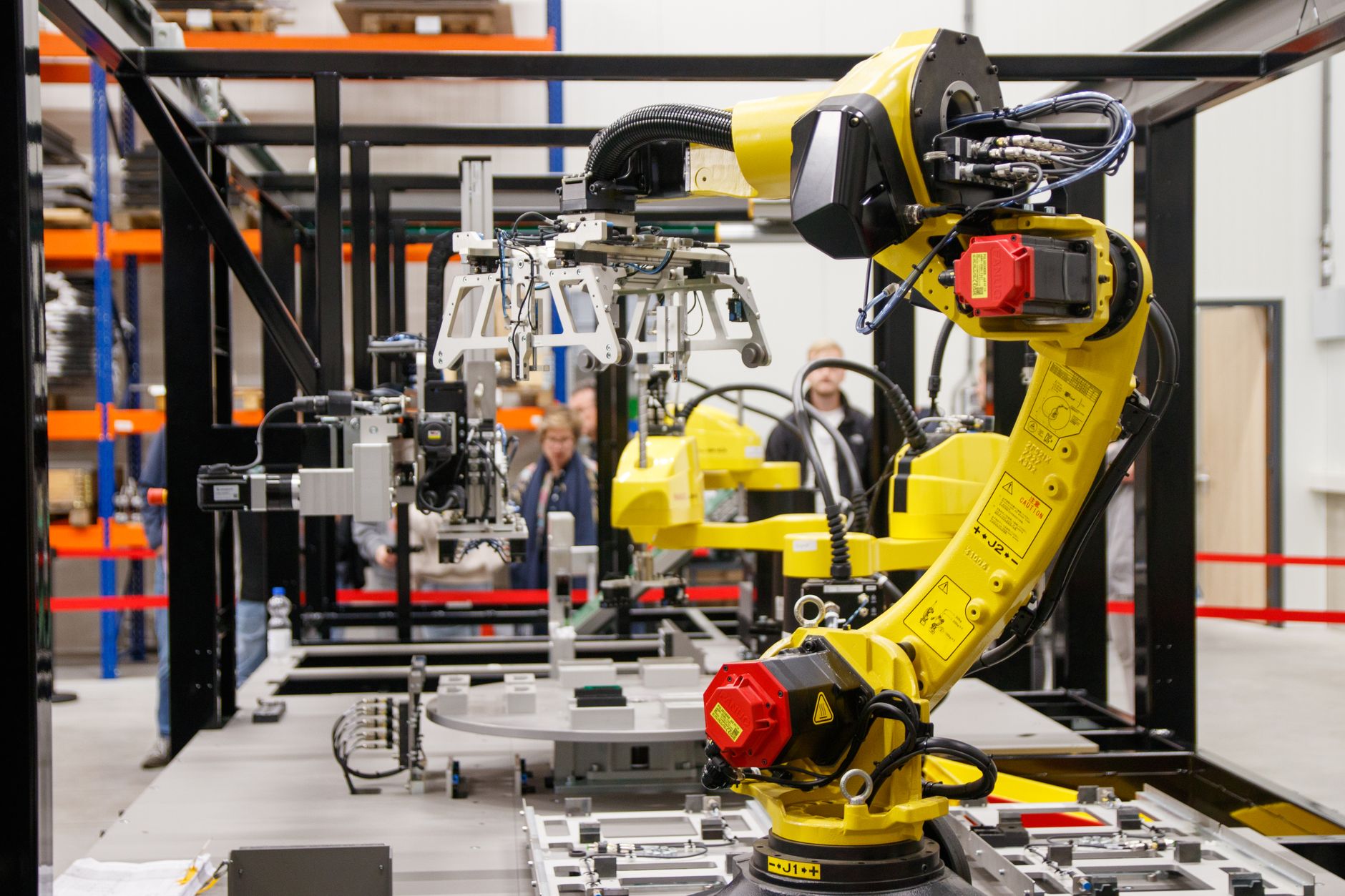

The U.S. Navy and its shipbuilders are deploying more robotic systems across fleet production and maintenance operations, addressing labor shortages, reducing build timelines, and improving quality control in an industry where precision determines mission capability. From robotic welding systems on carrier construction to autonomous underwater vehicles inspecting ship hulls, automation is becoming central to how the Navy sustains and expands its surface and submarine fleet.
This shift represents both a technological opportunity and a significant operational change for an industry accustomed to highly skilled, manual craftsmanship. The integration of robotics into shipbuilding and maintenance reflects broader trends in manufacturing, but the stakes in naval construction are unique: a single defect can compromise vessel seaworthiness or cost millions to repair once at sea. Huntington Ingalls Industries, General Dynamics Electric Boat, and other major contractors are investing in robotic arc welding systems, automated inspection drones, and inspection robots that can access confined spaces where human workers face time constraints or safety risks. These deployments are not wholesale replacements for human workers but rather targeted solutions to specific bottlenecks and hazardous tasks.
Table of Contents
- How Are Navy Shipbuilders Using Robots in Construction and Maintenance?
- The Technical Challenges and Limitations of Naval Robotics Integration
- Submarine Construction and Underwater Maintenance Robotics
- The Economics and Labor Implications of Automation
- Quality Assurance, Data Integrity, and the Risks of Over-Automation
- Emerging Additive Manufacturing and Robotic Precision
- Integration with Digital Shipyard Systems and Future Fleet Maintenance
- Frequently Asked Questions
How Are Navy Shipbuilders Using Robots in Construction and Maintenance?
robotic welding systems represent one of the most established applications in naval shipyards, handling repetitive, high-volume joints that benefit from consistency and speed. Unlike commercial shipbuilding where speed and cost dominate, military shipyards must also deliver weld quality that meets exacting Navy specifications, a standard that robotic systems can maintain across thousands of welds more reliably than human teams working long shifts. Some yards have deployed collaborative robots (cobots) that work alongside welders, handling materials and positioning components to reduce ergonomic strain and allow human technicians to focus on inspection and critical joints that require adaptive decision-making.
Maintenance and inspection present a different challenge. Naval vessels operate in corrosive environments where inspecting ballast tanks, fuel tank interiors, and pipe systems is dangerous and time-consuming. Inspection drones and crawling robots equipped with cameras and ultrasonic sensors can map corrosion, detect fatigue cracks, and identify maintenance needs without requiring workers to enter confined spaces or be exposed to residual chemical hazards. For submarines undergoing overhaul, robotic systems reduce the timeline for inspection phases, which directly translates to faster turnaround and increased fleet availability.
The Technical Challenges and Limitations of Naval Robotics Integration
Deploying robotics in a naval shipyard is not straightforward because military vessels are built to individual specifications, not mass-produced to a standard template. A carrier construction sequence may require different weld patterns, material types, and structural approaches than the previous vessel, forcing engineers to reprogram or reconfigure robotic systems. This variability reduces the efficiency gains that automotive or consumer electronics factories achieve through standardized processes, meaning robots must work alongside flexible, experienced human teams rather than replacing them.
A critical limitation is the lack of standardization in Navy and contractor specifications. Different yards operate with different tools, fixtures, and approval processes, which slows the deployment of proven robotic solutions across the industrial base. A welding robot that passes testing at one yard may require re-validation at another due to subtle differences in power supply, environmental conditions, or quality assurance protocols. Additionally, the skilled trades workforce—welders, inspectors, electricians—already faces shortages, and training the next generation to work effectively with robotic systems requires investment in education and apprenticeships that is not always prioritized alongside hardware purchases.
Submarine Construction and Underwater Maintenance Robotics
Submarine construction presents unique demands because submarines must be watertight and structurally flawless, making quality assurance even more critical than in surface ship construction. Robotic welding and inspection systems are being introduced into submarine production, but the rate of adoption has been slower than in carrier programs, partly because submarine-specific processes are harder to standardize.
General Dynamics Electric Boat and Huntington Ingalls operate submarine programs where robotic cutting and welding help with preliminary hull section assembly, but the final integration and certification work still relies heavily on human expertise. Underwater maintenance robotics have seen more rapid adoption because the hazard profile is clearer: human divers face decompression limits and oxygen toxicity, making autonomous underwater vehicles (AUVs) and remotely operated vehicles (ROVs) equipped with high-resolution sonar and optical systems valuable for hull inspections, propeller surveys, and sensor pod maintenance. A Navy vessel spending weeks undergoing diver-based inspection can compress that timeline significantly using robotic systems, reducing logistics costs and extending the working season in cold-water regions where human diving is limited to narrow windows.
The Economics and Labor Implications of Automation
The cost-benefit calculation for naval robotics is complex because military contracts do not operate under the same profit-margin pressures as commercial shipbuilding. A robotic system that saves money per unit on a thousand-ship commercial order becomes harder to justify if you are building five special-mission vessels over a decade. However, the persistent shortage of welders and skilled maritime workers has shifted the economics: a robotic welding cell may cost millions in capital equipment, but if it allows a shipyard to meet delivery schedules with available labor, the return is measured in schedule reliability and workforce stability rather than cost per weld alone. The labor displacement concern is real but nuanced.
Shipyard workers are aging, and fewer young people pursue maritime trades, so automation that reduces demand for human labor is simultaneously a solution to an industry-wide recruitment crisis. Rather than displacing employed welders, robots often enable yards to meet production goals without expanding headcount to unsustainable levels. However, the transition requires retraining programs: a welder whose job shifts toward robotic system monitoring and exception handling needs education in PLC programming, sensor troubleshooting, and data interpretation. Some unions and workforce development programs have begun forming partnerships with contractors to create pipelines for these new roles, but progress is uneven across yards.
Quality Assurance, Data Integrity, and the Risks of Over-Automation
A significant pitfall is over-reliance on automated inspection without human validation. A vision system that detects a surface anomaly might flag it as a defect requiring rework, but an experienced inspector would recognize it as an acceptable tool mark or manufacturing artifact. Conversely, inspection robots can miss defects that are subtle or partially obscured, especially in complex geometries where camera angles are limited. The Navy’s approach is to use robotics for initial screening and consistent data gathering, with human inspectors responsible for final sign-off and judgment calls.
This hybrid model is more effective than either purely manual or fully automated inspection but requires close coordination and clear handoff procedures. Data integrity and traceability are another challenge. Robotic systems generate vast amounts of sensor data—temperatures, pressures, dimensional measurements—but collecting, storing, and validating that data across multiple yards and decades of ship service requires infrastructure that many shipyards are still building. A robot’s quality record is only as good as the metadata that accompanies it, and if records are lost, misformatted, or incomplete, the Navy’s ability to trace defects back to root causes or determine if a system-wide production issue exists becomes severely hampered. This is not a hypothetical problem; quality data losses during ship transfers between yards have resulted in costly investigations and schedule delays.
Emerging Additive Manufacturing and Robotic Precision
Some Navy shipyards are beginning to explore additive manufacturing (3D printing) combined with robotic systems for producing replacement parts, complex plumbing assemblies, and structural components. Rather than maintaining vast inventories of spare parts or waiting for commercial machining shops to deliver components, onboard or shore-based additive systems could manufacture items on demand. Robotic arms equipped with welding torches or deposition tools can work in tandem with 3D printing systems to produce large structural sections or reinforced panels.
This approach is still largely in pilot phases but has potential for reducing logistics costs and enabling more responsive maintenance schedules. The precision of robotic additive manufacturing is superior to manual fabrication for many geometries, but material properties of additively manufactured components must meet Navy specifications before they can be certified for use in critical systems. A robotic 3D-welded steel beam might achieve dimensional tolerances tighter than hand-welded equivalents, but if the microstructure or mechanical properties differ, certification is delayed. The Navy’s standards bodies are working with contractors to develop guidance on acceptable additive processes, but this standardization work lags behind the rapid pace of robotic system deployments.
Integration with Digital Shipyard Systems and Future Fleet Maintenance
The Navy is moving toward digital shipyard management systems that tie robotic production and inspection data into broader lifecycle tracking. A weld completed by a robotic arm is logged with timestamp, material batch numbers, and quality metrics that can be queried years later when that ship undergoes overhaul. Shipyards are investing in digital twins—virtual replicas of ships and production processes—that allow engineers to simulate robotic tasks, optimize tool paths, and identify interference issues before robots are deployed on the actual vessel.
This integration creates operational efficiencies but also introduces cybersecurity and data sovereignty concerns. Shipyard networks connected to robotic systems and digital repositories are attractive targets for espionage or sabotage. The Navy has imposed strict information security requirements on contractors, but the more connected and automated the shipyard becomes, the larger the attack surface. Vendors providing robotic systems and control software must meet defense-grade security standards, which increases costs and can slow adoption of commercial off-the-shelf technologies that might otherwise be cost-effective for civilian shipyards.
Frequently Asked Questions
Are robots replacing skilled shipyard workers?
Not directly. Robots address specific bottlenecks and hazardous tasks, while the shipyard workforce is aging and facing recruitment challenges. The transition requires retraining existing workers into system monitoring and maintenance roles rather than pure job elimination.
How does robotic inspection compare to human divers for submarine maintenance?
Autonomous underwater vehicles can operate longer than divers, reducing logistics costs and extending working seasons in cold water. However, ROVs cannot yet perform complex repairs that humans can, so divers remain essential for certain maintenance tasks.
What is the biggest obstacle to wider robotic deployment in shipyards?
Navy vessels are custom-built, not mass-produced, so robots must be reconfigured for each new design. Standardization across yards and specifications remains limited, reducing economies of scale.
How do quality standards apply to robotic welds?
Robotic welds must meet the same Navy specifications as manual welds, verified through inspection and testing. Robots excel at consistency but lack adaptive decision-making for unusual joint configurations.
Can additive manufacturing replace traditional shipbuilding methods?
Not entirely. Additive manufacturing shows promise for complex parts and on-demand spare production, but larger structural sections still rely on traditional welding and assembly. Materials certification remains a bottleneck.