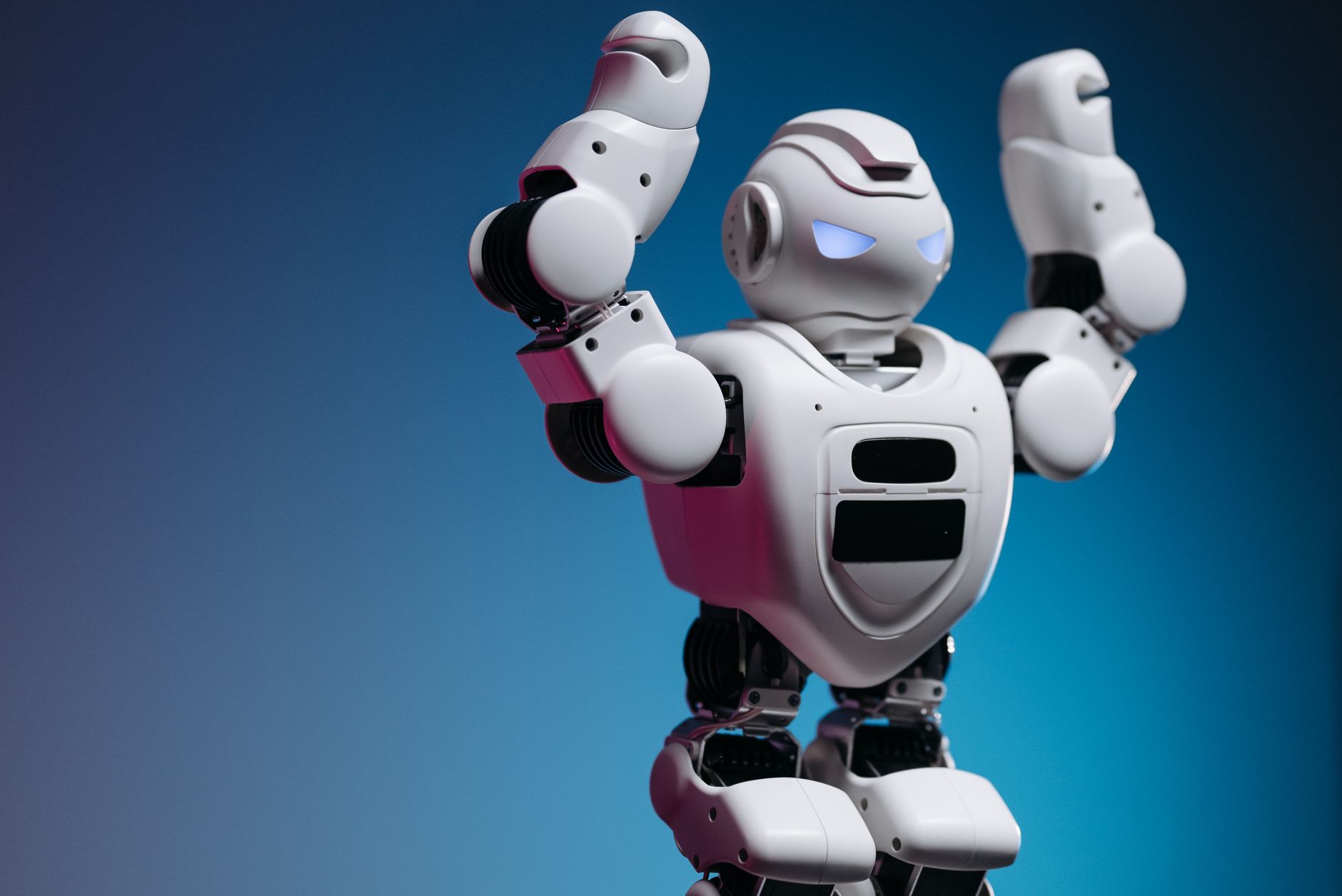

Humanoid robot trials are expanding across U.S. manufacturing facilities, marking a significant shift in how factories approach automation and labor. Companies across automotive, electronics, and warehouse logistics are testing bipedal machines that can navigate factory floors, handle delicate assembly work, and adapt to production lines originally designed for human workers.
These trials represent one of the first large-scale attempts to move humanoid robotics from research labs into real production environments. The expansion is driven by persistent labor shortages and the appeal of machines that can work alongside existing equipment without requiring complete factory redesigns. Unlike traditional industrial robots bolted to assembly lines, humanoid robots promise flexibility—the ability to move between workstations, learn new tasks, and handle unexpected challenges. However, early trials are revealing both the genuine capabilities and the significant limitations of current hardware and software, forcing manufacturers to set realistic expectations about timelines and ROI.
Table of Contents
- How Are Humanoid Robots Being Deployed in Real Factory Settings?
- What Technical Challenges Are Hampering Wider Adoption?
- What Production Tasks Show the Most Promise?
- How Do Trial Results Compare to Traditional Industrial Automation?
- What Safety and Liability Concerns Arise in Humanoid Robot Trials?
- What Does the Current State of Trial Programs Reveal?
- What Does Continued Factory Expansion Mean for Manufacturing Labor?
- Frequently Asked Questions
How Are Humanoid Robots Being Deployed in Real Factory Settings?
Humanoid robot trials are currently focused on specific, contained tasks rather than comprehensive factory automation. Manufacturers are testing these machines in roles like parts handling, quality inspection, material transport between workstations, and light assembly work. The bipedal design allows robots to navigate stairs, uneven floors, and spaces where wheeled alternatives would struggle—a practical advantage in older factory buildings or facilities with complex layouts. Most trials operate under close human supervision. Robots are typically contained to designated areas or work alongside human operators rather than replacing entire production lines.
Companies are using these experiments to gather data on reliability, cycle times, power consumption, and maintenance requirements. The goal is not immediate, large-scale deployment but rather understanding whether humanoid robots can eventually justify their cost in roles where traditional industrial robots lack flexibility. One practical limitation emerging from trials is the speed-versus-dexterity tradeoff. While humanoid robots can reach into tight spaces or manipulate objects from multiple angles, their movement speeds and reaction times lag behind both human workers and purpose-built industrial systems designed for high-volume repetitive tasks. This makes them currently unsuitable for high-speed assembly or time-critical operations.
What Technical Challenges Are Hampering Wider Adoption?
Balance and navigation remain core engineering problems. Humanoid robots must constantly adjust their stance and weight distribution to operate on factory floors that were never engineered with bipedal machines in mind. Uneven surfaces, shadows, cluttered workbenches, and rapid environmental changes cause balance corrections that slow operation and drain battery power. Factory environments are also notoriously dirty—oil residue, metal shavings, and dust pose challenges to sensors and joints designed for cleaner settings. Battery life presents an immediate practical constraint. Most current humanoid robots operate for 6 to 12 hours on a charge, depending on activity level.
In continuous manufacturing environments running multi-shift operations, this requires scheduled charging and creates coverage gaps. Battery replacement adds maintenance complexity and cost. Additionally, many modern factories rely on precise power management for thousands of connected machines; integrating autonomous robots with their own power demands requires rethinking electrical infrastructure. Cost remains a significant barrier. Humanoid robots currently range from hundreds of thousands to millions of dollars per unit, with no clear path to the scale economies that made traditional industrial robots affordable. Manufacturers are proceeding cautiously because the financial risk of a failed trial is substantial. If a robot spends more time on maintenance or troubleshooting than on productive work, the economic model collapses quickly.
What Production Tasks Show the Most Promise?
Inspection and quality control tasks appear to be where humanoid robots show early success. Machines can be equipped with multiple camera systems to examine products from various angles and apply consistent judgment across thousands of units per shift. Unlike visual inspection by human workers, which degrades with fatigue, automated inspection maintains consistency. However, subjective quality decisions—determining if a minor surface imperfection is acceptable or not—still often require human judgment, limiting full automation potential. Parts kitting and bin sorting also align well with humanoid robot capabilities.
These tasks require moderate dexterity and the ability to reach into containers or shelves, navigate short distances, and respond to variable bin contents. Trials in warehouse-adjacent factory environments show that robots can learn these tasks through repeated demonstration or programming. The challenge is that even modest variations—different bin sizes, orientations, or part orientations—often require retraining or recalibration, making these jobs less universally automatable than they initially appear. A specific limitation in parts handling involves precision assembly. Work requiring exact positioning tolerances, consistent force application, or rapid feedback—like fastening bolts to precise torque specifications—remains difficult for humanoid robots operating with current sensors and control systems. Tasks that seemed automatable in theory often have hidden complexity that only appears during actual production trials.
How Do Trial Results Compare to Traditional Industrial Automation?
The comparison between humanoid robots and conventional fixed automation reveals the fundamental tradeoff: flexibility versus efficiency. A traditional industrial robot arm designed for one task will perform that task faster, more reliably, and at lower operating cost than a humanoid robot attempting the same work. Fixed automation essentially trades flexibility for speed and precision, and that tradeoff favors the machine when production volumes are high and changeovers are rare. Humanoid robots gain advantage when tasks are diverse, changeover is frequent, or factory layouts prevent installing fixed equipment. The true value proposition emerges only when a single machine must competently handle five different jobs per shift—something a traditional robot cannot do without physical reconfiguration.
However, achieving this flexibility means accepting lower throughput on each individual task. For manufacturers, this is only economical if labor costs are extremely high, supply chains for specialized equipment are unreliable, or production flexibility is genuinely more valuable than speed. Maintenance and repair represent another critical comparison point. Traditional industrial robots have mature supply chains, predictable failure modes, and technicians trained to service them globally. Humanoid robots are emerging technology with limited repair expertise, scarce replacement parts, and failure modes that aren’t yet well understood across the industry. Downtime for a broken humanoid robot can be significantly longer than downtime for traditional equipment.
What Safety and Liability Concerns Arise in Humanoid Robot Trials?
Coexistence with human workers introduces liability questions that traditional industrial automation never faced. A traditional robot is safely caged behind fencing; a humanoid robot sharing the factory floor with humans creates potential accident scenarios. Current trial deployments address this through designated work areas, constant human supervision, and emergency stop systems, but as robots become more autonomous, liability frameworks remain undefined. Behavioral unpredictability presents an underestimated risk.
Humanoid robots can fail in ways that industrial robots rarely do—losing balance suddenly, experiencing sensor errors that cause jerky movements, or misinterpreting their surroundings in ways that might surprise nearby workers. Manufacturers conducting trials are discovering that “safe on the test course” doesn’t automatically mean “safe in a real factory with dozens of workers, machines, and unexpected hazards.” Training workers to safely coexist with robots is itself a new operational requirement that many factories are still learning to implement. A critical limitation is liability in accidents. If a humanoid robot injures a worker, the responsibility chain is far less clear than with traditional automation. Is liability on the manufacturer, the deploying company, the operator, or the maintenance technician? Insurance companies are still establishing underwriting standards for facilities with humanoid robots, and some manufacturers are proceeding cautiously precisely because legal frameworks remain uncertain.
What Does the Current State of Trial Programs Reveal?
Trials across the U.S. are advancing deliberately rather than explosively. Manufacturers are reporting meaningful progress on specific tasks, but deployment rates remain measured. The emphasis on trials—rather than immediate production—signals that industry leaders believe humanoid robots have genuine long-term potential but don’t yet perform reliably enough for mission-critical roles.
This measured approach reduces risk and allows real-world data to inform machine design improvements. The diversity of trial sites is significant. Trials aren’t concentrated in one sector or company; they span automotive facilities, consumer electronics assembly, logistics warehouses, and pharmaceutical manufacturing. This breadth suggests the appeal of humanoid automation is genuine across multiple industries, even if specific applications remain limited. The fact that major manufacturers are investing in trials indicates confidence in the technology’s trajectory, despite current limitations.
What Does Continued Factory Expansion Mean for Manufacturing Labor?
Ongoing humanoid robot trials signal gradual, not immediate, transformation of manufacturing workforces. The timeline for meaningful workplace impact is likely measured in years, not quarters—long enough that workforce adaptation, retraining, and gradual retirements can occur without sudden disruption. This contrasts with apocalyptic AI automation narratives; actual deployment follows engineering realities and economic calculation, not technological possibility alone.
The expanding trial footprint indicates that humanoid robots are moving from prototype status toward genuine industrial tools, but the journey is methodical. Manufacturers gaining experience with early systems are learning which tasks truly benefit from humanoid flexibility and which are better served by traditional equipment, humans, or hybrid approaches. The real story emerging from trials is not about robots replacing factories but about which specific roles change and over what realistic timeline that change unfolds.
- —
Frequently Asked Questions
Are humanoid robots faster than human workers?
Not yet. Current humanoid robots typically work slower than experienced human workers on most tasks. Their advantage lies in consistency, endurance without fatigue, and the ability to handle hazardous work rather than raw speed.
How much do these robots cost?
Most humanoid robots deployed in trials range from several hundred thousand to millions of dollars per unit. Widespread adoption requires significant cost reduction before they become economically viable for most manufacturers.
Can one humanoid robot replace multiple human workers?
Not in current trials. Most deployments show one robot performing one task adequately, with success measured more by consistency and safety than by productivity gains relative to human labor.
What happens when a humanoid robot breaks down?
Repair timelines remain unpredictable because the technology is still young. Traditional industrial robots have mature repair ecosystems; humanoid robots do not. Downtime can extend for weeks in some cases.
Are humanoid robots safer than traditional industrial robots?
It depends on the context. They reduce hazardous exposure in certain roles, but their unpredictability in shared workspaces with humans creates new safety considerations still being researched.