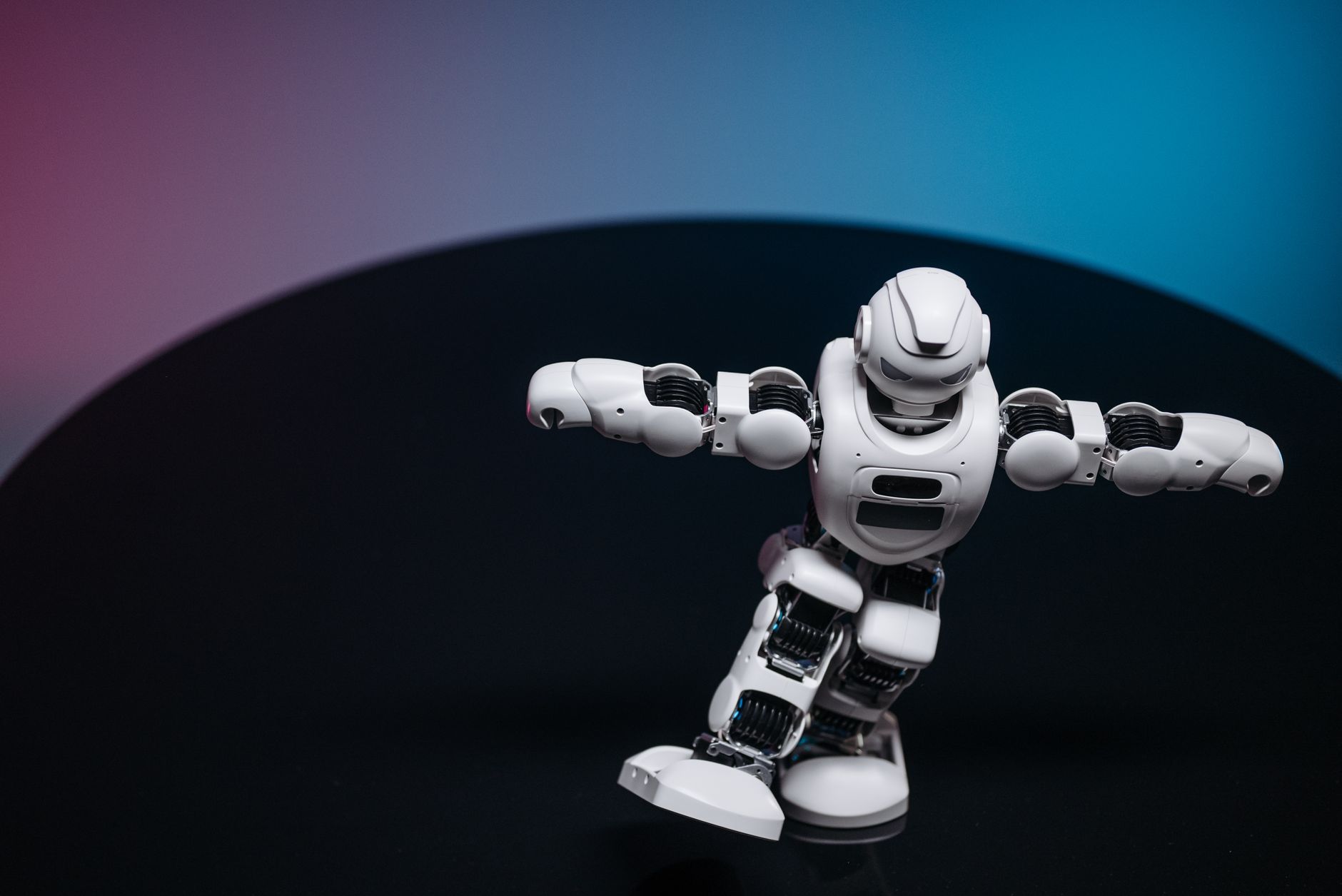

Humanoid factory robots can move materials, tend machines, inspect equipment, and perform simple assembly tasks in workspaces designed for people. Their practical value lies in flexible, low-to-moderate-rate work—not replacing every worker or outperforming specialized automation. A humanoid robot is a mobile machine with a humanlike body plan, usually including legs, arms, hands, and vision sensors. Its usefulness depends less on appearance than on reliability, safety, integration, and the specific job.
Table of Contents
- What can humanoid robots do in a factory?
- When does the humanoid form make sense?
- What are the main technical limits?
- How should safety be evaluated?
- How should a factory test and buy one?
What can humanoid robots do in a factory?
humanoid robots can combine mobility, perception, and manipulation. A single machine may walk between stations, recognize parts, grasp objects, press controls, and place completed items in a tote.
Plausible factory uses include: Performance varies sharply by task. Picking rigid parts from organized trays is easier than untangling cables, handling reflective objects, or finding randomly piled components.
- Moving bins or components between nearby stations
- Loading and unloading machines
- Kitting parts for assembly
- Performing visual inspection rounds
- Handling simple tools and controls
When does the humanoid form make sense?
A humanoid design can help when a factory cannot easily change its stairs, aisles, doors, shelves, and controls. Legs and two arms may let one robot serve several existing workstations without major reconstruction. That flexibility has a cost.
An industrial arm usually offers better speed, precision, and payload at a fixed station. A wheeled autonomous mobile robot is often simpler and more efficient for moving goods across level floors. Humanoids fit best when work changes frequently, requires several kinds of movement, and happens in spaces built around human reach. If the task repeats thousands of times in one location, dedicated automation is usually the stronger starting point.
What are the main technical limits?
Dexterity remains a central challenge. Human hands quickly adjust grip, pressure, and finger position, while robot hands can struggle with soft packaging, small fasteners, flexible parts, and unexpected obstructions. Factories also need predictable cycle times and uptime.
A robot that succeeds in a demonstration may still pause when lighting changes, a pallet shifts, or a component arrives in the wrong orientation. Remote human assistance may resolve exceptions, but it adds staffing and communications requirements. Battery runtime, payload, walking speed, heat, dust, liquids, vibration, and floor conditions can further restrict deployment. Buyers should confirm operating limits for the actual environment instead of assuming a general-purpose robot can work everywhere.
How should safety be evaluated?
A humanlike shape does not make a robot inherently safe around people. A moving arm, dropped load, unstable step, or unexpected restart can injure someone even at modest speed. Each application needs a task-specific risk assessment covering normal work, failures, maintenance, charging, and recovery.
Controls may include restricted zones, speed and separation monitoring, force limits, emergency stops, guarded areas, and lockout procedures. The full system matters: robot, gripper, payload, software, network, workstation, and human traffic. A robot described as collaborative may still require barriers or reduced operating speeds for a particular tool or load.
How should a factory test and buy one?
Start with one narrow workflow and measure it against the current process. A useful pilot includes realistic parts, shift conditions, floor traffic, network interruptions, and deliberately misplaced objects.
Track practical results: Before purchasing, define acceptance criteria and responsibility for software updates, spare parts, repairs, cybersecurity, and remote support. Do not scale the pilot until the robot completes the target task safely and consistently under ordinary factory variation.
- Successful cycles without intervention
- Average and worst-case cycle time
- Human assistance per shift
- Charging and maintenance downtime
- Damage, drops, and near misses