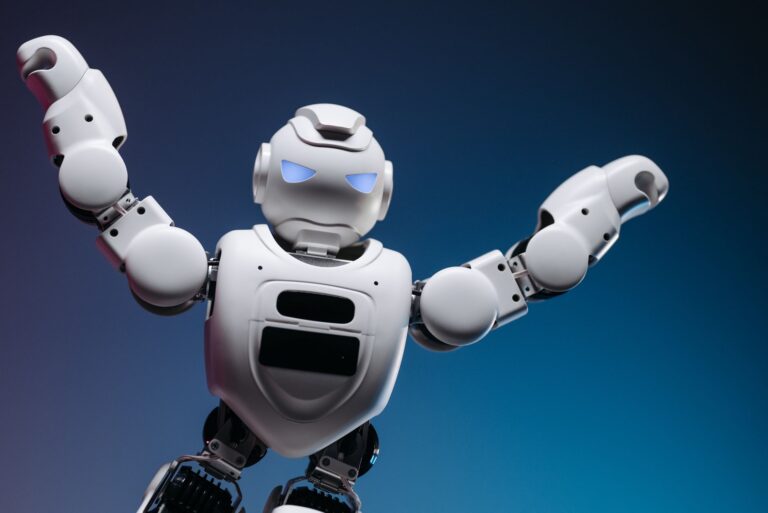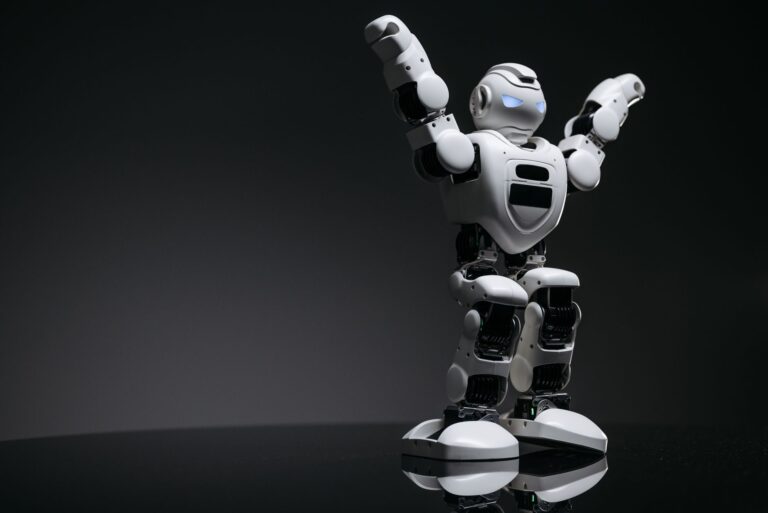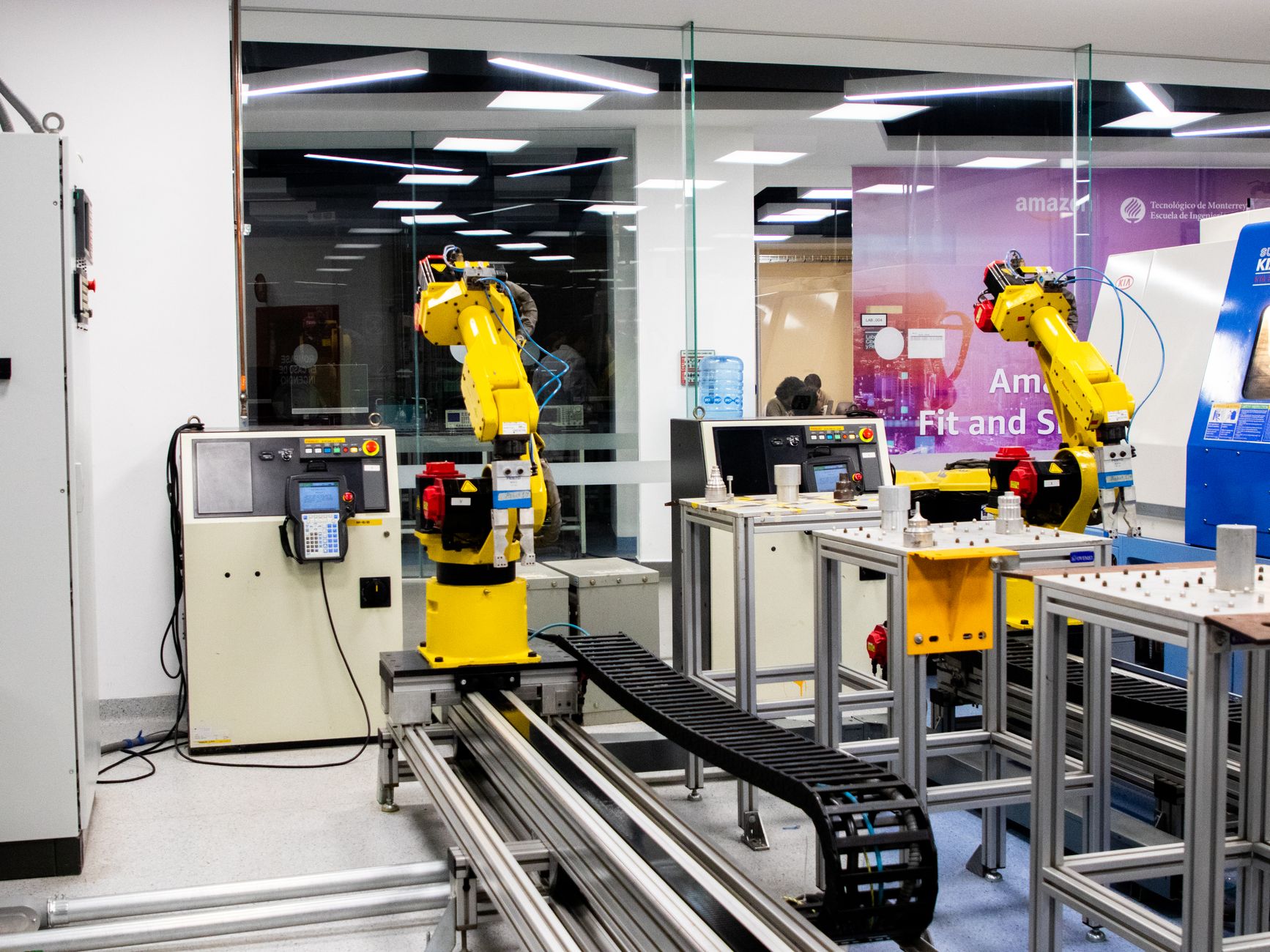

Verifying a robotics claim in 2026 means checking three things: whether the demonstrated behavior was autonomous or human-controlled, whether the footage matches independent hands-on testing, and whether the company has disclosed limitations rather than only favorable takes. Treat any demo video as unverified until a named source confirms how it was produced. The humanoid robot market has moved fast enough that company releases now outpace independent scrutiny. A reader who wants to know whether a robot "walked itself" or "folded laundry on its own" needs a short, repeatable process rather than a gut reaction to smooth footage.
Table of Contents
- Why robot demo videos mislead even careful viewers
- Teleoperation versus autonomy — the distinction that matters most
- Reading the red flags when a company won't say
- Why published benchmark numbers aren't directly comparable
- A practical checklist before sharing a robotics claim
- Frequently Asked Questions
Why robot demo videos mislead even careful viewers
A pre-registered study presented at NeurIPS 2026, surveying 9,341 participants across six countries, found that people generally cannot reliably tell whether robot demonstration footage is real or CGI, or whether the behavior shown is autonomous or remote-controlled. The same study found that adding explicit disclosures to a video measurably improved viewers' ability to tell the difference, according to the NeurIPS 2026 poster. This isn't a new problem. A 2020 paper by Rosen and colleagues proposed a checklist asking robotics teams to state plainly what a demonstrated robot can and cannot do, rather than show only its best outcomes.
That checklist is still cited as a baseline standard for judging company and lab videos, per the arXiv paper on best practices for robot videos. The practical takeaway: your own eyes are not a reliable instrument here. A fluid, confident-looking motion sequence can come from a skilled teleoperator wearing a VR headset just as easily as from an autonomous control system. The only way to tell the difference is to find out what the company itself, or an independent reporter, says about how the footage was produced.
Teleoperation versus autonomy — the distinction that matters most
Most humanoid robot demos fall into one of two categories: autonomous operation, where the robot's own software decides every movement, and teleoperation, where a human drives the robot remotely, often through a VR headset that mirrors the operator's own arm and hand movements onto the robot. 1X's $20,000 Neo home robot is a documented example of the latter. Wall Street Journal reporter Joanna Stern's hands-on test, published October 28, 2025, found Neo running in a human-controlled "Expert Mode," taking about five minutes to load a dishwasher and over a minute to fetch water, according to the Wall Street Journal's test coverage.
1X's own CEO, Bernt Øivind Børnich, has said the company trains Neo by having humans remotely operate it to generate data, and that a "world model" released in January 2026 is meant to gradually reduce that reliance, per the CEO's January 2026 interview. Tesla's Optimus has followed a similar pattern. Optimus program lead Milan Kovac acknowledged on X that robots shown at Tesla's October 2024 "We, Robot" event were human-assisted "to some extent," and Tesla separately confirmed that its November 2024 hand-demonstration video was teleoperated, as reported by Electrek's coverage of the Optimus hand demo. When a company discloses teleoperation, that disclosure is the verification — no further digging is needed to settle the autonomy question for that specific clip.
- Look for the words "teleoperated," "remote-operated," "Expert Mode," or "assisted" in the company's own materials or in reporter follow-ups.
- Treat silence on the question as a gap to investigate, not evidence of autonomy.
- A single autonomous demo does not mean every demo from that company is autonomous — check each one separately.
Reading the red flags when a company won't say
Some incidents never get a clean answer, and that ambiguity is itself informative. At Tesla's December 2025 "Autonomy Visualized" event in Miami, an Optimus unit fell backward on camera in a motion that observers familiar with VR teleoperation rigs read as a remote operator pulling off a headset mid-session. Tesla did not confirm or deny that interpretation, as reported by Breitbart's coverage of the Miami event.
Elon Musk has repeatedly pushed back on teleoperation claims about Optimus, stating of one viral clip that it was "AI, not tele-operated." That denial is a claim itself, not independent confirmation, and it sits opposite Tesla's own admissions about the November 2024 hand demo, per Quartz's reporting on Musk's statements. The same dynamic played out in reverse when Figure AI released a March 2026 video of its Helix robot doing household chores. Musk publicly questioned whether the footage was autonomous or remote-operated; Figure CEO Brett Adcock responded that the robot ran autonomously with no remote operators involved, according to Figure AI's response reported by Finviz. When two companies or executives dispute each other's claims in public, the dispute itself is worth tracking — it tells you the industry has not settled on how to prove autonomy to outsiders.
- An unexplained fall, pause, or glitch during a live demo is worth more scrutiny than a flawless one.
- A company's denial of teleoperation is not evidence on its own; look for a technical explanation or third-party confirmation.
- Cross-company accusations are a sign the underlying footage is genuinely ambiguous, not resolved by either side's statement.
Why published benchmark numbers aren't directly comparable
Beyond individual videos, robotics research papers report success rates, speed, and task-completion statistics that look precise but often aren't comparable across labs. Benchmarking research such as the RB2 paper documents that the field lacks a shared standard for metrics, hardware setups, and action-rate protocols in real-world manipulation tasks, which means one lab's 90% success rate and another's 90% success rate can describe different difficulty levels entirely, per the RB2 benchmark paper.
This matters when a press release cites a research paper's numbers as proof of a capability. A high success rate on a narrow, lab-defined task says little about how a robot performs in an unstructured home or warehouse. Before treating a cited statistic as a general claim, check whether the paper defines the task conditions, the hardware used, and whether other labs' numbers on the "same" benchmark were produced under matching conditions.
- Ask whether the task definition matches the real-world scenario the company is implying.
- Check whether the paper reports failure cases alongside successes, per the Rosen et al. disclosure standard.
- Treat a bare percentage with no methodology section as unverified.
A practical checklist before sharing a robotics claim
Verifying a specific claim doesn't require technical expertise — it requires asking the same handful of questions every time and tracking down a direct source for each answer. A claim that passes all five checks with named sourcing is as verified as the current state of the field allows. A claim that fails even one — especially the first — should be reported as what it is: unconfirmed until the company or an independent source says otherwise.
- Does the company's own material or a named reporter state whether the demo was autonomous or teleoperated?
- Has the company's story about a specific clip changed, or has it been disputed by a competitor or outside observer?
- If the claim rests on a published benchmark, does the paper disclose its task conditions and hardware setup?
- Did an independent reporter get hands-on access, rather than relying on a company-produced video alone?
- Is there an unexplained anomaly in the footage — a fall, a pause, a cut — that the company has not addressed?
Frequently Asked Questions
Is teleoperation the same as cheating?
No. Companies including 1X have openly said teleoperation is part of how they collect training data, as CEO Bernt Øivind Børnich described for Neo; the issue is whether a specific demo is presented as autonomous when it was not.
Can I trust a robot demo just because a company didn't call it teleoperated?
Not on its own. Tesla's Optimus hand demo was confirmed as teleoperated only after reporting followed up, and the December 2025 Miami fall was never explained either way by Tesla.