
ROS (Robot Operating System) is the dominant open-source framework for programming robots, while proprietary software is the closed, vendor-built control system that ships with many commercial robots. Neither one is universally "better" — ROS wins on flexibility and cost, proprietary software often wins on legal safety certification, and the right choice depends on what you're building and who has to certify it.
This matters because the open-source side of that choice just changed. ROS 1, the original branch of the framework, reached the end of its supported life, and the robotics field has been consolidating around its successor for several years now. Understanding where each option still holds an advantage — and where the two now overlap — is the difference between picking a stack that fits your project and inheriting problems you didn't know existed.
Table of Contents
- What's Actually Being Compared
- Why the Open-Source Side Is Gaining Ground
- Where Proprietary Software Still Has the Legal Edge
- The Middle Path: Hybrid Stacks
- How to Decide for a Given Project
What's Actually Being Compared
"ROS" is not one thing anymore. ROS 1, the version many engineers learned on, built its final distribution, Noetic, and that distribution reached end-of-life on May 31, 2025. After that date, Open Robotics stopped issuing new features, security updates, bug fixes, or binaries for ROS 1, which leaves ROS 2 as the only actively maintained open-source option for anyone starting a new robot programming project today.
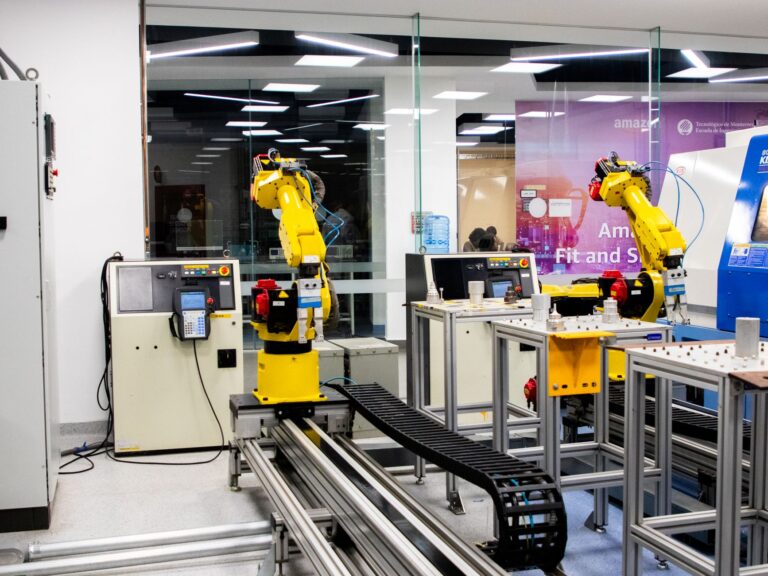
Proprietary software, by contrast, is whatever a robot manufacturer builds and controls itself — a closed programming environment, teach pendant, and control stack sold as part of the hardware. It's updated on the vendor's schedule, tested against that vendor's own robots, and generally not meant to be mixed with outside tooling. The practical comparison, then, isn't "ROS versus one single alternative." It's an actively maintained, vendor-neutral open-source stack (ROS 2) against a vendor-locked, closed stack that varies from manufacturer to manufacturer. That framing matters for every decision that follows.
Why the Open-Source Side Is Gaining Ground
The migration data backs up the end-of-life timeline. ROS 2 package downloads reached roughly 80% of all ROS downloads by September 2024, up from about 40% in 2022 — a clear sign that developers were already moving before ROS 1 support formally ended. That migration has institutional muscle behind it. Open Robotics released ROS 2 "Jazzy Jalisco" on May 23, 2024, as a Long Term Support release maintained until the end of May 2029; the release was built by 211 contributors and verified by 29 testers running over 400 tests before it shipped.
That's a different scale of maintenance than a single company's internal QA team. ROS also isn't confined to labs and hobby projects anymore. ABI Research estimated that nearly 55% of commercial robots shipped in 2024 — about 915,000 units — carried at least one ROS package onboard. That figure means ROS already sits inside a majority of commercial robot shipments, often alongside manufacturer-specific software rather than replacing it outright.
Where Proprietary Software Still Has the Legal Edge
Momentum isn't the whole story, and this is the section that changes the answer for industrial buyers. Safety-component maker Pilz told the 2019 ROSCon conference that most industrial robot manufacturers certify their manipulators only in combination with their own proprietary programming and control equipment, which makes substituting ROS for the control layer on those robots a legal grey area for safety compliance — not because ROS is unsafe, but because the manufacturer's certification simply doesn't cover that combination. Every industrial robot sold today has to meet requirements set out in ISO 10218-1, "Robotics — Safety requirements — Part 1: Industrial robots," which ISO published in its current edition in February 2025.
That standard applies to the robot's software and controller regardless of whether the stack is proprietary or ROS-based — it's the bar either path has to clear, not a reason to default to the vendor's own software. Pilz itself proved the bar is clearable: the company certified its PRBT 6 manipulator under EN ISO 10218-1 while running ROS packages as the control software, pairing it with a dedicated safety controller instead of a proprietary teach pendant. That case shows ROS-based control can pass industrial safety certification — but only when a manufacturer engineers for that outcome from the start, rather than treating ROS as a drop-in replacement on hardware certified for something else.
- If a robot ships pre-certified only with its manufacturer's own software, swapping in ROS for production control risks voiding that certification.
- If a vendor has explicitly certified a ROS-based configuration (as Pilz did), that specific combination is a documented, legal path.
- When in doubt, the certification paperwork — not the framework's reputation — determines what's actually compliant.
The Middle Path: Hybrid Stacks
A growing number of platforms split the difference rather than forcing an either/or choice. NVIDIA's Isaac robotics platform is built on top of ROS 2 rather than replacing it, so a system using Isaac keeps ROS 2's vendor-neutral middleware while adding NVIDIA-specific simulation and perception tools optimized for NVIDIA hardware. That arrangement gives a development team the open ecosystem, documentation, and interoperability that come with ROS, plus hardware-accelerated tools from a single vendor for the parts of the stack where that vendor's optimization genuinely helps — typically perception and simulation rather than core safety-critical control.
It's a practical answer for teams that want ROS's flexibility without giving up every vendor-specific performance advantage. This hybrid pattern is worth checking for before assuming a project is locked into a pure ROS build or a pure proprietary one. Many commercial robots already run this way, per the ABI Research shipment data cited above — ROS packages present alongside, not instead of, manufacturer software.
How to Decide for a Given Project
The decision comes down to what the robot does and who has to sign off on it, not a general preference for open or closed software. Whichever path a team picks, the one artifact worth keeping on file is the certification scope for the exact hardware-and-software combination in production — that document, not the framework's general reputation, is what determines legal compliance on an industrial floor.
- Building a new robot or research platform with no existing safety certification to protect: ROS 2 is the current, actively maintained option, since ROS 1 no longer receives security or bug fixes.
- Deploying on a commercial industrial manipulator that's already certified under ISO 10218-1 with the manufacturer's own software: stick with the proprietary stack unless the manufacturer has published a certified ROS-based configuration.
- Needing NVIDIA-class perception or simulation performance without abandoning open middleware: a ROS 2-based platform like Isaac is a documented middle option.
- Inheriting a ROS 1 deployment: plan a migration to ROS 2, since no further security patches are coming for the old branch after May 31, 2025.