
Installing a food processing robot typically costs $40,000 to $150,000 for a single automated station, and $120,000 to $300,000 or more once conveyors and line changes are involved. The final number depends on the robot type, the hygiene rating required for food contact, and how much of the existing line has to change to fit around it.
A collaborative robot arm handling light packaging work sits at the low end of that range. A full industrial robot replacing a labor-intensive case-packing or processing step, with vision systems and washdown-rated hardware, sits at the high end. The gap between those two numbers is almost entirely about tooling, integration labor, and facility prep — not the robot itself.
Table of Contents
- What Does the Robot Arm Alone Cost?
- What Else Gets Added to the Installed Price?
- Why Food-Grade Robots Cost More Than Standard Industrial Ones
- What Kind of Payback Can a Food Plant Expect?
- How to Scope a Realistic Budget
What Does the Robot Arm Alone Cost?
A bare collaborative robot arm — the kind designed to work near people without a safety cage — runs $25,000 to $60,000 before any tooling or integration, according to Standardbots' 2026 pricing guide. Once a controller, end-of-arm gripper, vision system, integration labor, and staff training are added, a fully deployed collaborative system typically lands between $40,000 and $150,000 depending on how complex the task is. Traditional industrial robots, the larger non-collaborative arms used for heavier or faster work, span a wider price range.
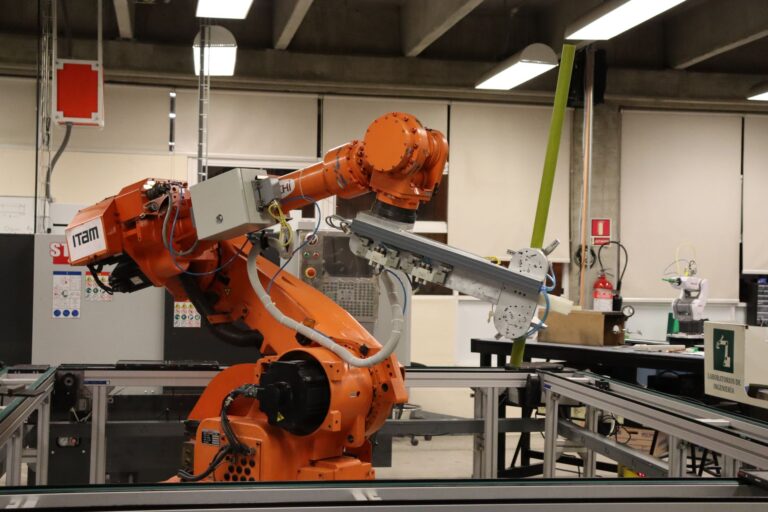
New FANUC industrial robots start around $17,500 for entry-level models and climb to $500,000 for high-end units, with the M-10 series commonly used in food handling priced between $50,000 and $100,000 depending on configuration, per Standardbots' FANUC pricing guide. Robots.com reports a similar range for a new industrial arm with its controller and teach pendant: roughly $50,000 to $80,000 before anything else is added, according to its industrial robot pricing guide. These arm-only prices explain why robot cost estimates vary so widely online. A quote that cites only the robot — say, $50,000 — is quoting a fraction of what it will cost to get that robot actually running on a food line.
What Else Gets Added to the Installed Price?
The robot arm is the smallest line item in most installations. Robots.com notes that peripherals and tooling — grippers, conveyors, fixtures, and the controls to tie them together — typically add another $50,000 to $100,000 on top of the arm's price, often matching or exceeding the cost of the robot itself, according to its pricing guide. Vision systems are a common and necessary addition on food lines, where product orientation and size vary batch to batch. Third-party vision systems add $10,000 to $30,000, and facility upgrades such as electrical service, compressed air, and safety fencing can add another $10,000 to $50,000 to the total project, per the same Robots.com guide.
Packaging equipment built specifically for food and beverage lines carries its own separate cost. A traditional case erector — the machine that forms cardboard boxes before a robot loads them — costs $45,000 to $90,000 depending on speed, forming 5 to 30 boxes per minute, according to Canada's Business Development Bank in its guide to robotics and automation for food and beverage manufacturers. That cost sits alongside, not instead of, the robot that feeds it. A simple rule of thumb from industry cost analysis: budget at least three times the robot's purchase price for the full installed project. Trade press citing a Boston Consulting Group analysis gives the example of a £65,000 six-axis robot implying about £195,000 in total installed cost, rising to four or five times the robot price for a full line overhaul requiring conveyors and auxiliary equipment, per Packaging Europe's ROI analysis.
Why Food-Grade Robots Cost More Than Standard Industrial Ones
Robots that touch food, or work in a zone that gets hosed down between shifts, need hardware rated for that environment. Food-grade robot arms must carry washdown ratings of IP67 to IP69K — a scale describing resistance to water jets and submersion — and some protein-processing lines also require components that survive clean-in-place chemical cycles, according to Convergix Automation's analysis of food packaging robotics.
These hygienic specifications push the hardware, and the price, above a standard industrial robot built for a dry manufacturing floor. A plant handling raw meat or dairy needs this washdown rating; a plant only moving finished, packaged goods through a dry warehouse zone generally does not. That distinction is worth confirming with an integrator before pricing out a project, since specifying the wrong rating either overpays for protection a line doesn't need or underspecs equipment that will corrode or fail inspection.
What Kind of Payback Can a Food Plant Expect?
Installed cost only tells half the story — the other half is how fast that cost comes back. In a documented washdown dairy installation, a robotic yogurt-packaging system let the plant reassign four workers who had been doing the packaging manually, generating more than $250,000 in annual labor and operating savings and reaching return on investment in about one year, according to a case study from the Association for Advancing Automation.
A smaller-scale example shows the same pattern at a different investment size. A UK food manufacturer installed a collaborative robot on a popcorn packaging line to replace contract staff; the integrator projects annual savings of about £93,000 and a full payback period of 14 months, according to Hayley Group's case study. Both cases point to payback inside one to two years once labor savings are counted, which is the number most plants use to decide whether an installation clears the bar.
How to Scope a Realistic Budget
A useful way to build a budget is to work backward from the installed-cost ranges above rather than from the robot's sticker price alone. A plant replacing one manual packaging station with a collaborative robot and basic vision should expect a total near the low end of these ranges, around $40,000 to $90,000. A plant overhauling a full case-packing or processing line with conveyors, washdown-rated hardware, and multiple robots should plan for $150,000 to $300,000 or more, consistent with the "four to five times the robot price" guidance for line overhauls.
- Start with the arm: $17,500–$500,000 for a standard industrial robot, $25,000–$60,000 for a collaborative arm, per Standardbots.
- Add tooling and peripherals: typically $50,000–$100,000, per Robots.com.
- Add vision if the product varies in size, shape, or position: $10,000–$30,000.
- Add facility prep — electrical, compressed air, fencing: $10,000–$50,000.
- Add a washdown or clean-in-place premium if the robot contacts food directly, per Convergix.