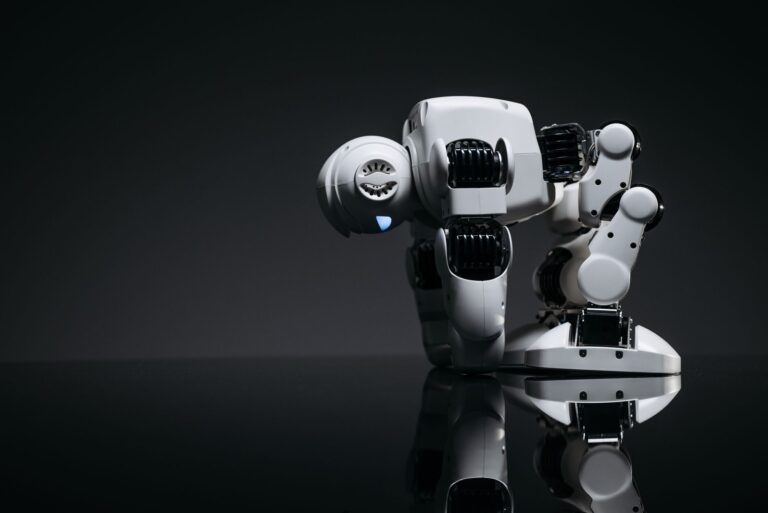

Advanced robotics manufacturer Agility Robotics has announced plans to go public through a $2.5 billion SPAC merger with Churchill Capital Corp XI, set to debut on Nasdaq under the ticker symbol AGLT. The deal, announced on June 24, 2026, marks a significant moment for the humanoid robotics industry, bringing a company with real commercial deployments to public markets rather than relying on prototype demonstrations and venture backing alone. The transaction is expected to generate more than $620 million in gross proceeds, combining $420 million from Churchill XI’s trust account with approximately $200 million in additional PIPE financing committed at $10 per share and led by Foxconn.
What distinguishes Agility’s market entry from typical robotics IPOs is that the company isn’t going public on promises alone. Agility’s Digit robots are already moving more than 100,000 totes commercially across nine customer facilities, with more than 65,000 hours of accumulated operational time. The robots are working at GXO, Amazon, and Toyota facilities, demonstrating that the hardware isn’t theoretical—it’s currently handling real warehouse logistics at scale.
Table of Contents
- How Does Agility’s Valuation Compare to Other Humanoid Robotics Competitors?
- What Commercial Traction Justifies Agility’s Public Market Entry?
- Where Is the $620 Million in Proceeds Going?
- Why Is Being the First US-Listed Pure-Play Humanoid Robotics Company Significant?
- What Do the Operational Metrics Reveal About Deployment Readiness?
- What Role Does Foxconn’s PIPE Investment Signal About Manufacturing?
- What Does This IPO Mean for the Broader Robotics and Automation Industry?
How Does Agility’s Valuation Compare to Other Humanoid Robotics Competitors?
The $2.5 billion valuation places Agility significantly below other well-funded humanoid robotics companies in the private market. Figure AI, a comparable company developing humanoid robots for industrial tasks, carries a private valuation of approximately $39 billion, roughly sixteen times higher than Agility’s public valuation. This gap reflects both the difference between private funding expectations and public market scrutiny, as well as Agility’s more advanced stage of actual commercial deployment compared to many competitors still in development phases.
The SPAC merger structure itself is notable because it allows Agility to access public capital without the full underwriting rigor of a traditional IPO roadshow. This approach has become common in robotics and deep-tech sectors, where traditional investment banks may struggle to model long-term returns for hardware companies with years of development still ahead. However, SPAC mergers also come with higher scrutiny from retail investors and shorter lockup periods for early shareholders, which can create volatility in the stock’s early trading.
What Commercial Traction Justifies Agility’s Public Market Entry?
Agility’s claim to commercial relevance rests on concrete operational metrics rather than pilot programs. The 100,000-plus totes moved commercially represent actual warehouse throughput, not laboratory demonstrations. These deployments span multiple customer verticals—Amazon’s e-commerce logistics, GXO’s third-party logistics operations, and Toyota’s manufacturing facilities—suggesting that the Digit robot addresses genuine workflow problems across different industries rather than solving a niche use case.
However, the number of facilities where robots are deployed (nine total) remains modest compared to traditional logistics automation providers. Each facility with humanoid robots still requires custom integration, maintenance personnel trained on Agility’s systems, and significant upfront capital investment. Unlike conveyor systems or traditional robotic arms that operate predictably within fixed environments, humanoid robots must adapt to floor-level work in facilities designed for human workers, which means ongoing software updates and troubleshooting are likely to remain part of the service model for years.
Where Is the $620 Million in Proceeds Going?
The transaction structure divides capital sources in a way that reflects both the maturity of Agility’s business and the appetite for continued growth funding. The $420 million from Churchill XI’s trust account represents the SPAC’s existing capital pool, while the $200 million in committed PIPE financing adds institutional validation—Foxconn’s leadership on this round signals manufacturing and supply chain expertise backing Agility’s expansion plans. The fact that PIPE investors committed at $10 per share establishes a baseline valuation assumption that the public market will test at and after the merger closes.
These proceeds will likely fund manufacturing scale-up, additional research and development for next-generation humanoid models, and expanded go-to-market operations to reach additional customer facilities. Agility has indicated plans to accelerate Digit production and expand deployment to more warehouse environments, but the specific allocation of capital across these areas will become clear in quarterly earnings calls post-merger. One constraint worth noting: $620 million in gross proceeds will be reduced by transaction fees, so net cash available for operations and growth will be substantially lower, potentially in the $500 million range depending on legal, advisory, and underwriting costs.
Why Is Being the First US-Listed Pure-Play Humanoid Robotics Company Significant?
Agility’s distinction as the first US-listed pure-play humanoid robotics company matters because it creates a direct public benchmark for the industry. Investors and competitors will now be able to scrutinize quarterly earnings, operational metrics, and cash burn rates in real-time, establishing clearer expectations for what commercialization of humanoid robotics actually costs and delivers. This transparency can accelerate the entire field by providing real data instead of venture-backed speculation.
The competitive landscape includes well-funded private companies like Figure AI, Boston Dynamics (owned by Hyundai), and various Chinese robotics firms backed by state-directed capital. Agility’s public listing doesn’t necessarily mean it’s the most advanced or best-capitalized—Figure’s $39 billion valuation suggests the market sees higher long-term potential in that company’s approach. However, Agility’s advantage lies in demonstrated commercial revenue, existing customer relationships, and operational expertise at scale, which are difficult assets to replicate. The company’s focus on a specific use case (warehouse logistics) also provides a clearer unit economics model than more generalized humanoid robot approaches.
What Do the Operational Metrics Reveal About Deployment Readiness?
The 65,000-plus hours of accumulated operation across nine facilities provides a meaningful dataset on reliability and performance. For context, this level of operational experience suggests that Agility’s engineering team has encountered and resolved multiple failure modes—software crashes, hardware degradation, integration issues with warehouse management systems, and unexpected environmental challenges. Companies don’t accumulate 65,000 operational hours without learning where their systems break and how to fix them.
However, 65,000 hours across nine facilities also breaks down to roughly 7,200 hours per facility on average, which may represent anywhere from a few months to two years of continuous or intermittent operation depending on how heavily each facility uses Digit robots. The real test of readiness will come when Agility attempts to scale from nine facilities to dozens or hundreds while maintaining uptime, safety standards, and customer satisfaction. The humanoid form factor, while flexible, is also more complex to maintain than specialized industrial robots, which means support costs could become a significant part of the unit economics as deployment expands.
What Role Does Foxconn’s PIPE Investment Signal About Manufacturing?
Foxconn’s participation in the $200 million PIPE financing round sends a clear signal about manufacturing viability and supply chain confidence. As the world’s largest contract electronics manufacturer and a producer of industrial robots and automation equipment, Foxconn understands what it takes to scale hardware production.
Their commitment suggests they believe Agility can move from producing dozens or hundreds of Digit robots per year to thousands, and that the company has a viable path to manufacturing cost reduction as volume increases. Foxconn’s involvement also hints at potential manufacturing partnerships or supply chain integration, though the PIPE investment alone doesn’t guarantee either. The Taiwanese manufacturer has invested in robotics companies before and tends to look for ways to integrate new automation technologies into its own operations, which could provide Agility with a significant anchor customer for future deployments.
What Does This IPO Mean for the Broader Robotics and Automation Industry?
Agility’s public market entry validates the hypothesis that humanoid robotics can move beyond research labs and venture funding into revenue-generating commercial operations. This opens the door for other robotics companies to pursue public listings and for traditional investors—pension funds, index funds, and long-term institutional money—to gain exposure to the sector without backing early-stage ventures. The public markets will now demand quarterly evidence of progress, which creates accountability but also attracts different types of capital than private equity alone.
The 100,000-plus totes moved and $2.5 billion valuation establish concrete benchmarks. Other companies developing humanoid robots can no longer claim equivalence with Agility without pointing to comparable commercial deployments. This competitive pressure, combined with the scrutiny that comes with public company status, will likely accelerate the entire industry’s move toward commercialization rather than extended research phases. Agility’s success or failure in scaling operations and profitability over the next three to five years will significantly influence whether other robotics companies rush to pursue public listings or remain patient with private capital.
- —