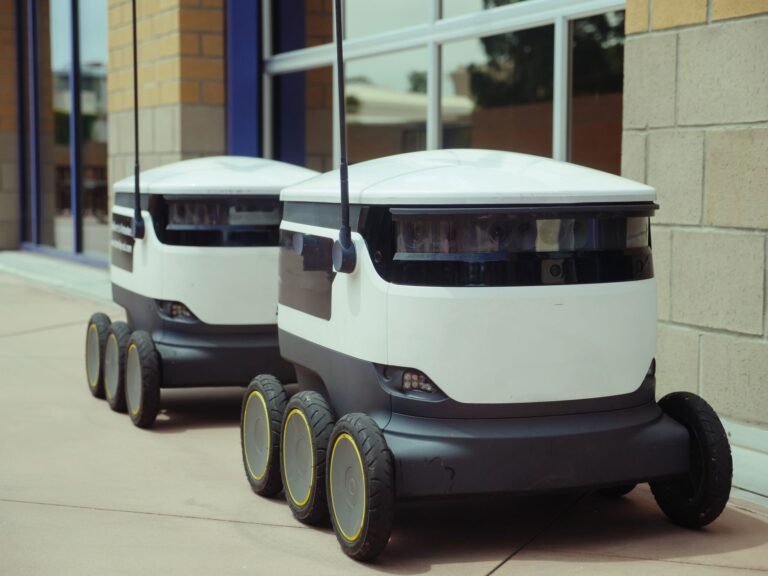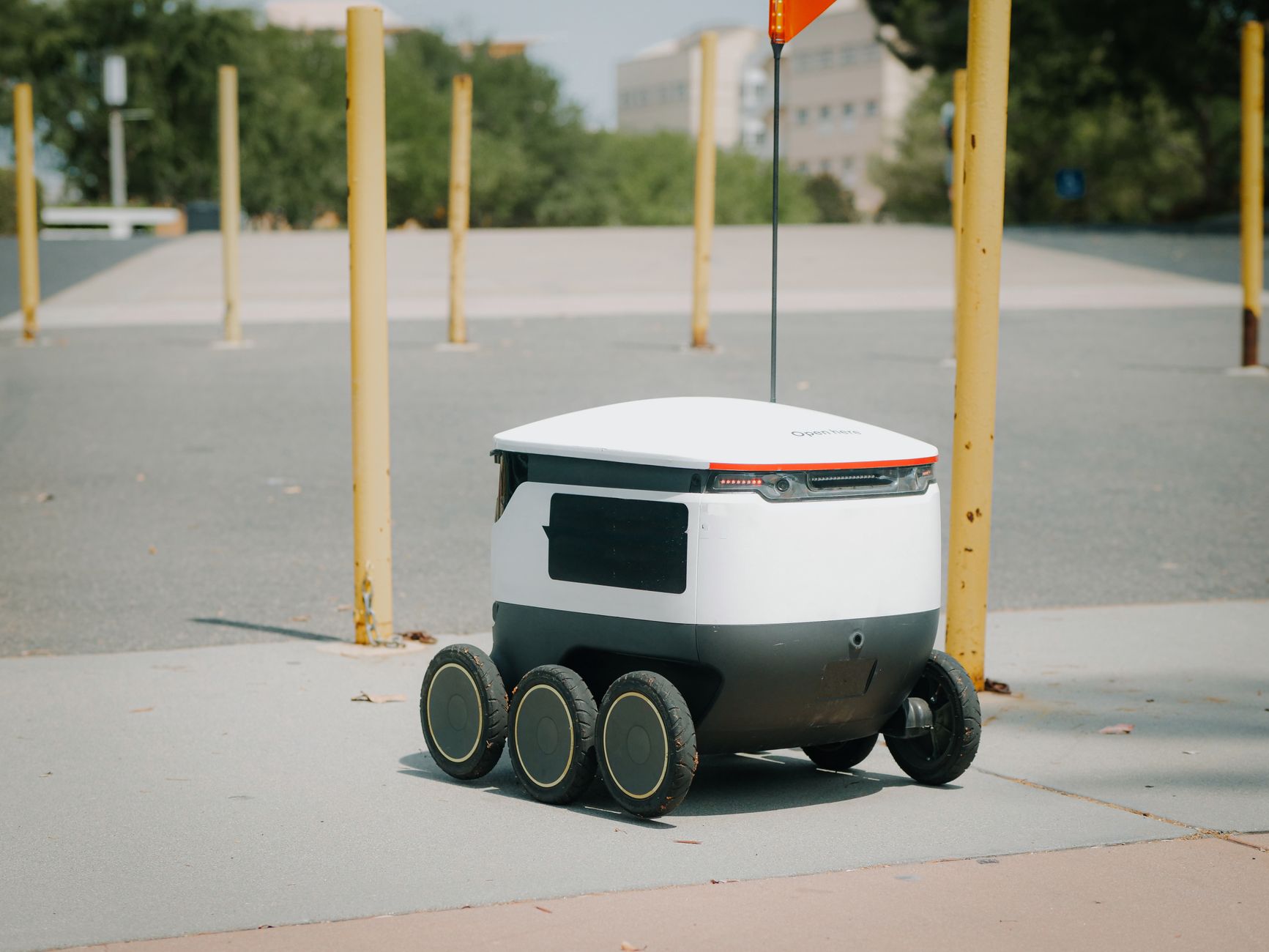

Autonomous grocery delivery robots operating across the UK have been involved in a series of safety incidents that raise serious questions about their readiness for widespread pavement deployment. In one documented case, a Starship robot struck and pushed a two-year-old child at Bletchley’s Brunel shopping centre in Milton Keynes, leaving the toddler scared and stressed. The robot did not stop to assess the situation and continued on its delivery route. When the child’s parent complained to Starship Technologies, the company’s response was limited to a £5 discount, an inadequate resolution that underscores deeper issues with accountability and safety protocols in the autonomous delivery sector.
These incidents are not isolated. With approximately 500 Starship autonomous vehicles currently operating across the UK for Co-op, Tesco, and Budgens deliveries, a pattern of collisions and close calls has emerged. A Rushden man reported being struck by a robot; a Tesco delivery driver documented an incident where a Starship bot rammed his German Shepherd. Each case reveals gaps in vehicle control, operator training, and incident response that extend beyond individual accidents to reflect systemic safety problems within the autonomous delivery industry.
Table of Contents
- What Safety Incidents Have Autonomous Delivery Robots Caused in the UK?
- The Scale of Operations and Vulnerable Users at Risk
- Inadequate Company Response and Accountability
- Why Autonomous Delivery Robots Present Unique Pavement Hazards
- Vulnerable Pedestrians and the Pavement-Robot Conflict
- Autonomous Delivery Expansion Despite Safety Concerns
- Current Operational Coverage and Growing Complexity
- Frequently Asked Questions
What Safety Incidents Have Autonomous Delivery Robots Caused in the UK?
The Milton Keynes toddler incident exemplifies the type of collision that leaves minimal physical injury but raises substantial safety concerns. The child was not seriously hurt, but the robot‘s failure to stop or alert nearby humans demonstrates a critical flaw: these vehicles prioritize delivery completion over pedestrian awareness. Starship’s investigation of the incident proceeded quietly in the background, but the inadequate complaint resolution—a £5 discount—suggested the company viewed the matter as a customer service issue rather than a safety failure requiring genuine remediation. A separate incident in Rushden added another data point to the growing list of collisions.
A pedestrian reported being “wiped out” by a Starship robot. More troubling was the revelation that followed: a Starship employee had been given additional training after remotely controlling a 35kg robot and what witnesses described as “charging it into” the pedestrian. This suggests that even human operators with supposed oversight capabilities may lack adequate training or judgment when placed in control of these vehicles. A Tesco delivery driver also reported that a Starship robot rammed his German Shepherd dog in Milton Keynes, indicating that the vehicles collide with obstacles without predictable patterns or consistent deceleration.
The Scale of Operations and Vulnerable Users at Risk
As of 2026, Starship operates approximately 500 autonomous vehicles across 11 UK locations: Milton Keynes, Northampton, Cambridge, Leeds, Wakefield, Greater Manchester, Sheffield, Sunderland, Reading, Bristol, and Barnsley. This geographic spread means that the robots‘ safety problems are not contained to a single region or population but dispersed across major urban and suburban areas. The vehicles deliver for multiple grocery chains and have begun expanding into takeaway food delivery through partnerships with Just Eat in Sunderland and Uber in Leeds and Sheffield. As the fleet grows and operational scope widens, the number of interactions between robots and pedestrians increases proportionally, compounding the risk to vulnerable populations.
The Living Streets campaign has specifically warned that autonomous delivery robots create hazards for pedestrians least able to avoid them: wheelchair users, people who are blind or partially sighted, elderly individuals, and those using mobility aids. These groups depend on predictable pavement behavior and clear navigation patterns. Robots that move unpredictably, fail to stop when encountering obstacles, and lack effective human oversight create barriers to safe pavement use for people who are already navigating complex accessibility challenges. The current deployment of 500 vehicles is merely the beginning; if expansion continues at present rates, the safety risk multiplies across every location where these robots operate.
Inadequate Company Response and Accountability
Starship Technologies’ response to documented incidents reveals an accountability gap that undermines confidence in the company’s commitment to safety. When a child was struck by one of its robots, the company’s offer of a £5 discount treated the incident as a customer complaint rather than a serious safety failure. The stated commitment to take such matters “seriously” and to investigate rang hollow without concrete changes to vehicle behavior, operator training, or incident response protocols. No public details emerged about what the investigation found or what operational changes resulted.
This silence suggests either that investigations concluded without meaningful safety improvements or that the company does not prioritize public transparency around incident resolution. The training incident involving a Starship employee who remotely controlled a robot into a pedestrian points to a deeper problem: even when humans are nominally in control, accidents still occur. Additional training was provided to the employee, but no information was disclosed about what systemic issues that training was designed to address. Did the employee lack understanding of the robot’s acceleration and deceleration capabilities? Were safety protocols unclear? Without transparency, it is impossible to assess whether the training actually resolves the underlying problem or merely creates a paper trail of compliance.
Why Autonomous Delivery Robots Present Unique Pavement Hazards
Autonomous delivery robots create safety challenges distinct from those posed by human-operated vehicles or traditional delivery methods. These robots operate on pavements where pedestrians of all abilities expect to move safely without monitoring for autonomous machinery. Unlike cars on roads, where pedestrians maintain heightened alertness, pavement users—particularly young children and elderly people—expect the environment to be designed for human-scale navigation. Starship robots, weighing up to 35kg and moving at operational speeds, violate this assumption. When a robot fails to detect an obstacle, does not decelerate appropriately, or continues on its route after a collision, it exposes a fundamental design and operational flaw.
The reliance on remote human operators creates an illusion of oversight that incidents have repeatedly disproven. A human operator controlling a robot from a distance cannot perceive the environment with the same immediacy as a human delivery driver. Reaction times are delayed, context is limited to camera feeds, and the operator may not fully understand the robot’s actual capabilities and limitations. The Rushden incident, where an operator was given additional training after driving a robot into a pedestrian, illustrates this gap. Remote operation is not a sufficient safety control when the underlying vehicle design and autonomous navigation systems are inadequate for shared pavement environments.
Vulnerable Pedestrians and the Pavement-Robot Conflict
The Living Streets campaign has crystallized the core issue: robots are being deployed on pavements without consideration for the pedestrians least able to avoid them. A person using a wheelchair may navigate the pavement with careful attention to surface conditions and obstacles, but a robot moving unpredictably, or continuing on a collision course, introduces a hazard that cannot be anticipated or avoided through ordinary caution. A blind or partially sighted pedestrian depends on predictable pavement conditions and may be unable to detect a small robot until it is very close.
Elderly people and those with mobility aids often move more slowly and may lack the agility to quickly step out of the path of a moving robot. Current deployment in urban areas like Milton Keynes, Cambridge, and Manchester means that vulnerable pedestrians are sharing pavements with robots daily, without dedicated infrastructure to separate robot routes from pedestrian zones. There is no requirement for robots to yield to pedestrians, no dedicated robot lanes, and no clear legal liability framework if a collision occurs and causes injury. The 500 robots currently operating present 500 sources of potential collisions, and the number is projected to grow as more retail chains adopt autonomous delivery.
Autonomous Delivery Expansion Despite Safety Concerns
Despite documented incidents, autonomous delivery services are expanding rapidly. Just Eat launched a joint hot takeaway delivery service with Starship in Sunderland in February 2026, marking a significant expansion beyond grocery delivery into food services. Uber has partnered with Starship to provide autonomous food deliveries in Leeds and Sheffield. These partnerships indicate that major platforms view autonomous delivery as viable despite the safety record, and their involvement likely accelerates rollout to additional regions.
The speed of expansion outpaces any comprehensive safety review or regulatory tightening. The participation of established retail and food delivery brands lends credibility to the autonomous delivery model that safety incidents alone have not yet undermined. Tesco, Co-op, and Budgens have normalized the presence of robots in their delivery operations. Each new partnership and retail integration reinforces the assumption that autonomous delivery is a settled technology ready for public deployment. Yet the incidents continue, and the response remains reactive rather than preventive.
Current Operational Coverage and Growing Complexity
The 11 locations where Starship robots currently operate span diverse urban environments: major conurbations like Greater Manchester and Sheffield, university cities like Cambridge, and newer deployment areas like Barnsley. This geographic diversity means that the robots operate in areas with varying pavement designs, pedestrian density, and vulnerability profiles. Milton Keynes, where the documented incidents occurred, includes busy shopping centres and suburban residential areas where toddlers and elderly people are common. Cambridge’s high student population creates different hazard profiles than Sheffield’s more mixed demographic.
Yet the same robot design, operational protocols, and remote control systems are applied across all locations without apparent adaptation to local conditions or populations. The addition of takeaway delivery partnerships with Just Eat and Uber adds another layer of complexity. Food delivery creates different operational pressures than grocery delivery: restaurants may prioritize order completion over safe robot operations, and the time sensitivity of hot food delivery could incentivize faster robot movement or less careful operator oversight. As the scope of autonomous delivery widens, the opportunities for safety failures multiply, yet there is no evidence of proportional investment in safety improvements, operator training programs, or incident response protocols.
Frequently Asked Questions
How many Starship robots are currently operating in the UK?
Approximately 500 Starship autonomous vehicles are deployed across the UK, operating in 11 locations including Milton Keynes, Cambridge, Manchester, Leeds, Sheffield, and others, delivering for Co-op, Tesco, and Budgens.
What happened in the Milton Keynes toddler incident?
A Starship robot struck and pushed a two-year-old child at Bletchley’s Brunel shopping centre. The robot did not stop and continued its delivery route. The child was scared and stressed but sustained no serious physical injury. Starship offered the parent a £5 discount.
Who is most at risk from autonomous delivery robots?
Living Streets campaign research identifies wheelchair users, people who are blind or partially sighted, elderly people, and those using mobility aids as particularly vulnerable, since robots operate unpredictably on shared pavements without clear safety protocols.
What is the company’s response to safety incidents?
Starship Technologies states it takes incidents seriously and investigates them, but public transparency is minimal. The response to the toddler incident—a £5 discount—suggested inadequate accountability for safety failures.
Are other companies expanding autonomous delivery in the UK?
Yes. Just Eat partnered with Starship for autonomous takeaway delivery in Sunderland in February 2026, and Uber partnered with Starship for autonomous food deliveries in Leeds and Sheffield, indicating rapid expansion despite safety concerns.
What safety infrastructure separates robots from pedestrians?
Currently, there is no dedicated infrastructure. Robots share pavements with pedestrians without designated lanes or safety separation, and there is no clear legal liability framework for collisions.