
Elderly care robots equipped with transfer technology are reshaping how assisted living facilities handle patient mobility, reducing the physical strain on caregivers while improving safety for residents who struggle with standing, walking, or moving between surfaces. A robot designed for transferring residents—such as models that lift users from beds or chairs and lower them safely to other locations—represents a significant shift from manual handling techniques that have placed healthcare workers at risk of injury for decades. These systems combine mechanical lifting capacity with positioning sensors and safety protocols to address one of the most demanding and injury-prone tasks in elder care.
The advancement centers on solving a practical crisis: the physical toll of patient transfer work has driven caregiver shortages and burnout across facilities worldwide. By automating the transfer process, these robots tackle both the shortage and the safety paradox where lifting residents manually risks harm to both caregiver and patient. The technology isn’t about replacing human care but redistributing labor so that caregivers can focus on meaningful interaction, medication management, and emotional support rather than repetitive mechanical lifting.
Table of Contents
- How Do Elderly Care Transfer Robots Reduce Injury Risk?
- The Safety Engineering Behind Transfer Technology
- Deployment in Residential and Long-Term Care Settings
- Economic Barriers and Facility Investment Decisions
- Limitations in Autonomy and Real-World Variability
- Integration of Human Care and Robotic Assistance
- Ongoing Development in Mobility Assistance Technology
- Frequently Asked Questions
How Do Elderly Care Transfer Robots Reduce Injury Risk?
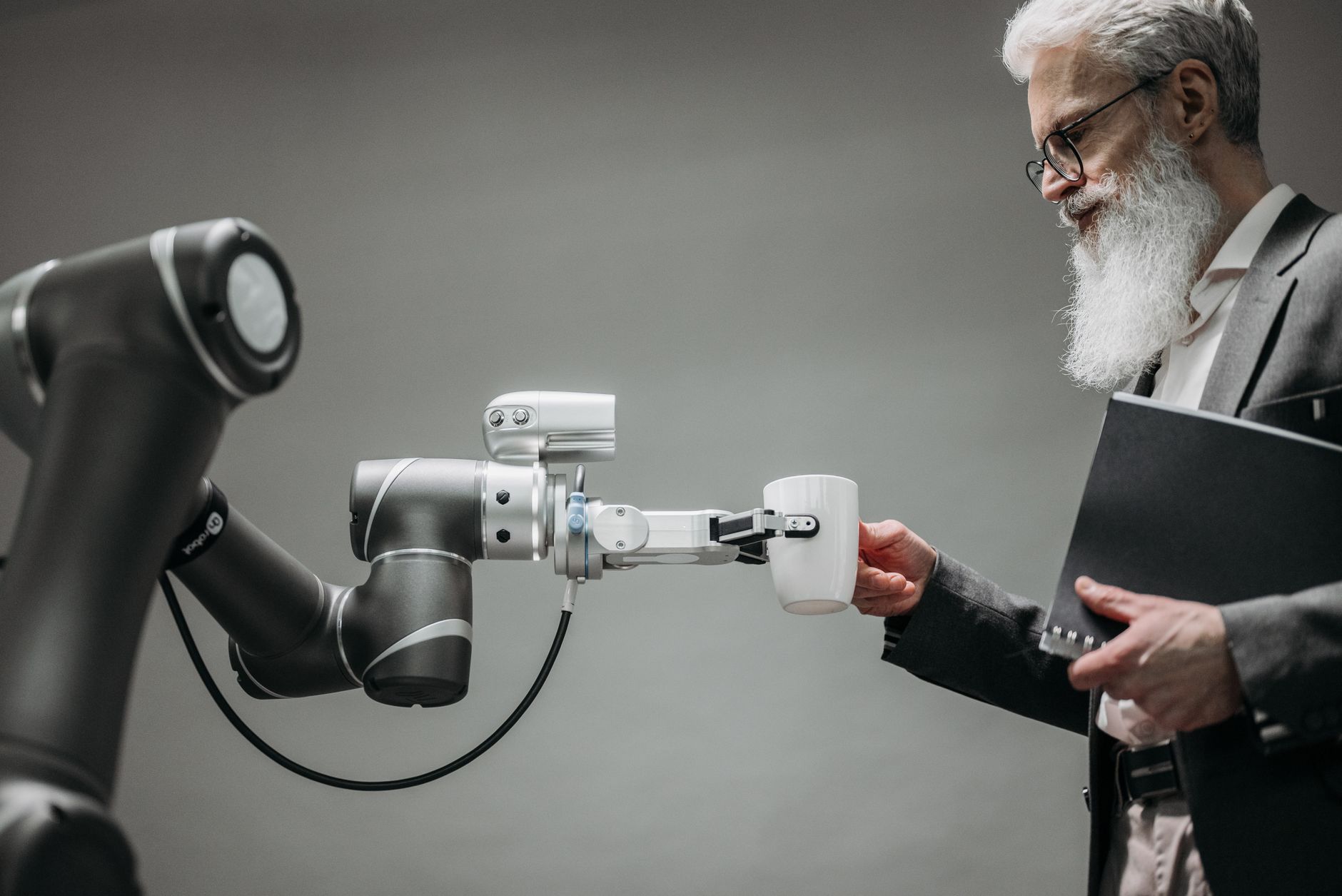
Patient transfer—moving someone from a bed to a wheelchair, toilet, or chair—involves lifting awkward weight at unpredictable angles. Without mechanical assistance, caregivers experience cumulative stress on their backs, shoulders, and knees. Transfer robots change this dynamic by taking on the mechanical load themselves, using robotic arms or hydraulic platforms guided by the caregiver’s commands rather than the caregiver’s strength. These systems typically work through a sequence: the robot aligns itself beneath or beside the resident, sensors confirm proper positioning and weight distribution, and then mechanical actuators perform the lift under controlled, consistent force.
Unlike manual lifting, which varies in speed and force depending on caregiver fatigue or technique, robotic transfer maintains uniform motion and strength, reducing jarring movements that can bruise or alarm elderly residents. A facility using transfer robots reports fewer musculoskeletal injury claims filed by staff compared to facilities relying solely on manual technique and lifting belts. However, not all residents adjust equally well. Some elderly people experience anxiety when handled by machines or find the sensation of robotic movement disorienting, requiring staff to spend extra time building trust and explaining the process. This means transfer robots cannot simply replace caregivers; they require human oversight, reassurance, and judgment about whether a particular resident is ready for robotic transfer.
The Safety Engineering Behind Transfer Technology
Transfer robots must meet stringent safety standards because failure carries immediate physical consequences—a misaligned lift or loss of power during a transfer can injure a resident. Manufacturers engineer these systems with redundant load cells, emergency descent protocols, and sensors that verify resident positioning before motion begins. Most systems include backup manual overrides so caregivers can halt or lower the robot immediately if something feels wrong. A critical limitation appears in edge cases: residents with severe contractures, asymmetrical weight distribution due to stroke, or metal implants require custom adjustments or may not be suitable for certain robotic transfer methods.
The technology works best for residents whose mobility challenges stem from weakness or fatigue rather than structural deformities. Facilities must invest in assessment protocols to determine which residents can safely use transfer robots and which need traditional manual or alternative assisted-transfer methods. Battery or power supply failures remain a practical concern. If a robot loses power mid-transfer, the resident is suspended at an awkward height and angle. Most systems address this through backup power supplies or gravity-assisted descent modes, but these safeguards add complexity and cost, making transfer robots expensive to purchase and maintain.
Deployment in Residential and Long-Term Care Settings
Nursing homes and assisted living communities represent the primary market for transfer robots, where the volume of daily transfers justifies the investment. A mid-sized facility conducting dozens of transfers per day sees the labor efficiency case clearly: fewer caregiver injuries translate to lower workers’ compensation costs and reduced staff turnover. Facilities with chronic staffing shortages often view transfer robots as a retention tool—existing caregivers appreciate physical relief and express greater job satisfaction when robotic systems handle heavy lifting. Implementation success depends on workflow integration. Robots must fit through doorways, maneuver around furniture, and dock cleanly at beds and chairs without requiring staff to move residents prematurely.
Facilities that redesigned care units to accommodate larger transfer robots saw higher adoption rates than those attempting to retrofit narrow hallways or cramped bathrooms. This means transfer technology adoption is not purely a purchasing decision but an architectural one, favoring newer facilities or those with space for renovation. Staff training represents another substantial cost and time burden. Caregivers accustomed to manual techniques must learn new protocols: checking robot readiness, positioning residents correctly for the robot to grasp, monitoring the transfer on screens, and handling exceptions when the robot flags positioning problems. Inadequate training has led to residents being injured or traumatized by rushed or poorly guided robotic transfers, highlighting that automation requires thoroughness, not speed.
Economic Barriers and Facility Investment Decisions
Transfer robots cost tens of thousands of dollars per unit, placing them beyond the budget of smaller facilities or those with thin margins. A facility with 40 beds faces a decision: invest in multiple robots that serve high-transfer-volume populations, or purchase fewer units and share them across units, reducing their availability and slowing care routines. Smaller rural or underserourced facilities often cannot justify the capital expenditure, even if the labor savings would eventually offset the cost. The economics shift when factoring in the full cost of manual transfer injuries: caregiver worker compensation claims, temporary staffing to cover injured staff, turnover and retraining costs, and increased liability insurance premiums.
Facilities that conduct formal cost-benefit analyses often find that transfer robots become cost-neutral within 3-5 years if they reduce injury rates. However, this calculation assumes consistent use and proper maintenance. A robot sitting idle because staff haven’t been trained or a facility hasn’t redesigned workflow is a poor investment that discourages further adoption. Government reimbursement rarely covers the cost of transfer robots directly, leaving facilities to absorb the capital investment through operational budgets or philanthropy. This creates a two-tier care system where well-funded facilities provide robot-assisted transfers while under-resourced facilities continue relying on manual methods, widening the safety and caregiver-experience gap.
Limitations in Autonomy and Real-World Variability
Current transfer robots operate under caregiver supervision and command, not autonomously. They cannot decide when a resident needs transfer, assess whether a resident has eaten recently (relevant for abdominal pressure and transfer comfort), or adapt to residents who move unexpectedly. The robot executes the transfer once a caregiver initiates it, but human judgment remains essential for safety and consent. Residents who are combative, confused, or in acute pain present scenarios where robotic transfer may not be appropriate.
A resident having a behavioral crisis or showing signs of acute illness requires human caregivers to make clinical judgments that robots cannot replicate. This means transfer robots are best suited for stable, cognitively intact or mildly impaired residents with predictable mobility needs—not the most complex care situations where injury risk is also highest due to behavioral factors. Sensor errors and environmental factors introduce unpredictability. A resident’s swollen legs, wrinkled clothing, or repositioning mid-transfer can confuse load cells, causing the robot to abort the transfer or proceed with compromised positioning. In these cases, caregivers must troubleshoot, reposition the resident manually, or cancel the robotic transfer entirely—sometimes taking longer than a skilled manual transfer would have.
Integration of Human Care and Robotic Assistance
The most effective transfer robot deployments pair machines with enhanced human care practices. As robots handle the physical lift, caregivers can focus on verbal reassurance, emotional connection, and noticing subtle signs of distress or medical change that might be missed during the intensity of manual lifting. This reframing positions transfer robots as enabling better care quality, not replacing caregivers.
Facilities implementing this model report that residents perceive care as more personalized, since staff engage conversationally during transfers rather than concentrating on proper body mechanics and lifting technique. Caregivers similarly report greater job satisfaction when they’re performing care—attending to dignity, comfort, and emotional needs—rather than simply performing physical labor. This hybrid model suggests that the future of elderly care involves robots handling predictable physical tasks while humans provide the judgment, empathy, and adaptability that define quality care.
Ongoing Development in Mobility Assistance Technology
Manufacturers continue developing lighter, more compact transfer systems designed for home settings and small facilities. Portable robotic lift assists that don’t require permanent installation or structural modification could expand access beyond large institutional settings.
These smaller systems face engineering challenges around power, reach, and lifting capacity, but solving them would democratize transfer robot access for family caregivers and small residential care homes that currently cannot afford multi-ton stationary systems. Research into advanced sensing—computer vision systems that could identify proper patient positioning automatically, or pressure sensors that detect pain or discomfort during transfer—may eventually reduce the need for caregiver monitoring during routine transfers. Until these advances reach production scale and proven reliability, transfer robots remain tools that amplify caregiver capability rather than replace it, suitable for specific predictable scenarios within a broader care ecosystem that still depends fundamentally on human judgment and attention.
- —
Frequently Asked Questions
Can transfer robots completely replace human caregivers?
No. Transfer robots handle the mechanical lifting but require caregivers to assess eligibility, position residents, monitor transfers, and provide emotional support. They reduce physical labor but not human presence.
Are transfer robots affordable for small facilities?
Most systems cost $30,000-$100,000+ per unit, making them difficult for small or under-resourced facilities to justify. Larger facilities with high transfer volumes see better cost-benefit returns.
Which elderly residents are unsuitable for robotic transfer?
Residents with severe contractures, asymmetrical weight distribution, acute behavioral distress, or certain medical conditions may not be candidates. Each facility must assess residents individually.
How long does staff training typically take?
Training varies by system complexity and staff experience, but facilities typically allocate several weeks to develop competency, with ongoing refreshers for new equipment or staff.
Do insurance companies cover the cost of transfer robots?
Most government and private insurance plans do not directly reimburse facilities for purchasing robots, leaving facilities to absorb capital costs through operational budgets.
What happens if a transfer robot loses power mid-transfer?
Most systems include battery backup or gravity-assisted descent to safely lower residents. Manual override options allow immediate caregiver intervention if needed.