
Pudu Robotics has confirmed that the world’s first hotel entirely operated by robots will open in 2027 on West Artificial Island in Guangdong Province, China. The facility represents a complete reimagining of hospitality services—not a single robot novelty, but a coordinated fleet handling check-in, room service, cleaning, food preparation, and guest support. Unlike previous hotel automation experiments that deployed isolated robots for limited tasks, this project uses a unified AI platform directing dozens of specialized robots across every hospitality function.
The 44-room property sits on West Artificial Island, which opened in December 2025 as part of the Shenzhen-Zhongshan Link infrastructure project connecting two major Chinese cities. Scheduled robot trials for check-in and autonomous delivery begin in late 2026, setting the stage for full operations the following year. Pudu Robotics, in collaboration with Shenzhen Culture & Tourism Industry Development, developed this concept specifically to test whether robots can entirely replace human labor across a hospitality supply chain.
Table of Contents
- How Will Robots Run an Entire Hotel?
- The Technical Architecture and AI Coordination Challenge
- Robot Roles Across Guest Experience
- Timeline and Pre-Launch Testing Strategy
- Limitations and Edge Cases in Robotic Hospitality
- Industry Precedent and Competitive Pressure
- West Artificial Island’s Role in the Flagship Project
How Will Robots Run an Entire Hotel?
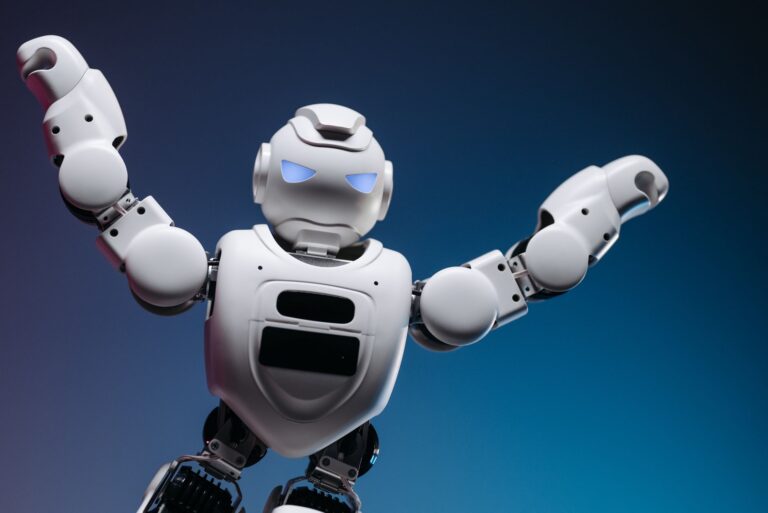
Pudu Robotics’ design moves past the single-purpose robot model that dominated earlier hospitality automation. Rather than deploying one humanoid to greet guests and stopping there, the system orchestrates multiple robot types working under a centralized AI coordinator. Reception robots handle check-in. Delivery robots move items through corridors and guest rooms. Cleaning robots manage the property daily.
Kitchen robots prepare and plate food. The unified platform ensures these systems communicate and sequence work without human intervention—a guest orders breakfast and the kitchen robot must time delivery to match housekeeping’s room exit. This differs fundamentally from hotels like those in Japan that integrated isolated robots into largely human-staffed operations. When a Tokyo hotel famously laid off half its robot workforce, it was because individual robots couldn’t coordinate with human staff efficiently. The Pudu model assumes robots as the primary labor source, requiring software layers that anticipate failures and reroute tasks when a robot malfunctions. For example, if a delivery robot breaks down mid-route, the system must reassign that task to another robot without human oversight, a coordination problem far more complex than deploying a single novelty robot.
The Technical Architecture and AI Coordination Challenge
The unified AI platform represents the genuine innovation here. Pudu must solve problems that traditional hotel software never encountered. How do you coordinate delivery timing so robots don’t collide in hallways? How does the system maintain guest privacy when multiple robots enter rooms? How do you handle exceptions—a guest requests immediate room service at 3 a.m., but the kitchen robot is in maintenance mode? Standard hotel management systems assume human staff can improvise; this system cannot. The trials starting in late 2026 will stress-test this coordination in real conditions before full opening.
Check-in and autonomous delivery specifically were chosen as early trial focuses because they represent the highest-volume, most predictable tasks—ideal starting points for validation. The limitation here is data quality; the AI system learns from guest interactions, but hotel operations are rare enough that Pudu cannot simply train on historical hotel data. Every system will operate in a partial learning state, making early 2027 a live experiment rather than a proven solution. If coordination failures occur during peak occupancy, the hotel lacks the human staff depth to quickly recover—a risk absent from human-centered hotels that can temporarily redirect available staff.
Robot Roles Across Guest Experience
The robot division of labor spans guest arrival through departure. Reception robots greet guests, process check-in documentation, and issue room keys or door codes. Room service robots deliver meals, fresh linens, and amenities requested through the guest app or voice interface. Cleaning robots handle daily housekeeping between guests and deep-clean public spaces. Kitchen robots plate and prepare dishes sent from a centralized food service. Guest-support robots field questions about facilities, recommend restaurants outside the hotel, and troubleshoot room issues like temperature or connectivity problems. Each robot type is purpose-built rather than a single humanoid attempting multiple tasks.
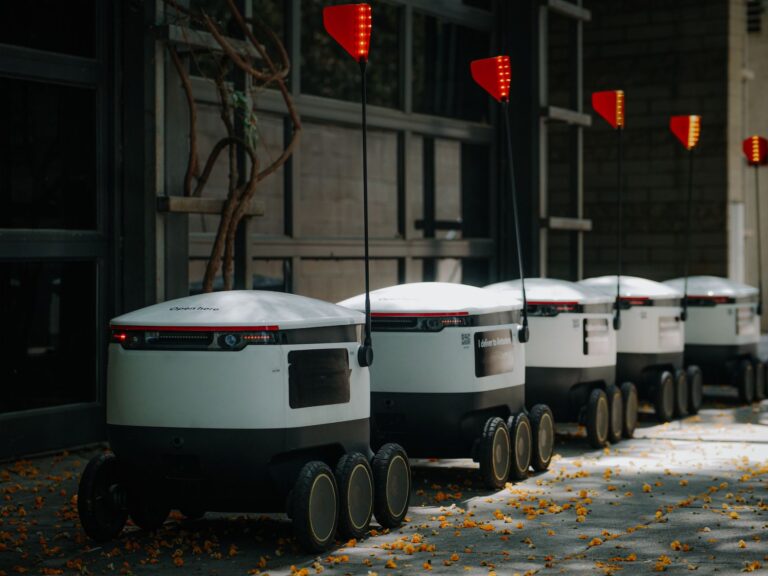
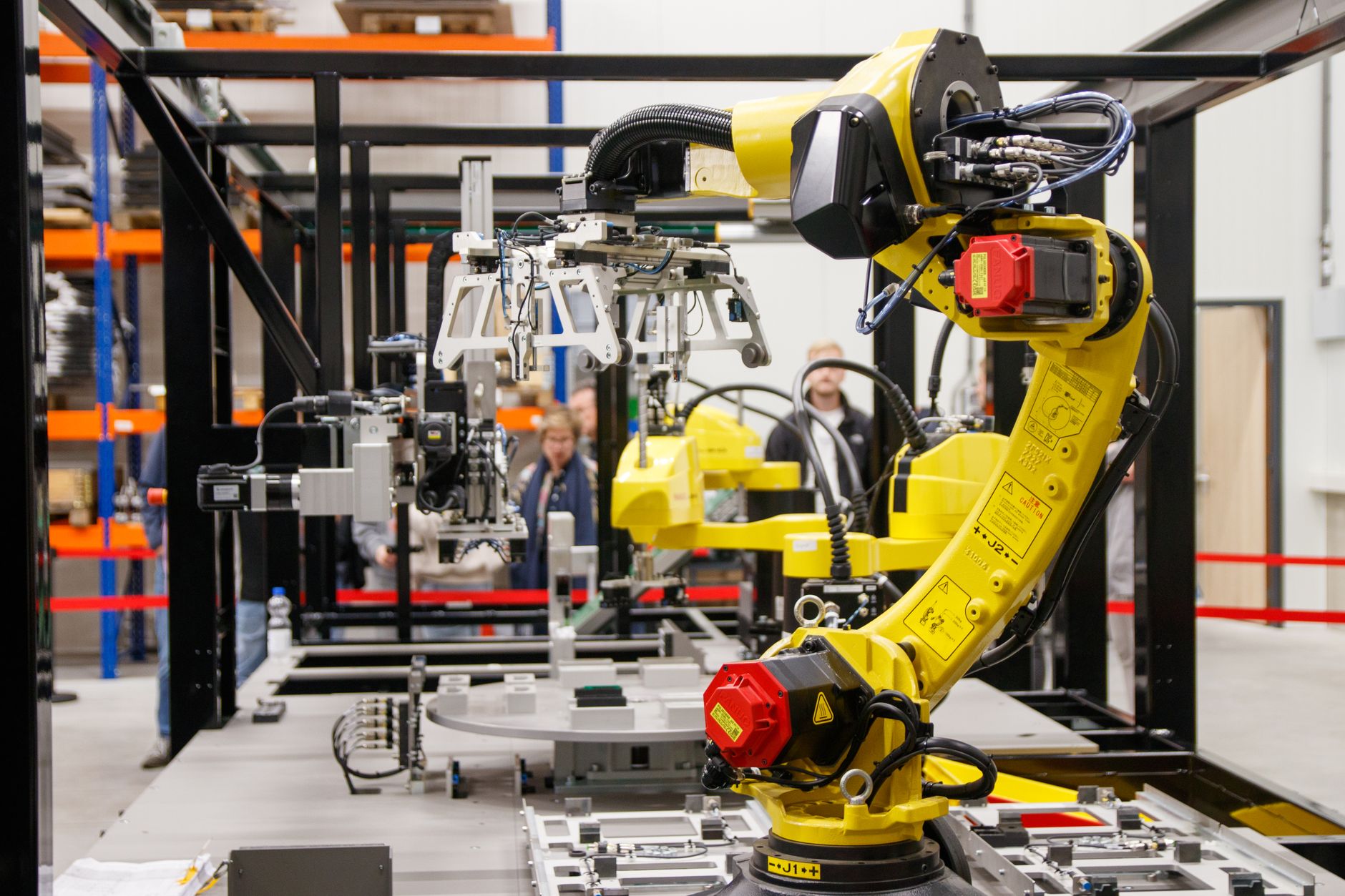
A delivery robot is a three-foot wheeled platform with cargo capacity but no upper-body manipulation. A cleaning robot is a compact autonomous vacuum with mop attachments and chemical reservoirs. A kitchen robot has precise arm articulation suited to plating but no mobility across distance. This specialization improves reliability—a delivery robot cannot be called upon to cook—but creates dependency on system coordination. If the food-delivery connection fails, guests receive cold meals. If the delivery-routing system sends a robot to the wrong floor, correction requires human dispatcher intervention, a role the hotel claims to eliminate entirely. The actual staffing model for 2027 has not been disclosed; early hints suggest some human staff will remain for exception handling, undercutting the “fully robotic” marketing claim.
Timeline and Pre-Launch Testing Strategy
The development timeline segments into clear phases. West Artificial Island itself opened in December 2025, providing the physical infrastructure and an audience of workers and early visitors for testing. Pudu’s late 2026 trials will deploy check-in and delivery robots in controlled scenarios, likely during off-peak hours or in designated zones. This staged approach mirrors how self-driving cars have rolled out—limited pilots precede full deployment. The difference is stakes: a self-driving car failure injures occupants.
A hotel robot failure frustrates guests but has lower injury risk, which may accelerate Pudu’s willingness to run trials with live guests. The 2027 opening date is firm according to partnership statements, but hotel openings routinely slip due to regulatory approval, guest-safety certification, and liability insurance requirements that robotics ventures have never navigated. No hotel has operated without human staff; no liability framework exists for a guest injury caused by a malfunctioning robot where no human was present to intervene. Pudu will need Chinese regulatory approval, which may accelerate faster than in Western regulatory environments, but still represents an unknown delay vector. The hotel’s 44 rooms are deliberately modest—large enough to showcase a full operation, small enough to manage complexity if rollout reveals coordination failures.
Limitations and Edge Cases in Robotic Hospitality
Robot systems struggle with exceptions and ambiguity—precisely what hospitality requires. A guest suffers a medical emergency; which robot responds and what is its protocol? A guest’s room card fails to open the door; the reception robot cannot physically help like a human concierge. Guests traveling with children or pets may find robot-only service dehumanizing or inadequate. Customization requests beyond the robot system’s training dataset—”I need an allergy-free meal prepared a specific way”—default to voice interface options with no guarantee of proper execution. The hotel’s guest base will likely skew toward novelty seekers and business travelers indifferent to hospitality flair, not guests seeking personalized service. The labor displacement narrative is also worth examining candidly.
Pudu and partners frame this as innovation; existing hotel workers in Shenzhen see it as unemployment. The 44 rooms represent perhaps 30-50 eliminated housekeeping, dining, and service jobs. If this model spreads, the global hotel industry would shed millions of roles, with no announced retraining program. The hotel technology sector has historically moved slowly on automation precisely because labor costs in many regions remain low enough that robots offer no economic advantage. West Artificial Island and Shenzhen’s premium positioning allows Pudu to charge rates that justify $10 million in robotics infrastructure; the same hotel in a rural area or developing economy might remain human-staffed indefinitely. This trial is possible only because of geography and wealth concentration.
Industry Precedent and Competitive Pressure
No hotel has attempted full robotic staffing before, making this a genuine frontier. Henn-na Hotel in Nagasaki, Japan, pioneered the novelty-robot concept starting in 2015 but maintained extensive human staff; it later downscaled robots after efficiency declined. The Mitsui Garden Hotel in Tokyo deployed robots for luggage handling alongside human concierges. These precedents show that previous attempts integrated robots into existing service models rather than replacing the entire model.
Pudu’s departure from this pattern—attempting replacement rather than augmentation—means no playbook exists for the operational, safety, and customer-experience challenges the hotel will encounter. Competitors in robotics and hospitality will watch intently. If Pudu succeeds, Alibaba and other major Chinese tech companies have the capital to replicate the model in Shanghai, Beijing, and beyond. If Pudu fails—technical coordination breaks down, guest safety incidents occur, regulatory scrutiny stalls expansion—Western hotels may feel vindicated delaying robotic labor investments. The hotel thus functions as both innovation showcase and high-stakes industry test, with Pudu’s reputation and future funding rounds attached to execution.
West Artificial Island’s Role in the Flagship Project
The location underscores this project’s symbolic importance. West Artificial Island opened in December 2025 as a major infrastructure achievement connecting Shenzhen and Zhongshan via the ShenZhong Link, a cross-sea transportation corridor. The island hosts tourism infrastructure designed to showcase cutting-edge technology and culture. Placing a fully robotic hotel there brands Pudu Robotics alongside national development ambitions—this is not a private company gambling on an experiment but a visible component of regional modernization narrative.
The hotel’s opening in 2027 will coincide with the island’s maturation as an established destination, maximizing the audience for this operational debut. The partnership structure reflects this positioning. Pudu Robotics collaborates with Shenzhen Culture & Tourism Industry Development, a government entity, ensuring the project receives permitting priority and potential subsidies. This public-private alignment accelerates timelines and reduces financing risk compared to independent hotel ventures. The 44-room capacity—deliberately small—allows Pudu to maintain high margins and recover robotics investment quickly if occupancy rates remain elevated, which they likely will given the novelty factor and premium positioning.