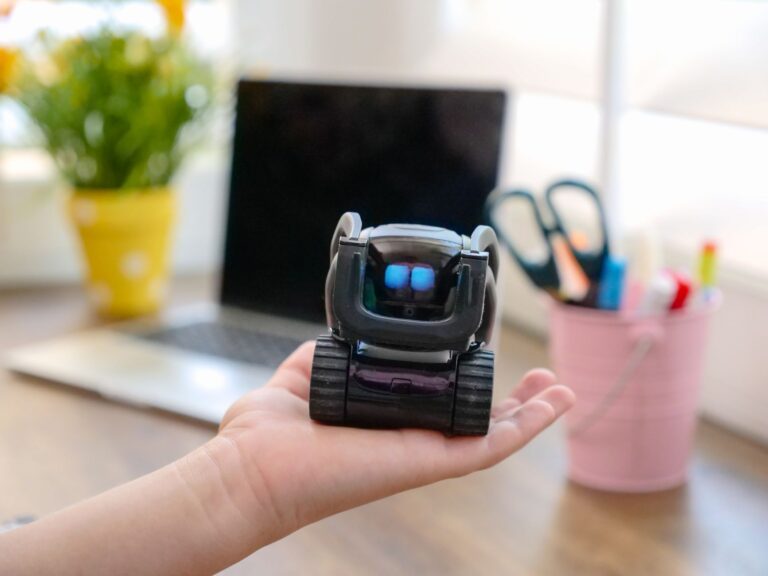

Computer vision robotics in 2026 means robots that use cameras and AI to navigate, pick, and work near people. Warehouse crews, auto-plant teams, developers, and buyers are most affected, with scaled deployments and new safety tests setting the next moves. Vision-guided systems now handle aisle navigation, shelf picking, mapping, and humanoid control. Buyers can act by matching the task to proven performance, safety rules, and limits in lighting and clutter.
Table of Contents
- Who is using vision robots now?
- What tools help developers build vision-to-action?
- Which safety and market rules apply?
- Where does vision still fail?
- What should buyers do before deployment?
Who is using vision robots now?
Warehouse operators are deploying vision-guided mobile robots at scale in 2026. Technology Org reports higher picking efficiency from Locus collaborative robots, while Brightpick units navigate aisles and pick from shelves with vision and real-time mapping in the warehouse operations report. The impact falls on pick teams, supervisors, and fulfillment managers who plan labor, layout, and throughput.
Auto plants are testing humanoids alongside fixed automation. Figure AI says Figure 02 humanoids helped build 30,000 cars at BMW Spartanburg and will retire from BMW as Figure 03 moves toward operational readiness. That shift affects line workers, plant engineers, and integrators who handle task design, safety zones, and changeover.
What tools help developers build vision-to-action?
Developers gained open training and teleoperation tools for humanoids in July 2026. Robotics and Automation News reports NVIDIA and Hugging Face added the open Isaac GR00T 1.7 vision-language-action model and Isaac Teleop to LeRobot in the LeRobot expansion report. Teams can collect demonstrations, train vision-to-action policies, and test control without closed tooling.
Hardware is also consolidating sensing for humanoids. STMicroelectronics and Leopard Imaging introduced a multimodal vision module on March 16, 2026 with imaging, 3D mapping, and motion sensing. The module uses NVIDIA Holoscan Sensor Bridge for native Jetson and Isaac use, which simplifies integration for navigation and manipulation.
Which safety and market rules apply?
U.S. buyers face updated robot safety practice. Design World and A3 reporting summarizes ANSI/A3 R15.06-2025, which adopts ISO 10218-1:2025 and -2:2025 for vision-integrated robots. Manufacturers, integrators, and end users must complete risk assessments and use personnel safety protocols.
EU market access adds AI compliance timing. Reuters reports vendors selling AI safety components face high-risk duties, with transparency duties from Aug. 2, 2026, while Annex III deadlines move to Dec. 2, 2027 and embedded-machinery systems to 2028 under Regulation 2026/1744 in the EU market-access analysis. Product teams should map whether their vision function is a safety component and track the applicable date.
Where does vision still fail?
Computer vision degrades in busy, changing scenes. A 2024 inspection-robot study in Nature Scientific Reports found varying lighting and object occlusions hurt segmentation, point clouds, and grasps in the inspection study. That means a demo in clean light may not predict aisle performance.
The practical limit is reliability across shifts and seasons. Dust, glare, shifted stock, mixed packaging, and blocked views can turn a correct map into a missed pick. Operations teams should test day and night lighting, peak clutter, and partial occlusion before setting speed targets.
What should buyers do before deployment?
NIST's Measurement Science for Robotics program with ASTM develops test methods for 3D vision and bin-picking performance. Buyers should require standardized checks for accuracy, field of view, and reliability before deployment.
Vendor claims need repeatable numbers from the same parts, bins, distances, and light levels. Use a short purchase checklist:.
- Define the task, parts, cycle time, and failure budget in writing.
- Require test data for accuracy, missed picks, and false detections.
- Test lighting changes, occlusions, and restocked shelves on site.
- Confirm risk assessment, guarding, stop functions, and staff training.
You Might Also Like
- Tutorials and DIY Robotics Explained for 2026: Who It Affects, Key Evidence, and What to Do Next
- Simulation Digital Twins Robotics Explained for 2026: Who It Affects, Key Evidence, and What to Do Next
- Sensors and Perception Robotics Explained for 2026: Who It Affects, Key Evidence, and What to Do Next