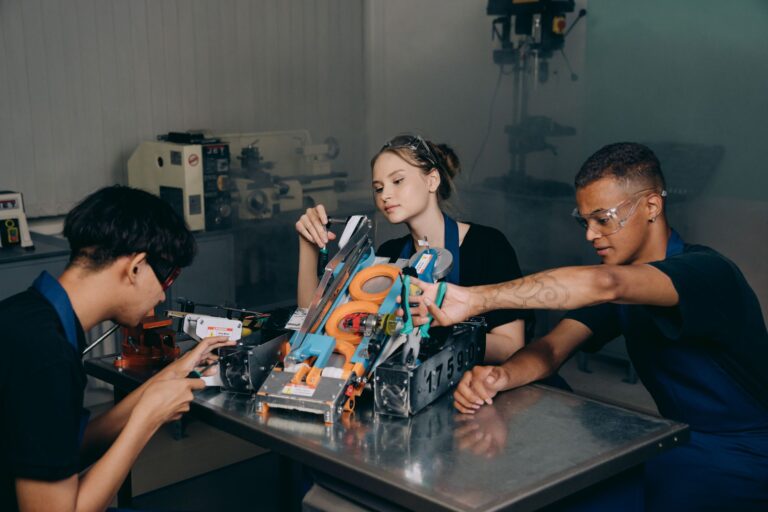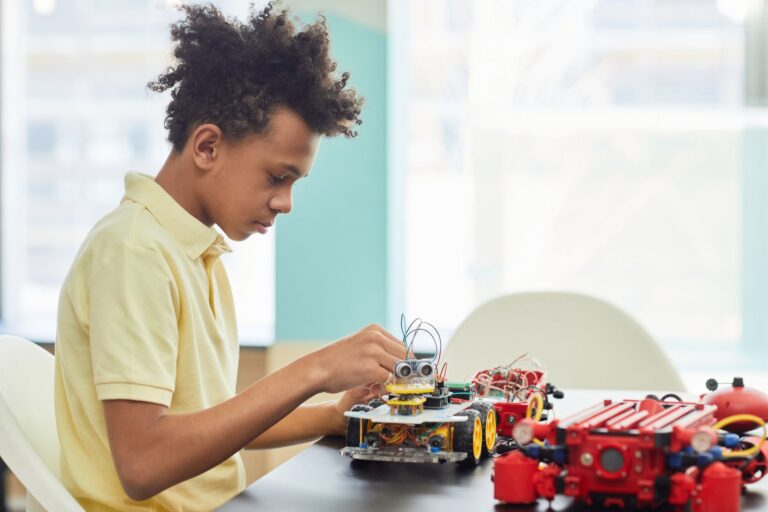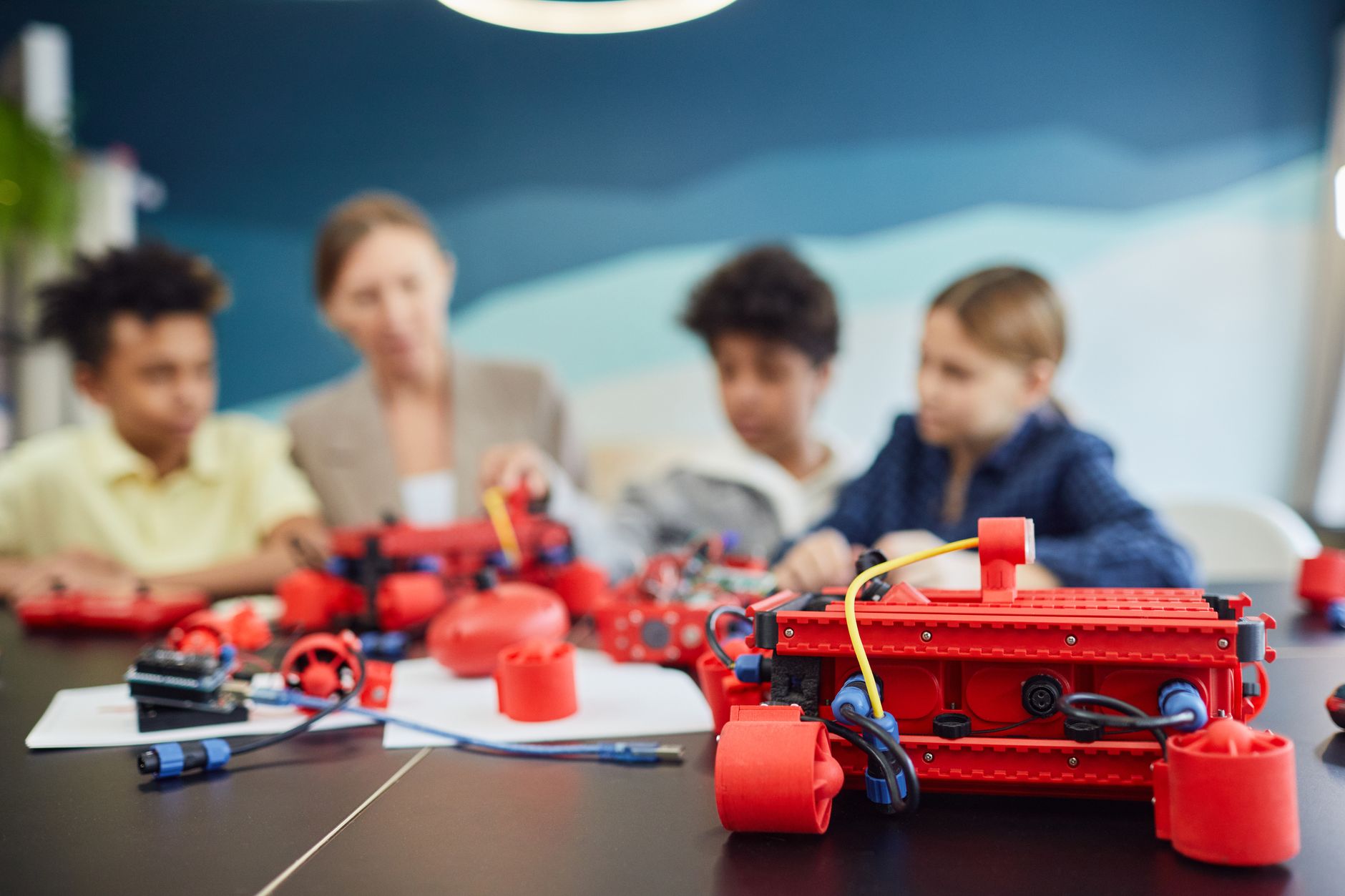

There was no single sector-wide education robotics update in August 2026. Instead, competition changes, platform upgrades, policy guidance, grants, and campus projects created several decisions for schools. Education robotics means using programmable machines to teach subjects such as engineering, computing, and automation. The immediate priorities are managing the FIRST LEGO League transition, applying stronger technology safeguards, and budgeting beyond advertised grant amounts.
Table of Contents
- FIRST LEGO League enters a two-track transition
- Platforms improve, but adoption standards get stricter
- Teacher preparation and university robots widen the field
- Funding helps, but rarely covers a complete program
- What should schools watch next?
FIRST LEGO League enters a two-track transition
FIRST LEGO League began a hardware transition in August. LEGO Education is running the SPIKE-based Founders Edition alongside a new Future Edition built around computer science hardware, according to the FIRST LEGO League update from LEGO Education. That parallel structure creates practical questions for schools. Teams may need to support different equipment, training materials, and competition expectations during the same transition period.
Coordinators should confirm which edition local events will accept before buying kits or revising lessons. The longer-term issue is partnership continuity. LEGO Education says it will not renew its FIRST partnership after the 2026–27 season and plans to operate its own competition season for 2027–28. Schools should avoid assuming that current event structures, volunteer networks, or purchasing choices will carry forward unchanged. Before committing funds, ask suppliers and event partners how hardware, registration, curriculum, and local tournaments will be supported after 2026–27.
Platforms improve, but adoption standards get stricter
Carnegie Mellon robotics Academy scheduled a CS2N platform refresh for August 31. CS2N, an online learning and classroom-management platform, is gaining a redesigned dashboard, better mobile support, faster group-progress processing, notifications, and OpenID Connect single sign-on. Single sign-on can reduce separate accounts and password problems for district users. Faster progress processing and notifications may also help teachers manage several classes, but schools still need to test rostering, identity integration, accessibility, and data handling in their own environments.
New federal guidance raises the standard for evaluating classroom technology. The U.S. Department of Education's August 20 guidance tells states and districts to consider instructional value and evidence while preserving educator judgment, parent transparency, accessibility, and student-data protection. For robotics buyers, an impressive demonstration is not enough. A defensible review should establish what students will learn, how teachers remain in control, what data the system collects, and whether every student can use it.
Teacher preparation and university robots widen the field
Howard University's robotics Academy of Practice is preparing eight K–12 educators each summer. The three-week program moves from simulation to physical hardware and targets underrepresented school districts in the Washington area. That model addresses a common constraint: equipment has limited value when teachers lack time and confidence to integrate it. Its small cohort also limits immediate reach, so districts may need their own mentoring, release time, and follow-up support.
Georgia Southern University added a humanoid robot for shared undergraduate projects, master's theses, and faculty research. Planned work spans human-robot interaction, machine learning, and autonomous navigation. This signals a broader change in higher education. Robotics training is expanding beyond fixed industrial machines toward systems that perceive, move through, and interact with human environments. Access still matters: one shared platform can support several disciplines, but scheduling, supervision, maintenance, and safety determine how many students gain meaningful hands-on time.
Funding helps, but rarely covers a complete program
Alabama public-school systems can apply for grants of up to $3,500 per school for qualifying robotics programs. Applications are due September 30, according to the Alabama AMSTI robotics grant page.
The grant excludes computers, tablets, travel, and competition fees. A school could therefore receive equipment funding and still lack the devices, transportation, or event budget needed to run the intended program. Build a full-cost worksheet before applying:.
- Separate eligible robotics purchases from excluded expenses.
- Confirm that existing computers or tablets meet the program's needs.
- Budget for replacement parts, storage, teacher training, and supervision.
- Price travel, registration, and competition fees independently.
- Identify which costs remain if the grant is not renewed.
What should schools watch next?
Competition continuity deserves the closest attention. Schools should track local decisions about Founders Edition and Future Edition events, then request written information about hardware support beyond the 2026–27 season. Technology reviews should also test claims of autonomy.
Current robots still struggle to interpret complex, changing environments reliably, according to the National Science Foundation. Good programs should teach sensing limits, uncertainty, safety procedures, and human oversight instead of presenting robots as universally independent. For decisions already on the calendar, use a short readiness check:.
- Verify which competition edition local organizers will support.
- Map every platform to district identity, privacy, and accessibility requirements.
- Pair equipment purchases with teacher preparation and classroom time.
- Treat humanoid systems as supervised teaching and research tools.
- Submit qualifying Alabama grant applications by September 30 without including computers, tablets, travel, or competition fees.