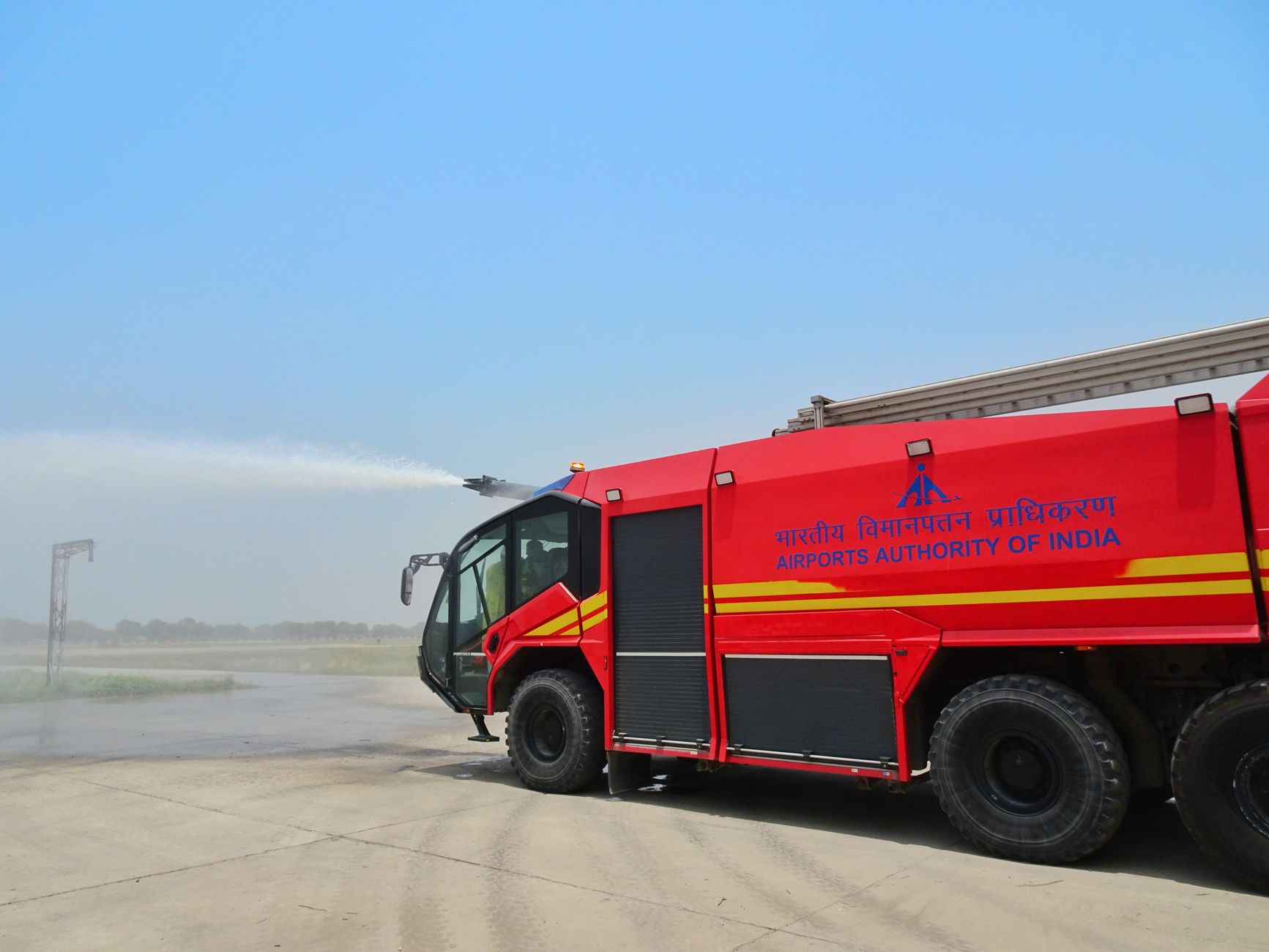

The Airports Authority of India (AAI) — the state-owned body that operates most of the country's airports — is funding 20 STEM and robotics laboratories in government schools across Gujarat under its Corporate Social Responsibility programme. According to India CSR's report on the initiative, the labs are expected to reach more than 10,000 students. The programme works by placing physical lab equipment inside existing government schools and pairing it with teacher training and ongoing technical support, rather than by building standalone centres. It was formally launched on 7 October 2026, and the delivery work is handled by an NGO partner rather than by airport staff.
Table of Contents
- Where the 20 labs are going
- What students actually do in the labs
- Who runs the programme, and who funds it
- Teacher training is the part that decides whether this works
- How the 10,000-student figure should be read
- Why an airport operator funds school robotics
- Frequently Asked Questions
Where the 20 labs are going
The labs are spread across three Gujarat districts — Gandhinagar, Mehsana and Mahisagar — rather than concentrated in a single city. That placement matters for anyone tracking robotics-education access, because it puts the facilities in semi-urban and rural school catchments where hands-on technical equipment is usually thinnest.
Mahisagar in particular is a largely rural district, and Mehsana sits well outside the Ahmedabad–Gandhinagar urban core. Spreading 20 labs over three districts means roughly six or seven schools per district, so this is a seeded network rather than saturation coverage of any one area. The launch event took place at Swami Vivekanand Vidhya Vihar in Gandhinagar, where the Eastern Herald reported that school's STEM and robotics laboratory was inaugurated as the first of the set.
What students actually do in the labs
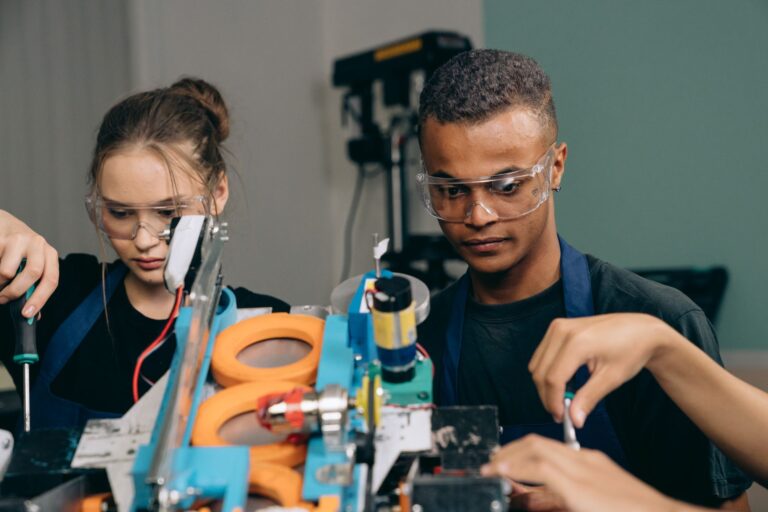
The labs are built around construction and experiment rather than demonstration. Students build working models, run robotics experiments and test scientific principles directly, with the stated aim of giving them the practical exposure that government-school science teaching typically cannot provide. That distinction is the substantive one in school robotics.
A lab that exists to be shown to visitors produces very different outcomes from one where a class of thirty students each gets build time on a chassis, a controller and a set of sensors. The programme's description points at the second model. For readers evaluating similar projects, the useful questions are the same ones this design implies:.
- How many students share each kit, and how often does each student get hands-on time?
- Is the activity tied to the syllabus the students are already examined on, or does it sit outside it?
- Who repairs a broken kit, and how long does a school wait?
- Does the teaching staff change the activities over time, or run the same starter builds each year?
Who runs the programme, and who funds it
AAI is the funder; it is not the operator. The labs are implemented on the ground by the NGO Ghoomar Kala Evam Shiksha Seva Sansthan, according to Business News This Week, which means the school-level activity is run by a dedicated delivery partner rather than by airport personnel. That split is normal in Indian CSR and it is worth understanding before judging the project. The funder sets the scope and sanctions the money; the implementing partner recruits trainers, installs equipment, schedules sessions and absorbs the day-to-day friction of working inside a government school calendar. On the funding side, the initiative was approved through AAI's Head Office CSR Committee, with India CSR crediting V. K.
Gupta and Amit Agrahari, CSR Secretary, AAI. So this is a centrally sanctioned corporate project, not a discretionary donation from one airport's local budget — which generally means a defined scope and a defined review path. Locally, V. K. Seth, General Manager (ATM) and Officer-in-Charge of AAI at Sardar Vallabhbhai Patel International Airport, Ahmedabad, inaugurated the Gandhinagar lab. The programme therefore has both head-office sanction and a named local AAI office attached to it.
Teacher training is the part that decides whether this works
AAI's support extends past hardware to structured teacher training, student engagement programmes and ongoing technical support. That is the component most worth watching, because it is what determines whether the equipment is still in use a year after installation. School robotics programmes fail in a predictable way.
The kits arrive, one enthusiastic teacher runs sessions, that teacher transfers or takes on an exam-year class, and the boxes go into a cupboard. A programme that funds training and continuing technical support is explicitly designed against that outcome; a programme that funds only hardware is not. The practical test, roughly a year out, is simple: how many of the 20 labs are running regular timetabled sessions, and how many trained teachers per school are still at that school. Those two numbers say more about the programme than the headline student count does.
How the 10,000-student figure should be read
The "more than 10,000 students" figure is a coverage number — the student population the 20 schools serve — not a count of students who have completed a robotics course. Across 20 schools that averages about 500 students per school, which is an ordinary enrolment for a government secondary school.
Reach of that kind is a reasonable way to describe a facility available within a school. It is not the same as contact hours, and the two should not be used interchangeably when comparing this against other STEM interventions. A lab that serves one section intensively and a lab that rotates every class through once a term both report the same reach.
Why an airport operator funds school robotics
Education is a long-standing AAI thrust area rather than a new direction. AAI's CSR policy covers school infrastructure and vocational training in rural and urban-slum areas, and the policy was most recently revised in October 2025. Indian companies above defined size, profit or net-worth thresholds are required to spend a share of profits on CSR, and education is among the permitted activity areas.
For a large public-sector operator, school infrastructure in districts near its own operations is a well-trodden way to deploy that budget. For readers in robotics and automation, the practical opening is the delivery side. Equipment vendors, curriculum providers and trainers working with Indian school programmes should be tracking the implementing NGO and AAI's CSR committee, because those are the two parties that decide what goes into the next set of labs — and the approval sits at head office, where a three-district pilot can become a larger sanction.
Frequently Asked Questions
When did the programme start?
It was formally launched on 7 October 2026 at Swami Vivekanand Vidhya Vihar in Gandhinagar, where the first STEM and robotics laboratory was inaugurated.
Which districts are covered?
Gandhinagar, Mehsana and Mahisagar. The 20 labs are divided across government schools in all three rather than placed in one city.
Does AAI run the labs itself?
No. AAI funds the programme and the NGO Ghoomar Kala Evam Shiksha Seva Sansthan implements it in the schools.