
Most people reach a working skill level in robot programming in anywhere from one week to two years, depending on what "robot programming" means for their goal. A factory technician learning to run a pre-built FANUC routine can finish in days; someone building autonomous navigation software in ROS needs months of structured study, and a career technician role typically expects a multi-year degree behind it. The timeline hinges on which kind of robot programming a person is after: industrial robot operation, the ROS/ROS2 software stack used in research and advanced automation, or a formal technician or engineering credential. Each path has a different realistic floor, and knowing which one applies avoids both under- and over-investing time.
Table of Contents
- It Depends on Which Kind of "Robot Programming" You Mean
- Industrial Robot Programming: Days to Weeks
- Learning ROS or ROS2: Weeks to a Few Months
- Combining Code and Hardware: A Structured Certificate
- When the Goal Is a Job Title, Not Just a Skill
- Frequently Asked Questions
It Depends on Which Kind of "Robot Programming" You Mean
"Robot programming" covers at least three distinct skills, and they take wildly different amounts of time. The first is operating and programming an industrial robot arm on a factory floor — teaching it motion paths, grippers, and vision systems through a manufacturer's interface. The second is ROS (Robot Operating System) or its successor ROS2, the open-source software framework used to write control, navigation, and perception code for mobile robots, drones, and research platforms.
The third is a full technician or engineering credential that combines both with electronics, mechanics, and general programming. A person asking "how long to learn robot programming" usually means one of these, not all three. Someone aiming to run a manufacturing cell needs a very different, much shorter path than someone trying to write navigation software for a mobile robot.
Industrial Robot Programming: Days to Weeks
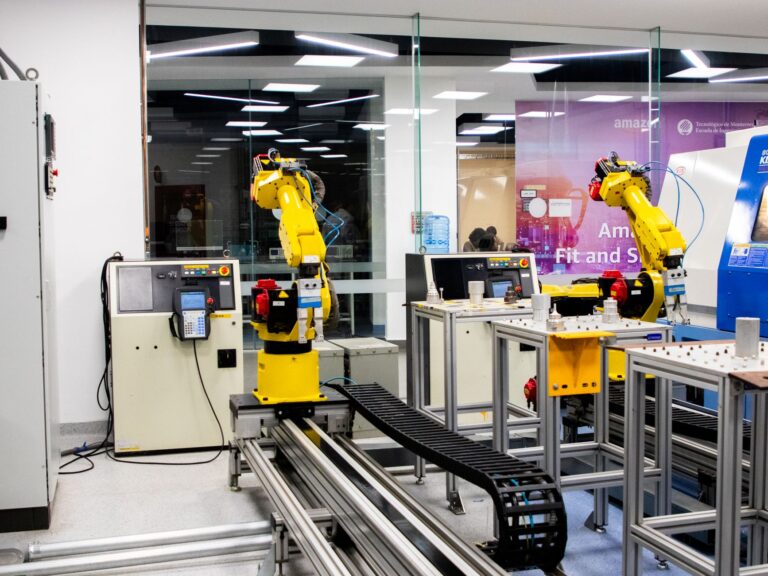
Learning to program a specific industrial robot brand is the fastest path, and vendor-certified courses measure it in days or single-digit weeks. Jackson State Community College's FANUC "Handling Tool Operation and Programming" course runs 32 contact hours and costs about $2,236, awarding a FANUC CERT I credential; Monroe Community College runs the identical 32-hour course over four Saturdays for the same certification. Vantage Career Center's FANUC pathway moves even faster for a working credential: a 20-hour introductory course followed by a 40-hour Handling Pro course, which the center says can be completed in one week of training.
For a more complete skill set, Macomb Community College bundles 120 hours across operations, ROBOGUIDE simulation, advanced operations, and iRVision 2D into a full FANUC robot programmer pathway ending in two certifications. These programs assume no prior robotics background and teach the manufacturer's own programming interface rather than general-purpose code. They are the right choice for someone targeting a manufacturing or systems-integration job on a specific robot line, not someone who wants to write robotics software from scratch.
Learning ROS or ROS2: Weeks to a Few Months
Software-focused robot programming — writing the code that controls perception, navigation, and motion planning — runs longer because it builds on general programming skills. At the short end, a corporate training course titled "ROS: Programming for Robotics" from NobleProg packs an introduction into three days (21 hours) with a completion certificate, and Delft University of Technology's edX course ROS1x covers robot programming with ROS in a self-paced 7-week format. For a fuller specialization, Coursera's "Mastering ROS 2 for Robotics Programming" is listed as a self-paced program lasting 3 to 4 months and awards a certificate on completion.
The Construct's 2026 Robotics Developer Masterclass goes deeper still: 240 hours of ROS/ROS2 training that can be finished in 3 months at 20 hours a week, or stretched to 12 months at 5 hours a week, with a certificate tied to passing a final project. The spread between these options comes down to depth, not just pace. A 21-hour course introduces the framework's concepts; a 240-hour masterclass builds toward an independent final project, which is a meaningfully different skill level.
Combining Code and Hardware: A Structured Certificate
Some learners want both the Python/software foundation and the ROS2 layer in one sequence rather than stitching courses together. Northwest Nazarene University's non-degree robotics certificate does this as an 8-week, two-course sequence — Python first, then ROS2 — priced at $1,850 tuition.
That timeline sits between the single-skill vendor courses and the multi-month software specializations, because it is building a foundation rather than assuming one. This kind of sequencing matters for anyone starting with no programming background at all. Jumping straight into a ROS2 specialization without basic Python is the most common reason a stated "3-4 month" course stretches much longer in practice.
When the Goal Is a Job Title, Not Just a Skill
If the end goal is an actual robotics technician role rather than a standalone skill, the realistic timeline is longer than any single course. The U.S. Department of Labor's O*NET profile for Electro-Mechanical and Mechatronics Technologists and Technicians — the occupational classification covering robotics technician work — lists an associate's degree as the most common entry-level requirement, with programs typically running one to two years.
At the far end, a full robotics engineering degree is a multi-year undertaking. Worcester Polytechnic Institute became the first U.S. university to offer a Bachelor of Science in Robotics Engineering when it launched the program in fall 2007, establishing robotics as its own four-year engineering discipline rather than a specialization bolted onto mechanical or electrical engineering. A short certificate and a four-year degree are not competing answers to the same question — they answer different ones, and matching the course length to the actual goal is what prevents wasted time either direction.
- Want to run a specific industrial robot on the job: days to a few weeks (vendor certificate)
- Want to write ROS/ROS2 software: a few weeks to four months (course or specialization)
- Want a technician job title: one to two years (associate degree)
- Want a robotics engineering career: four years (bachelor's degree)
Frequently Asked Questions
Can someone learn robot programming without any coding background first?
Programs like Northwest Nazarene University's certificate build this in deliberately, starting with an 8-week sequence that teaches Python before moving into ROS2, rather than assuming prior coding skill.
Is a college degree required to program industrial robots?
No — vendor certificate paths like FANUC's 32-hour Handling Tool course or Vantage Career Center's one-week pathway teach the manufacturer's programming interface directly, with no degree prerequisite.
Why do ROS course lengths vary so much, from days to months?
They cover different depth. NobleProg's 3-day course is an introduction, while The Construct's 240-hour masterclass builds toward an independent final project, which takes far longer to reach.