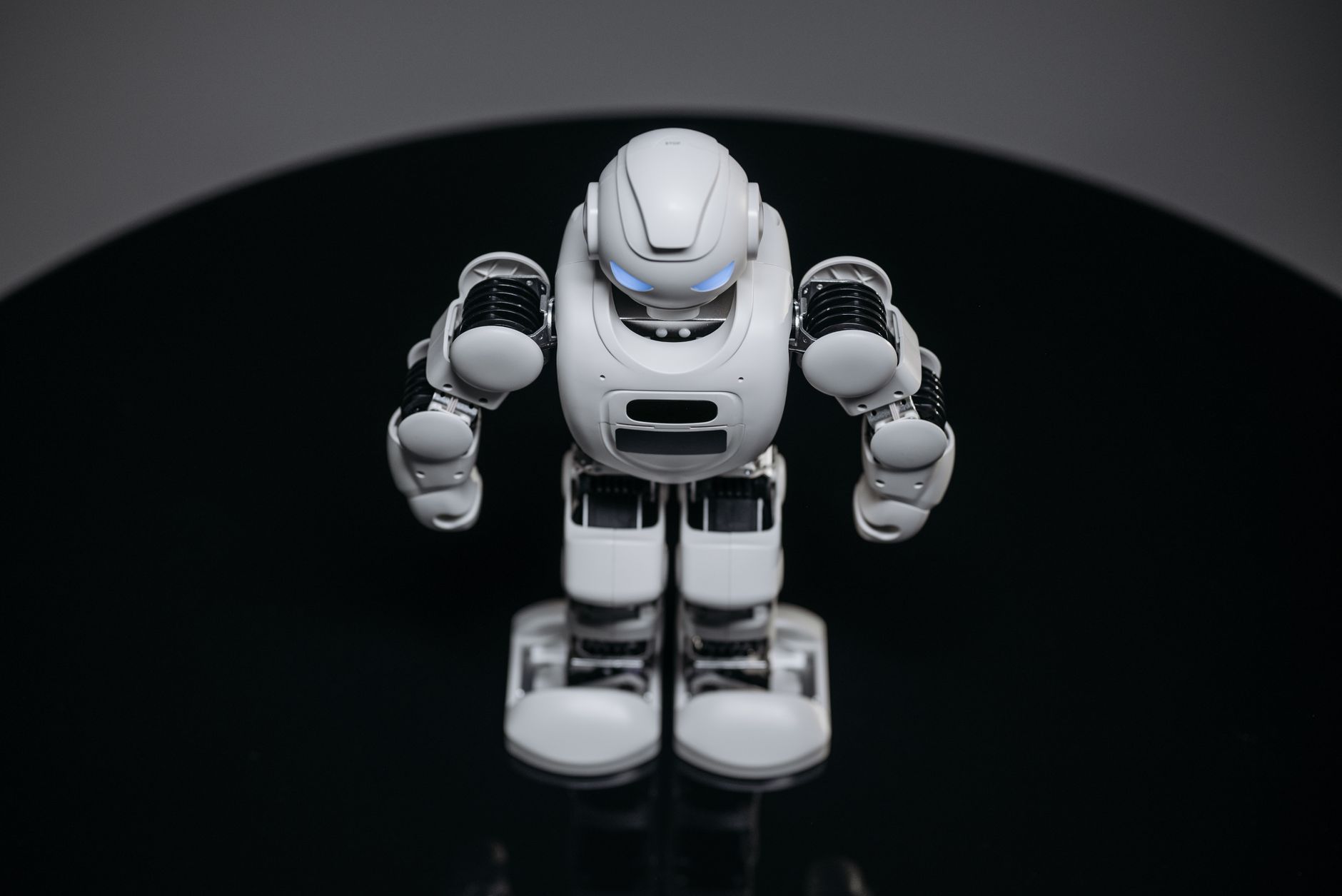

The U.S. government needs a comprehensive regulatory framework for humanoid robots that balances innovation with public safety, worker protection, and accountability. Currently, humanoid robots operate in a patchwork of existing regulations designed for traditional machinery, autonomous vehicles, and labor standards—none of which adequately address the specific risks and opportunities these machines present.
Six key policy recommendations can guide federal action: establishing mandatory safety certification standards before deployment, requiring impact assessments for workplace automation, clarifying liability chains between manufacturers and operators, setting transparency requirements for AI decision-making, protecting worker displacement through retraining support, and creating oversight mechanisms that evolve with the technology. The urgency of this regulatory work is real. Humanoid robots like Boston Dynamics’ Atlas and Tesla’s Optimus are already entering warehouses, manufacturing facilities, and construction sites in pilot programs. Without clear rules before widespread adoption, companies will continue operating in a compliance gray zone, workers will lack protections, and incidents—whether safety failures or misuse—will force reactive legislation that often stifles innovation while failing to prevent harm.
Table of Contents
- What Safety Standards Should Apply to Humanoid Robots?
- How Should Employment Impact Be Assessed and Managed?
- Who Is Liable When a Humanoid Robot Causes Harm?
- What Transparency Requirements Should Govern Humanoid Robot Operations?
- How Should Data Privacy and Surveillance Risks Be Managed?
- What Standards Should Apply to Humanoid Robots in Public Spaces?
- Which Federal Agencies Should Oversee Humanoid Robot Regulation?
- Frequently Asked Questions
What Safety Standards Should Apply to Humanoid Robots?
humanoid robots require safety certification protocols distinct from traditional industrial machinery because they operate unpredictably in shared spaces, make real-time decisions, and interact with human workers and the public. Current standards like ISO 10218 (industrial robot safety) assume fixed workspaces and predictable movement; humanoid robots often work in dynamic environments where humans are present, requiring human-following capabilities, obstacle detection, and emergency response systems that existing standards don’t comprehensively address.
The Federal government should mandate that any humanoid robot operating in a workplace, public space, or near humans passes third-party safety testing covering mechanical failure modes, sensor blind spots, and edge-case decision-making before commercial deployment. A concrete example: if a humanoid robot deployed on a construction site loses GPS calibration and misplaces a heavy object near workers, or a robot in a warehouse aisle malfunctions and traps a human in its mechanical grip, current regulations don’t clearly define whether the manufacturer, the facility owner, or the deploying company bears responsibility for ensuring the robot was safe to deploy in the first place. Establishing mandatory pre-deployment certification would create accountability and force companies to address these risks upfront rather than discovering them through litigation after incidents occur.
How Should Employment Impact Be Assessed and Managed?
humanoid robots will displace workers in specific roles—warehouse order-picking, simple assembly, material handling, and potentially customer-facing service jobs are all vulnerable. A responsible regulatory approach requires companies deploying humanoid robots at scale to conduct and file workplace impact assessments with the Department of Labor, detailing which jobs will be affected, how many workers may lose employment, and what transition support the company will provide. This is not about banning automation; it’s about creating visibility and accountability so displacement isn’t a surprise that catches workers and communities off-guard. The limitation here is that impact assessments can be gamed or minimized by companies, and federal enforcement of transition support is historically weak.
However, a mandatory reporting requirement at least creates a paper trail, enables local workforce development agencies to prepare retraining programs, and allows workers to organize and negotiate. Without it, companies can quietly phase out positions while labor departments and retraining programs scramble to respond after layoffs have already begun. Countries like France and Germany have experimented with robot taxes or retraining levies; the U.S. could require companies deploying humanoid robots above a certain scale to fund worker transition programs or contribute to a national automation adjustment fund.
Who Is Liable When a Humanoid Robot Causes Harm?
one of the murkiest policy questions today is liability. If a humanoid robot injures a worker, malfunctions and causes property damage, or is misused by its operator to harm someone, who is responsible: the robot’s manufacturer, the facility where it was deployed, the operator who programmed or triggered it, or the company that owns it? Without legal clarity, injured parties face years of litigation while companies hide behind claims that “the AI made the decision” or “the robot was operating as designed.” Federal law should establish a clear liability chain: manufacturers are responsible for design and safety defects; operators and facility owners are responsible for misuse, inadequate maintenance, and failure to follow safety protocols; and operators/owners can be held liable for harm caused by the robot’s decisions if they failed to disable the robot when it exhibited unsafe behavior.
Additionally, the law should prohibit manufacturers from disclaiming liability for known failure modes or from inserting arbitration clauses that prevent injured workers or the public from suing. This creates a strong incentive for manufacturers to over-design for safety and to be transparent about limitations. It also protects workers and the public from bearing the risk of a technology that benefits companies economically.
What Transparency Requirements Should Govern Humanoid Robot Operations?
If a humanoid robot makes a decision—whether to slow down, stop, or move around an obstacle; how to prioritize multiple conflicting instructions; or how it interprets and responds to human commands—there should be a record and a human-understandable explanation of how that decision was made. This is particularly critical in safety-critical environments like hospitals, construction sites, or public spaces. Regulations should require operators to maintain and provide, upon request, logs of a robot’s decisions and the reasoning or sensors that led to those decisions.
This creates accountability and enables investigation if something goes wrong. The practical tradeoff is that transparency requirements can slow down robot response times and create data storage burdens. However, the benefit—preventing a robot from operating as a “black box” that no one can audit or understand—outweighs the cost. Companies already maintain detailed logs for other systems; humanoid robots should be no exception.
How Should Data Privacy and Surveillance Risks Be Managed?
Humanoid robots deployed in workplaces will inevitably collect data about worker movements, interactions, productivity, and behavior. Without privacy guardrails, companies could use humanoid robots as surveillance tools—monitoring where employees go, whom they talk to, and how long they spend on tasks. Federal regulations should prohibit humanoid robots from collecting or storing personally identifiable data about individuals (their location, behavior patterns, conversations) without explicit consent, and should require that data collection be limited to what is necessary for the robot to perform its assigned task.
For example, a robot that delivers packages in a warehouse needs to know where packages are and where to deliver them; it does not need to track an employee’s daily movements or conversations. A critical limitation: workers may not feel they can meaningfully “consent” to surveillance if opting out means losing their job. Regulations should therefore prohibit retaliation against workers who refuse to have their data collected or who object to surveillance, and should give workers the right to review and challenge data about them that the robot has collected. This is especially important in low-wage, high-turnover industries where workers have little bargaining power.
What Standards Should Apply to Humanoid Robots in Public Spaces?
If humanoid robots are deployed to interact with the general public—in stores, transportation hubs, hospitals, or streets—an additional layer of regulation is needed because the public cannot opt out or negotiate with the robot’s operator. These robots should be required to clearly identify themselves as robots, display information about whom to contact if the robot malfunctions, and be programmed to refuse commands or requests that would violate laws or endanger people.
For example, a humanoid robot deployed as a security guard should not be able to unlawfully detain someone, use excessive force, or discriminate in whom it helps or monitors. The government should also require that public-facing robots undergo accessibility testing to ensure they can interact effectively with people who are deaf, blind, non-English speaking, or mobility-limited. A robot that only responds to voice commands excludes Deaf users; one that requires smartphone interaction excludes elderly or low-income users who don’t have phones.
Which Federal Agencies Should Oversee Humanoid Robot Regulation?
Oversight should be distributed across agencies with existing expertise: the Occupational Safety and Health Administration (OSHA) handles workplace safety, the National Highway Traffic Safety Administration (NHTSA) could oversee robots in transportation or public spaces, the Federal Trade Commission (FTC) should police deceptive practices and privacy violations, and the Department of Labor should track employment impact and enforce worker protection requirements. However, there should be a coordinating body—perhaps a Humanoid Robotics Task Force within the National Science and Technology Council—that ensures these agencies’ rules don’t conflict and that guidance evolves as the technology does.
No single agency has jurisdiction over all humanoid robot issues today, which is why many robots operate without coherent oversight. A coordinating task force with explicit statutory authority could issue joint guidance, track incidents across agencies, and recommend legislative updates as the technology and its risks become clearer.
Frequently Asked Questions
Do current occupational safety regulations cover humanoid robots?
Partially. OSHA’s machinery standards apply, but they assume predictable robot behavior and fixed workspaces. Humanoid robots that learn, move unpredictably, or operate in dynamic environments often fall into gaps where existing rules don’t apply clearly.
What happens if a humanoid robot injures someone but no regulation existed when it was deployed?
The injured party would likely sue the manufacturer and operator in civil court, but without clear liability standards, companies may not be held accountable. Retroactive regulation also risks unfairly penalizing early adopters who operated in good faith.
Could humanoid robot regulation reduce U.S. competitiveness against China or other countries?
Well-designed regulation that ensures safety, clarity, and public trust can actually accelerate adoption by reducing litigation risk and consumer concern. Countries with strong safety standards often lead in robot exports because customers trust the products.
Who pays for worker retraining when humanoid robots displace jobs?
This is unresolved. Options include requiring deploying companies to fund programs, creating an industry-wide retraining tax, or using federal workforce development funding. The current approach—leaving it to states and non-profits—is inadequate.
Can humanoid robots be designed to refuse unsafe or illegal commands?
Yes, but it requires deliberate engineering choices (constraining the range of commands a robot can execute, requiring human approval for high-risk actions) and clear legal guidance about what “unsafe” and “illegal” mean in context.
How often should humanoid robot regulations be updated?
At least every 2-3 years or whenever significant new capabilities emerge (e.g., robots with stronger gripping force, autonomous navigation in unpredictable environments, or AI systems that make decisions without explicit human instruction). Regulation should evolve with the technology, not freeze at one point in time.