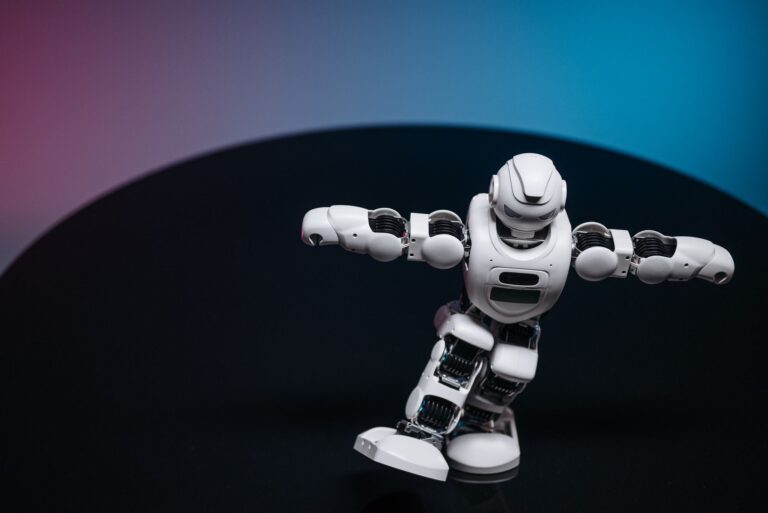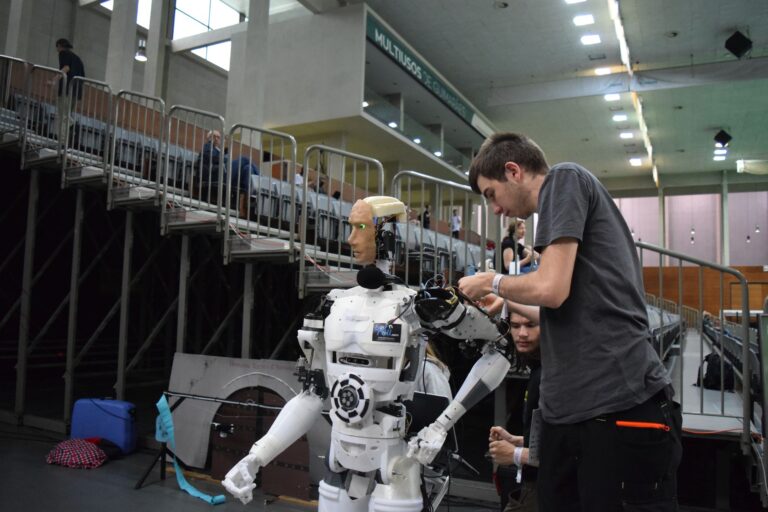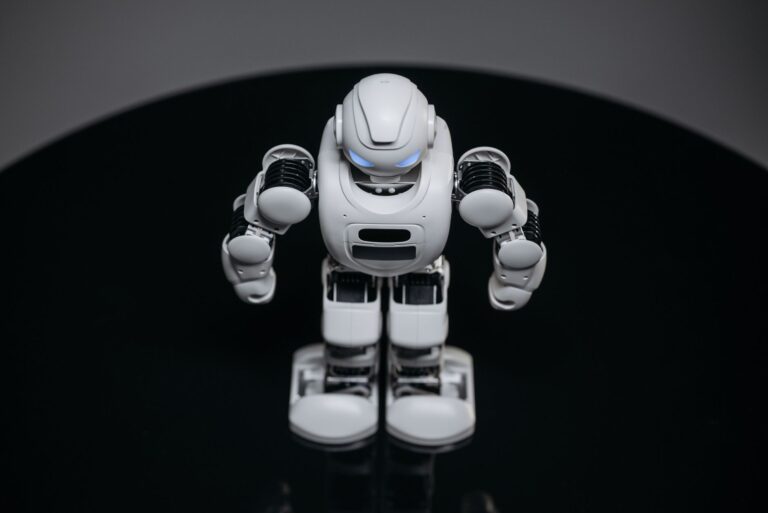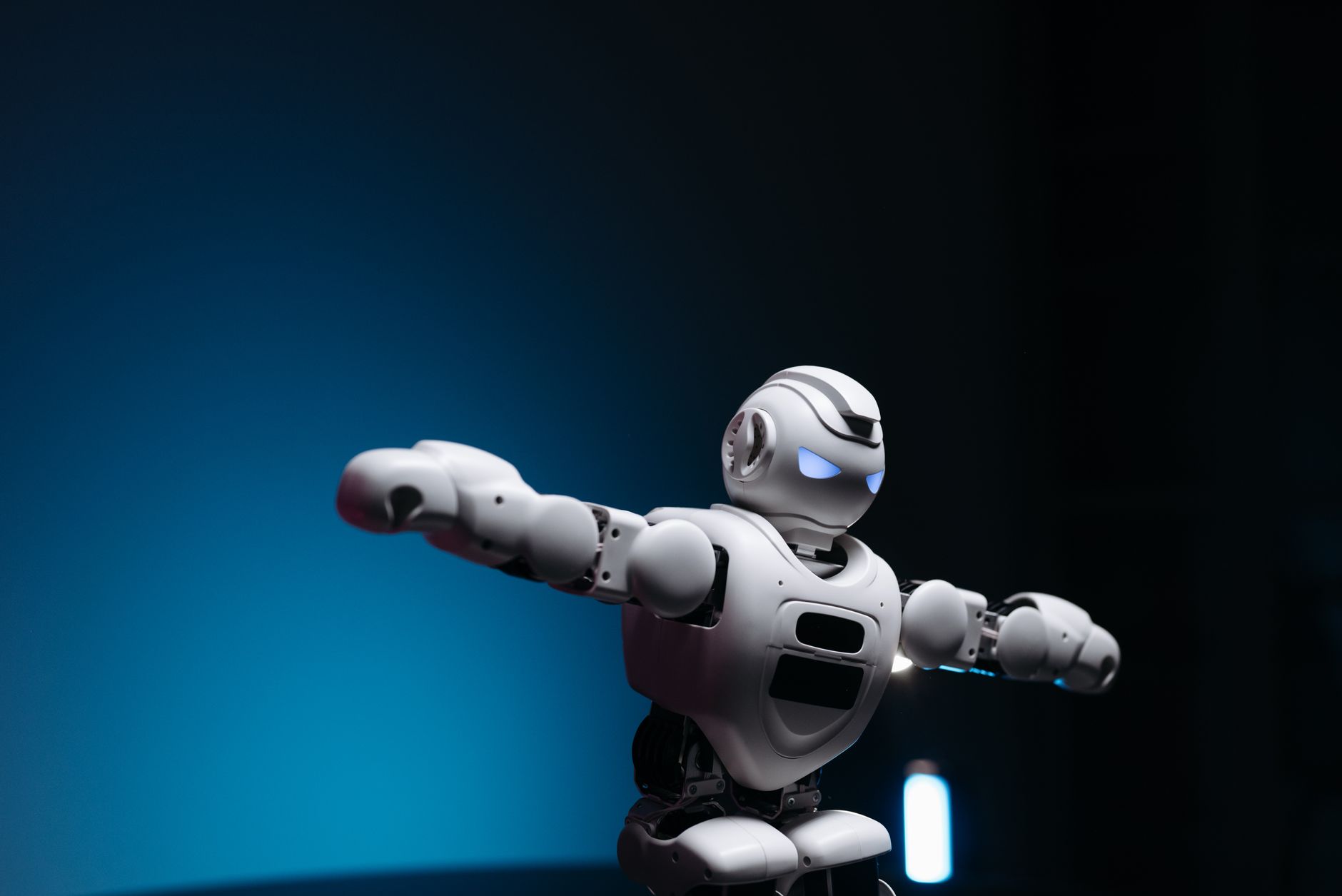

Humanoid robotics platforms have recently been demonstrated in operational factory environments, marking a significant milestone in industrial automation. These demonstrations, often coinciding with high-profile global events, suggest that humanoid robots may finally transition from research labs to production floors. However, a demonstration—even one captured during a major sports event—differs substantially from sustained factory deployment, and the gap between showcasing a capability and reliably executing it at scale remains considerable.
The significance of such demonstrations lies not in the robot itself, but in what it reveals about readiness for real manufacturing challenges. A humanoid platform must handle dexterous tasks, navigate unpredictable shop floors, operate safely alongside human workers, and maintain consistent performance across hundreds of repeated cycles. When manufacturers and robotics companies choose to demonstrate these capabilities at visible venues, they’re signaling confidence in a particular level of maturity—though spectacle and operational readiness are not the same thing.
Table of Contents
- What Makes Factory Environments Uniquely Demanding for Humanoid Robots?
- Critical Capabilities Required for Industrial Humanoid Deployment
- Safety Considerations in Mixed Human-Robot Environments
- The Real Gap Between Demonstration and Deployment
- Technical Limitations Affecting Industrial Viability
- The Demonstration Effect and Market Timing
- Current State of Factory Readiness and Realistic Expectations
What Makes Factory Environments Uniquely Demanding for Humanoid Robots?
factory floors present a different problem set than controlled laboratory conditions. A robot must handle variable part orientations, work within existing production layouts, integrate with legacy equipment, and respond to safety protocols that exist to protect human workers. Humanoid platforms offer certain advantages here: their bipedal design allows them to navigate stairs and uneven terrain, their arm configurations can reach across workbenches similarly to humans, and their hand dexterity potentially allows them to manipulate small components or perform assembly tasks that wheeled or non-anthropomorphic platforms struggle with.
The practical advantage, however, comes with significant overhead. A bipedal walking system requires complex balance algorithms, higher power consumption than a wheeled equivalent, and more sophisticated control software. A humanoid robot attempting to pick parts from a standard industrial bin must solve computer vision problems, reach accuracy challenges, and manipulation uncertainties that a specialized robotic arm solved decades ago. Manufacturers considering humanoid deployment must weigh whether the flexibility they gain justifies the complexity they inherit.
Critical Capabilities Required for Industrial Humanoid Deployment
A humanoid platform operating in a factory must demonstrate several non-negotiable capabilities. First is uptime and reliability—factory operations run on predictable schedules, and a robot that requires technicians to reboot it several times per shift becomes a liability rather than an asset. Second is safety compliance; operating alongside human workers or in shared spaces requires sophisticated sensing, predictable movement patterns, and failsafe mechanisms. Third is the ability to perform meaningful work at production speeds; a robot that completes a task correctly but too slowly simply displaces the human cost rather than reducing it.
The most overlooked requirement is integration with existing systems. Factories run on conveyor systems, Part and Material Management (PMM) software, quality control protocols, and operator interfaces that may be decades old. A humanoid platform must connect to these systems—receiving instructions from scheduling software, delivering parts to specific stations, and reporting back completion status in formats the factory already understands. Companies showcasing humanoids at events often demonstrate isolated tasks in sterile conditions; real factory integration means the robot must become invisible within an existing workflow.
Safety Considerations in Mixed Human-Robot Environments
A humanoid operating in a factory floor occupied by human workers introduces complexity that specialized industrial robots in caged environments avoid. These robots are large, powerful, and move unpredictably—their very human-like appearance can create a false sense of safety when their actual behavior remains difficult to predict. If a humanoid misinterprets a sensor reading and reaches toward a person standing nearby, or if its balance system fails and it falls, the consequences could be severe.
Manufacturers have responded with layered safety approaches: force-limiting technology that prevents excessive impact, redundant sensing systems that stop the robot if a person approaches, and operational protocols that define zones where humanoids operate only when humans are absent. These safeguards add cost and complexity, and they reduce the primary selling point of humanoids—their ability to work flexibly in spaces designed for humans. A humanoid operating safely in a factory often requires the same physical barriers and operational restrictions as a traditional industrial robot, diminishing the efficiency gains.
The Real Gap Between Demonstration and Deployment
A global sports event provides an ideal stage for demonstrating a humanoid’s capabilities. The tasks chosen are typically well-defined, the environment is controlled, and the robot operates under close supervision. Deployment at scale in a manufacturing facility is orders of magnitude more complex. A robot must function during the night shift when fewer technicians are available, handle parts with slight variations that the demonstration scenario didn’t account for, operate when environmental conditions change, and continue performing reliably after weeks of continuous operation.
The economic case also shifts under real deployment constraints. In a demonstration, a robot’s value comes from proving it can perform a task. In a factory, a robot’s value comes from performing that task profitably, repeatedly, and reliably. This means accounting for the cost of the robot, the infrastructure required to support it, the technicians needed to maintain it, the downtime when it malfunctions, and the continuous software updates required to handle new parts or process changes. Few manufacturers publicly disclose the total cost of ownership for early-generation humanoid deployments, which itself suggests these numbers may not yet be compelling.
Technical Limitations Affecting Industrial Viability
Humanoid platforms face several inherent limitations that affect factory deployment. Their bipedal locomotion consumes significant power, limiting operational duration without recharging—whereas a wheeled platform could run for 8-12 hours per shift, humanoids often require mid-shift recharging or accept substantial runtime constraints. Their hands, while dexterous, are still less capable than specialized grippers designed for specific tasks; a humanoid may struggle with objects requiring precise pressure control or unusual geometries.
Battery management and thermal stability present underappreciated challenges. Extended factory shifts mean sustained power draw; the battery systems required to support this add weight and occupy space where additional sensors or computing power could go. Heat dissipation from actuators becomes problematic during continuous operation, particularly if the platform works in already-warm factory environments. Manufacturers have largely solved these problems for industrial robots operating at constant high intensity; they remain open problems for general-purpose humanoid platforms still in the deployment exploration phase.
The Demonstration Effect and Market Timing
The decision to demonstrate a humanoid platform at a major global event carries strategic messaging. It signals to investors, competitors, and potential customers that the technology has matured beyond research. It provides media coverage that shapes public perception of the industry’s progress. However, demonstrations are also carefully constructed narratives; they showcase successful runs and controlled conditions, not failure modes or edge cases.
The robotics industry has a history of demonstrations creating unrealistic expectations about timelines. Platforms that could perform impressive tasks in 2015 were still struggling with deployment reliability in 2023. Early demonstrations of autonomous vehicles, collaborative robots, and humanoid systems have frequently preceded actual commercial viability by many years. Current humanoid demonstrations should be interpreted as evidence of progress toward deployment capability, not proof that deployment capability currently exists at scale.
Current State of Factory Readiness and Realistic Expectations
As of now, humanoid robots in factories remain in pilot and early-deployment phases. A small number of manufacturers have integrated humanoid platforms into specific, carefully controlled factory processes—typically for tasks like assembly, material handling, or quality inspection. These pilots gather data on reliability, identify failure modes, and inform the next generation of hardware and software improvements.
They are not yet demonstrations of humanoid ubiquity on factory floors. The timeline for widespread humanoid factory deployment remains uncertain. Optimistic industry projections suggest meaningful adoption within the next 3-5 years for specialized applications; more cautious assessments suggest a 10-year horizon before humanoids become routine in manufacturing. What remains clear is that demonstrations at high-profile events, while technically impressive, represent waypoints on a longer journey toward factory integration rather than proof that the destination has been reached.