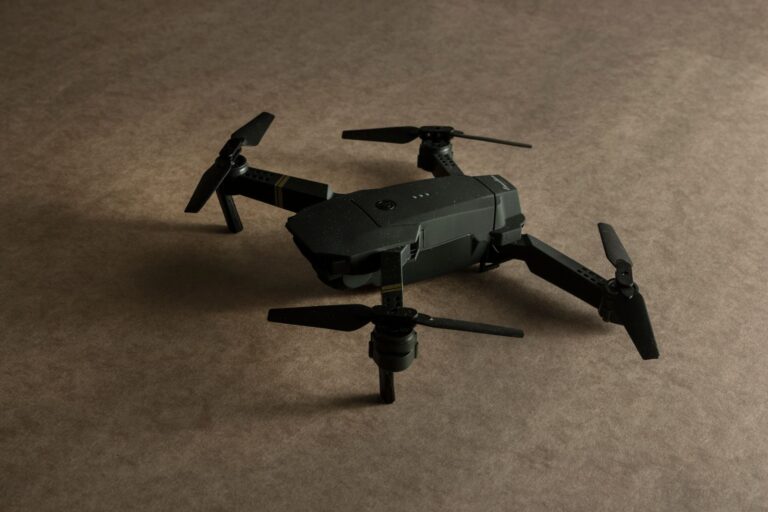

Iran has demonstrated its continued capability to conduct large-scale drone operations against military targets in the Middle East, including strikes directed at American military installations in Jordan. These attacks represent a significant escalation in the use of autonomous and semi-autonomous aerial systems in regional conflicts, marking a shift in how state actors deploy unmanned technology for geopolitical purposes. The sophistication of these operations underscores the maturation of drone technology beyond experimental platforms into operational military systems that can traverse international borders and engage defended positions.
The deployment of drones at this scale serves multiple strategic purposes: demonstrating technological capability, projecting power across vast distances without risking crewed aircraft, and testing air defense systems. For the robotics and automation industry, these events illustrate both the current state of autonomous vehicle technology and the urgent need for defensive countermeasures. Unlike earlier drone operations that relied heavily on manual control and predetermined routes, modern military drones increasingly employ autonomous navigation, obstacle avoidance, and target recognition algorithms—core robotics technologies now being stress-tested in active conflict zones.
Table of Contents
- How Military Drones Have Evolved from Remote-Controlled Weapons to Autonomous Systems
- The Challenge of Operating Drones Across Defended Borders and Airspace
- Drone Swarm Tactics and Coordinated Attack Planning
- Air Defense Technologies and the Automation-Versus-Autonomy Tradeoff
- Detection Evasion and the Limitations of Autonomous Countermeasures
- Implications for Unmanned Systems Regulation and Export Control
- The Current State of Drone Countermeasures and Future Robotics Challenges
How Military Drones Have Evolved from Remote-Controlled Weapons to Autonomous Systems
Military drone technology has undergone a dramatic transformation over two decades, evolving from simple remote-controlled aircraft to increasingly autonomous systems. Early drones like the U.S. military’s Predator required constant pilot input and could not navigate independently through contested airspace. Modern platforms, including those reportedly deployed in recent Middle Eastern operations, incorporate advanced autonomy features: GPS-denied navigation, obstacle detection and avoidance, and automated mission planning that allows drones to adapt their routes and timing without human intervention.
The progression reflects advances in several core robotics domains. Computer vision systems now allow drones to recognize and classify objects in real-world conditions without relying solely on operator interpretation. Onboard processing power has increased dramatically, enabling edge computing—decisions made aboard the aircraft rather than sent to distant control stations. This shift reduces communication lag and makes drones more resilient to signal jamming, a critical capability in contested airspace. The algorithms powering these systems are fundamentally the same as those used in autonomous vehicles and industrial robotics, though tailored for military requirements and operating in more chaotic environments.
The Challenge of Operating Drones Across Defended Borders and Airspace
Launching drone attacks across international borders presents substantial technical and operational challenges that highlight the limits of current autonomous systems. Air defense systems—whether radar-guided missiles, electronic jamming, or fighter aircraft—create dynamic threats that static pre-planned routes cannot adequately address. Drones attempting to penetrate defended airspace must navigate uncertainty: they cannot perfectly predict where threats will appear, and they must make real-time decisions about evasion or alternative routing. This requirement pushes autonomous systems toward genuine decision-making rather than simple waypoint-following.
The specific vulnerabilities are considerable. Radar systems can track incoming aircraft at long range; electronic warfare systems can spoof GPS signals, forcing drones to rely on inertial navigation that accumulates error over long distances. Modern air defense systems integrate multiple sensors and communication networks, creating a redundancy that single-platform autonomous systems struggle to overcome. A limitation of current drone technology is that truly autonomous responses to unknown threats remain largely unsolved problems—most systems either require human operators to make tactical decisions when surprised by threats, or they fall back to preprogrammed responses that may not fit novel situations. This explains why drone swarms (multiple coordinated aircraft) are considered more effective than individual systems: coordinated attacks can overwhelm defenses through saturation rather than sophisticated autonomy.
Drone Swarm Tactics and Coordinated Attack Planning
Recent military operations have increasingly employed drone swarms—coordinated groups of aerial vehicles attacking simultaneously or in rapid succession. This tactic overcomes individual drones’ limited payload capacity and vulnerability to interception by distributing the attack across multiple platforms. Coordination among drones in a swarm requires communication systems that share real-time targeting data, track which drones have completed their objectives, and dynamically reassign tasks as platforms are lost to air defense. These capabilities represent a frontier in distributed robotics and autonomous multi-agent systems. Swarm coordination operates under severe constraints that differ markedly from academic multi-robot research.
Military swarms must function in the presence of active jamming and cannot rely on high-bandwidth communication channels. This forces reliance on local decision-making—each drone operates largely independently using local sensor data and limited communication with nearby teammates, much like how autonomous vehicles must function in uncertain environments. The algorithms enabling this behavior draw from biomimetic approaches inspired by animal swarms, but adapted for weapons systems operating under wartime conditions. A critical practical example is time-coordinated arrivals: if multiple drones attack the same target, arriving within seconds of each other overwhelms static defenses more effectively than sequential attacks. Achieving this synchronization across drones separated by dozens or hundreds of kilometers, with varying wind conditions and route constraints, requires sophisticated autonomous planning that remains difficult to achieve reliably.
Air Defense Technologies and the Automation-Versus-Autonomy Tradeoff
Defending against drone attacks has become a central driver of robotics innovation in military systems. Air defense relies on three overlapping layers: early detection (radar and sensor networks), active interception (missiles or other platforms), and soft-kill countermeasures (electronic warfare). Each layer increasingly relies on automation to compensate for the speed advantage that drones enjoy. Traditional air defense systems operated on human-driven decision loops: detect a threat, assess it, alert commanders, await authorization, then launch a response. This process takes minutes; modern drones can travel dozens of kilometers in that timeframe.
Modern air defense systems compress these timelines through automation, employing machine-learning-trained classifiers to distinguish drone signatures from clutter or decoys, and autonomous engagement protocols that permit systems to launch countermeasures without waiting for human authorization. However, this automation introduces its own complexity. Autonomous air defense systems must balance a critical tradeoff: aggressive automation enables faster responses but increases the risk of false positives—firing on civilian aircraft or friendly systems. Comparatively, conservative automation that requires human confirmation is more precise but slower, potentially allowing time-critical threats to escape. Military systems typically operate somewhere in the middle, with human operators able to intervene but automated systems armed with “shoot-on-confirmation” protocols. This hybrid approach reflects the broader robotics industry’s experience that purely autonomous systems often underperform in high-stakes domains where the cost of error is severe.
Detection Evasion and the Limitations of Autonomous Countermeasures
Drone designers continue to develop technologies intended to evade detection and countermeasures, creating an ongoing competition between offensive and defensive robotics systems. Stealth design reduces radar cross-section through shaped airframes and radar-absorbing materials. Decoys and autonomous evasion—drones that detect radar signals and alter course—attempt to defeat tracking systems. Some systems employ swarm tactics specifically to saturate defenses: if forty drones attack simultaneously but a defense can only engage ten, many will penetrate regardless of individual evasion capability. A significant limitation of current defensive systems is that they scale poorly against large swarms; radar capacity, missile inventory, and interception opportunities all become bottlenecks. Electronic warfare represents another frontier where autonomy approaches real limits.
Drones equipped with electronic countermeasures can detect that they are being targeted by a specific radar or missile system and can attempt countermeasures: jamming transmissions, deploying decoys, or maneuvering to break tracking locks. However, such systems operate within a competitive dynamic. Air defense systems counter these measures with frequency-hopping radars that change operating parameters unpredictably, making jamming ineffective. Newer systems add adaptive algorithms: radar systems that learn from attack attempts and adjust tactics accordingly. This escalation continues into layers of increasing complexity, but a genuine limitation persists: neither side can achieve perfect awareness or response in contested environments where information is incomplete and decision time is compressed. The result is that both offensive and defensive systems increasingly delegate decisions to autonomous algorithms not because human operators are unavailable, but because humans operating on timescales of seconds cannot reliably outthink algorithms trained to react in milliseconds.
Implications for Unmanned Systems Regulation and Export Control
The demonstrated capability of middle-power nations to conduct coordinated drone operations has prompted urgent discussions about export controls and technology transfer restrictions. Many advanced robotics capabilities—including vision systems, autopilot algorithms, and communication protocols—are dual-use technologies with applications in both civilian and military domains. A commercial drone manufacturer developing obstacle-avoidance systems for agricultural applications builds technology that, with modification, enables military drones to navigate through contested airspace.
This dual-use nature complicates international efforts to restrict drone proliferation. Export controls have become increasingly granular as nations recognize that controlling raw components is often ineffective; instead, control efforts target the algorithms and software that enable autonomous behavior. This creates tension between the robotics industry’s interest in open research and innovation, and security concerns about technology proliferation. The United States and allied nations have restricted exports of advanced flight control systems and certain processing architectures, recognizing that a highly capable autopilot system is relatively fungible across platforms.
The Current State of Drone Countermeasures and Future Robotics Challenges
Practical countermeasures against drone attacks remain immature compared to conventional air defense. Physical interception—shooting down drones mid-flight—requires systems optimized for fast, small, maneuverable targets, which is a different challenge from defending against aircraft or missiles. Directed energy weapons (high-powered lasers and microwave systems) have been tested for drone defense with mixed results; they are effective in some conditions but weather-dependent and limited in range. Drone-on-drone interception—using autonomous vehicles to collide with or capture attacking drones—represents an emerging area combining swarm robotics, pursuit-evasion algorithms, and real-time autonomous decision-making.
The fundamental challenge is that drone technology matured faster than defensive robotics. Military organizations built drone capabilities across two decades and deployed them operationally; defensive systems are still in earlier stages of development and deployment. This asymmetry means that air defense planners must rely on layered approaches and decentralized systems rather than single-solution technologies. The robotics industry is beginning to address these gaps through systems designed for high-speed autonomous interception, electronic countermeasures that adapt to novel jamming techniques, and decentralized sensor networks that share threat information without centralized command centers. These defensive systems must match the sophistication of the offensive platforms they encounter, which means the automation and robotics capabilities of future air defense will rival those of the weapons they defend against.
- —