
iRobot (IRBT) has established itself as the dominant force in home automation robotics much like Amazon controls e-commerce—through ubiquitous products, ecosystem integration, and strategic acquisitions that entrench its market position. The company’s Roomba vacuum robots have achieved over 40 percent market share in the robotic vacuum segment globally, a concentration of power that goes far beyond a single successful product. IRBT’s strategy mirrors Amazon’s playbook: entering a market with a flagship offering, building brand loyalty and consumer trust, then expanding into adjacent categories and acquiring competitors to consolidate control. The comparison extends to business fundamentals.
Amazon created infrastructure (AWS) that powers competitors while generating massive profits. Similarly, IRBT has transformed robotic vacuums from niche gadgets into mainstream household items through relentless iteration and manufacturing scale. The company doesn’t just sell robots—it collects data from millions of devices in customers’ homes, builds software ecosystems that lock in users, and uses that installed base to justify R&D spending that smaller competitors cannot match. However, unlike Amazon’s proven global dominance across multiple industries, IRBT remains largely concentrated in one category: home floor cleaning. This concentration represents both the company’s greatest strength and a significant vulnerability that separates it from true Amazon-scale diversification.
Table of Contents
- What Makes IRBT the Market Leader in Home Robotics?
- The Product Ecosystem and Platform Strategy
- Acquisition Strategy as Corporate Consolidation
- Practical Market Adoption and Consumer Switching Costs
- Technical Limitations and Competitive Vulnerabilities
- Software, Data, and Smart Home Integration
- Future Outlook and Market Expansion Challenges
- Conclusion
- Frequently Asked Questions
What Makes IRBT the Market Leader in Home Robotics?
irbt‘s dominance stems from three interconnected factors: first-mover advantage combined with relentless product improvement, acquisition strategy that eliminates competitors, and ecosystem lock-in through software and services. When iRobot launched the original Roomba in 2002, it solved a genuine consumer problem and had a years-long head start before competitors figured out the technology. That early lead transformed into market position—today, “Roomba” functions as a near-generic term for robotic vacuums, similar to how “Band-Aid” describes adhesive bandages regardless of brand.
The company has systematically acquired rivals to maintain dominance. In 2022, IRBT completed its $1.4 billion acquisition of Evolution Robotics’ intellectual property portfolio, and previously acquired companies like Irobot and Aaeon (now part of its ecosystem). These acquisitions serve multiple purposes: they eliminate competing products from the market, bring complementary technologies in-house, and prevent competitors from accessing strategic patents. Google’s attempted $3.5 billion acquisition of IRBT in 2024, though ultimately blocked by regulatory concerns about market concentration, demonstrated how other tech giants view the company’s strategic value.

The Product Ecosystem and Platform Strategy
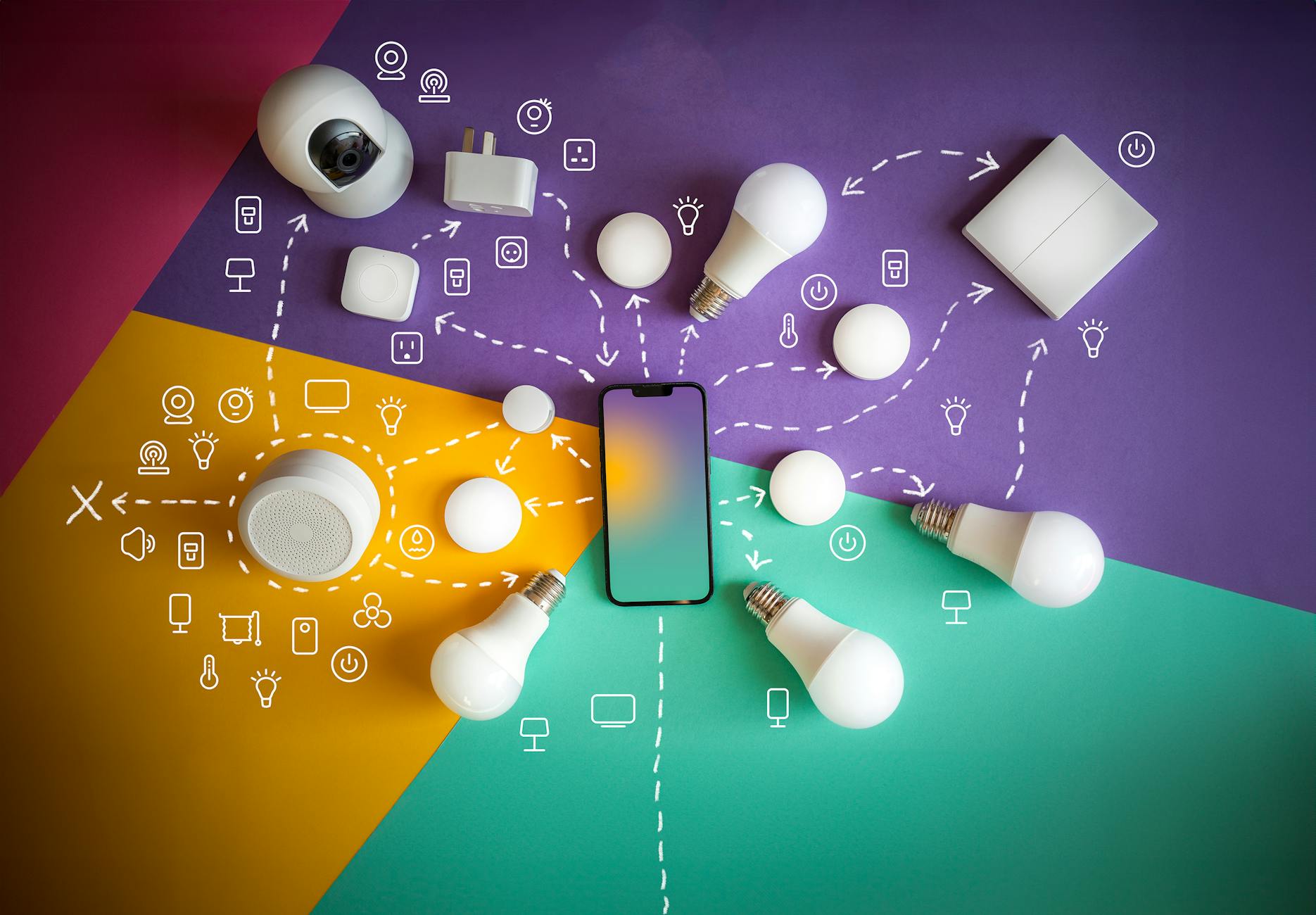
IRBT’s real power lies not in individual robots but in an interconnected ecosystem. Customers who own a Roomba gain access to an app that integrates with smart home platforms (Alexa, Google Home), enables remote scheduling, and provides troubleshooting data. This integration keeps users within the iRobot ecosystem even when competitive products offer similar or superior vacuuming performance. A customer considering switching to a Shark or Bissell competitor faces disruption: the new robot doesn’t play nicely with their existing smart home setup, the app is less polished, and they lose data history and customized routines. The limitation here is significant: IRBT’s ecosystem remains tied to floor cleaning.
Amazon leverages AWS, logistics networks, video streaming, and cloud computing across entirely different markets. IRBT cannot claim comparable diversification—their robotics efforts beyond vacuums remain limited. The company acquired Terra, a lawn-mowing robot startup, but that effort never achieved consumer scale. Unlike Amazon’s web services subsidiary, IRBT has no platform business generating exponential margins. A single competitor breakthrough in suction power, navigation, or battery life could theoretically shift customer preference away from ecosystem benefits.
Acquisition Strategy as Corporate Consolidation
IRBT’s acquisition approach directly mirrors Amazon’s expansion pattern—buy best-in-class companies and either integrate them or shut them down to eliminate competition. The company has acquired over a dozen robotics-adjacent firms, absorbing patents, teams, and customer bases. This strategy works efficiently when acquisition targets cost less than developing comparable technology in-house, and when eliminating competition justifies the purchase price. A real-world example: When IRBT acquired Irobot company’s mapping and navigation assets, it wasn’t primarily to launch a competing product—it was to prevent a competitor from using those technologies.
This is textbook consolidation strategy. However, there’s a warning embedded here: regulatory scrutiny of such acquisitions is increasing. The blocked Google acquisition and ongoing antitrust investigations into tech giants suggest IRBT’s acquisition-heavy strategy faces headwinds. Future growth through acquisition may become more difficult, potentially forcing the company to innovate organically or risk competitive encroachment in new categories.

Practical Market Adoption and Consumer Switching Costs
For homeowners considering a robotic vacuum, IRBT’s dominance translates to practical advantages: widespread repair networks, abundant aftermarket accessories, established compatibility with existing smart homes, and proven reliability through decades of consumer feedback. A Roomba owner in most cities can walk into Best Buy and find replacement parts immediately, whereas competitors might require mail order or special ordering. The tradeoff is price.
IRBT products command premium pricing—sometimes 20-30 percent higher than comparable Bissell or Shark models with nearly identical suction power and navigation. Consumers pay for the ecosystem lock-in and brand trust, not necessarily superior hardware performance. This pricing advantage is sustainable only as long as switching costs remain high and consumer preference for the Roomba brand persists. If a competitor launches a better app, offers superior navigation at lower cost, or achieves better dust containment, the price premium evaporates quickly.
Technical Limitations and Competitive Vulnerabilities
Despite market dominance, IRBT faces serious technical limitations that competitors increasingly exploit. Many Roombas struggle with certain floor types—thick carpets, multiple floor levels connected by narrow hallways, and rooms with significant furniture generate problems. Newer competitors like Roborock and EcoVacs have achieved superior navigation on some room layouts by using superior LiDAR sensors and more sophisticated mapping algorithms. In real-world testing, some Roombas still miss edges, get stuck on low-pile transitions, and require frequent manual intervention—frustrations that undermine the automation promise.
A warning: as robotic vacuum technology matures, performance gaps between leaders and competitors are shrinking. Consumer Reports testing shows that price-to-performance ratios now favor many mid-tier competitors over premium Roombas. If IRBT fails to innovate as aggressively as competitors, the ecosystem lock-in advantage could erode rapidly. Additionally, rising labor costs in the US where IRBT manufactures some models, combined with increased competition from Chinese brands with lower cost structures, squeeze margins. The company cannot compete on price with brands like Roborock without sacrificing profitability.
Software, Data, and Smart Home Integration
IRBT collects massive amounts of data from millions of robots operating in real homes—floor plans, obstacle locations, movement patterns, and homeowner behavior. This data represents an underutilized asset that competitors cannot easily replicate. In theory, IRBT could train machine learning models to predict home maintenance needs, optimize route planning, or identify health issues (like unusual dust quantities suggesting potential HVAC problems).
The company has patented technologies around home mapping and analytics, positioning itself for potential platform expansion. A specific example: If IRBT integrated with smart thermostats and air quality monitors, it could theoretically alert homeowners about air filtration needs or trigger the robot more frequently when pollen counts spike. This type of health-adjacent service could justify ecosystem expansion beyond vacuums. However, IRBT’s current execution in this space remains limited—they have not fully monetized the data advantage or created compelling integrations that drive new revenue streams.
Future Outlook and Market Expansion Challenges
The robotic vacuum market is maturing. Growth rates in North America and Europe are slowing as market penetration approaches saturation—most consumers who want robotic vacuums already own one. IRBT’s future growth increasingly depends on either capturing emerging markets (India, Southeast Asia) where robotic vacuums remain new, or expanding into adjacent categories like mopping robots, window cleaners, and lawn mowers. The company has launched mopping-capable models like the Roomba j7+, but none have achieved the market penetration or cultural status of the original vacuum lines.
The forward-looking challenge is whether IRBT can evolve into a true diversified robotics company or remains perpetually dependent on floor-cleaning robots. The Amazon comparison breaks down here—Amazon diversified into radically different businesses and achieved dominance in multiple markets. IRBT has not replicated that diversification. If the company remains narrowly focused on floor cleaning, it risks commoditization as competitors improve, costs decline, and consumer attachment to the Roomba brand weakens. Success requires either breakthrough innovation in home robotics (truly autonomous general-purpose robots) or successful expansion into multiple robot categories that achieve their own market dominance.
Conclusion
iRobot has earned the “Amazon of home automation robots” comparison through market concentration, ecosystem control, and strategic acquisitions that entrench competitive advantage. The company transformed robotic vacuums from novelty to necessity and built moats through software integration, brand trust, and switching costs. However, that dominance remains narrowly concentrated in a single product category, which differentiates IRBT fundamentally from Amazon’s multi-market empire.
The comparison is apt for the home cleaning robotics market specifically, but breaks down when considering the broader robotics and automation landscape. The critical question for IRBT’s future is whether current market dominance provides the foundation for diversified robotics expansion or becomes a liability if confined to a maturing floor-cleaning category. Investors and consumers should monitor whether the company’s acquisition strategy and R&D investments can successfully launch adjacent robot categories with comparable market penetration, or whether the “Amazon of home robots” remains perpetually the dominant player in a category rather than across multiple categories as its namesake analogy would suggest.
Frequently Asked Questions
Is IRBT’s Roomba technology significantly better than competitors?
Not necessarily. Many Roborock and EcoVacs models achieve equivalent or superior navigation, suction, and battery life at lower prices. Consumers often pay premium pricing for the ecosystem integration and brand familiarity rather than technical superiority.
Can I use a Roomba with any smart home system?
Roombas integrate with Amazon Alexa and Google Home, enabling voice control and scheduling. However, integration depth varies—the iRobot app remains the primary control interface, whereas some competitors offer deeper automation capabilities within competing platforms.
What happens to my robot if iRobot discontinues a model?
Older Roombas continue functioning indefinitely, though new features and app updates may eventually become incompatible. Parts availability remains strong in North America, but international support deteriorates for discontinued models.
Is the robotic vacuum market still growing?
Growth in developed markets (North America, Europe, Japan) is slowing significantly. Expansion is occurring in emerging markets like India and Southeast Asia, where robotic vacuums remain novelty products. Market consolidation favors established players with strong brand recognition.
What’s IRBT’s main competitive threat?
Chinese competitors like Roborock, with superior capital efficiency and lower cost structures, combined with increasing consumer sophistication that reduces reliance on brand familiarity for purchasing decisions. Technical commoditization is the longer-term threat.
Could IRBT expand successfully into other robot categories?
The company has attempted lawn mowers and window cleaners with minimal market impact. Success in new categories requires separate brand building and dedicated distribution—core competencies iRobot has not yet demonstrated at scale outside floor cleaning.