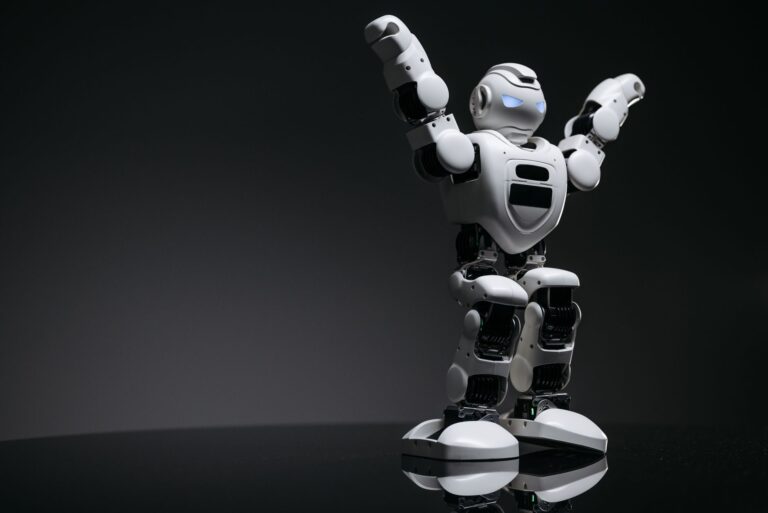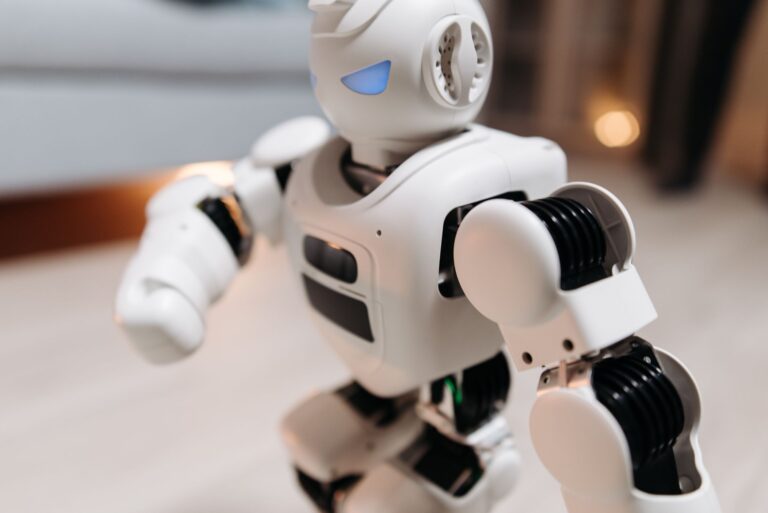

Tesla’s 2026 stock forecast hinges on whether the company can deliver on massive AI robotics and semiconductor investments that could reshape its revenue model entirely. Analyst price targets range from a bearish $25.28 to a bullish $600, with the consensus clustering between $427 and $502.94, reflecting deep uncertainty about execution on three fronts: Optimus humanoid robots, robotaxi networks, and internal semiconductor manufacturing. The company is betting $25 billion in 2026 capital expenditure on these bets, alongside Elon Musk’s proposal for a $120 billion Terafab semiconductor complex in Texas—a gamble that could either secure Tesla’s competitive moat or strain cash flows if production milestones slip.
The core question isn’t whether Tesla’s technology roadmap is ambitious; it’s whether 2026 will prove these investments are turning from R&D costs into actual revenue engines. Robotaxi deployments begin expanding to seven new U.S. cities, Cybercab volume production launches in April, and the Fremont factory shifts entirely from Model S and X production to humanoid robots and autonomous vehicles. These shifts signal a fundamental business model transition away from traditional vehicle sales toward a services and robotics platform—but they also create execution risk that even optimistic analysts cannot ignore.
Table of Contents
- How Could AI Robotics and Semiconductor Advances Transform Tesla’s Profit Model in 2026?
- The Semiconductor Strategy: Securing Competitive Advantage or Creating Financial Exposure?
- Robotaxi Expansion: From Pilot Program to Mainstream Revenue in 2026
- Analyst Forecasts: What the Price Targets Actually Reveal About Market Uncertainty
- Manufacturing Shifts and Production Reality: The Fremont Factory Transformation
- Energy Storage and Autonomous Technology Diversification Beyond Robotaxi
- Capital Allocation and Risk Concentration in 2026
How Could AI Robotics and Semiconductor Advances Transform Tesla’s Profit Model in 2026?
Tesla’s 2026 strategy revolves around transforming from a car manufacturer into an AI-driven robotics and autonomous services company. The company is channeling over $25 billion in capital expenditure toward Optimus robotics development, autonomous technology infrastructure, full self-driving capabilities, and energy storage expansion. This isn’t incremental investment—it represents a structural pivot. To understand the scale, consider that Tesla spent roughly $5 billion annually on capex in recent years; a $25 billion allocation to these four categories signals that traditional vehicle production is no longer the growth engine the company is betting on.
The profit transformation depends on unit economics at scale. Robotaxi networks could generate $250 billion in annual revenue by the mid-2030s if Tesla achieves its targets, but 2026 is primarily an expansion and validation phase. Early 2026 robotaxi deployments to seven new U.S. cities will test whether the business model works outside initial geographies and whether removing safety monitors (as planned) actually reduces operational costs without triggering regulatory pushback or insurance premium spikes. Optimus humanoid robots, now being produced at the Fremont factory after Tesla ended Model S and Model X production, face a different profit question: can Tesla achieve sufficient unit volumes and price the robots competitively against Chinese alternatives before 2027?.
The Semiconductor Strategy: Securing Competitive Advantage or Creating Financial Exposure?
Tesla’s proposed $120 billion Terafab semiconductor complex in Texas represents one of the most aggressive capital commitments in the company’s history and carries significant execution risk. The rationale is clear: Tesla needs advanced AI chips for autonomous driving, Optimus inference, and energy management systems, and relying on external suppliers (whether NVIDIA or others) creates both bottleneck risk and cost drag. By bringing chip manufacturing in-house, Tesla aims to control the supply chain for itself, SpaceX, and related ventures—effectively becoming a vertically integrated AI infrastructure company. However, semiconductor manufacturing is unforgiving.
Delays in Taiwan’s TSMC and Samsung’s foundries are well-documented; Tesla has no prior experience at this scale. A $120 billion facility represents roughly 20% of Tesla’s current market cap and requires flawless execution on site selection, equipment procurement, talent recruitment, and process technology licensing. Even a two-year delay would push meaningful chip production past 2026, leaving the company dependent on external suppliers precisely when Optimus and robotaxi volumes are ramping. Analysts betting on the bullish $600 price target assume this execution risk is manageable; those forecasting $334–$588 (algorithmic models) embed higher probability of delays or partial success. The bearish $25.28 forecast essentially prices in a scenario where the semiconductor gamble fails catastrophically, draining capital and missing both robotics and autonomous vehicle timelines.
Robotaxi Expansion: From Pilot Program to Mainstream Revenue in 2026
The robotaxi business model is Tesla’s most concrete near-term test case. In early 2026, the company plans to expand robotaxi operations to seven new U.S. cities, with a critical change: removal of safety monitors from vehicles. This shift has dual implications. On the upside, it dramatically reduces operational costs and proves that Tesla’s autonomous driving stack is production-ready without human backup.
On the downside, it increases liability exposure and regulatory scrutiny—any accident involving a monitor-free robotaxi will trigger intense debate about self-driving readiness and could invite federal intervention. April 2026 marks the production launch of the Cybercab, Tesla’s purpose-built robotaxi vehicle. If this vehicle reaches planned volumes, it could reshape unit economics by eliminating many of the costs built into modified Model 3s and Model Ys. The long-term revenue projection of $250 billion from robotaxi networks by the mid-2030s assumes exponential adoption and geographic scaling; 2026 serves as the proof-of-concept year. Stock valuations at the higher end of the forecast range ($502–$600) require investors to believe that 2026 will demonstrate robotaxi demand is both real and scalable. Early city deployments will generate limited revenue in 2026 itself—perhaps $500 million to $1 billion—but positive unit economics and expansion signals could unlock valuation multiples that justify the current stock price and higher forecasts.
Analyst Forecasts: What the Price Targets Actually Reveal About Market Uncertainty
Wall Street’s analyst price targets for Tesla in 2026 cluster into three distinct bands, each reflecting different assumptions about technology execution and market timing. The consensus range of $427–$502.94 represents analysts who believe Tesla will hit most robotics and autonomous vehicle milestones on schedule, with steady profitability and revenue growth. This band assumes Optimus reaches meaningful production volumes (perhaps tens of thousands of units), robotaxi networks begin generating positive operating margins, and the Terafab project stays broadly on budget without major delays.
The bullish outlier is Wedbush Securities at $600, which essentially assumes Tesla’s roadmap succeeds faster or more completely than the consensus base case—perhaps Optimus achieves earlier adoption than expected, or robotaxi revenue scales faster than conservative forecasters model. The bearish extreme from GLJ Research at $25.28 is so far removed from the consensus that it effectively assumes a scenario where multiple pillars of the strategy fail simultaneously: Optimus doesn’t reach commercial scale, robotaxi deployments face regulatory roadblocks, and the Terafab project either stalls or consumes capital without generating returns. Algorithmic forecasting models project a range of $334–$588, reflecting high variance in potential outcomes and the model’s inability to assign high confidence to any single scenario. For investors, this diversity of forecasts is both a warning and an opportunity: the gap between bearish and bullish targets exceeds 2,200%, signaling that 2026 will be a validation year where real execution metrics move the stock dramatically in one direction or the other.
Manufacturing Shifts and Production Reality: The Fremont Factory Transformation
Tesla’s decision to end Model S and Model X production marks a structural decision with immediate stock implications and long-term industry consequences. By repurposing the Fremont factory entirely for Optimus humanoid robots and autonomous vehicle technology, Tesla is betting that robot production economics will eventually surpass high-end vehicle manufacturing on a dollars-per-unit or revenue-per-square-foot basis. This is plausible but unproven at scale. Humanoid robots could generate higher margins once automation and yield rates improve, but 2026 will likely see the factory operating below historical capacity as teams retool production lines, install new equipment, and ramp a product category with zero legacy manufacturing processes.
The warning embedded in this strategy is production discontinuity and customer impact. Demand for Model S and Model X is strong in certain markets, and some customers will shift to competitors (Lucid, BMW iX M60, or used Model Ps) rather than wait for future refreshes or alternative products. Additionally, Fremont factory utilization will drop during the 2026 transition, reducing quarterly revenue per facility—a metrics hit that will pressure near-term earnings even if the long-term strategy is sound. Stock forecasts assuming smooth execution may underestimate this short-term friction, while bearish forecasts might overweight it. The reality will likely fall between: the factory shift happens, revenues take a small hit, but robotics progress stories help maintain stock momentum if early Optimus metrics are positive.
Energy Storage and Autonomous Technology Diversification Beyond Robotaxi
Tesla’s $25 billion 2026 capex allocation includes full self-driving development and energy storage expansion alongside robotics and robotaxi infrastructure. Energy storage has become a meaningful revenue segment, with Tesla competing in grid-scale battery products and vehicle-to-grid technology. Autonomous driving software updates (toward FSD capability) feed both the consumer vehicle fleet and the robotaxi network, creating a product feedback loop where each serves the other.
In 2026, these parallel investments could diversify Tesla’s revenue base if energy storage volumes accelerate or FSD subscriptions expand to more geographies and vehicle models. The energy storage angle deserves attention because it’s less volatile than robotaxi speculation. If Tesla achieves a $2–3 billion annual run-rate in energy storage by 2026 (up from roughly $1.5 billion), this segment alone could justify a meaningful portion of current stock valuation without requiring robotaxi or Optimus breakthroughs. This is why some analysts maintain confidence in the $427–$502 range even if they’re cautious on robotics execution: the base business is diversifying, and worst-case scenarios (where robotaxi fails) are partially cushioned by energy storage and software revenue streams.
Capital Allocation and Risk Concentration in 2026
The $25 billion 2026 capex and $120 billion Terafab proposal represent extraordinary capital concentration in emerging technologies. Tesla’s 2025 market cap is roughly $600 billion, so the Terafab alone would consume 20% of that valuation in a single facility bet. This creates a scenario where Tesla’s stock price becomes highly sensitive to any signal about Terafab progress, funding timeline, or technical viability.
If Musk signals a delay or requests additional capital in Q2 or Q3 2026, the stock could face sharp downside pressure regardless of robotaxi deployment success. The risk concentration also affects Tesla’s ability to respond to competitive threats. If rival manufacturers (Tesla’s traditional competitors or new entrants like Figure AI with Boston Dynamics humanoids) achieve breakthroughs in robotics or autonomous driving, Tesla’s capital lock in emerging ventures may reduce flexibility to pivot or acquire competitive technology. Conversely, if execution proceeds faster than expected and both Optimus and robotaxi networks demonstrate strong unit economics in 2026, the capital concentration becomes a competitive moat—Tesla’s vertically integrated strategy outpaces smaller competitors who lack in-house semiconductor and robotics capabilities.