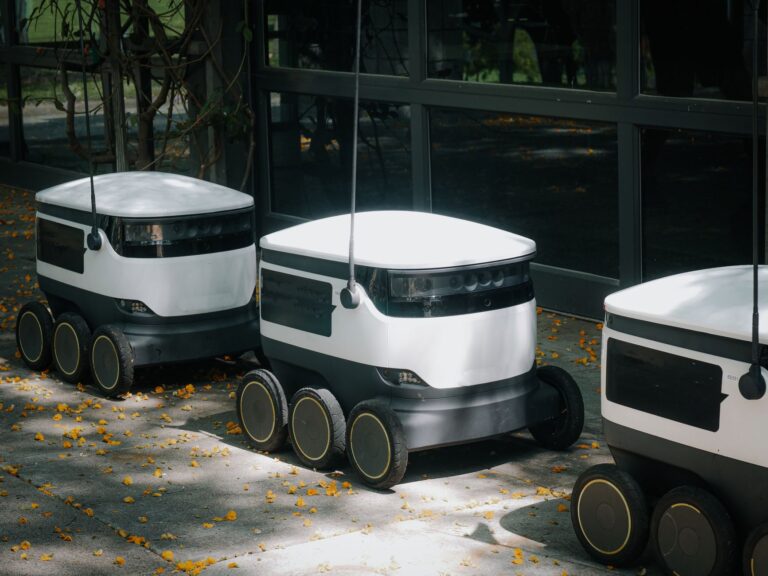

Robotics news in 2026 shows a sector expanding beyond factories into logistics, healthcare, mobility, cleaning, and early humanoid fleets. Proven scale remains concentrated in industrial and warehouse systems, while humanoids, robotaxis, and drones still face narrower deployments or unresolved constraints. A robotic system combines a physical machine with sensors, control software, task tools, and connections to a wider workflow. Readers should judge these systems by deployed performance, not demonstrations or ambitious forecasts.
Table of Contents
- What makes a robotics system useful?
- Where is robotics already operating at scale?
- Which applications show measurable operational impact?
- How should readers assess autonomous vehicles and drones?
- How can buyers separate progress from publicity?
What makes a robotics system useful?
A robot creates value only when the entire system works reliably. Mechanical capability matters, but so do perception, task planning, safety controls, maintenance, and integration with existing equipment. The surrounding workflow often determines whether a deployment succeeds. A warehouse fleet needs routing and traffic coordination.
A manufacturing robot needs predictable parts, safe work zones, and quality checks. A medical robot needs validated procedures and trained operators. This distinction explains why an impressive prototype may not become a useful product. Buyers must evaluate uptime, error recovery, operating limits, and support requirements alongside the robot's headline capabilities.
Where is robotics already operating at scale?
Factory automation remains robotics' largest installed base. The International Federation of Robotics recorded 542,000 industrial-robot installations in 2024, with 74% deployed in Asia and 4.664 million units operating worldwide, according to its global factory-robot report. Those figures show a mature market adding substantial capacity, even though the 2024 installation total was the second-highest rather than a record. Industrial robotics should therefore remain the benchmark when comparing newer categories with established deployment.
Growth outside factories is more uneven but increasingly significant. The federation's World Robotics 2025 service-robot summary reported 9% growth in professional service-robot sales during 2024. Logistics units rose 14%, cleaning robots rose 34%, and medical-robot sales increased 91% to nearly 16,700. Percentage growth alone can obscure market size. Readers should compare unit volume, installed stock, and repeat orders before concluding that a fast-growing category has reached industrial scale.
Which applications show measurable operational impact?
Warehousing provides one of the clearest examples of robotics tied to a large operational network. Amazon reported deploying its one-millionth robot across more than 300 facilities and introduced DeepFleet to coordinate fleet movement. The company says the model can reduce robot travel time by 10%, according to its June 2025 deployment announcement. The practical impact comes from fleet orchestration rather than any single machine. Shorter travel paths can improve equipment use and fulfillment flow, but Amazon's stated efficiency gain remains a company-reported estimate.
humanoid systems are entering limited industrial fleets. Figure reported that its Figure 03 entered BMW's Spartanburg assembly-and-logistics hall in June 2026 to sequence parts and move carts. Figure also said its earlier Figure 02 deployment contributed to 30,000 cars, although that result is company-reported. Boston Dynamics began producing its electric Atlas in January 2026 and said its 2026 deployments were committed to Hyundai and Google DeepMind. These developments indicate controlled customer use, not broad general-purpose adoption. The immediate test is whether humanoids can deliver repeatable work at an acceptable cost and failure rate.
How should readers assess autonomous vehicles and drones?
Road autonomy has accumulated meaningful operating volume. Waymo reported more than 14 million fully autonomous trips in 2025 and planned ride-hailing operations in more than 20 additional cities during 2026. Its goal of one million weekly rides by year-end remained a projection, not an achieved result. Readers should separate completed trips from geographic plans and future capacity targets.
Each measures something different: operating experience, expansion intent, and expected scale. Drone adoption also depends on regulation. The FAA's August 2025 proposal for some beyond-visual-line-of-sight operations could replace case-by-case waivers and support delivery, inspection, agriculture, and emergency-response uses. It was still a proposed rule, however, so companies should not treat it as finalized operating permission.
How can buyers separate progress from publicity?
Validated performance is becoming a central adoption requirement. NIST describes autonomy-enabled manufacturing robotics as an emerging field and is developing metrics, datasets, test methods, and standards for perception, manipulation, and monitoring through its robotics measurement program.
Use five checks when evaluating a robotics announcement: For procurement, test the complete workflow under realistic conditions rather than accepting a polished demonstration. Before approval, put the acceptance threshold, test environment, fallback procedure, and owner of each failure mode into the contract.
- Identify whether it describes a demonstration, pilot, production deployment, or installed fleet.
- Look for measurable outcomes such as uptime, throughput, error rates, or completed tasks.
- Separate independently measured results from vendor-reported claims.
- Check the operating limits, including location, task type, supervision, and environmental conditions.
- Distinguish achieved results from targets, expansion plans, and proposed regulations.