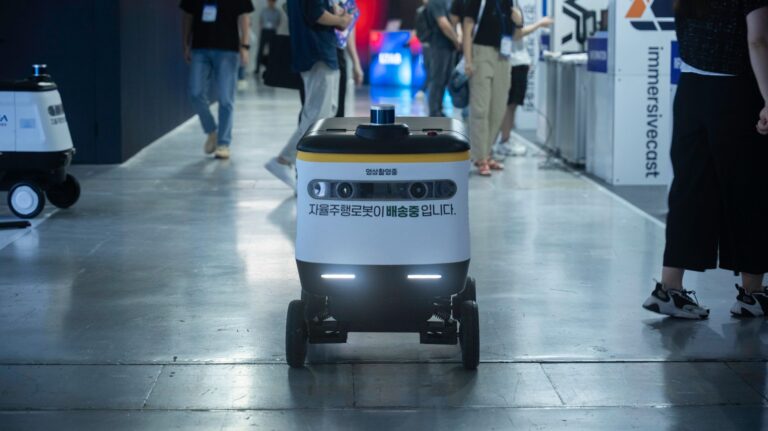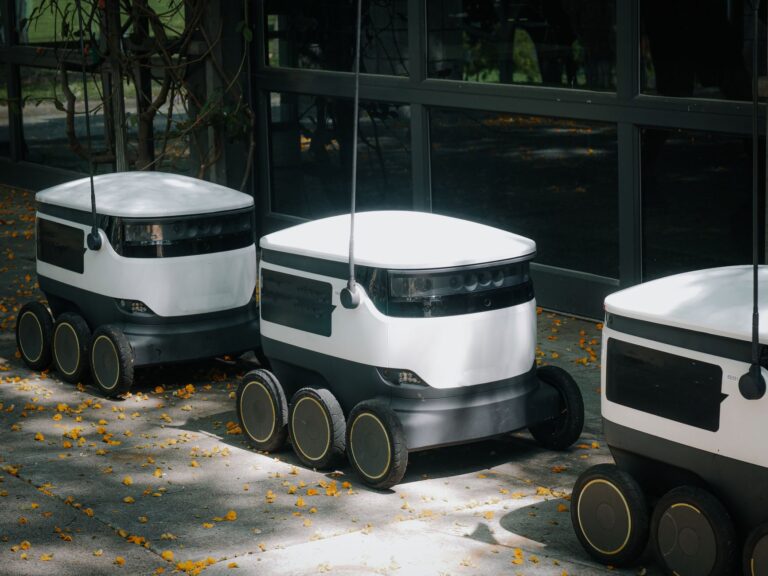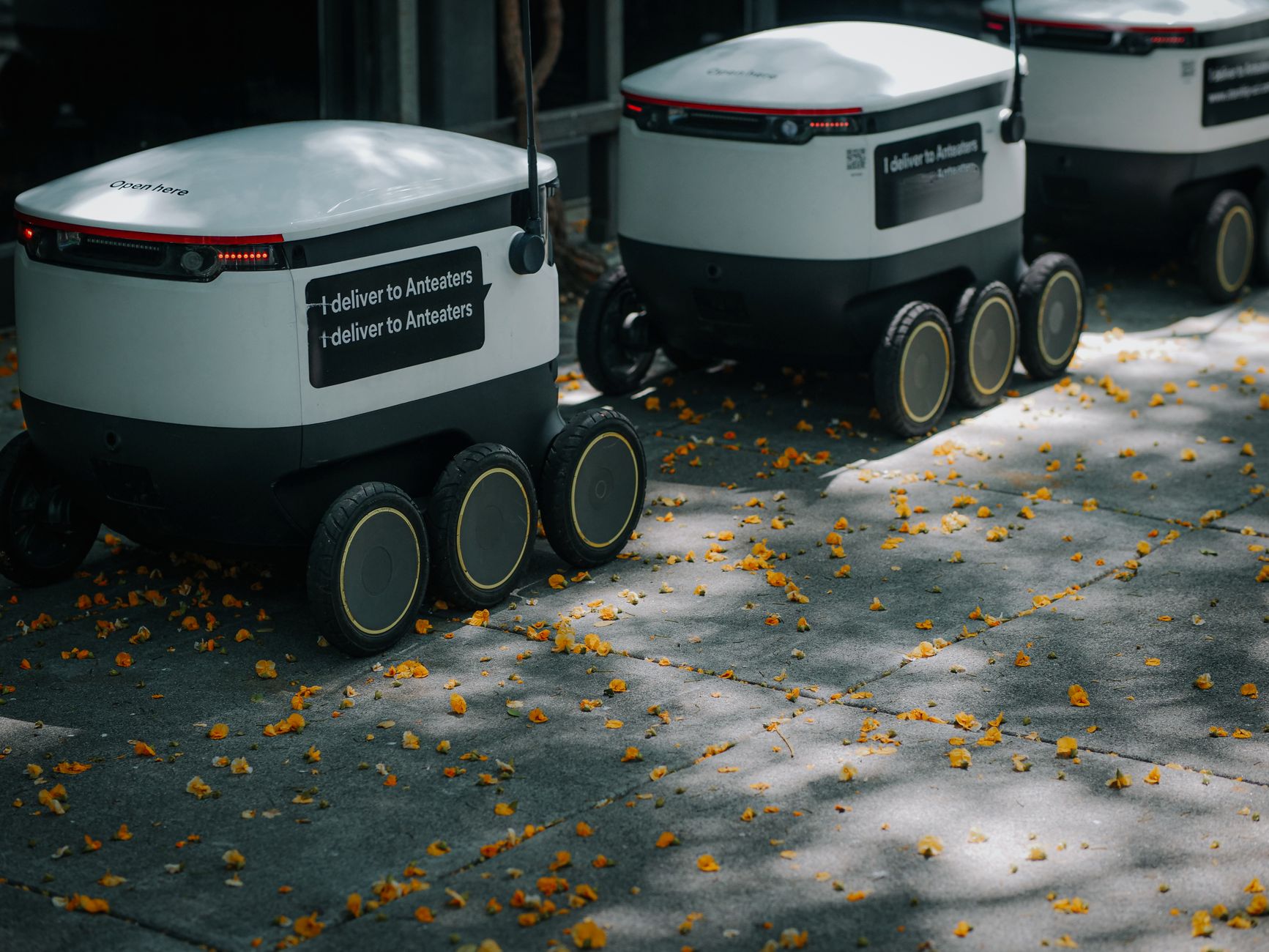

Sidewalk delivery robots work best in compact, pedestrian-scale areas with short trips and steady foot traffic. They work there because slow, curb-level travel matches those routes better than full-size road vehicles.
A sidewalk delivery robot is a small automated carrier that moves goods along footpaths and crossings. Campuses, dense neighborhoods, and mixed-use districts often suit this design. Operators still need to check path width, crossings, and local rules before use.
Table of Contents
- Where do they fit best?
- Why does slow travel help?
- What stops sidewalk service?
- How should teams judge a route?
Where do they fit best?
Enclosed or walkable sites give these robots a clear lane and a short task. University campuses, hospitals, business parks, and dense residential blocks often have those traits. Short food, parcel, and supply runs repeat well there. Long or scattered routes fit less well.
Wide arterials, high-speed crossings, and far-flung drop-offs add delay and risk. A road van or central locker often serves those trips better. The shared trait is predictability. Smooth paths, clear curbs, and regular demand help planning. Irregular terrain and changing access rules make service harder to sustain.
Why does slow travel help?
Slow travel lets the robot share space with walkers. It can stop, yield, and pass through narrow gaps without forceful moves. That behavior matters on crowded or uneven footpaths. Small size also helps loading and handoff.
Staff can place goods in a single compartment at a fixed point. Recipients can meet the robot at a door, gate, or curb. Short range keeps the task simple. Brief trips reduce exposure to obstacles and missed turns. They also make charging, cleaning, and restocking easier to schedule.
What stops sidewalk service?
Footpaths are not built for machines. Narrow sections, parked scooters, trash bins, snow piles, and broken pavement can block passage. Construction detours and crowded events can close a route without warning. Crossings add the hardest choices.
Curb ramps, signals, turning cars, and low visibility strain sensing and judgment. Sites with many uncontrolled crossings need closer review. Weather and light change performance. Rain, fallen leaves, ice, glare, and darkness can hide edges and marks. Operators should set clear limits for low grip, poor sight lines, and blocked paths.
- Check usable path width during busy hours, not only on a map.
- Check curb ramps, crossing signals, and sight lines at each crossing.
- Check where staff can safely intervene without entering traffic.
- Check building access, gates, and handoff points for step-free reach.
How should teams judge a route?
Start with the walk itself. Travel the path at delivery pace and note pinch points, crossings, doors, and waiting space. Look for places where crowds form and where access changes by hour. Then test the handoff.
Confirm who loads the robot, where it waits, and how recipients find it. Clear signs, fixed stops, and simple pickup steps reduce failed drops. Keep human help within reach. Assign staff to clear faults, guide crossings when needed, and answer recipient questions. A short pilot on one or two routes will show where sidewalk delivery saves time and where walking or driving still wins.