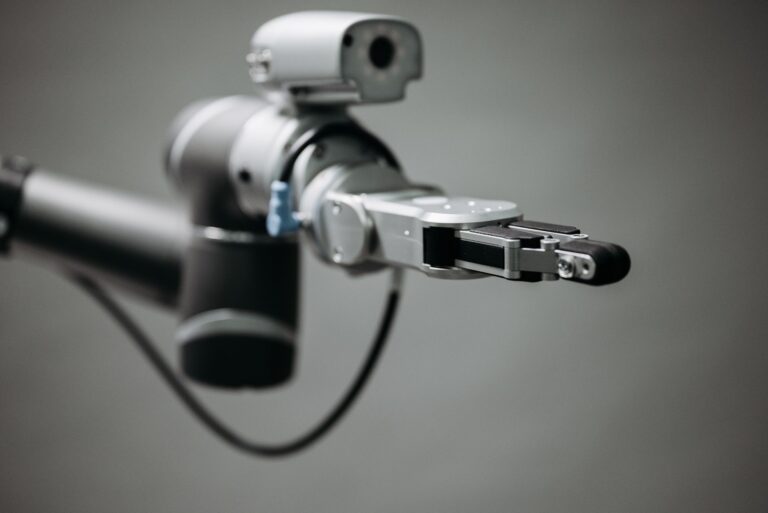

Pittsburgh International Airport is testing up to four autonomous quadruped robots in its Airside Terminal. The six-month pilot with Pittsburgh-based Skild AI runs under the airport's xBridge innovation program, as reported by Aerospace Global News in its pilot account.
A quadruped is a four-legged walking robot that steps over obstacles instead of rolling on fixed wheels. The machines operate in live post-security areas shared by travelers and staff. The trial studies how legged robots handle crowds, clutter, and routine facility checks during normal airport work.
Table of Contents
- What jobs are the robots testing first?
- How do they navigate a busy terminal?
- Who runs the trial on the ground?
- What are the limits of this test?
What jobs are the robots testing first?
The pilot starts with indoor air-quality monitoring. One roaming robot collects readings during patrols, as described by Travel Noire in its demonstration report. It sends an alert to airport personnel when a measurement falls outside defined parameters.
A later phase widens the task list to work that supports custodial crews between cleaning rounds. A Sept. 29 demonstration used an overflowing trash can as the test case in a busy terminal. That phase covers three practical checks:.
- spill detection on terminal floors
- full or nearly full trash-can detection
- congestion reporting for terminal operations
How do they navigate a busy terminal?
Each robot uses Skild AI adaptive autonomy software for movement and perception. Cameras, environmental sensors, and AI-driven perception help it travel on its own, spot anomalies, and send real-time data to operations staff.
The wheeled-leg design shown to reporters combines legs with wheels for terminal floors. That layout suits long patrol routes, door thresholds, and crowded areas where a pure walker or pure roller may struggle.
Who runs the trial on the ground?
Skild AI is a Pittsburgh startup founded by Carnegie Mellon Robotics Institute and School of Computer Science faculty Deepak Pathak and Abhinav Gupta. The company is building general robot autonomy that can move across different robot bodies.
The airport deployment uses two charging stations with defined patrol areas and avoid zones, according to Travel Extra in its deployment report. Skild AI handles installation, mapping, supervision, and staff training. A company monitor watches during the trial.
What are the limits of this test?
This is a supervised proof-of-concept in designated post-security areas, as noted by Technical.ly in its pilot overview. The point is to learn how the robots behave around real people.
It is not a permanent airport-wide rollout for security or delivery. Readers should judge it on reliable patrols, clean handoffs to staff, and safe crowd behavior. A Skild AI monitor watches during the trial.