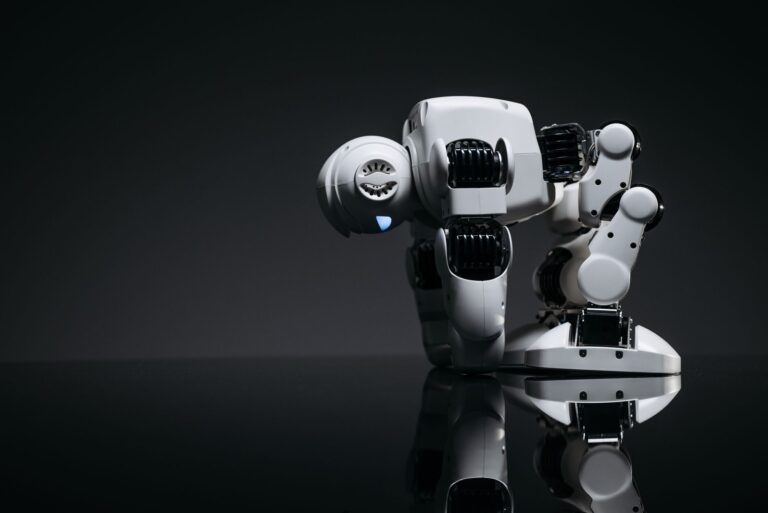

The next Nvidia in robotics won’t be the company building the robots themselves—it will be the companies supplying the infrastructure that makes those robots possible. Just as picks and shovels sellers made fortunes during gold rushes by providing tools to miners, the real wealth in the robotics boom may accrue to infrastructure suppliers: the chip test equipment makers, the cable manufacturers, the memory suppliers, and the foundries that enable the AI and automation revolution. As hyperscalers project to spend around $700 billion on AI data centers in 2026 alone, and industrial robotics partnerships accelerate—like Humanoid’s recent deployment agreement with Schaeffler for German production environments, and Aptiv’s joint venture with Comau on advanced warehouse automation—the bottlenecks shifting to physical infrastructure reveal which suppliers will capture outsized profits. The robotics industry stands at an inflection point. Nvidia’s CEO declared at GTC 2026 that “every industrial company will become a robotics company,” and the company’s new Physical AI platforms (Isaac and GR00T) are already driving deployment momentum.
But building robots at scale requires foundational infrastructure that few companies can supply. Teradyne’s stock is up 57% year-to-date and 69% over 52 weeks, valued at $30.5 billion, precisely because semiconductor test equipment—the unglamorous tool for validating AI chips—has become the binding constraint. Credo Technology, a supplier of Active Electrical Cables connecting AI server clusters, has surged 1,700% since its 2022 IPO and posted 278% year-over-year product revenue growth. These aren’t sexy robot companies. They’re the picks and shovels of the robotics era.
Table of Contents
- Why Picks and Shovels Infrastructure Outperforms Robot Makers
- The Hardware Bottlenecks Shaping the Robotics Supply Chain
- Cable Infrastructure and the Hidden Cost of AI Scale
- Semiconductor Manufacturing Capacity and the ASML Chokepoint
- Memory Supply and the Hidden Complexity of High-Performance AI Systems
- Real-World Robotics Deployment Accelerating in May 2026
- The Geopolitical Reshuffling and Supply Chain Restructuring
- Conclusion
Why Picks and Shovels Infrastructure Outperforms Robot Makers
History suggests that infrastructure suppliers often outperform the end-product companies they serve. During the California Gold Rush, pick and shovel manufacturers made steadier, more predictable profits than most miners. In semiconductors, ASML—the Dutch lithography equipment maker—has generated extraordinary shareholder returns despite being invisible to consumers. The same pattern is emerging in robotics: as Nvidia, Tesla, Boston Dynamics, and others race to deploy robots, they depend on a supply chain of specialized manufacturers that face hard technical limits and few substitutes. The arithmetic is straightforward.
A single Advanced Chip Manufacturer facility can spend hundreds of millions on equipment from suppliers like Teradyne and ASML. Teradyne’s test equipment validates every advanced AI chip before it ships; without it, yields collapse and timelines slip. ASML’s Extreme Ultraviolet (EUV) lithography machines, each priced at $200 to $400 million, are the only tools capable of manufacturing the most advanced chips. TSMC, the world’s primary foundry for cutting-edge AI processors, is bottlenecked not by demand or talent, but by delivery schedules of ASML’s machines. That hard constraint creates pricing power and margin stability that robot companies themselves rarely enjoy.

The Hardware Bottlenecks Shaping the Robotics Supply Chain
The robotics revolution is being constrained by three critical bottlenecks, each controlled by a handful of companies. First is chip manufacturing capacity: ASML is the sole supplier of EUV lithography equipment, and its delivery schedule directly determines how many advanced AI chips TSMC can produce. ASML has limited production capacity and faces geopolitical headwinds in exporting to China, meaning Western foundries are competing fiercely for every machine delivered. this creates a years-long queue and justifies ASML’s stratospheric valuations. Second is the validation of those chips: Stifel upgraded Teradyne to “Buy” in December 2025, citing growing AI test revenue, and UBS analysts identified Teradyne as a potential second-source supplier for Nvidia’s Blackwell chips. Every wafer that ships must be tested; without reliable test equipment, yield rates drop and customers lose faith. Third is the memory that powers AI inference: Micron is the primary supplier of HBM (high-bandwidth memory) for AI processors, and analysts project the HBM market will grow from $35 billion in 2025 to $100 billion by 2028.
That explosive growth means Micron’s capacity additions will lag demand for years. A critical limitation of this supply-chain view is that infrastructure suppliers themselves face execution risk. If Teradyne’s test equipment underperforms, or if Credo’s cables fail under thermal stress, the entire chain breaks. Unlike a robot company that can pivot its product roadmap, an infrastructure supplier that misses on reliability becomes obsolete. Additionally, infrastructure suppliers often operate on thin margins despite their market power. They must invest heavily in R&D and manufacturing capacity to stay ahead of demand, and price pressure from large customers (like TSMC or Nvidia) can compress profitability. Investors in picks-and-shovels plays should expect volatility and the possibility of disruption from new entrants or alternative technologies.
Cable Infrastructure and the Hidden Cost of AI Scale
One of the least understood bottlenecks in the robotics and AI ecosystem is connectivity—specifically, the cables that link AI servers into coherent systems. Credo Technology manufactures Active Electrical Cables (AECs) that carry high-speed data between GPU-accelerated servers in data centers, a critical component for training large models and running real-time AI inference on industrial robots. Credo’s growth trajectory has been dramatic: up 1,700% since its 2022 IPO, with 278% year-over-year product revenue growth, and analysts project an additional 60% upside from current levels. The reason for this explosive growth is simple: as data centers scale to house tens of thousands of GPUs, the power density and signal integrity challenges of connectivity become paramount. Passive cables can no longer handle the speeds required. Credo’s AECs solve this by integrating signal conditioning and amplification directly into the cable, enabling longer runs at higher speeds without signal degradation.
Credo’s dominance in this niche is not absolute, however. Competitors like Amphenol and TE Connectivity have begun developing alternative interconnect solutions, and as volumes grow, alternative technologies (optical cables, backplane solutions) could emerge. The window of opportunity for AEC specialists may have a time limit. Additionally, Credo is entirely dependent on demand from hyperscalers and their willingness to adopt AECs over alternative solutions. A slowdown in data center spending, or a shift in architecture away from tightly coupled server designs, could rapidly erode Credo’s growth. The valuation premium already reflects optimism about these trends; there is limited room for disappointment.
Semiconductor Manufacturing Capacity and the ASML Chokepoint
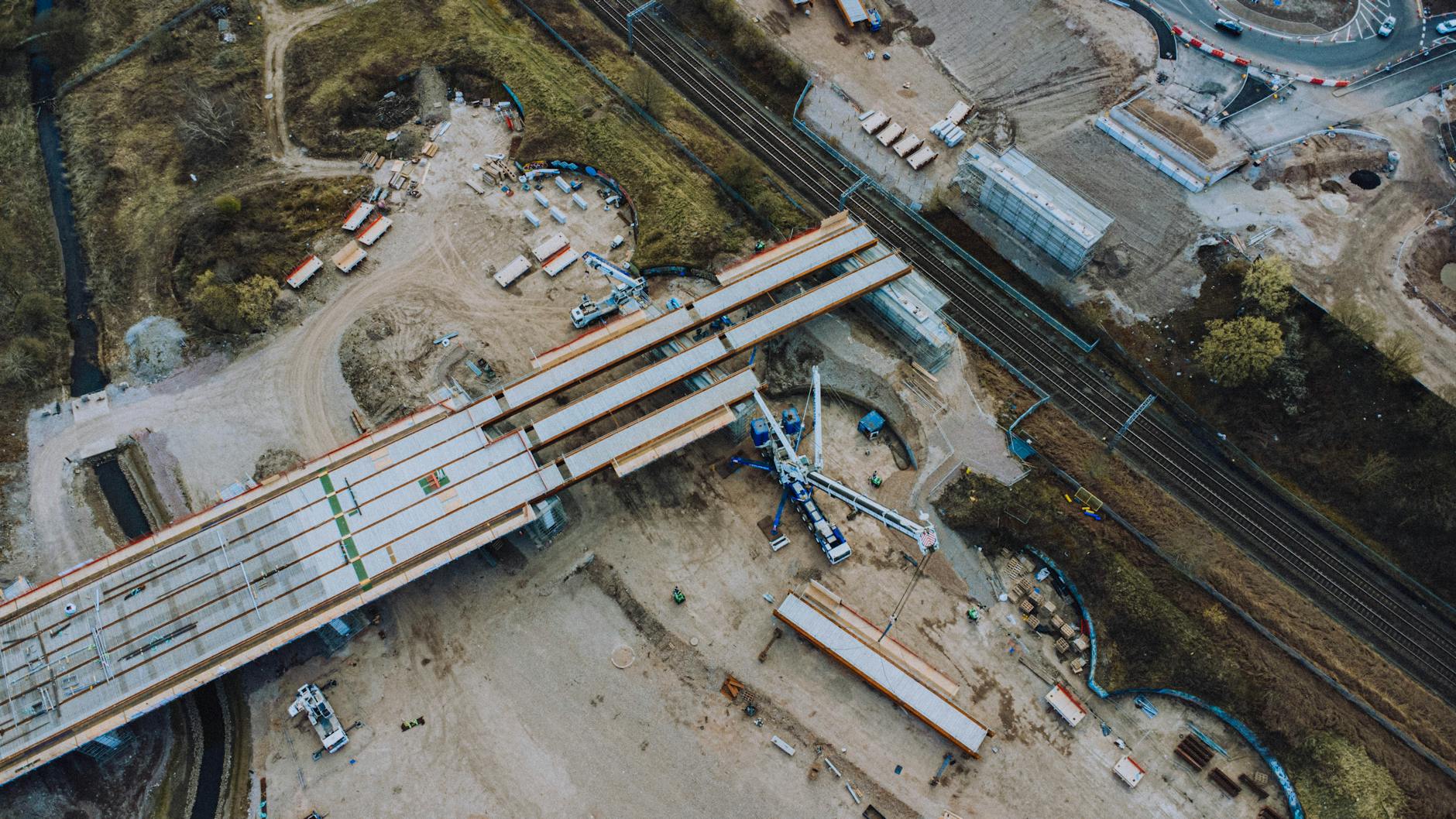
ASML stands alone as the sole supplier of EUV lithography systems, the machines required to manufacture the most advanced semiconductors. This monopoly is the result of decades of technological superiority and regulatory protection—the Dutch government restricts ASML’s export of cutting-edge equipment to China. Each EUV machine sells for $200 to $400 million and takes years to deliver. TSMC, Samsung, and Intel all compete for ASML’s delivery slots, and the wait list extends years into the future. This creates a structural constraint on AI chip production: no matter how much demand exists for Nvidia chips, TSMC cannot manufacture more than ASML’s machine deliveries allow.
ASML’s 2026 guidance reflects this bottleneck; the company is selling near maximum capacity, which means pricing power and margin expansion for years to come. The practical implication is that during the robotics boom, chip manufacturing capacity will be the ultimate limiting factor. Companies that secure dedicated manufacturing capacity—through long-term contracts, equity investments, or partnerships—gain a structural advantage. Nvidia has already begun funding new fabs and partnerships (like with Intel) to ensure supply. Startups without such relationships may find themselves unable to access the latest chips, relegating them to older, less capable architectures. This is a constraint on competition itself: it favors large, well-capitalized players and creates natural moats around incumbent robotics companies.
Memory Supply and the Hidden Complexity of High-Performance AI Systems
HBM (high-bandwidth memory) is a specialized type of memory that sits directly adjacent to GPUs, providing the massive bandwidth required for real-time AI inference. Micron dominates this market, with SK Hynix and Samsung as secondary suppliers. The HBM market is projected to expand from $35 billion in 2025 to $100 billion by 2028, a tripling in three years. This explosive growth is driven by the need to serve more AI workloads simultaneously across data centers and, increasingly, embedded AI systems in robots. A single advanced AI data center consumes thousands of HBM modules; each industrial robot with on-device inference capability requires specialized memory packages. Micron’s ability to expand production to meet this demand will constrain the entire ecosystem.
One critical limitation is that HBM technology is still evolving. Current HBM4 generations offer significant bandwidth, but power consumption and thermal management remain challenges in embedded robotics applications. Next-generation HBM standards (HBM5, future roadmaps) will offer better performance but require significant equipment and manufacturing changes. If Micron stumbles on the transition to next-generation standards, competitors could gain share. Additionally, not all AI workloads require the highest-performance HBM; some robotics tasks can function with cheaper, lower-latency alternatives. This creates a risk that HBM demand growth is front-loaded and may slow as the market matures and adopts more efficient architectures.
Real-World Robotics Deployment Accelerating in May 2026
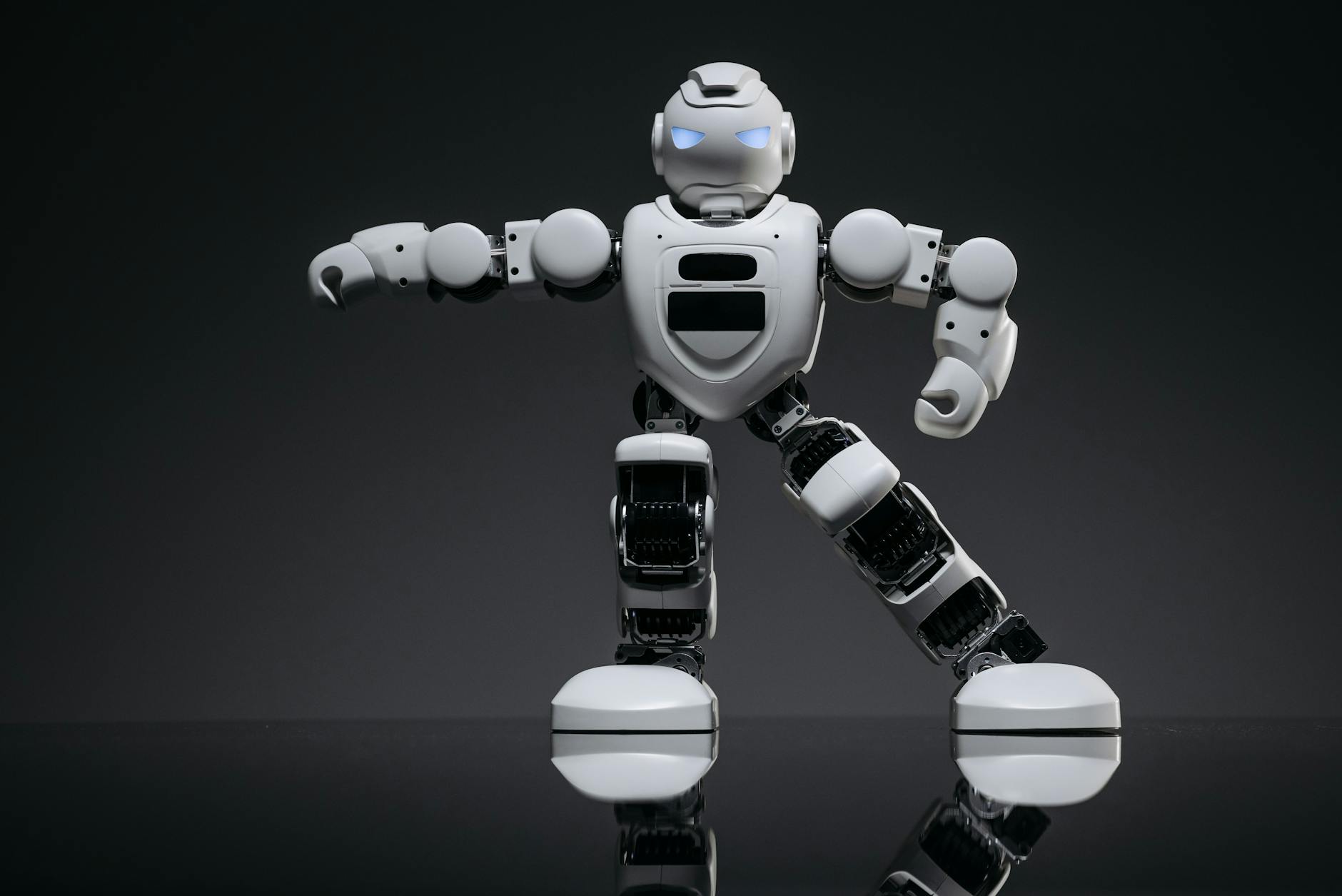
The robotics deployment ecosystem is accelerating rapidly in real time. In May 2026, Humanoid and Schaeffler announced a deployment agreement to bring humanoid robots into German production environments, a significant milestone showing that industrial robotics are moving from prototype to scaled deployment. Simultaneously, Aptiv and Comau jointly announced advanced robotics and automated warehouse systems, demonstrating that robotics partnerships are becoming mainstream in logistics and manufacturing. These partnerships represent the end-to-end ecosystem that Nvidia CEO described: industrial companies becoming robotics companies. Each deployment requires thousands of components from picks-and-shovels suppliers: test equipment, cables, memory, sensors, actuators, and foundry capacity.
These May 2026 deployments are not isolated experiments. They signal a shift from R&D phase to production phase for industrial robotics. This transition increases demand across the supply chain, creating multi-year tailwinds for infrastructure suppliers. A single humanoid robot deployment facility might require dedicated manufacturing support, specialized test equipment, and custom AI compute capacity—all of which flow through picks-and-shovels companies. The shift also reveals geopolitical dimensions: many Western companies are pursuing “lights-out” manufacturing (fully automated, minimal human presence) partly in response to supply chain reshuffling and the cost of nearshoring production back to developed economies. This geographic reshuffling accelerates automation investment in Western countries, further boosting demand for the companies that supply it.
The Geopolitical Reshuffling and Supply Chain Restructuring
Underlying the picks-and-shovels opportunity is a profound geopolitical restructuring. Western governments are incentivizing automation investment through subsidies, export controls, and tax incentives as they nearshore supply chains away from China and other geopolitically sensitive regions. The Inflation Reduction Act in the U.S., the European Chips Act, and equivalent programs in other developed economies are explicitly funding manufacturing capacity in the West. This pushes industrial companies to automate faster than they would otherwise, and it concentrates those automation investments in geographies where picks-and-shovels suppliers have established facilities and relationships. Mawer Investment Management noted in their analysis that “the robotics supply chain includes makers of sensors, actuators, and specialized chips forming the robot’s body and brain,” and that geopolitical reshuffling is driving Western investment in lights-out manufacturing.
This creates a multi-year tailwind for companies that supply that ecosystem. This geopolitical advantage is not permanent. Supply chains can shift again; technologies can be developed elsewhere; regulatory incentives can expire. Chinese robotics companies and manufacturers are advancing rapidly and will eventually compete in these markets. The window for Western suppliers to consolidate market positions and build moats is open now, but it will not remain open indefinitely. Companies that invest in capacity and relationships during this window will capture the bulk of the value; those that hesitate may find themselves competing on cost in a mature market where margins have compressed.
Conclusion
The next Nvidia in robotics likely will not be a robotics company at all. It will be an infrastructure supplier—a company that provides the picks and shovels that enable others to build and deploy robots at scale. Teradyne, ASML, Credo, and Micron are the leading candidates, each controlling a critical bottleneck in the supply chain. The $700 billion in hyperscaler spending projected for 2026, combined with accelerating robotics deployments in real industrial environments, ensures that these bottlenecks will persist for years.
Infrastructure suppliers have pricing power, margin stability, and exposure to multi-year demand growth that end-product companies rarely enjoy. While picks-and-shovels plays carry execution risk and are not immune to technological disruption, history suggests they will outperform the more glamorous robotics companies they serve. For investors seeking exposure to the robotics boom, infrastructure suppliers merit serious consideration. For robotics companies planning deployments, securing partnerships and contracts with these suppliers early will be critical to execution success. The robotics revolution is real, but its primary beneficiaries may not be the companies building the robots—they may be the companies supplying the tools.