
The next dominant force in robotics may not be another artificial intelligence software company or a robotics system integrator—it could very well be a specialized chip supplier. As robotics applications expand from manufacturing floors to autonomous systems and industrial automation, the demand for purpose-built silicon has exploded. The company that controls the processor architecture powering the majority of deployed robots could accumulate the kind of market power and recurring revenue that NVIDIA has achieved in data centers.
The Jetson Thor, which shipped starting November 2025 at $3,499 for developers and $2,999 per module in production volumes, represents the current benchmark for AI-capable robotics processors, but emerging competitors from AMD, SambaNova, and Qualcomm suggest the market is beginning to splinter into specialized tiers. The robotics industry reached an inflection point in 2025 and early 2026 when multiple vendors simultaneously released competing platforms targeting robotics teams that previously had few alternatives beyond NVIDIA’s Jetson line. NVIDIA’s dominance in this space is not yet threatened, but the ecosystem is developing in ways that mirror the GPU compute market a decade ago—multiple credible suppliers offering different performance tiers, cost structures, and optimization strategies. Understanding this shift matters because chip choice cascades through system architecture, software tooling, and total cost of ownership for robotics programs that may run for five to ten years.
Table of Contents
- Why Robotics Chip Suppliers Matter More Than Robotics Startups
- The Jetson Thor’s Advantage and Its Hidden Constraints
- AMD’s Targeted Challenge with Ryzen AI Embedded
- SambaNova’s Performance Play and the TCO Alternative
- Qualcomm’s Disruption of the Developer Platform Market
- Power Efficiency and the Mobile Robotics Constraint
- The Next Supplier Will Likely Specialize, Not Dominate
- Conclusion
Why Robotics Chip Suppliers Matter More Than Robotics Startups
A robotics chip supplier controls the foundation upon which entire systems are built. Unlike a robotics company that sells complete platforms or software, a chip supplier’s decision to include or exclude a feature—support for a particular neural network framework, specific I/O interfaces, memory configurations—determines what every downstream roboticist can do. The Jetson Thor, for example, delivers 2,070 FP4 teraflops of AI performance with 128GB of memory in a 130-watt thermal envelope. Those specifications aren’t negotiable for a roboticist designing a vision system; they either fit the constraints or they don’t.
A robotics startup can pivot, rebrand, or be acquired; a chip supplier that becomes the de facto standard becomes structurally embedded in the industry. The financial picture explains why this matters. NVIDIA’s Jetson Thor pricing—$2,999 per unit for orders over 1,000—means a medium-scale robotics deployment could represent six or seven figures in processor purchases alone. When multiplied across thousands of developers, integrators, and manufacturers building systems, a single chip supplier can generate recurring revenue streams that rival software licensing. The company that powers 70 percent of deployed robots doesn’t need to build any robots itself; it simply sells the brain, captures the margin, and influences the technology roadmap for its entire downstream market.
The Jetson Thor’s Advantage and Its Hidden Constraints
NVIDIA’s current advantage rests on three factors: an established ecosystem of CUDA-based tools and libraries, proven performance, and aggressive specifications. The Jetson Thor’s 14-core Arm Neoverse-V3AE CPU paired with 128GB of LPDDR5X memory and a 130-watt power budget delivers 7.5 times more AI performance than the previous-generation Jetson Orin while consuming 3.5 times less energy per operation. For roboticists building autonomous systems, those metrics translate directly to either smaller batteries, longer operational windows, or more complex neural networks running in real time. The General Availability announcement from August 25, 2025, followed by actual shipments in November 2025, established NVIDIA’s timing advantage. The constraint few roboticists discuss openly is thermal management.
A 130-watt chip in a mobile robot demands active cooling in most deployments. That requirement adds cost, complexity, and power draw. For outdoor or dusty environments, active cooling becomes a maintenance liability. Smaller robots—collaborative arms under 10 kilograms, mobile manipulators in food processing environments—sometimes need to run inference on smaller, fanless devices. NVIDIA addresses this through its broader Jetson line, but it means no single NVIDIA product is optimal for all robotics applications. This fragmentation within NVIDIA’s own portfolio created an opening for competitors.
AMD’s Targeted Challenge with Ryzen AI Embedded
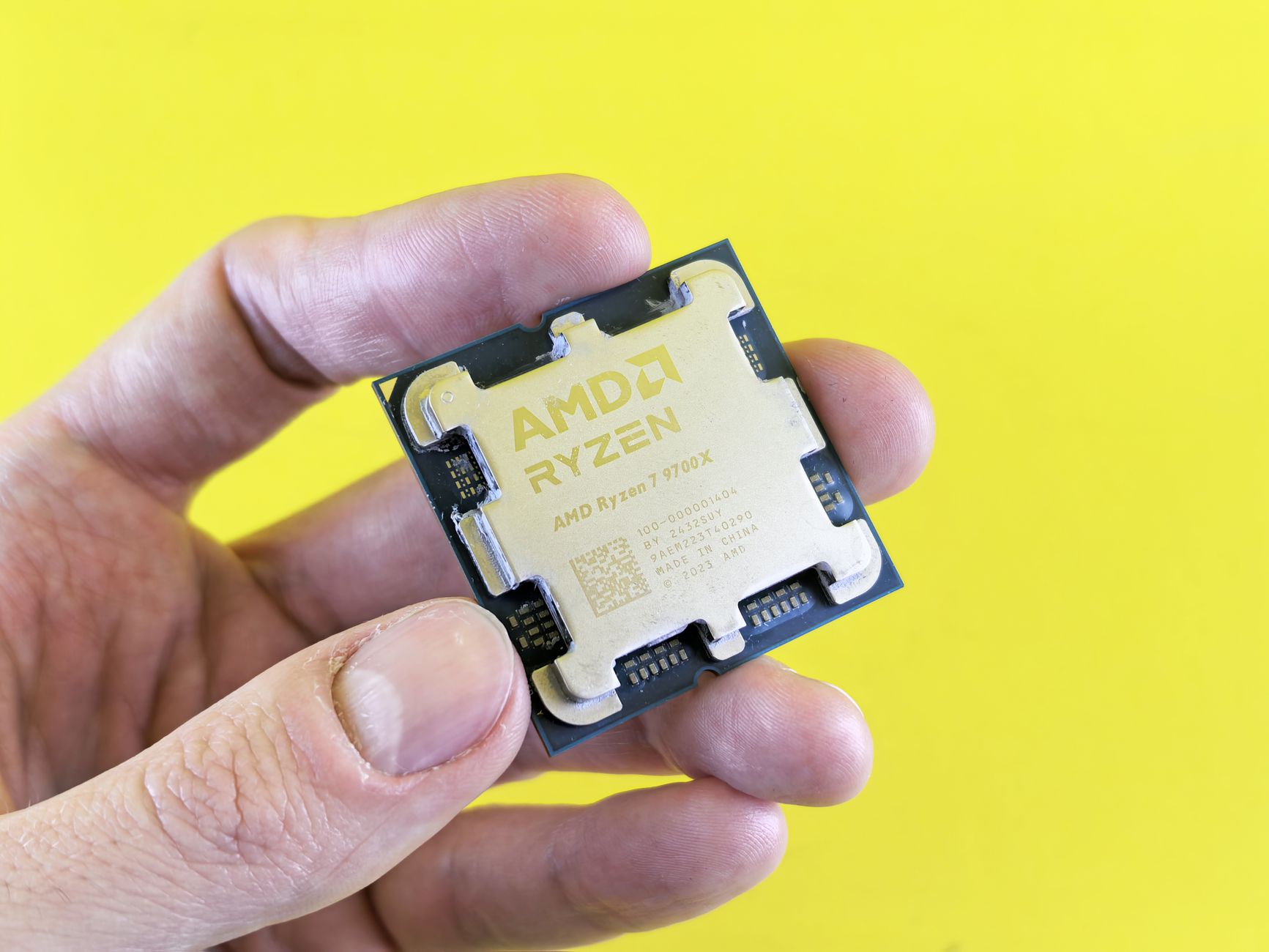
AMD’s entry into the robotics chip market arrived in January 2026 with the Ryzen AI Embedded series, specifically the P100 variant designed for human-machine interfaces and industrial automation, and the X100 variant with up to 16 CPU cores targeting autonomous systems and robotics workloads directly. AMD’s strategy differs from NVIDIA’s—rather than building a single flagship processor and extending downward, AMD is segmenting by application first. The X100’s focus on CPU performance alongside AI acceleration represents a different bet: that many robotics workloads don’t need the extreme GPU parallelism NVIDIA optimizes for, and that having more flexible CPU cores delivers better real-world performance. The practical implication is visible in early deployments.
A collaborative robot running both inverse kinematics calculations (CPU-heavy) and object detection (GPU-accelerated) potentially executes more efficiently on AMD’s multi-core architecture than on a GPU-dominant Jetson. However, AMD faces the ecosystem disadvantage that has been the Jetson’s greatest strength. CUDA libraries, PyTorch CUDA kernels, ROS packages optimized for NVIDIA—these tools developed over a decade don’t transfer directly to AMD hardware. A team switching from Jetson to Ryzen AI Embedded needs to validate that their specific perception pipeline, motion planning library, or control software performs acceptably on the new platform. That friction is small enough to overcome in greenfield projects but large enough to keep existing deployments loyal to NVIDIA.
SambaNova’s Performance Play and the TCO Alternative
SambaNova released the SN50 in February 2026, positioning it explicitly against GPU-based robotics processors with claims of 5 times faster execution and 3 times lower total cost of ownership for agentic AI workloads. Unlike NVIDIA’s incremental performance improvements or AMD’s architectural diversification, SambaNova’s bet is on a fundamentally different chip architecture—their dataflow approach to processing neural networks—that trades some generality for raw speed on transformer-based models. For roboticists deploying large language models as reasoning engines (a growing trend in task planning and semantic understanding), the SN50’s speed advantage could be decisive. The TCO claim deserves scrutiny.
SambaNova’s lower cost projection depends on amortizing development time, training data preparation, and software optimization across enough deployments to exceed the threshold where speed advantages exceed the added engineering burden. For a robotics program with limited software resources or established workflows around PyTorch, the “lower TCO” may only materialize if SambaNova’s ecosystem matures faster than historical trends suggest. This is the classic risk of backing an architectural underdog: superior performance on paper doesn’t guarantee adoption if ecosystem friction remains high. SambaNova is aware of this and has focused early efforts on securing partnerships with large system integrators that can absorb upfront optimization costs.
Qualcomm’s Disruption of the Developer Platform Market
Qualcomm’s entry into robotics processors through the Snapdragon Robotics Development Platform with Dragonwing, unveiled at CES 2026, takes a different approach entirely. Rather than competing on absolute performance, Qualcomm is targeting the developer segment—engineering teams at universities, startups, and integrators currently using Jetson for prototyping and learning. Dragonwing and the Snapdragon Robotics platform aim directly at reducing the barrier to entry and providing a migration path for teams that don’t require Jetson-class performance. This segment matters more than many in the industry acknowledge.
The roboticists who cut their teeth on a Jetson for undergraduate research projects often specify Jetson for their first industry roles. By capturing this developer audience early, Qualcomm influences purchasing decisions five and ten years downstream. The risk for Qualcomm is that many of these developers eventually do need Jetson-class performance and migrate back to NVIDIA. But if Snapdragon Robotics can create a smooth upgrade path—staying within Qualcomm’s ecosystem while scaling performance—the developer advantage compounds. NVIDIA’s equivalent developer program has been strong, but having one fewer major competitor for mindshare among emerging roboticists represents a meaningful strategic loss.
Power Efficiency and the Mobile Robotics Constraint
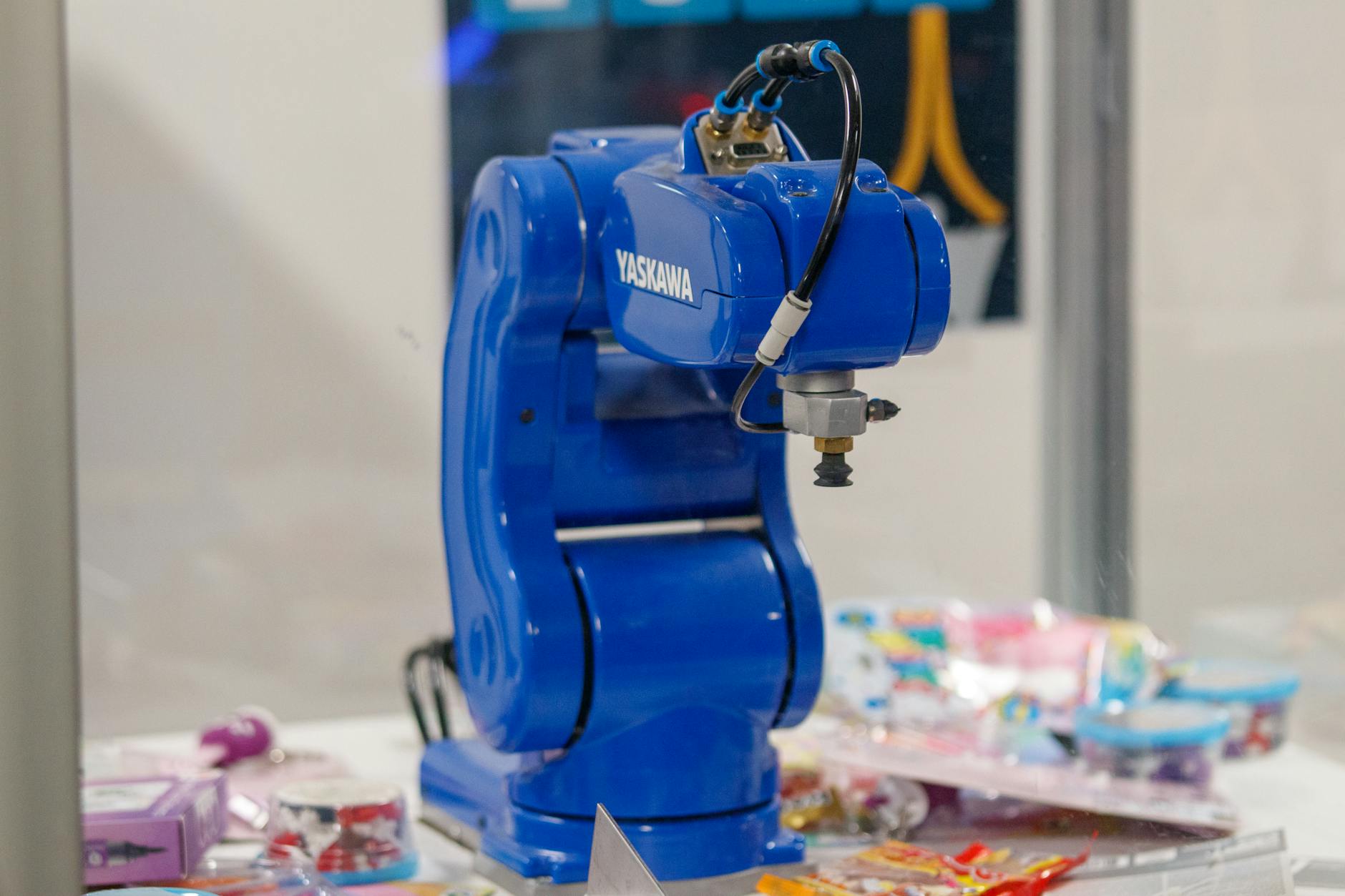
Mobile robots—autonomous mobile bases, delivery robots, inspection drones—operate under relentless power constraints. A robot that requires 130 watts of processing power simply cannot run for eight hours on a mobile base’s battery without dramatic oversizing of the power system, which increases cost and reduces payload capacity. This constraint has driven some roboticists toward edge deployment, running lighter models on smaller processors (often with Jetson Nano or Xavier at lower power budgets) and reserving the flagship processors for stationary systems or highly constrained real-time applications.
The emerging standard for mobile robotics is a heterogeneous approach: lightweight processors (ARM Cortex-A or similar) for motion control and basic perception, connected to a heavier processor via PCIe or Ethernet for intensive AI workloads when needed. This architecture decouples power constraints from processing capability, allowing teams to keep the 130-watt Jetson Thor inactive during transit and power it on only when the robot enters a task-intensive phase. However, this design pattern creates its own complexity and latency. A robotics chip supplier that can deliver Jetson Thor performance in a 50-watt or 60-watt envelope would immediately reshape system architecture across the industry.
The Next Supplier Will Likely Specialize, Not Dominate
The trajectory of the robotics chip market suggests the eventual winner won’t look like NVIDIA’s dominance in data centers—a single player controlling 80-90 percent of the market. Instead, the market is likely to stratify into specialized segments: high-performance GPU-centric suppliers for compute-intensive autonomous systems, efficiency-focused providers for mobile robotics, cost-optimized solutions for manufacturing, and specialized architectures for specific workloads like real-time control or vision processing. The “next NVIDIA” in robotics may actually be the supplier that successfully positions itself as the standard in one of these segments rather than achieving broad dominance across all applications. This fragmentation reflects the maturation of the robotics market itself.
As robotics applications diversify—manufacturing, logistics, agriculture, healthcare, service—the processing demands diverge. A surgical robot, an autonomous harvester, and a warehouse mobile manipulator have almost nothing in common from a chip requirements perspective. The supplier that understands this heterogeneity and builds specialized products rather than attempting universal solutions will likely capture the most defensible market position. NVIDIA’s current strength comes partly from the fact that many roboticists still treat the Jetson line as the default choice, not because it’s necessarily optimal for their specific application, but because it’s the known solution. The company that breaks that default by offering a clearly superior alternative for a large subset of applications could build a durable competitive advantage.
Conclusion
The next NVIDIA in robotics is not necessarily another graphics processor manufacturer or systems integrator. It’s more likely to be a company that understands robotics-specific computing challenges—heterogeneous workload distribution, power efficiency at scale, specialized architecture for control and perception—and builds silicon optimized for those constraints rather than adapting general-purpose computing platforms. NVIDIA’s Jetson Thor remains the performance benchmark and the de facto standard, but the emergence of AMD’s Ryzen AI Embedded, SambaNova’s SN50, and Qualcomm’s Snapdragon Robotics within a single six-month window signals that the market is no longer accepting a monopoly solution.
For roboticists and system integrators evaluating processors today, the key lesson is that choice now exists where it didn’t two years ago. Evaluate your workload’s actual requirements—power budget, performance profile, ecosystem compatibility, and support from your chosen software frameworks—rather than defaulting to the market leader. The company that wins the next decade of robotics probably won’t win by doing what NVIDIA does, but by understanding what NVIDIA’s dominance obscures about the real diversity of robotics applications.