
Yes, the next Nvidia in robotics could very well be a robotics control systems company. While Nvidia dominates the hardware backbone of robotics through its processors and foundation models, control systems companies are positioning themselves to become the critical software layer that directs how robots actually move, perceive, and make decisions in the physical world. This isn’t speculation—the funding markets are already signaling this shift. Skild AI raised $1.4 billion in a Series C round in early 2026, catapulting its valuation from $4.5 billion to over $14 billion in just seven months, making it the largest robotics control systems funding round on record. This single investment exceeds the annual budgets of most robotics companies and reflects deep confidence that whoever controls the software that governs robot behavior could capture the kind of market dominance Nvidia achieved in AI compute.
Control systems companies sit at an inflection point. Nvidia provides the silicon and training models, but a robot still needs to translate those models into physical action—coordinating motors, managing sensors, adapting to environmental changes, and ensuring safety across thousands of different industrial applications. That translation layer is where control systems specialists operate, and it’s where the real competitive moat is forming. Across the industry, funding reflects this reality: Physical Intelligence secured $400 million from backers including Jeff Bezos, and smaller players like Konnex raised $15 million in January 2026 to build autonomous robotics platform software. Meanwhile, the global robotics market is projected to reach $124.37 billion in 2026, up from $10.3 billion in venture funding alone in 2025.
Table of Contents
- Why Control Systems Could Become the Dominant Layer in Robotics
- The Massive Capital Influx Signals Confidence in the Control Systems Model
- Nvidia’s Own Strategy Reveals Where Real Competition Lies
- How Industrial Robotics Companies Are Betting on Control Systems Specialization
- The Critical Risk: Control Systems Fragmentation Could Prevent Dominance
- Strategic Examples: Where Control Systems Create Real Economic Value
- The Nvidia-Robotics Ecosystem Points Toward a Multi-Layer Market Structure
- Conclusion
Why Control Systems Could Become the Dominant Layer in Robotics
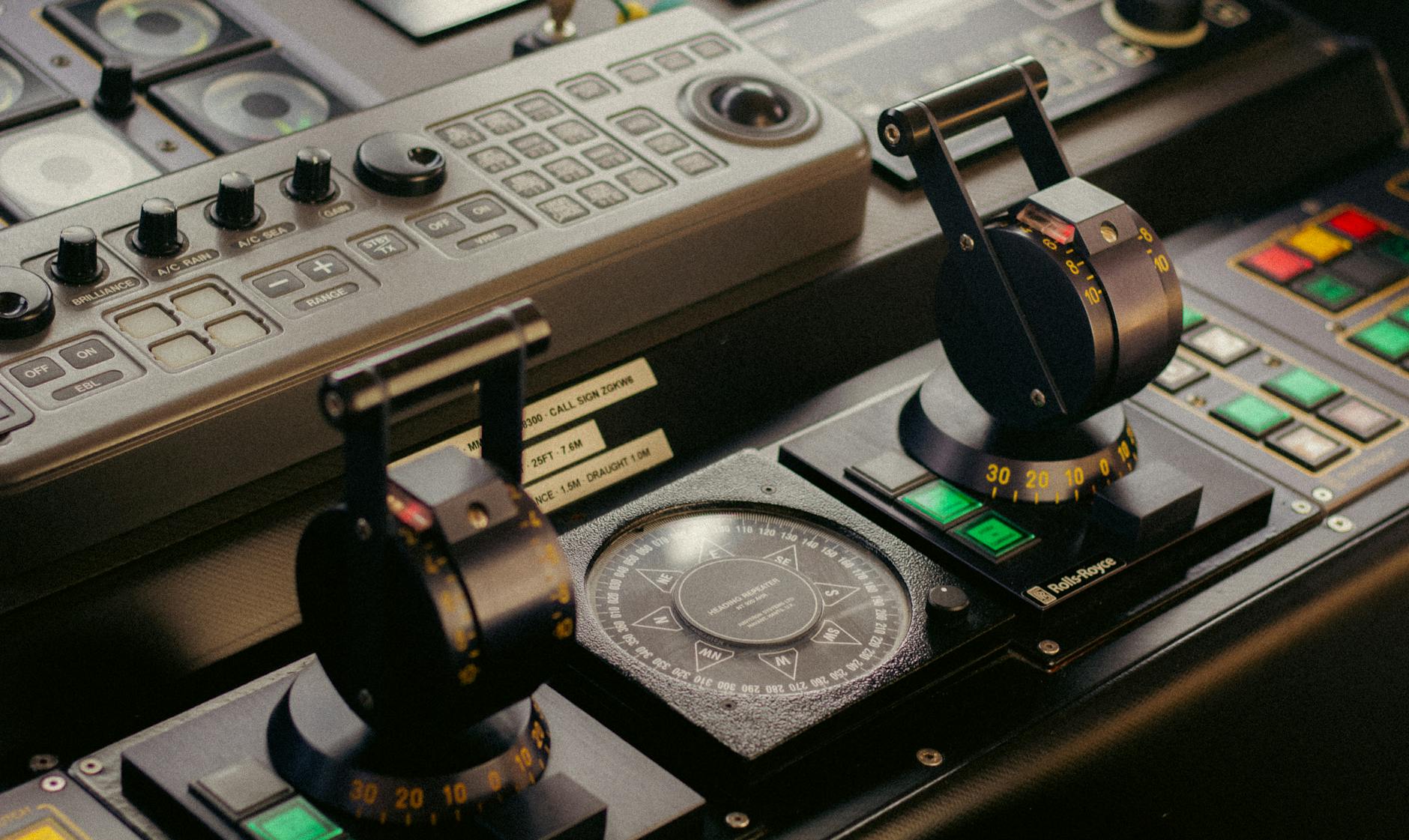
Control systems companies operate at the nexus of software and physics. They don’t build the chips that power robots, and they don’t train the large language models that robots increasingly rely on. Instead, they create the software framework that decides how a robot interprets sensory input, makes decisions, and executes physical movements. This is less visible than hardware but far more critical to actual functionality. A robot with cutting-edge processors and perfect AI models is useless if it can’t coordinate its actuators, manage real-time constraints, or handle the friction of actual industrial environments.
The comparison to nvidia is apt but incomplete. Nvidia became dominant because every AI application needed its GPUs—the company created an essential dependency. Control systems companies are pursuing a parallel strategy but in software: become the operating system for robot behavior that no major robotics manufacturer can avoid using. Unlike Nvidia’s generalist approach, control systems specialists can go deep into vertical markets—autonomous vehicles need different control logic than surgical robots, which differ fundamentally from warehouse automation systems. This fragmentation actually strengthens the control systems thesis: whoever builds the standard software platform for each vertical could command pricing power comparable to Nvidia’s current position.
The Massive Capital Influx Signals Confidence in the Control Systems Model
The funding numbers tell a compelling story about investor conviction. Skild AI’s $1.4 billion Series C is not an outlier but rather the leading edge of a broader trend. In 2025, global robotics funding reached $10.3 billion—the highest level since 2021—and control systems companies captured a disproportionate share of that capital. this concentration of funding in control software rather than hardware robotics companies suggests investors believe the value accrual will flow upward into the software layer, not downward into commodity hardware manufacturers.
One critical limitation, however, is that massive funding doesn’t automatically translate into market dominance. Physical Intelligence and Skild AI are still privately held, and their valuations are based on projected future revenue, not proven ability to capture market share. The robotics industry is fragmented across industries with different requirements, safety standards, and integration challenges. A control systems company that excels in automotive might struggle to apply that expertise to surgical robotics or warehouse logistics. This vertical fragmentation means the “next Nvidia” may not be a single dominant company but rather several specialists, each commanding Nvidia-like margins within their specific domain.
Nvidia’s Own Strategy Reveals Where Real Competition Lies
Nvidia is not passive in this space. The company released GR00T N2, its next-generation robot foundation model, which achieves more than double the success rate on new tasks compared to competing vision-language-action models. Nvidia also claims a global install base exceeding 2 million robots powered by its technology. These numbers position Nvidia as not just a supplier but an end-to-end player in robotics intelligence. Yet even Nvidia’s massive resources and installed base cannot handle the specific control logic requirements across all robotics applications.
This is where the control systems opportunity emerges. Even with Nvidia’s advanced foundation models running on its processors, manufacturers still need specialized software to translate those models into safe, reliable, production-grade robot behavior. Nvidia’s recent expansions suggest the company recognizes this—by developing GR00T N2 and building a robotics ecosystem, Nvidia is moving up the stack toward becoming a complete platform. But this also creates friction with existing robotics manufacturers and control systems specialists, suggesting that rather than Nvidia absorbing the entire value chain, we’ll see a partnership model where Nvidia provides the intelligence layer and specialized control systems companies provide the execution layer. This division of labor benefits companies that can own the control systems domain.

How Industrial Robotics Companies Are Betting on Control Systems Specialization
The broader robotics industry is making billion-dollar bets on control systems as the critical capability. SoftBank agreed to acquire ABB’s robotics division for $5.375 billion, and ABB is simultaneously planning to spin off its robotics unit as a separate publicly listed entity targeting a $3.5 billion valuation in 2026. These moves signal that even established hardware-centric robotics companies now view their control software as their most defensible asset—valuable enough to require dedicated, specialized corporate attention. ABB’s spinoff is particularly instructive.
By separating the robotics division, ABB is signaling that controlling the software platform for industrial robot behavior deserves its own capital structure, strategic priorities, and investor profile. Rather than viewing robotics as a peripheral business within a larger industrial conglomerate, ABB is treating it as a potential independent company worth billions. This mirrors historical precedent: when IBM realized that software and services were more valuable than hardware, it transformed its business model. ABB’s spinoff suggests similar recognition that in robotics, the competitive advantage increasingly lies in control systems, not in the mechanical hardware. The tradeoff is execution risk—spinning off a business is organizationally challenging, and ABB must execute perfectly to capture value from this separation.
The Critical Risk: Control Systems Fragmentation Could Prevent Dominance
One major downside to the control systems thesis is that robotics remains deeply fragmented across industries with incompatible requirements. A surgical robotics control system, where millimeter precision and safety certification are paramount, operates under completely different constraints than a warehouse robot optimizing for speed and throughput. This fragmentation means that unlike Nvidia, which could sell the same GPU to every AI application, a control systems company might need to maintain separate product lines for different industries, eroding the margin benefits of scale. Additionally, the barrier to entry for building control software is lower than for manufacturing processors or training foundation models.
Many robotics companies are building proprietary control systems in-house, betting that their vertical expertise is more valuable than outsourced software. This could prevent any control systems company from achieving Nvidia-like dominance across all robotics applications. The risk is that control systems becomes a fragmented market with multiple specialists commanding strong margins in their niches but no single dominant player achieving Nvidia’s position as an irreplaceable enabler of an entire industry. Companies betting on control systems need to choose a vertical and own it completely—trying to be the generic control software platform for all robotics could result in mediocrity across multiple segments rather than excellence in one.

Strategic Examples: Where Control Systems Create Real Economic Value
Real-world examples illustrate why control systems companies command premium valuations. In surgical robotics, companies like Intuitive Surgical generate enormous margins not because of superior hardware—surgical robot arms are relatively simple mechanically—but because of advanced control software that enables precision, real-time feedback, and safety certification that surgeons and hospitals require. Intuitive’s dominance comes from owning the control systems stack, not hardware innovation.
Similarly, in autonomous vehicle development, the software that manages real-time decision-making, sensor fusion, and safe navigation is valued far more highly than the mechanical chassis or even the individual components. Skild AI’s Series C valuation of $14 billion reflects investor belief that it can replicate this model at scale—building the fundamental software framework that robotics manufacturers across industries will depend on. The company’s willingness to invest at that valuation suggests confidence that it can create switching costs and dependencies comparable to Nvidia’s, but at the software layer rather than hardware. Physical Intelligence’s $400 million funding from Bezos and other blue-chip investors indicates similar conviction that universal AI control systems—software that enables robots to generalize across tasks—represents the next major layer of technological dominance.
The Nvidia-Robotics Ecosystem Points Toward a Multi-Layer Market Structure
Nvidia CEO Jensen Huang stated in 2026 that “every industrial company will become a robotics company,” signaling that robotics adoption is about to accelerate dramatically. This prediction, if accurate, suggests exponential growth in demand for robotics control systems over the next decade. Huang’s comment also reveals Nvidia’s confidence in its position within the robotics value chain—the company clearly expects to be the foundational technology layer powering this transformation. But Huang’s statement also implicitly acknowledges that companies building applications for those robots will need specialized software layers to operationalize Nvidia’s AI capabilities.
This multi-layer structure—foundation models and processors from Nvidia, control systems from specialists, application software from vertical integrators—mirrors the evolution of cloud computing and enterprise software. AWS became dominant in cloud infrastructure, but specialized companies like Databricks and Stripe captured enormous value in the layers above AWS. The robotics industry is likely to follow this same pattern, with Nvidia maintaining the foundational hardware and model layer while control systems specialists and application developers build the economically valuable layers above it. The companies winning in control systems will be those that can lock in dependencies at the operational level—making their software so integral to manufacturing workflows that switching costs become prohibitive.
Conclusion
The case for control systems companies becoming the “next Nvidia in robotics” is strong but conditional. Capital is flowing aggressively into companies like Skild AI and Physical Intelligence because investors recognize that whoever controls how robots actually behave in production environments could command similar economic leverage to Nvidia’s position in AI compute. The global robotics market is projected to reach $124.37 billion in 2026, creating a massive opportunity for software platforms that become indispensable to major manufacturers. Industry moves like ABB’s robotics spinoff and SoftBank’s massive acquisition of ABB’s division confirm that established players view control systems as the crown jewel of robotics business value.
However, success requires execution at the highest level and a willingness to go deep into specific verticals rather than attempting to be all things to all robots. The companies that win will be specialists who own the control systems layer for particular industries—surgical robotics, autonomous vehicles, warehouse automation, industrial manufacturing—and make switching to competitors so costly that their software becomes as essential to customers as Nvidia’s chips are to AI developers. The robotics revolution is real, the market opportunity is enormous, and the control systems layer is where value will ultimately accumulate. The next Nvidia won’t necessarily have Nvidia’s name, but it will operate in this critical middle layer between AI models and physical robot behavior.