
Nvidia has already established itself as the foundational infrastructure provider for robotics and autonomous systems, and this position is becoming increasingly strategic as enterprise capital spending pivots toward automation. With 25% of all capital spending projected to shift to automation over the next five years, companies like Nvidia—and the broader ecosystem built around platforms like Jetson—are positioned to capture disproportionate value from this structural shift in industrial investment. For example, when Rockwell Automation announced manufacturing autonomous mobile robots at its Milwaukee headquarters in March 2026, the decision wasn’t about robotics alone; it was a bet that automation spending would accelerate so dramatically that vertical integration into robotics manufacturing became essential. This reflects a deeper pattern: the next dominant player in robotics won’t necessarily be a traditional robot manufacturer, but rather the infrastructure provider that powers the software, hardware, and AI systems that enable others to build and deploy robots at scale.
The robotics market is experiencing a structural expansion that mirrors the infrastructure booms that created technology giants. The global robotics market is projected to reach $124.37 billion by 2026, with expectations of 19.6% compound annual growth through 2036. Industrial robotics alone is forecast to hit $93.31 billion by 2035, while service robotics is projected to reach $65.02 billion by 2030. This isn’t cyclical growth—it’s a reallocation of capital from traditional manufacturing and operations toward automation, AI, and robotics. Manufacturers are projected to more than double their use of AI and automation by 2030, creating a massive addressable market for companies that can provide the computing hardware, software platforms, and AI models that enable this transition.
Table of Contents
- How Is the Robotics Market Capturing Automation Spending?
- The Infrastructure Play Behind Robotics Market Growth
- Where Is Capital Actually Flowing in the Robotics Ecosystem?
- How Manufacturers Are Repositioning for Automation Spending Shifts
- The Risk of Over-Concentration in Single Platforms
- Software and AI Models as the Real Leverage Point
- Looking Forward—The Structural Shift in Industrial Capital Allocation
- Conclusion
How Is the Robotics Market Capturing Automation Spending?
The connection between automation spending and robotics growth is direct and measurable. Over the past five years, more than 10% of all technology investment—averaging over $1 billion monthly in 2023—has flowed into robotics development and deployment. This concentration of capital is not distributed evenly; it flows toward companies and platforms that reduce the barrier to entry for building and deploying robots. When Qualcomm launched its Dragonwing robotics development platform at CES 2026 to compete with nvidia‘s Jetson ecosystem, it was a tacit acknowledgment that platform dominance in robotics development is becoming critical to market capture. The platform provides developers with the necessary hardware, software tools, and AI capabilities to build robotics applications without starting from scratch.
This is the same dynamic that allowed Nvidia to dominate GPU computing: by providing the accessible, standardized platform, the company becomes essential infrastructure regardless of who ultimately manufactures the robots or robots. Enterprise adoption patterns show that automation spending is accelerating across sectors. Service robotics is growing at 4.92% annually with $65 billion projected by 2030, but industrial robotics is growing even faster. The $5.375 billion SoftBank acquisition of ABB’s robotics division in 2026 demonstrates that even established industrial companies see robotics as a capital-intensive growth vector. ABB, one of the world’s oldest industrial robotics companies, was valuable enough to acquire as a business unit because the automation spending cycle is shifting significantly. When enterprise capital heads toward automation, it doesn’t return to traditional manufacturing the same way; that capital is permanently redeployed toward flexible, software-driven systems that can adapt to multiple applications.

The Infrastructure Play Behind Robotics Market Growth
Infrastructure providers win in emerging markets by becoming so embedded in the development process that switching becomes costly. Nvidia’s position in robotics mirrors its dominance in AI development: by providing Jetson platforms, CUDA software, and increasingly, pre-trained robotics models, Nvidia makes it easier and faster for companies like AGIBOT, Figure, ABB Robotics, FANUC, and Agility to develop robotics applications. However, there’s a limitation to this dominance: Qualcomm’s new platform launch suggests that Nvidia’s monopoly on robotics hardware accelerators is not inevitable or permanent. Qualcomm is attacking on the basis that Dragonwing will provide more energy-efficient robotics development, and energy efficiency is becoming critical as deployment costs become a constraint. For manufacturers operating millions of robots, even 10% energy improvements compound into significant operational expense savings.
The infrastructure layer also concentrates risk. As more robotics companies build on Nvidia’s Jetson ecosystem, they become dependent on Nvidia’s product roadmap, pricing strategy, and ecosystem support. If Nvidia prioritizes data center compute over edge robotics hardware, or if supply constraints emerge, robotics manufacturers have limited alternatives. This was demonstrated during semiconductor shortage periods: companies with over-reliance on single-source hardware experienced operational disruptions. The diversification of platforms—including Qualcomm’s Dragonwing and Microchip Technology’s new BZPACK silicon carbide modules launched in March 2026—suggests that some enterprises are actively building hedges against infrastructure concentration risk.
Where Is Capital Actually Flowing in the Robotics Ecosystem?
Enterprise capital is flowing not just toward robot manufacturers, but toward the entire value chain: semiconductors, AI software, sensors, power management, and integration platforms. Microchip Technology’s March 2026 launch of BZPACK mSiC silicon carbide power modules is a seemingly technical announcement with enormous strategic importance. Power management has become a bottleneck in robotics deployment because autonomous robots must operate longer without recharging, operate in harsh environments, and handle unpredictable power demands. By releasing silicon carbide modules specifically designed for industrial robotics, Microchip is capturing a slice of the automation spending shift—but one that most investors miss because it’s less visible than robot manufacturers or AI companies. This reveals how automation spending allocation is fragmenting across multiple subsystems.
The consolidation wave in industrial robotics shows that capital has fundamentally shifted toward companies with scale. SoftBank’s acquisition of ABB Robotics signals that even large, established industrial companies see robotics as a growth engine worth significant capital deployment. ABB has 140 years of industrial pedigree, yet SoftBank valued its robotics division at $5.375 billion—a price that reflects confidence in robotics growth but also demonstrates that traditional manufacturing expertise alone is insufficient. SoftBank is acquiring the robotics division to fold it into a larger automation-and-AI platform strategy. This pattern repeats: capital consolidates toward platforms and ecosystems rather than point solutions.
How Manufacturers Are Repositioning for Automation Spending Shifts
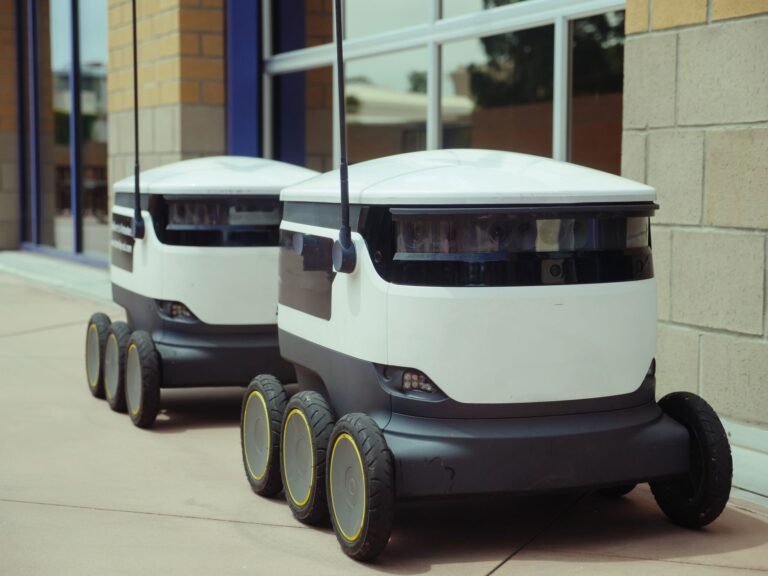
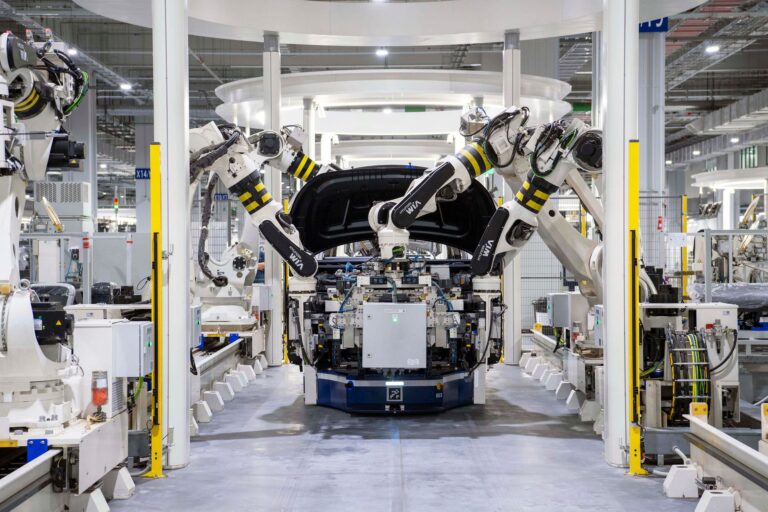
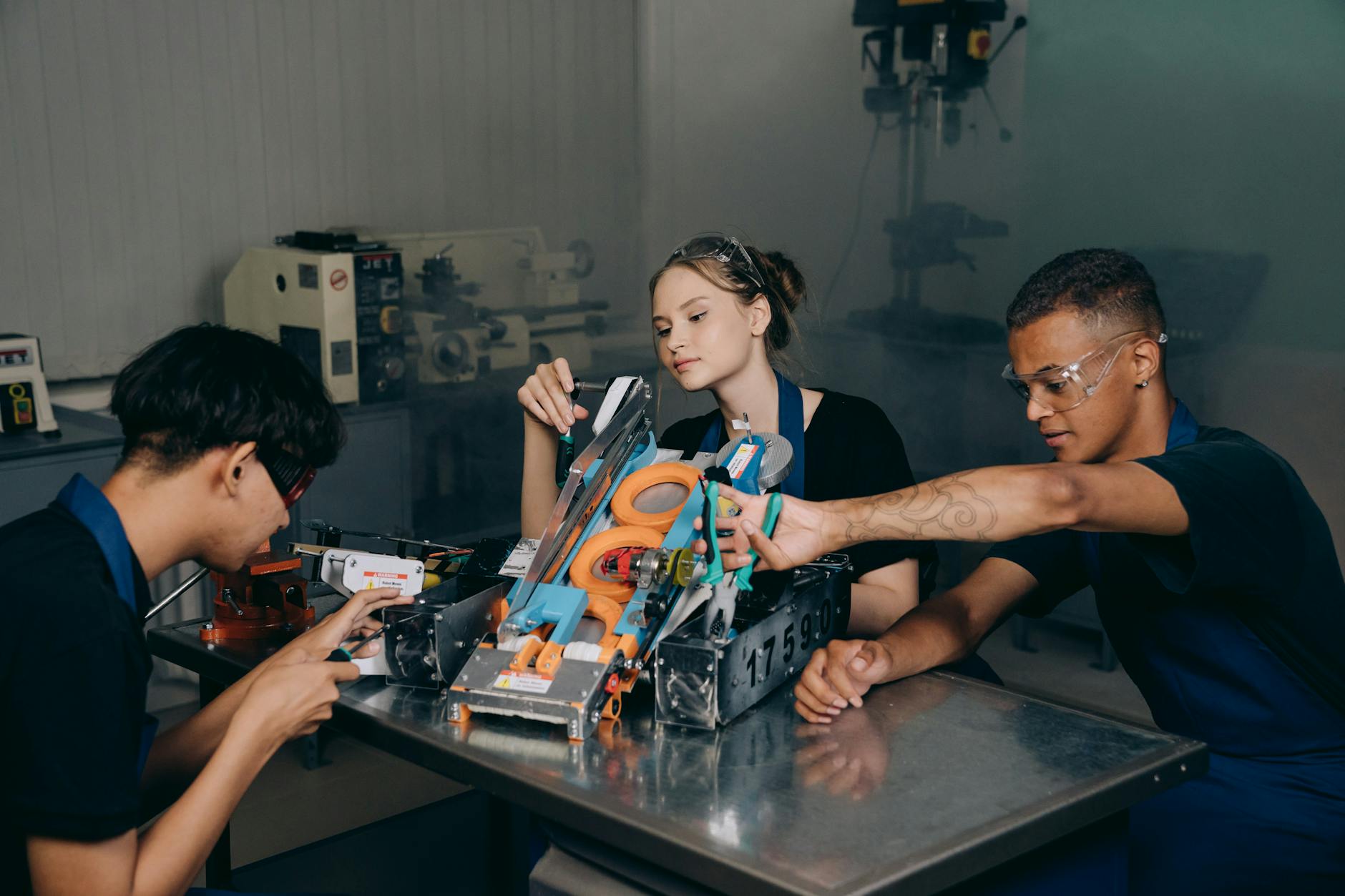
The most dramatic indicator of automation spending reallocation is when established manufacturers vertically integrate into robotics. Rockwell Automation’s March 2026 announcement that it was manufacturing autonomous mobile robots at its Milwaukee headquarters was not a defensive move—it was an offensive pivot. Rockwell, a 130-year-old automation company, recognized that as customers shifted capital toward autonomous systems, Rockwell needed to own the robotics layer directly. This is comparable to how Intel moved from processors into data center software, or how cloud infrastructure providers moved into AI tools: the company that owns the underlying platform captures more value. By manufacturing AMRs in-house, Rockwell Automation becomes not just a software provider, but a full-stack automation partner to manufacturers. However, vertical integration carries execution risk that many companies underestimate.
Manufacturing robots is operationally different from writing software or selling hardware controllers. It requires supply chain management, quality control, manufacturing floor expertise, and servicing capabilities. Companies that move too slowly into robotics risk losing capital allocations to more specialized competitors; companies that move too fast risk operational failures that damage their brand. The tradeoff is between first-mover advantage (capturing automation spending early) and execution risk (struggling with unfamiliar operational complexity). Some companies, like Rockwell, have decided the market opportunity justifies the risk. Others are taking different approaches: acquiring robotics capabilities (SoftBank buying ABB Robotics) or partnering with specialists rather than building in-house.
The Risk of Over-Concentration in Single Platforms
As automation spending accelerates, there is a risk that over-reliance on single infrastructure providers (like Nvidia Jetson) creates brittleness in the robotics supply chain. If a major disruption occurs—semiconductor shortage, geopolitical supply chain break, or even a critical software vulnerability—the entire robotics ecosystem could face cascading failures. This happened in automotive manufacturing during 2021-2022: over-reliance on a handful of semiconductor suppliers created months of production delays across the industry. The robotics market is smaller but growing faster, and the concentration of hardware on Nvidia platforms is more pronounced in robotics than in most other technology sectors.
The emergence of competing platforms like Qualcomm’s Dragonwing is actually healthy for market maturity because it reduces single-point-of-failure risk. However, it also suggests that Nvidia’s margin advantage in robotics is not sustainable indefinitely. As robotics becomes mainstream and capital spending accelerates, competition will intensify on price and performance. Nvidia’s current dominance is real, but the “next Nvidia” may not be Nvidia itself—it may be a company that solves the next bottleneck in the robotics value chain after Nvidia has commoditized its current advantage.

Software and AI Models as the Real Leverage Point
While hardware platforms like Jetson are critical, the AI models and software frameworks running on those platforms are becoming the true leverage point in the robotics boom. At CVPR 2026, the industry showcased the next generation of embodied AI, robotics, and autonomous systems—most of which relied on pre-trained models and software frameworks that simplify robotics development. Companies like Nvidia are embedding AI models, simulation environments, and developer tools into the Jetson ecosystem to make it even easier to build robotics applications. This software layer is where defensibility increases, because replacing software is harder than replacing hardware once developers have committed to frameworks and tools.
The challenge is that software in robotics is more complex than software in other domains because it must bridge the digital and physical worlds. A robot trained in simulation may not perform identically in the real world. This gap between simulation and reality has persisted as a fundamental challenge in robotics for decades. Companies that solve this problem—through better simulation, better real-world data, or better transfer learning techniques—will capture outsized value. This is why companies like Nvidia are investing heavily in physical AI models and data factories for robotics development: the company that owns the software and data infrastructure for robotics development will eventually own the robotics market.
Looking Forward—The Structural Shift in Industrial Capital Allocation
The next 5-10 years will be defined by a structural reallocation of industrial capital toward automation. This is not a temporary trend driven by labor shortage cycles; it’s a permanent shift driven by AI capabilities enabling autonomous systems to perform tasks previously requiring human intervention or fixed automation. As this shift deepens, companies that have positioned themselves as infrastructure providers for automation will capture disproportionate value.
Nvidia has done this well for AI computing; the question is whether the company can maintain this dominance in robotics as the market matures and as specialized competitors emerge. The “next Nvidia in robotics” may not be a single company, but rather a ecosystem of companies that collectively solve the robotics infrastructure problem across semiconductors, software, and integration platforms. However, the company that controls the dominant development platform—the tools and frameworks that make it easiest for robotics developers to build and deploy applications—will likely capture the most value. Whether that remains Nvidia depends on whether the company continues investing in accessibility, performance, and ecosystem support as robotics becomes mainstream.
Conclusion
Nvidia’s current dominance in robotics infrastructure is real and consequential, but it is leverage over capital spending rather than monopoly power. As 25% of enterprise capital redirects toward automation over the next five years, companies that provide the foundational platforms for robotics development will see their value increase dramatically. However, this dominance is not permanent or uncontested.
The emergence of platforms like Qualcomm’s Dragonwing, the importance of specialized semiconductors like Microchip’s silicon carbide modules, and the increasing criticality of software and AI models create multiple paths for value capture across the robotics ecosystem. The key insight is that the “next Nvidia” in robotics won’t necessarily be a robotics manufacturer or an AI company, but rather whoever owns the most essential layer of the automation infrastructure stack. That may be Nvidia itself, but only if the company continues to prioritize accessibility, performance, and ecosystem support as robotics moves from niche adoption to mainstream deployment. For robotics developers, investors, and manufacturers, the opportunity is clear: capital is flowing toward automation, and the companies that provide the infrastructure for that automation will capture the most value.