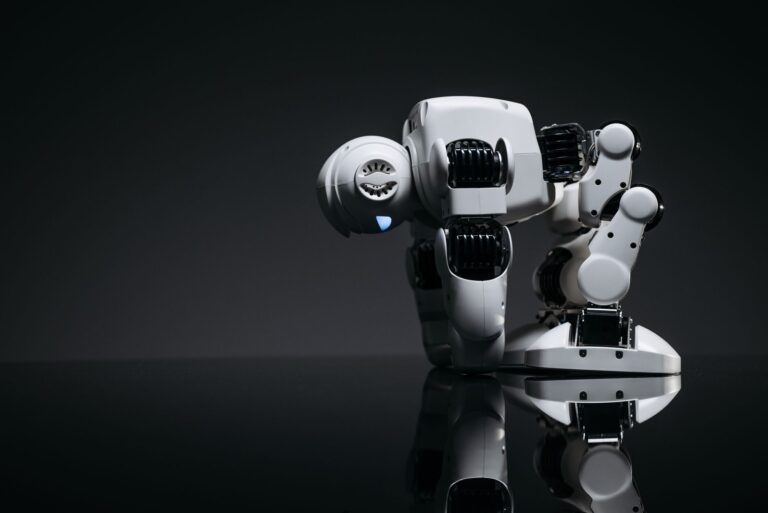

NVIDIA has positioned itself as the dominant infrastructure provider for the robotics revolution, and this positioning is directly leveraged to address what many view as an inevitable global labor shortage. The company’s CEO Jensen Huang frames robots not as futuristic novelties but as “AI immigrants” that can handle work humans have decided not to do anymore—a pragmatic response to a labor crisis that Huang estimates will impact tens of millions of workers globally. This framing goes beyond marketing.
With the global robotics market projected to expand from $73.64 billion in 2025 to $218.56 billion by 2031, and the Physical AI sector alone growing at 47.2% annually, NVIDIA’s chips and software platforms have become the backbone of a massive market shift that directly addresses labor scarcity in manufacturing, warehousing, and logistics. The connection is straightforward: labor shortages are forcing industries to automate, and NVIDIA’s GPU architecture, software stacks, and simulation tools have become the de facto standard for companies building and deploying the robots that fill that gap. Unlike previous robotics booms that relied on specialized, single-purpose machines, today’s AI-powered robots run on NVIDIA’s infrastructure, making the company a kind of “pick and shovel” vendor in a gold rush of automation. This positions NVIDIA to capture enormous value from the labor shortage phenomenon, but it also means the company’s success is now directly tied to the pace and scale at which industries embrace robotic automation.
Table of Contents
- How Labor Shortages Are Driving the Robotics Boom That Favors NVIDIA
- NVIDIA’s Strategic Dominance in Physical AI and Its Limitations
- How Major Manufacturing Players Are Leveraging NVIDIA for Labor Shortage Solutions
- The Economics of NVIDIA-Based Robotics in a Labor-Scarce Market
- The Risk of Over-Dependence on a Single Technology Stack
- The Physical AI Market Explosion and NVIDIA’s Growth Trajectory
- The Future of Labor Markets and NVIDIA’s Evolving Role
- Conclusion
- Frequently Asked Questions
How Labor Shortages Are Driving the Robotics Boom That Favors NVIDIA
Developed economies face a structural problem: aging populations and immigration restrictions are reducing the available workforce precisely when labor-intensive industries need more hands, not fewer. Manufacturing hubs in the United States, Europe, and Asia are already feeling this pressure. Factories that once could rely on steady streams of workers now compete fiercely for limited talent, driving wages up and making low-margin operations unviable. This is where robotics enters not as a luxury but as a necessity, and nvidia‘s technology stack is the most mature option for deploying solutions at scale. The physical AI market—estimated at $1.50 billion in 2026 and projected to reach $15.24 billion by 2032—represents the intersection of these forces.
Companies like ABB, FANUC, KUKA, Boston Dynamics, and Foxconn are all building robotic systems that depend on NVIDIA’s GPU architecture for vision, decision-making, and real-time control. Boston Dynamics’ humanoid robots, for example, rely on NVIDIA’s computational platforms to process sensor data and plan movements. Without NVIDIA’s infrastructure, these robots would be far less capable and considerably more expensive to deploy. The shortage of human workers has created a genuine urgency to adopt these systems now, rather than waiting for cheaper alternatives. This dynamic gives NVIDIA a powerful position, but it also creates a dependency risk for industries adopting robotic solutions. Companies investing in NVIDIA-based robots are betting that NVIDIA’s hardware roadmap will remain stable and that software ecosystems will continue to improve around the company’s platforms.

NVIDIA’s Strategic Dominance in Physical AI and Its Limitations
NVIDIA has cultivated partnerships with virtually every major robotics manufacturer: ABB, FANUC, KUKA, Foxconn, and Boston Dynamics all build systems around NVIDIA chips. The company has positioned itself as the “undisputed leader in the physical AI ecosystem,” and this leadership extends beyond just hardware. NVIDIA’s simulation tools, inference platforms, and software libraries have become the standard that robotics engineers learn and build around. This creates a powerful moat, where switching costs for manufacturers and end-users are high. Yet this dominance also presents a critical limitation: NVIDIA’s control over the entire stack means that the cost of robotics solutions is partially beholden to NVIDIA’s pricing power. As adoption accelerates, NVIDIA faces pressure to keep costs reasonable, but the company’s historical pattern of premium pricing could eventually create an opening for competitors.
Additionally, NVIDIA’s dominance in GPUs may not translate automatically to dominance in robotics-specific applications. Competitors like Intel and custom silicon providers are investing heavily in alternatives. If a robotics company can achieve comparable performance with cheaper hardware from a competitor, the entire value proposition shifts. Another limitation is that NVIDIA’s strength is in the compute layer, not in the mechanical, sensor, or control systems that make robots effective in the real world. A robot’s success depends on mechanical design, material science, sensor quality, and real-world task specificity—areas where NVIDIA has no inherent advantage. This means NVIDIA’s role, while essential, is always somewhat dependent on the capabilities of the robots themselves.
How Major Manufacturing Players Are Leveraging NVIDIA for Labor Shortage Solutions
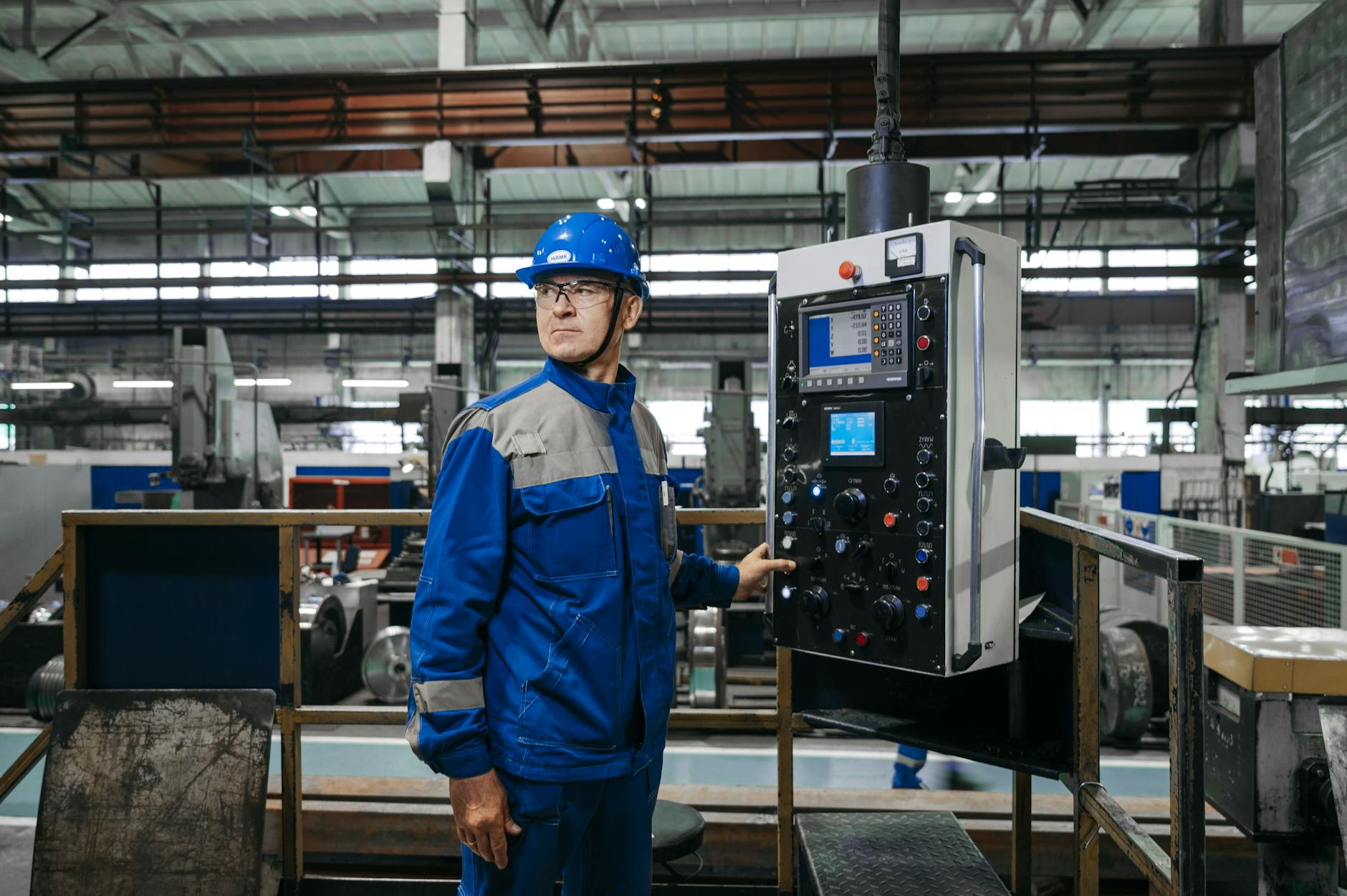
ABB and FANUC, two of the world’s largest industrial robotics firms, have integrated NVIDIA technology into their latest platforms to handle more complex, adaptive tasks. These companies have historically built reliable but relatively rigid automation systems. With NVIDIA’s AI acceleration, they can now deploy robots that learn from sensor input, adapt to slight variations in tasks, and require less pre-programming. In Foxconn’s manufacturing facilities, NVIDIA-powered robots are handling increasingly sophisticated assembly tasks that would have required human dexterity just a few years ago. The key difference is that these robots are not simply replacing one human worker with one machine. Instead, one operator now manages multiple robotic systems simultaneously, with the machines handling the physically demanding or hazardous work.
This multiplier effect—where automation boosts worker productivity rather than simply eliminating jobs—is central to how labor shortages are being addressed. Without NVIDIA’s inferencing performance, this would not be economically viable. A human supervisor overseeing five or ten robots instead of operating one machine is a fundamentally different economic equation. However, this transition is not without friction. Factories deploying NVIDIA-powered robots must invest in retraining workers to manage autonomous systems, upgrading infrastructure to handle power and cooling demands, and adapting workflows to align with robotic capabilities. Companies that underestimate these costs often find that the labor savings are slower to materialize than expected.
The Economics of NVIDIA-Based Robotics in a Labor-Scarce Market
The fundamental economics favor NVIDIA-powered robotics in labor-scarce regions. In the United States, manufacturing wages have climbed 4-5% annually in recent years, while robotic hardware costs have fallen 5-10% annually due to scale and competition. This crossover point—where robots become cheaper than human labor—is moving faster in high-wage regions, which tend to be precisely the areas experiencing acute labor shortages. Compare this to labor-abundant regions like parts of Asia and Africa, where the economics are entirely different. In Vietnam or Bangladesh, where wages are a fraction of U.S.
levels, the ROI on expensive robotics solutions is much lower. This creates a geographic divergence: wealthy, labor-scarce regions are investing heavily in NVIDIA-powered automation, while lower-wage countries may rely on traditional manufacturing for a decade or more. This has profound implications for global supply chains and economic inequality. The tradeoff is that early adopters of NVIDIA-based robotics in high-wage regions gain a competitive advantage, but they also become vulnerable to the pace of technological change. A robot deployed in 2026 may be obsolete by 2032 as NVIDIA’s next-generation architecture enables far more capable systems at lower cost.
The Risk of Over-Dependence on a Single Technology Stack
NVIDIA’s dominance in robotics creates a concentration risk that neither manufacturers nor end-users can fully ignore. If NVIDIA experiences supply constraints—as the company did with GPUs during the AI boom—entire robotic systems can be delayed or become unaffordable. Additionally, NVIDIA’s ability to raise prices or shift focus toward more profitable applications (like data center AI) could leave robotics manufacturers with outdated or increasingly expensive platforms. Competitors are acutely aware of this vulnerability. Companies developing alternative accelerators specifically designed for robotic inference are emerging, and some are making progress on specialized tasks.
If a robotics-specific accelerator can deliver comparable performance at 30% lower cost, the entire competitive landscape shifts. NVIDIA is aware of this threat and has invested in robotics-specific software (Nvidia Isaac) to deepen lock-in, but the competition is fierce. Another warning worth considering: the labor shortage narrative assumes that robots will continue to improve in capability at the pace currently expected. If robotic progress stalls—due to unforeseen technical barriers, regulatory restrictions, or safety concerns—then the entire investment thesis could unwind. This has happened before in other domains where technology failed to live up to hype.
The Physical AI Market Explosion and NVIDIA’s Growth Trajectory
The projected growth of the Physical AI market from $1.50 billion in 2026 to $15.24 billion by 2032 (a 47.2% CAGR) represents one of the fastest-growing technology markets in existence. For context, the cloud computing market grew at roughly 25-30% annually during its early phase. The fact that physical AI is growing nearly twice as fast suggests genuine market acceleration driven by urgent labor needs, not speculative investment.
This growth is not abstract. Concrete examples include warehouse automation companies using NVIDIA-powered vision systems to sort packages, agricultural robotics startups deploying autonomous harvesters, and surgical robotics platforms relying on NVIDIA’s inference capabilities for real-time precision. Each of these represents a labor shortage being directly addressed by NVIDIA-enabled automation. The scale of deployment is now reaching critical mass, where these systems are becoming standard rather than experimental.
The Future of Labor Markets and NVIDIA’s Evolving Role
Looking ahead, the connection between labor shortages and NVIDIA’s growth appears structural rather than cyclical. Demographic trends in developed nations will only intensify labor scarcity over the next decade, while NVIDIA’s compute advantage is unlikely to be displaced in the near term. The company’s control over the software-hardware interface, combined with its first-mover advantage in physical AI, suggests that NVIDIA will capture enormous value from this transition.
However, NVIDIA’s role may evolve. As robotics becomes more commoditized and specialized accelerators emerge for specific tasks, NVIDIA may shift from providing the primary compute to being one of many options. The company’s challenge will be maintaining market share while resisting the temptation to extract maximum short-term profit from its current dominance, which could accelerate the development of competitive alternatives.
Conclusion
NVIDIA has positioned itself as the essential infrastructure provider for the robotics solutions that address global labor shortages. The connection is direct: labor scarcity drives demand for automation, NVIDIA’s technology is the most mature platform for building and deploying advanced robots at scale, and the company’s strategic partnerships with ABB, FANUC, KUKA, Boston Dynamics, and others cement its position. With the Physical AI market growing at 47.2% annually and the broader robotics sector expanding toward $218 billion by 2031, NVIDIA stands to capture enormous value from this shift.
For companies, investors, and policymakers, the implications are significant. The speed of robotic adoption will depend not just on technological capability but on economic necessity and regulatory acceptance. NVIDIA’s dominance is real but not invulnerable. The company’s success going forward will depend on maintaining its technical leadership, managing pricing to keep robotics economically viable, and resisting the temptation to over-extract value from a market that will eventually become more competitive as alternatives emerge.
Frequently Asked Questions
Why is NVIDIA specifically positioned to benefit from labor shortages rather than other chipmakers?
NVIDIA’s GPU architecture is optimized for the parallel processing required by AI inference on robots. The company’s existing dominance in AI compute, combined with strategic partnerships with robotics manufacturers and custom software tools like Nvidia Isaac, creates high switching costs and deep market integration that competitors would take years to replicate.
How much does NVIDIA hardware contribute to the total cost of deploying a robotic system?
The GPU typically represents 15-30% of the total cost of an advanced robotic system, depending on the application. The rest includes mechanical systems, sensors, software development, and integration. This means NVIDIA is important but not dominant in determining total system cost, leaving room for alternative accelerators to gain share if they deliver competitive performance.
Could labor shortages be solved without robotics?
Partially, but at significant cost. Immigration policy changes, wage increases, and reshoring of manufacturing could all partially address labor shortages, but these solutions are politically contentious and economically costly. Robotics offers an alternative that is increasingly economically competitive, especially in high-wage regions.
What happens if robotics adoption slows?
NVIDIA would lose a high-growth market opportunity, but the company’s core data center business would likely remain strong due to ongoing AI demand in other sectors. However, slowing robotics adoption would suggest that labor shortages are being addressed through other means, which would represent a fundamental shift in global economic dynamics.
Are there industries where robotics cannot address labor shortages?
Yes. Highly specialized roles requiring judgment, creativity, or unpredictable problem-solving remain difficult to automate. Additionally, low-wage industries may find that robotics costs are still prohibitive compared to human labor, even with NVIDIA’s improving efficiency.
What is the timeline for NVIDIA-powered robots to become mainstream?
Industrial robotics are already mainstream in manufacturing. Consumer and service robotics will likely see significant deployment by 2030-2035, with specialized applications (healthcare, hospitality, agriculture) leading adoption driven by acute labor shortages in those sectors.