
The next Nvidia in robotics hasn’t emerged yet, but several companies are positioning themselves to capture outsized returns as the sector explodes. Unlike the semiconductor market where Nvidia achieved near-monopolistic dominance, the robotics boom will likely split across multiple infrastructure providers, chip makers, and hardware specialists. Serve Robotics, which recently raised significant capital for autonomous delivery systems, exemplifies the type of company that could capture market leadership in a specific robotics vertical—though it lacks the foundational platform control that made Nvidia’s ascent so dramatic.
What makes a company candidate for “next Nvidia” status in robotics is not necessarily pure hardware dominance, but rather control over critical infrastructure that every robotics player needs. Nvidia achieved this through its computing platforms, software frameworks, and simulation tools. The robotics era will create similar chokepoints, but distributed across different layers of the stack. Companies providing AI chips for robotic systems, connectivity solutions for autonomous fleets, or operating systems for industrial robots all have pathways to becoming essential vendors in the industry.
Table of Contents
- Where Does the Next Nvidia Emerge in a $218 Billion Robotics Market?
- The Industrial and Autonomous Robotics Boom Is Already Here
- ARM Holdings and Custom Chip Makers Position Themselves for Robotics AI
- How Serve Robotics and Focused Players Capture Market Share
- The Nvidia Comparison Has Limits That Investors Should Understand
- Software and Simulation Frameworks as Hidden Moats
- The Next Five Years Will Determine the Winners and Losers
- Conclusion
Where Does the Next Nvidia Emerge in a $218 Billion Robotics Market?
The global robotics market is set to expand from $76 billion in 2023 to $218 billion by 2030—a nearly threefold increase that rivals the growth trajectories we’ve seen in AI infrastructure. this growth isn’t theoretical; it’s driven by concrete demand. The International Federation of Robotics projects that global demand for factory robots alone could double over the next decade, while the autonomous vehicle market is expected to grow at a 19.9% compound annual growth rate, reaching $214.32 billion by 2030. These aren’t speculative figures—they’re based on real deployment trends already underway in manufacturing, logistics, and transportation. The key difference between the robotics opportunity and the semiconductor opportunity Nvidia captured is that robotics is more fragmented.
Nvidia became the dominant player in AI because everything ran on its chips. In robotics, success depends on different factors. A company could dominate by owning the chips (like Nvidia did), but also by owning the software layer, the connectivity infrastructure, or the simulation environment. Marvell Technology and Astera Labs represent candidates that are less visible than Nvidia but potentially more critical to robotics infrastructure—Marvell provides custom AI chips and optical interconnect for data center communication, while Astera Labs specializes in high-speed connectivity chips for AI systems. Both are 2026-era winners in infrastructure that robotics companies desperately need.
The Industrial and Autonomous Robotics Boom Is Already Here
Industrial robotics specifically is forecast to reach $35 billion by 2030, representing sustained, measurable demand from manufacturers who are racing to automate. This isn’t speculation about future robotics—factories are deploying robots today. The bottleneck isn’t demand; it’s supply of the chips, software, and infrastructure needed to build robots at scale. Companies that solve this bottleneck will capture outsized returns, similar to how Nvidia profited from the GPU shortage in AI.
However, there’s a critical limitation to remember: unlike Nvidia’s dominance in GPUs, no single company will likely control all the infrastructure that robotics requires. A robot manufacturing facility needs compute, connectivity, specialized sensors, control software, and simulation environments. Multiple vendors will win here, which means returns will be spread thinner than Nvidia’s monopoly-adjacent position. This fragmentation is actually healthy for robotics adoption—it reduces vendor lock-in and accelerates innovation—but it also means no single “next Nvidia” will see the 50x or 100x returns that Nvidia investors experienced.
ARM Holdings and Custom Chip Makers Position Themselves for Robotics AI
ARM Holdings represents an interesting candidate because it has positioning across the entire robotics stack. ARM-based processors power everything from autonomous delivery robots to industrial control systems. Unlike x86 processors, which carry the overhead of server computing, ARM chips offer the efficiency that battery-powered and energy-constrained robots require. As robotics demand accelerates, ARM could see substantial revenue growth from licensing its instruction sets and core designs to robotics chip makers.
Marvell Technology and Astera Labs represent the less flashy but equally critical layer of the infrastructure stack. Marvell’s custom AI chips and optical interconnect solutions ensure that the AI models running on robots can communicate with data centers and other robots efficiently. Astera Labs’ high-speed connectivity chips solve a real problem: as more robots become autonomous and networked, the infrastructure connecting them to cloud services and to each other becomes a critical bottleneck. These companies may never achieve Nvidia’s brand recognition, but they could achieve similar financial returns by being irreplaceable to the robotics ecosystem. An autonomous vehicle fleet operator, for example, needs Astera’s connectivity chips to function at scale—the choice isn’t optional.

How Serve Robotics and Focused Players Capture Market Share
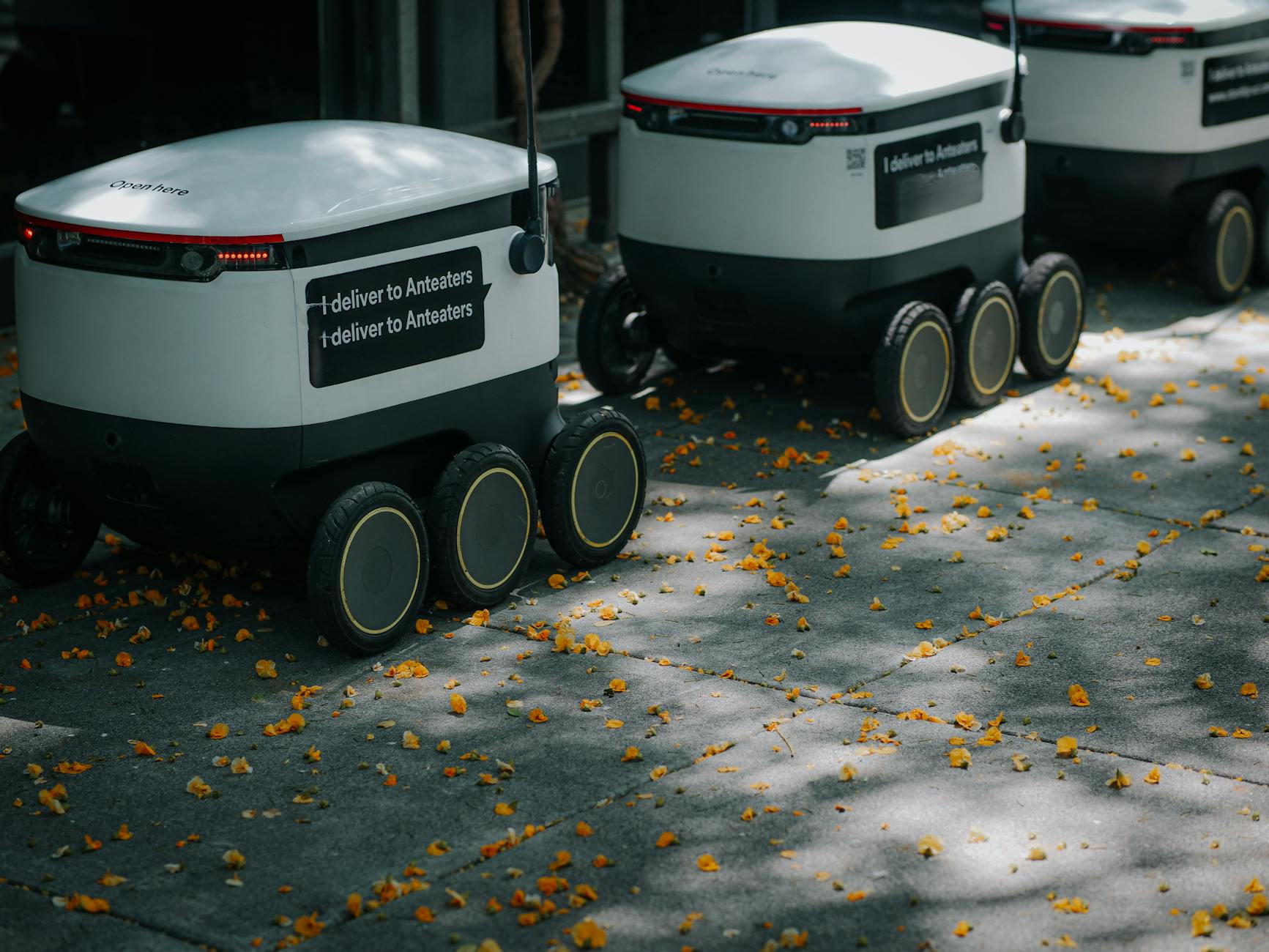
Serve Robotics exemplifies a different path to “next Nvidia” status: owning a specific robotics vertical so thoroughly that you become essential infrastructure within that domain. Serve is forecasted to see revenue growth nearly tenfold, driven by demand for autonomous delivery robots. This isn’t because Serve will dominate all of robotics; it’s because Serve is capturing a large share of a specific market segment that’s growing explosively. Similar dynamics could play out in autonomous trucking, warehouse automation, or surgical robotics.
The comparison to Nvidia isn’t perfect here—Nvidia became dominant by making the chips that everyone needed, while Serve becomes valuable by making the robots that consumers see. But the financial returns can be similar if the market grows fast enough and competition remains manageable. The tradeoff is that Serve’s upside is capped by its addressable market (delivery robots), while Nvidia’s infrastructure play scaled across every AI application globally. This is why infrastructure plays—companies providing chips, connectivity, or simulation software for robots—may ultimately have higher return potential than robot manufacturers themselves.
The Nvidia Comparison Has Limits That Investors Should Understand
Nvidia achieved a 90% market share in self-driving car platforms and controls 50% of industrial robots through its software layer. These are extraordinary market positions that took years to build and are extraordinarily difficult to replicate. No new entrant to robotics will easily achieve this level of dominance, because the market is more mature and competitive than the AI infrastructure market was when Nvidia took off. Additionally, robotics isn’t as winner-take-all as semiconductor computing. A manufacturing facility might use robots from multiple vendors, from multiple software stacks, all running different control systems.
This limits the monopoly power any single company can achieve. The warning here is that “next Nvidia” candidate stocks are higher-risk bets than Nvidia was when it began its ascent. Investors expecting 50x returns should recalibrate expectations downward. A robotics infrastructure play that grows 5-10x over the next decade, while delivering outsized returns compared to broader market indices, may be the actual outcome for the winning companies. Nvidia’s returns were extraordinary partly because the market didn’t anticipate AI’s growth, and partly because Nvidia’s technology became genuinely indispensable. The robotics market is more visible, more competitive, and more crowded with smart capital allocating to winners.
Software and Simulation Frameworks as Hidden Moats
Nvidia’s dominance wasn’t just about GPU hardware—it was about CUDA software, simulation frameworks, and an ecosystem of tools that made building AI easy. Whoever controls the equivalent layers in robotics—the simulation environments where robots train before being deployed, the operating systems that control them, the AI frameworks optimized for robotics—could capture similar value.
This is why companies like ARM, which control the instruction set architecture that robots run on, or companies developing robotics-specific simulation software, have potential “next Nvidia” characteristics. They’re not selling flashy hardware; they’re providing the infrastructure that robotics companies depend on and cannot easily replace. A robotics startup cannot switch its entire fleet to a different operating system midway through development, just as AI labs couldn’t switch from CUDA to an alternative once they’d built their stacks on top of it.
The Next Five Years Will Determine the Winners and Losers
The robotics infrastructure wars will be decided between now and 2030, as the market grows from $76 billion to $218 billion. Companies that secure early platform adoption, lock in customers with superior tools and integration, and scale their manufacturing will emerge as winners. The leaders in 2030 won’t necessarily be the ones with the best technology today—they’ll be the ones that achieved the best distribution and the most seamless integration into the robotics ecosystem.
The investment landscape favors infrastructure providers that can achieve scale across multiple robotics segments, rather than vertical specialists focused on one type of robot. However, the diversified infrastructure approach carries more execution risk than a dominant player in a single market. This is what makes robotics different from Nvidia’s ascent: there will likely be multiple “next Nvidia” winners across different layers of the stack, each capturing significant returns in their niche rather than one dominant winner capturing 50% of all robotics value.
Conclusion
The “next Nvidia in robotics” will likely emerge from the infrastructure layer—companies providing chips, connectivity, software frameworks, or simulation environments that robotics makers depend on. Serve Robotics represents the vertical specialist approach, with massive growth in a focused market. Marvell Technology, Astera Labs, and ARM Holdings represent the infrastructure approach, providing critical components that scale across all robotics applications.
Each has a realistic pathway to significant financial returns, though none will likely replicate Nvidia’s monopoly-adjacent market position. Investors should evaluate robotics infrastructure candidates on their ability to achieve platform adoption, defend against competition, and scale manufacturing to meet explosive demand. The 3x expansion of the robotics market from $76 billion to $218 billion over the next four years is real, and companies positioned to serve this growth will deliver outsized returns. However, the distributed nature of the robotics stack means returns will be spread across multiple winners rather than concentrated in a single company like Nvidia.