
Yes, the next Nvidia in robotics likely already exists—and you probably haven’t heard of it yet. While Nvidia dominates the AI and robotics infrastructure market with a valuation that reflects its current dominance, several smaller, less-known companies in the robotics and automation space remain significantly undervalued relative to their growth potential. Companies like Symbotic, Cognex, Teradyne, and Intuitive Surgical are trading at prices that don’t reflect the scale of the robotics revolution unfolding around us, even as their earnings have expanded sharply.
The key difference between today’s opportunity and Nvidia’s rise is visibility. Nvidia’s value became obvious in hindsight because the GPU boom was everywhere; most investors saw it happening in real time. The robotics opportunity, by contrast, is fragmented across dozens of smaller players solving specific automation problems—warehouse robots, vision systems, semiconductor testing equipment, and surgical devices. That fragmentation is precisely why valuations remain so attractive.
Table of Contents
- Which Robotics Companies Are Genuinely Undervalued?
- The Valuation Disconnect in Specialized Robotics
- The Infrastructure Play: Why TSMC and AMD Matter More Than You Think
- Comparing Robotics Hardware Companies to Infrastructure Plays
- The Hidden Risks Nobody Talks About
- Serve Robotics and the Direct Nvidia Comparison
- The Long-Term Outlook and What Comes Next
- Conclusion
Which Robotics Companies Are Genuinely Undervalued?
The robotics sector has identified several consistent undervalued plays that recently blew out earnings expectations. Symbotic, which provides automation solutions for warehouses and distribution centers, has seen revenue accelerate as e-commerce logistics demand remains insatiable. Cognex, a leader in machine vision systems, directly enables robotics deployment by giving robots the ability to “see” and make decisions. Teradyne, which manufactures automated test equipment, stands to benefit enormously from the build-out of AI chip manufacturing and robotics hardware. These companies share a common trait: they serve markets growing at 15-25% annually, yet trade at valuations that assume single-digit growth.
The comparison to Nvidia is instructive but incomplete. Nvidia became dominant because it owned the infrastructure layer—GPUs are essential for AI and robotics. The next Nvidia in robotics won’t necessarily look like Nvidia. It could be a vision systems company that becomes indispensable to autonomous devices, a motion control specialist that powers the next generation of factory robots, or a company that solves the robotics software problem that has plagued the industry for years. What they’ll share with Nvidia is market position in a layer that everyone else depends on.

The Valuation Disconnect in Specialized Robotics
Here’s where the warning comes in: many investors confuse “undervalued” with “safe.” Some robotics companies trade cheaply because they operate in genuinely difficult markets or face entrenched competition. Intuitive Surgical, for example, dominates surgical robotics but faces questions about market saturation in developed countries and slow international adoption. The stock has been cheap relative to its moat before—and it stayed cheap because the market was already pricing in that constraint. The real opportunity lies in companies where the valuation discount reflects investor neglect rather than fundamental weakness.
Cognex, for instance, serves the machine vision market that nobody thinks is sexy until earnings reports show 20% growth. These are companies with pricing power, defensible niches, and tailwinds from automation that’s not optional but inevitable. The risk, however, is that “cheap” can become cheaper. A robotics stock trading at a 40% discount to fair value doesn’t double immediately; sometimes it takes 3-5 years of consistent execution for the market to recognize the value. Patience is required.
The Infrastructure Play: Why TSMC and AMD Matter More Than You Think
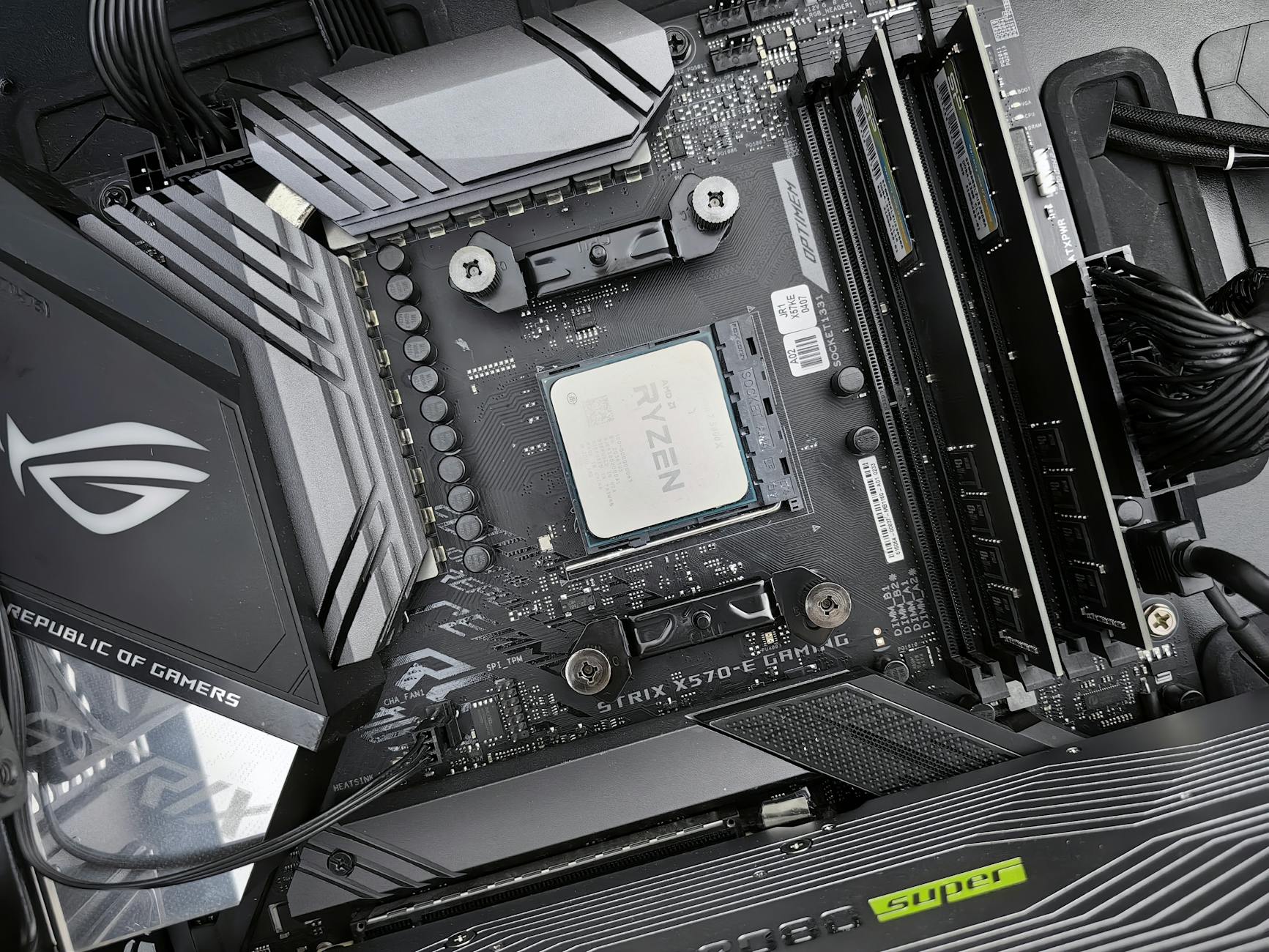
The next Nvidia in robotics isn’t just about robotics hardware makers—it’s about the companies that enable them. Taiwan Semiconductor Manufacturing company (TSMC) manages AI revenue as a major growth driver, with management projecting a compound annual growth rate of 60% for AI chips from 2024 through 2029. That projection is staggering and represents a fundamental shift in where value accrues in the technology stack. Robotics companies need custom chips, specialized processors, and components optimized for edge AI.
TSMC is building the foundry capacity to make those chips. AMD offers another angle: it’s explicitly positioning itself as the cheaper, more efficient alternative to Nvidia for AI infrastructure. With management projecting a 60% CAGR for its data center division through 2030, AMD is stealing share in exactly the compute-intensive segments that power robotics. If you believe the next Nvidia in robotics will eventually become infrastructure-critical, then the companies building that infrastructure—TSMC and AMD—are the picks-and-shovels play. They’re not as cheap as the robotics hardware companies, but they’re also not as concentrated a bet on a single market outcome.
Comparing Robotics Hardware Companies to Infrastructure Plays
The practical choice for investors boils down to risk tolerance and time horizon. Robotics hardware companies like Symbotic or Teradyne offer higher leverage to the robotics boom. If warehouse automation or semiconductor testing becomes as essential as everyone expects, these companies could see 10x returns. But they’re also more volatile and require the robotics industry to mature faster than it currently is. Infrastructure plays like TSMC or AMD offer lower returns but broader exposure—you’re not betting on robotics alone, you’re betting on AI chips enabling everything from data centers to smartphones to robots.
The tradeoff is classic venture capital thinking applied to public markets. Robotics-focused companies are higher-risk, higher-reward bets on specific market outcomes. Semiconductor manufacturers are lower-risk, lower-reward bets on broader AI trends. Neither is objectively superior; they serve different investors. Someone with a five-year horizon and conviction that warehouse robotics will double in deployment can make a strong case for Symbotic. Someone who wants more diversified exposure with less single-company risk makes a stronger case for TSMC or AMD.
The Hidden Risks Nobody Talks About
The biggest risk in “cheap” robotics stocks is that cheapness often reflects genuine business uncertainty. Robotics adoption depends on robot economics improving faster than historical trends. A robot arm costs $100,000; if labor is $20 per hour, the economics only work if the robot lasts ten years and produces significant productivity gains. If robot failure rates stay high or upgrade cycles compress to five years, the ROI narrative collapses. This is why robotics stocks can stay cheap for decades—the future adoption rate is genuinely uncertain, not just ignored by the market.
A second risk is M&A and acquirer strategic changes. Intuitive Surgical was cheap for years because larger medical device companies weren’t convinced the market justified premium valuations. When valuations do re-rate higher, the company can become acquisition prey. That’s not necessarily bad for shareholders, but it means you might be buying a company specifically because it’s overlooked, only to lose ownership at exactly the moment the market recognizes its value. This has happened repeatedly in industrial automation and remains a real constraint on long-term returns.
Serve Robotics and the Direct Nvidia Comparison
Serve Robotics offers a useful case study because it’s positioned directly against the Nvidia comparison. Coverage exists explicitly positioning Serve as the cheaper robotics alternative to Nvidia, making it a natural focal point for investors asking the “next Nvidia” question. Serve focuses on autonomous mobile robots for retail and warehouse environments—a real market with real demand. But the company is far earlier in its lifecycle than Nvidia was at comparable valuations, meaning the execution risk is correspondingly higher.
The key insight from Serve’s positioning is that the “next Nvidia” in robotics doesn’t need to be cheaper than Nvidia permanently. It needs to be cheaper relative to its growth rate and competitive position. Nvidia is cheap today relative to its 2025 earnings, which means a robotics company trading at similar multiples but growing 30% instead of 15% is a better opportunity. This flips the analysis: you’re not looking for the lowest price, you’re looking for the best growth at a reasonable price. Serve might be that company, or it might not—but the framing matters more than the stock picker’s hot tip.
The Long-Term Outlook and What Comes Next
The robotics industry is at an inflection point that resembles where GPU computing was around 2015-2016. Demand is accelerating, costs are falling, and use cases are proliferating beyond anyone’s original expectations. The timing suggests that valuations in the sector are about to shift meaningfully higher. The question is which companies benefit most and which become acquisition targets or losers in competitive shakeouts.
The companies most likely to become “the next Nvidia” will be those solving problems that compound across multiple robotics applications. This could be a breakthrough in robotics software, a new type of sensor or vision system, or a company that somehow becomes essential to most automation projects. The market hasn’t clearly identified this company yet, which is precisely why valuations remain attractive across the sector. By the time the answer is obvious, multiples will have expanded dramatically.
Conclusion
The next Nvidia in robotics is probably trading at a significant discount today, but identifying it requires looking beyond simple “cheapness” metrics to understand which companies have defensible positions in essential layers of the automation stack. Symbotic, Cognex, Teradyne, and Intuitive Surgical all meet this bar, as do infrastructure enablers like TSMC and AMD that will power the robotics revolution regardless of which hardware companies win. The best strategy isn’t to pick one winner; it’s to build exposure across multiple bets at different risk levels.
Robotics hardware companies offer the highest leverage. Semiconductor companies offer diversified exposure. Both can deliver meaningful returns over the next 5-10 years as automation reshapes industry economics. The key is buying now, before the market fully values what’s coming—and being patient enough to wait for execution to match the opportunity.