
Warehouse automation funding is surging precisely because it delivers measurable cost reductions at scale. Walmart recently announced a $1 billion automation investment to expand micro-fulfillment centers in existing stores—a commitment that reflects a much broader industry shift. Fulfillment costs can drop from $10-15 per order to $3-6 per order with automation, a 60-70% reduction that justifies the capital expenditure and explains why 60% of warehouses have announced plans to increase automation budgets by 20% in 2026.
The market velocity is accelerating. The global warehouse automation market reached $29.98 billion in 2026 and is projected to reach $59.52 billion by 2030 with a compound annual growth rate of 18.7%, while total global investment in warehouse automation is projected to exceed $90 billion by 2033—a 329% increase from approximately $21 billion in 2023. This isn’t speculative spending; it’s backed by concrete ROI data and driven by both cost pressures and persistent labor shortages that show no signs of easing.
Table of Contents
- Why the Automation Wave Is Accelerating Now
- The Economics of Warehouse Automation: When Cost Savings Justify the Investment
- Mobile Robots and the Changing Shape of Distribution Centers
- The Shift to Micro-Fulfillment and Store-Based Distribution
- The Hidden Costs of Warehouse Automation Implementation
- Labor Shortage as the Invisible Driver of Automation Investment
- Deployment Realities: Where Automation Works and Where It Doesn’t
Why the Automation Wave Is Accelerating Now
The convergence of three factors is driving unprecedented warehouse automation investment. First, operational costs have become unsustainable—labor shortage is pervasive, with 76% of supply chain and logistics operations reporting notable workforce shortages as of early 2024. Retailers cannot hire their way out of this problem, making automation not merely an efficiency option but a necessity. Second, the financial case has solidified: average planned spend on materials handling equipment is expected to reach $1.584 million in 2026, up from $1.457 million in 2025, a 9% increase that signals management confidence in the technology’s maturity.
The spending data reinforces this confidence. Seventy percent of warehouse decision-makers are now facing modernization mandates, and 64% of warehouses plan to increase funding over the next five years for modernization. This isn’t theoretical interest—warehouses are committing capital. By the end of 2026, approximately 4.69 million commercial warehouse robots are expected to be installed worldwide across over 50,000 warehouses, a deployment scale that was unthinkable five years ago. For context, over 450,000 logistics robots were sold globally in 2025 compared to 75,000 in 2019, a 500% increase that underscores the market’s explosive growth trajectory.
The Economics of Warehouse Automation: When Cost Savings Justify the Investment
The return-on-investment case for warehouse automation has become difficult to ignore. autonomous Mobile Robots (AMRs) achieve 250% ROI in live deployments with payback periods under 24 months, meaning operators recover their capital investment in less than two years and then accrue profit. One major operator achieved a 25% fulfillment cost reduction through automation—not the theoretical maximum but a real-world result that demonstrates the technology’s practical effectiveness without requiring perfect implementation. The cost impact is most dramatic in high-volume operations.
Store shipments cost approximately 70% of traditional warehouse shipments, which is why 64% of retailers plan to expand automated micro-fulfillment centers within five years. This metric is crucial: if a retailer can fulfill orders from stores rather than distant warehouses, they reduce not just the picking cost but the entire transportation component of fulfillment. However, the caveat is significant: these economics work only at scale. A single micro-fulfillment center in a pilot location may struggle to achieve positive ROI. The winning operators are those deploying automation across multiple facilities simultaneously, which requires capital discipline and tolerance for the learning curve as teams adapt to new workflows.
Mobile Robots and the Changing Shape of Distribution Centers
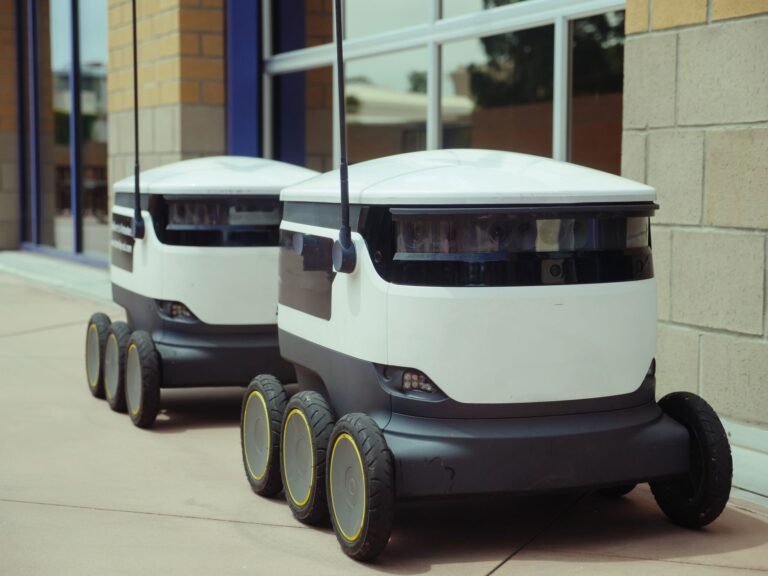
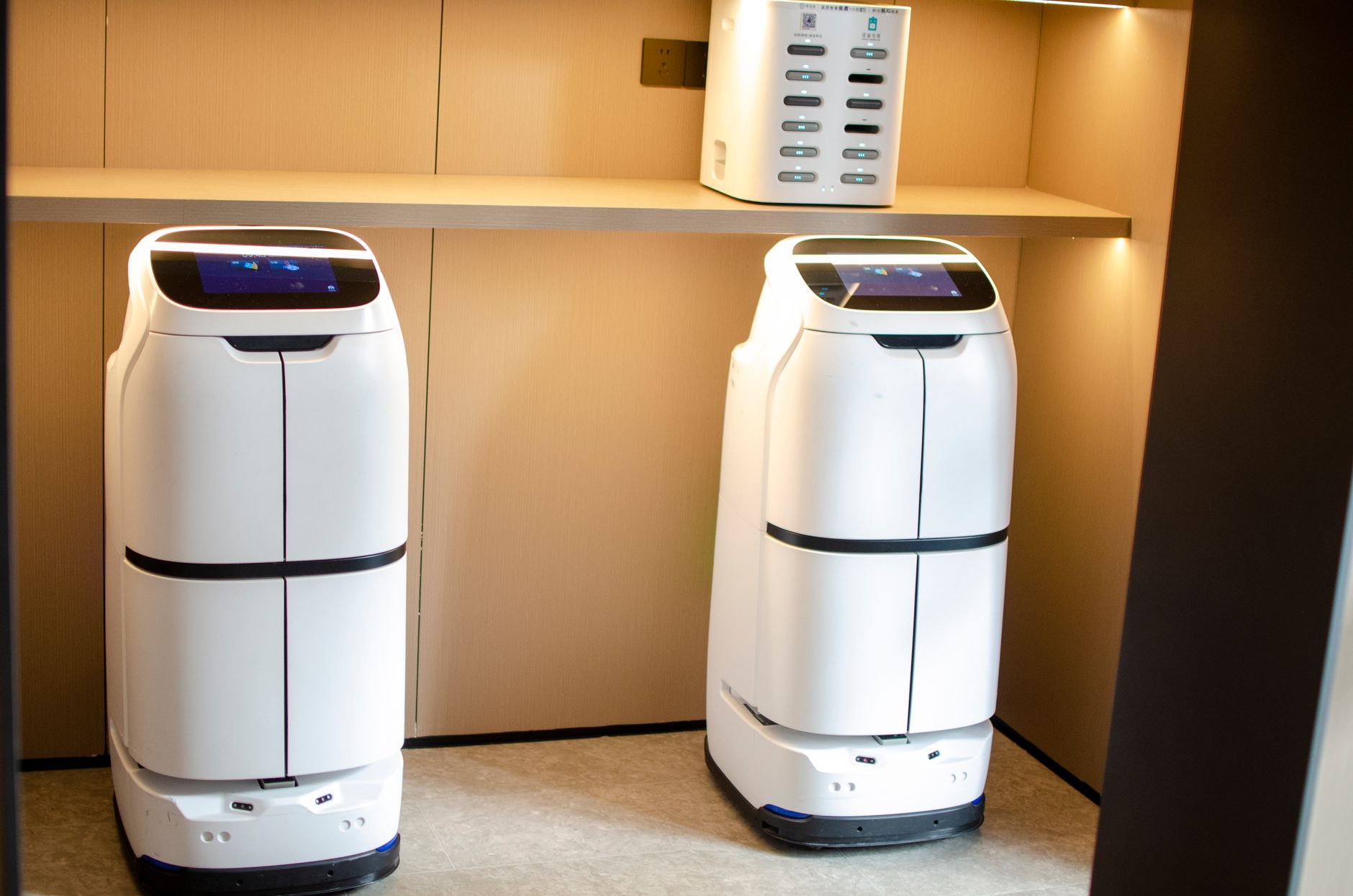
The robotics deployed in modern warehouses are fundamentally different from the fixed automation systems that defined previous generations. Over 750,000 mobile robots are already deployed across operations, and they operate alongside human workers rather than replacing entire shifts. These Autonomous Mobile Robots are designed to handle variable workflows—they pick up bins, transport goods, and navigate around obstacles without requiring the extensive infrastructure rewiring that older conveyor-based systems demanded. This flexibility matters because it lowers the barrier to adoption for mid-sized operators.
Traditional warehouse automation required a complete redesign of facility layout and workflow, often necessitating temporary shutdowns or new construction. Mobile robots can be deployed in existing facilities with minimal retrofitting, which is one reason the technology adoption has accelerated so dramatically. The downside, however, is integration complexity. Warehouses must still invest in software systems, warehouse management systems (WMS) integration, and workforce training. A facility with outdated software systems may find that the robot deployment sits incomplete while IT infrastructure catches up.
The Shift to Micro-Fulfillment and Store-Based Distribution
Walmart’s $1 billion automation investment specifically targets micro-fulfillment centers in existing stores, a strategy that is rapidly becoming industry standard. Micro-fulfillment uses compact, automated picking systems to fulfill online orders from retail locations, shrinking the delivery radius and dramatically reducing the transportation cost component of fulfillment. The economics are straightforward: if fulfillment costs drop from $10-15 to $3-6 per order, a portion of that savings comes from the mobile robot system itself, but a portion also comes from fulfillment location density. This model represents a fundamental shift in supply chain architecture.
Rather than centralizing fulfillment in mega-warehouses served by national carriers, retailers are distributing fulfillment capacity closer to customers. The capital efficiency is higher because a single facility can serve a smaller geographic area. The trade-off is operational complexity: instead of managing a few large facilities, retailers must now manage dozens or hundreds of smaller micro-fulfillment centers, each with its own robotics, software, and workforce considerations. The labor requirement doesn’t disappear—it shifts from warehouse workers to store associates trained on micro-fulfillment operations.
The Hidden Costs of Warehouse Automation Implementation
The financial metrics presented by automation vendors are often accurate, but they exclude several categories of real cost that operators discover during implementation. Integration with existing warehouse management systems requires extensive consulting and custom development, adding 20-40% to the capital cost in many cases. Workforce retraining is nontrivial: operating a mixed human-robot warehouse requires different training protocols, safety procedures, and workflow management than fully manual or fully automated facilities. There is also the question of technology risk.
A mid-sized operator who deploys 50 mobile robots is making a significant bet on a particular vendor’s architecture and roadmap. If the vendor changes pricing models, discontinues support, or is acquired by a competitor, the operator has limited recourse. This is why larger operators tend to favor multi-vendor strategies and why contracts with automation vendors are increasingly contentious. A facility that experiences a major system failure during peak season (late October through December) faces potential fulfillment delays and customer impact, which means automation deployment must be carefully staged and tested rather than done as a single cutover event.
Labor Shortage as the Invisible Driver of Automation Investment
The funding surge cannot be separated from labor market dynamics. Seventy-six percent of supply chain and logistics operations reported notable workforce shortages as of early 2024, and those shortages have not resolved. Warehouse work is physically demanding, often involves repetitive motion, and in many regions does not offer competitive compensation relative to alternative employment. Automation solves this problem by reducing the number of workers required per unit of throughput and by shifting the remaining roles toward technical positions (robotics maintenance, software configuration, data analysis) that have lower turnover.
For warehouse operators, automation is increasingly the only viable path to capacity expansion. A facility that needs to increase throughput by 30% cannot simply hire 30% more workers—they cannot find them at the market-clearing wage. They must automate to increase productivity per worker, which in turn requires capital investment. This explains why 60% of warehouses have announced plans to increase automation budgets by 20% in 2026. The alternative—accepting constrained capacity—is not acceptable in a competitive retail environment.
Deployment Realities: Where Automation Works and Where It Doesn’t
Warehouse automation deployment success correlates strongly with volume consistency and product homogeneity. A fulfillment center handling thousands of identical products benefits enormously from mobile robot systems because the picking logic is straightforward and the throughput justifies the capital investment. Conversely, a facility handling thousands of SKUs with highly variable demand patterns and frequent returns may find that the complexity of managing returns through the automated system offsets much of the operational gain. The geographic variation in automation adoption is also significant.
Retailers with strong positions in high-cost labor markets (California, New York, parts of the Northeast) face stronger incentives to automate than those in lower-wage regions. This creates a self-reinforcing dynamic where automation vendors focus development and support resources on high-volume deployments in tight labor markets, making adoption easier and cheaper in exactly those locations. For a regional operator in a lower-wage market, the automation investment may not clear the ROI hurdle because the labor cost baseline is lower and the upfront capital requirement is identical. The projected $90 billion in global automation investment by 2033 is not evenly distributed; it concentrates in precisely the markets where labor constraints are most acute.