
September 2026 marks a convergence of accessible learning platforms, breakthrough research, and commercial robot deployments across industrial and consumer applications. ICRA 2026 received record submissions with approximately 1,800 accepted papers, generating new research on robot learning from unseen objects, while Boston Dynamics released the Electric Atlas humanoid and Apptronik's Apollo entered production, signaling the industry's shift from prototype to deployment. Simultaneously, lower-cost platforms are lowering entry barriers for hobbyists and students seeking hands-on robotics education. The market now spans enterprise systems costing millions and open-source kits under $500, each addressing distinct audiences and use cases.
Table of Contents
- How is academic research improving robot learning?
- What industrial robots are entering deployment now?
- What low-cost platforms are now available for learners?
- How is warehouse automation evolving in parallel?
- Key takeaways for practitioners
- Frequently Asked Questions
How is academic research improving robot learning?
The IEEE International Conference on Robotics and Automation (ICRA) in Vienna this June showcased research that directly addresses a longstanding robotics challenge: learning new tasks when objects differ from training data. Research on 3D point-cloud trajectory pretraining (FP3) demonstrated over 90% success rates for robots learning new manipulation tasks with previously unseen objects, according to papers featured at the conference.
This matters because real-world deployment always involves variation—different product sizes, shapes, or surface properties that training data may not capture. The 1,800 papers accepted from 5,088 submissions at ICRA 2026, representing a 35% acceptance rate, also included 153 workshop and tutorial proposals, indicating the field is actively teaching practitioners to apply these advances.
What industrial robots are entering deployment now?
Three major releases underscore the shift from development to commercial deployment. Boston Dynamics unveiled the Electric Atlas humanoid in early 2026, designed for material handling and order fulfillment, with deployments already allocated to Hyundai and Google DeepMind.
The shift from hydraulic to electric power reduces maintenance overhead and improves efficiency in warehouse environments where uptime is critical. Apptronik's Apollo humanoid robot ramped production in 2026 through a partnership with manufacturing company Jabil, expanding availability beyond research labs. Additionally, Tesla's Optimus Gen 2 integrates advanced AI for both industrial and domestic tasks, positioning general-purpose robots as practical tools rather than novelties.
What low-cost platforms are now available for learners?
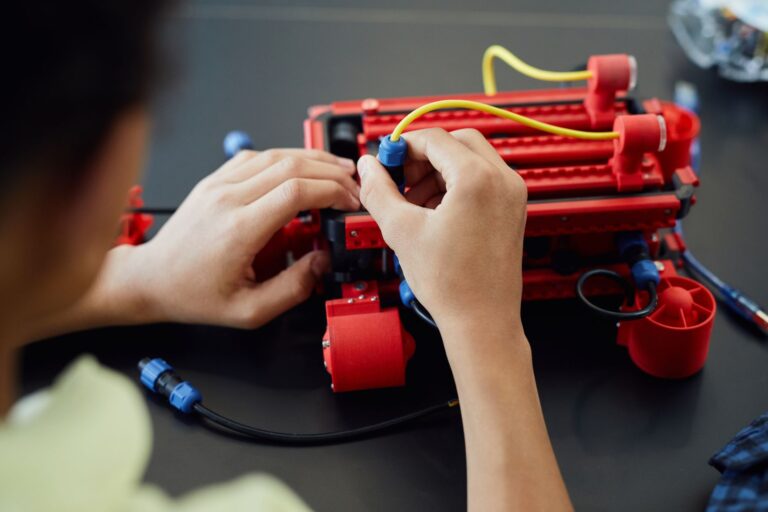
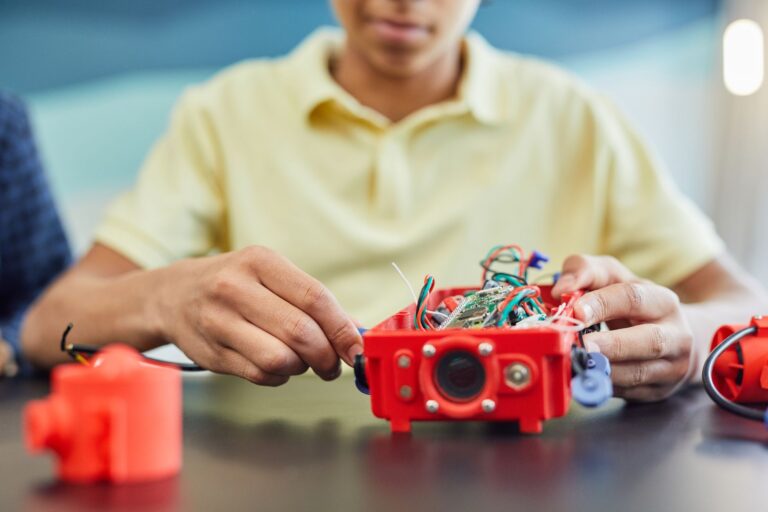
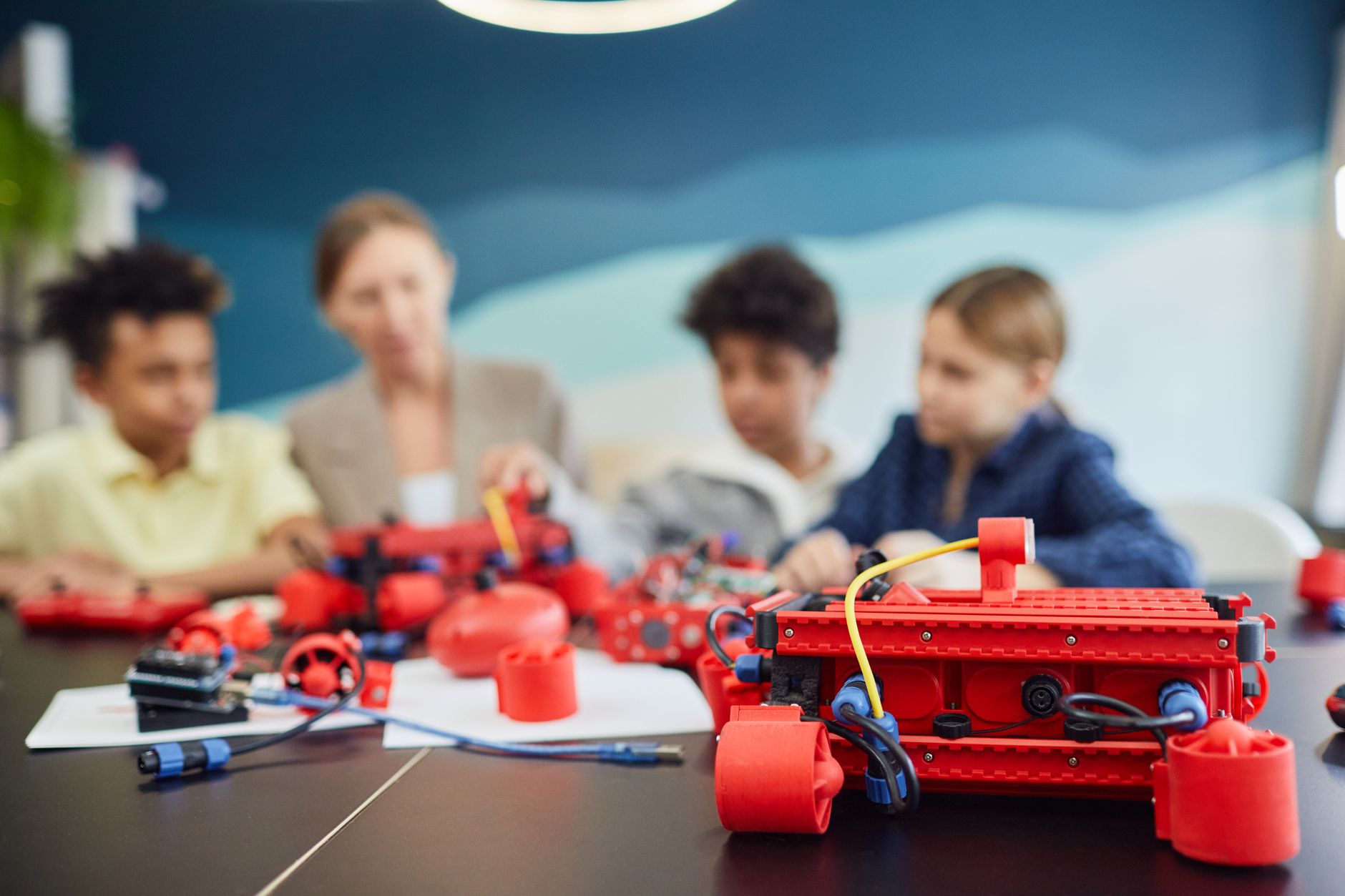
For students and hobbyists, the barrier to entry has dropped significantly. Hugging Face and Pollen Robotics launched Microduck, a $400 open-source trainable robot targeting learners seeking low-cost DIY robotics, making hands-on robotics accessible to groups that previously faced prohibitive costs.
The platform includes built-in training capabilities so users can immediately experiment with programming and control strategies. Otto DIY Academy offers free guides and STEM-aligned robotics curriculum with structured coursework on programming, building, and designing robots. These resources fill a gap between theoretical knowledge and practical construction, allowing learners to move from concepts to functioning systems without commercial platforms' licensing costs.
How is warehouse automation evolving in parallel?
Symbotic announced upgraded battery technology in September for warehouse robotics in collaboration with U.K. partners, addressing one of deployment's practical constraints: energy efficiency and runtime between charges.
Better batteries mean warehouses can run larger deployments without expanding charging infrastructure, directly affecting the cost-per-unit economics of automation. This trend mirrors the broader September 2026 shift: incremental improvements in power systems, procurement networks, and learning algorithms now matter more than breakthrough innovations in mobility or sensing. Deployment success depends on reliability and cost-per-task, not frontier capabilities.
Key takeaways for practitioners
The September 2026 landscape offers distinct paths depending on your goal. Professionals implementing warehouse automation benefit from production-ready systems like Electric Atlas and Apollo, now with established supply chains and performance benchmarks. Researchers and students gain from both abundant academic output (ICRA's 153 new workshops) and affordable platforms (Microduck at $400), creating feedback loops where learning drives innovation.
The critical limitation: all three deployment examples—Hyundai, Google DeepMind, and warehouse operators—remain enterprise contexts. Consumer robotics remains largely speculative; Optimus Gen 2 is announced but not yet broadly available at stated specifications. For learners planning investments, prioritize open-source platforms and academic resources now; production timelines for household robots remain uncertain.
Frequently Asked Questions
Can I actually run a Microduck robot if I buy one, or does it require programming expertise?
Microduck includes built-in training capabilities designed for learners, but the Otto DIY Academy's free curriculum provides structured guidance on programming and design alongside the hardware purchase, so beginners can follow step-by-step tutorials rather than reverse-engineering alone.
Will Boston Dynamics' Electric Atlas or Apptronik's Apollo ever be available outside of Hyundai, Google, and logistics companies?
Both are production-ready industrial systems now, but pricing and availability remain tied to enterprise supply agreements; learners and smaller organizations currently have no path to purchase them, making the $400 Microduck or Otto DIY platforms the realistic entry points.
How much better is the new 3D pretraining research compared to what robots could do before?
The 90%+ success rate on unseen objects addresses a specific limitation in manipulation—previous systems trained on fixed object sets performed poorly when encountering variations, so this improvement directly enables real-world deployment where product variation is inevitable.
You Might Also Like
- What Is New With Exoskeletons Robotics in August 2026? Latest company releases and research papers and Key Takeaways
- What Is New With Legged Robots in August 2026? Latest company releases and research papers and Key Takeaways
- Tutorials and DIY Robotics August 2026 Update: What Changed, Why It Matters, and What to Watch Next