
Hadrian, a Los Angeles-area manufacturer, wants to build a dozen more automated factories for defense production, and the Pentagon is considering lending it as much as $15 billion to do it, ProPublica reported on Nov. 24, 2026. For the robotics industry, the plan is a test of whether software-run machine shops can scale like a franchise.
Where it stands: the loan is under consideration only. A Pentagon spokesperson said talks were in “early stages” and disputed that the deal was for $15 billion, and an administration official called the request “extremely early.” The Pentagon said no company gets preferential treatment. 1789 Capital, where Donald Trump Jr. is a partner, owns a minority stake and says it stays out of government contracts its companies seek; Trump Jr.’s lawyer said he had no role in the matter. Hadrian did not respond to ProPublica, and no one is accused of wrongdoing.
How Hadrian’s automated factories work
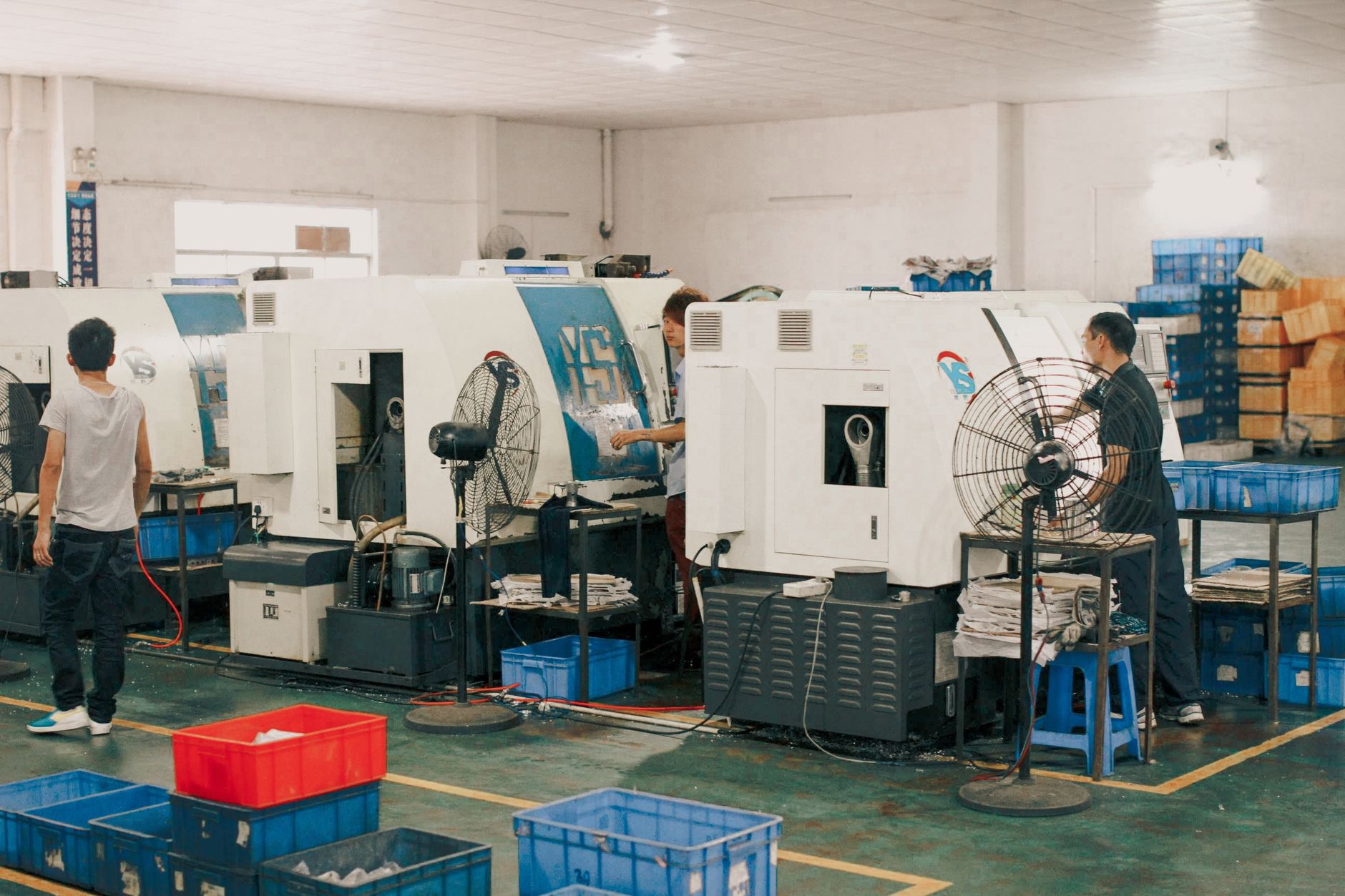
The core unit is a CNC machining cell, not a humanoid or an assembly line. TechCrunch described Hadrian automating the steps from a customer’s order to shipment, “which includes programming the CNC cutting and inspection machines but extends well beyond that, to many other aspects of factory operations: scheduling, task management, paperwork.” Once the machine programming is handled by software, “one person can run four to six machines simultaneously (as opposed to a single expert assigned to each machine).”
Early on, Power described the goal as a general-purpose plant. “We’re building an abstract factory that you can drop any part into and it comes out the other side,” he told CNBC in 2022, within limits on part size and material. Hadrian has since widened the process list. At the Navy plant in Alabama, Defense One reported, automation and robotics “will be used for welding, machining, fabrication, assembly, inspections, and tests.”
John Phelan, then the Navy secretary, summed up the pitch at the March opening: “Hadrian does not just machine parts. They build integrated production systems: raw material in, test-ready hardware out.” Defense One noted the difference from shipyards, which already use robots: Hadrian builds automation in from the start rather than bolting it onto a manual process.
The operator model and the 30-day claim
Hadrian’s labor model is as central as its machines. Power told reporters in March, as quoted by ProPublica: “We need to automate and have people running multiple robots in a new way of doing things versus replacing jobs.” For Factory 4 he set a target, telling Breaking Defense, “We want to be about 80 percent automated and make it simple enough that we can train, like in our other factories, a new workforce in 30 days or less.”
The training figure varies by venue. In oral testimony to a House Oversight subcommittee in April 2025, Power said every one of his workers had never been inside a factory before joining, and added: “We can train them in 30 days, and not 10 to 20 years.” His written testimony for the same hearing said Hadrian can take someone with no machining experience and, “in 40 days, prepare them to manufacture precision components bound for space.” At the Alabama event he spoke of training “in 30 to 40 days.” The gap is small, but the 30-day figure is the one most often repeated, and none of these numbers has been independently audited.
Readers weighing similar staffing math for their own plants can compare it with our breakdown of the manufacturing automation business case.
The factory footprint so far
Hadrian has moved from one small research shop to four sites in about five years. The table draws on the company’s releases and trade coverage.
| Site | Status | Size | Notes |
|---|---|---|---|
| Hawthorne, Calif. | First R&D site, now closed | 20,000 sq ft | Per TechCrunch |
| Torrance, Calif. (two sites) | Operating; headquarters | Main factory about 100,000 sq ft | Per The Robot Report and Hadrian |
| Factory 3, Mesa, Ariz. | Opened Jan. 29, 2026 | 290,000 sq ft | $200 million invested; 350-plus jobs planned |
| Factory 4, Cherokee area, Ala. | Opened March 2026; full output in about two years | 2.2-million-square-foot site | Submarine parts for the Navy; up to 1,000 jobs |
| Two more Navy plants | Not yet announced | Not disclosed | Castings, forgings and other critical materials |
The Robot Report put total capacity at “just under 3 million sq. ft.” across four sites after the Alabama opening. The Alabama plant reuses an industrial park in Barton where railcars were once built.
The Navy deal as a template
The submarine work shows how Hadrian pairs public and private money. Defense One reported that the Navy’s $900 million covers “non-recurring engineering across three facilities,” and that Factory 4 is the first of three Navy-focused plants in a $2.4 billion Hadrian program. Breaking Defense described the arrangement as more than $1.5 billion in private capital combined with $900 million from the Navy. Company officials said the other two facilities will focus on castings, forgings and other critical materials. Our earlier coverage of how the Navy and shipbuilders are bringing more robots online puts that program in context.
The proposed loan would be a much larger version of the same idea. Pentagon documents reviewed by ProPublica describe a dozen “automated factories” built with other defense companies, and possibly commercial ones, to make munitions, drones and other equipment. The Robot Report said Hadrian already plans new production lines in “munitions and autonomous systems for national security needs.”
Can automated factories be built this fast?
That is the open question. ProPublica wrote that Hadrian “has announced openings of new plants faster than outside analysts have been able to assess how well its operations are working,” and that the loan documents record Pentagon staff concerns about its ability to expand and hire quickly enough. Full production in Alabama is still a couple of years away.
There is also the question of demand. ProPublica noted the military’s shortage of some munitions after the wars in Ukraine and Iran, but said it is unclear whether the planned factories are aimed at those particular shortfalls.
How Hadrian compares with other automated defense plants
Hadrian is not the only company betting that software-defined plants can speed up defense production, though the approaches differ.
| Company | Approach | Scale reported |
|---|---|---|
| Hadrian | Automated CNC machining plus welding, assembly and inspection; sells factory capacity | Four sites, just under 3 million sq ft |
| Anduril (Arsenal-1, Ohio, announced January 2025) | Software-driven mass production of its own autonomous weapons | Announced as nearly $1 billion; 5 million square feet and 4,008 jobs at full scale by 2035 |
| Machina Labs | Robotic metal-forming cells (RoboCraftsman) | $124 million Series C; 200,000 sq ft plant with up to 50 cells |
The difference matters for a lender. Anduril builds its own products, while Hadrian largely makes parts and systems for other companies. Machina’s cells center on robotic forming of metal structures, while Hadrian began by cutting parts on CNC machines. Smaller players are also chasing defense automation money, as our report on what Foundry Robotics is building with its defense funding shows.
The labor-shortage case for automated factories
Hadrian’s pitch leans on a workforce problem that industry surveys confirm. In a PwC and Aerospace Industries Association survey reported by NOTUS in July, “Seventy-four percent identified a shortage of skilled labor as a major constraint,” and machine operators were among the hardest roles to fill. Katherine Boyle of Andreessen Horowitz, an early Hadrian backer, told CNBC in 2022 that many machinists were in their mid-50s and nearing retirement.
Power made the same argument to Congress, relaying what he hears from shipbuilding program officers: “You could give me a billion dollars. I simply cannot hire enough welders. They no longer exist in the country.” Whether automation can fill that gap at the scale of a dozen new plants is what the Pentagon’s review, if it continues, would have to judge.
Frequently Asked Questions
What are Hadrian’s automated factories?
They are machine shops and assembly plants run by Hadrian’s own software, in which CNC machines and robots handle most of the programming, scheduling and inspection work. Operators supervise several machines at once instead of one each. Hadrian sells capacity in them to defense and aerospace contractors.
How many factories does Hadrian have?
Four sites as of its August 2026 funding round: two in Torrance, California, Factory 3 in Mesa, Arizona, and Factory 4 in northwest Alabama, adding up to just under 3 million square feet, according to The Robot Report. A first research site in Hawthorne, California, has closed.
What is the Pentagon loan to Hadrian?
According to ProPublica, Pentagon officials are weighing a loan that could reach 15 billion dollars, meant to fund a dozen more automated factories. The Pentagon says talks are early and disputes the figure. No loan has been approved.
How long does Hadrian take to train a factory worker?
Hadrian usually says about 30 days. Its founder’s written House testimony in 2025 gave 40 days for someone with no machining experience, and he has also cited a range of 30 to 40 days.
Who else is building automated defense factories?
Anduril has announced its Arsenal-1 plant in Ohio for autonomous weapons, and Machina Labs is building a robotic metal-forming factory for defense and aerospace parts. Each takes a different technical approach from Hadrian’s machining-first model.
Sources
- A Startup Tied to Donald Trump Jr. Could Get a Historic $15 Billion Loan From the Pentagon — ProPublica (Robert Faturechi and Aaron C. Davis), November 24, 2026
- Hadrian Automation’s CEO wants to defy history and revitalize American industry — TechCrunch (Aria Alamalhodaei), February 21, 2024
- Machine-parts start-up Hadrian raises $90 million from Andreessen, Lux — CNBC, March 31, 2022
- Made in the USA: Igniting the Industrial Renaissance of the United States (hearing transcript) — U.S. House Committee on Oversight, Subcommittee on Economic Growth, Energy Policy, and Regulatory Affairs (GovInfo), hearing of April 29, 2025
- Revitalizing American Manufacturing for Security and Prosperity (written testimony of Chris Power) — U.S. House of Representatives Document Repository, April 29, 2025
- Navy bets $900M on automated factories to boost submarine production — Defense One, March 20, 2026
- Navy, Hadrian launch partnership, open facility to build submarine parts — Breaking Defense, March 20, 2026
- Hadrian celebrates ribbon cutting of Factory 3 in Mesa — Greater Phoenix Economic Council (reproducing Hadrian’s release), January 29, 2026
- Mission critical: Navy, Hadrian unveil $2.4 billion ‘factory of the future’ in Northwest Alabama — 256 Today, March 2026
- Hadrian raises $1.37B to accelerate U.S. defense, aerospace manufacturing — The Robot Report, August 2026
- Anduril to build $1B Arsenal-1 hyperscale facility in Ohio — Manufacturing Dive, January 2025
- Machina Labs raises $124M to launch large-scale intelligent U.S. factory — The Robot Report, February 2026
- Labor constraints could stand in the way of the president’s goals to ramp up weapons manufacturing — NOTUS, July 22, 2026
This article is news reporting and analysis based on the public sources listed above, as they stood on the dates shown. Where officials, lawmakers or analysts disagree, including on whether an action is lawful, their positions are attributed to them; Robotics Reports is not a court and nothing here is legal advice. Facts in a developing story can change.