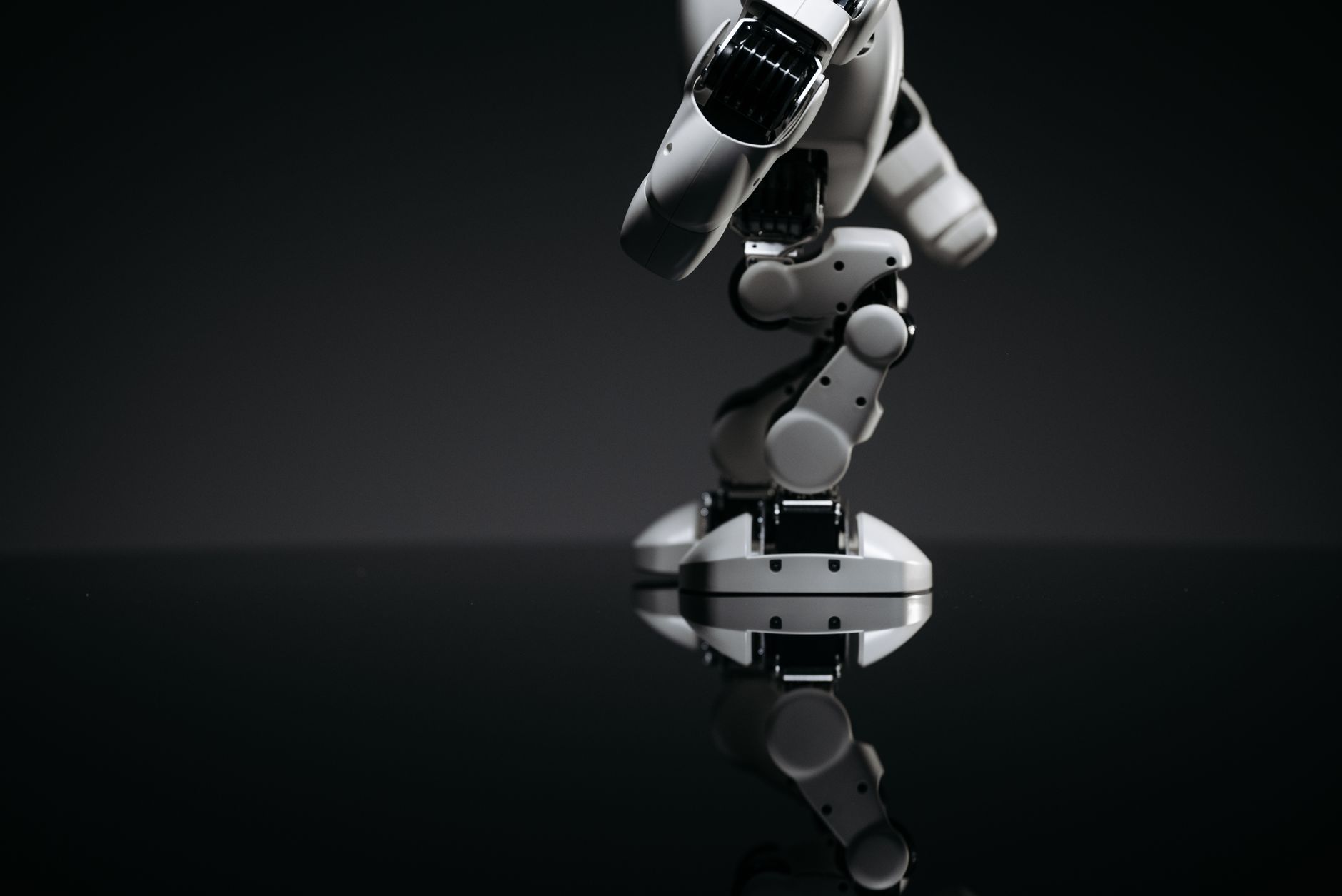

Physical AI — machines such as humanoids and autonomous vehicles that sense, decide, and act in the real world — faces a supplier rethink because Nvidia brings high cost, high power demand, single-vendor dependence, and new leadership-continuity risk. Makers were already uneasy about those trade-offs before Jensen Huang's exit added another reason to seek options. Nvidia aims to be the default platform, not just a chip vendor. TechCrunch describes a full stack spanning Cosmos world models, GR00T foundation models, Isaac simulation and deployment tools, and Thor hardware.
Table of Contents
- What pushed firms to reconsider?
- What does Nvidia cost and demand?
- Which alternatives are gaining attention?
- Why does Nvidia dependence persist?
What pushed firms to reconsider?
Humanoid, vehicle, and physical-AI builders worried about being locked to one supplier for perception and compute. Cost and power budgets were already tight for mobile machines. Fierce Sensors reported that Huang's exit added leadership-continuity risk to those concerns Fierce Sensors analysis.
The issue is habit as much as hardware: once models, simulation, and deployment assume Nvidia, switching takes work. The practical response is optionality rather than an abrupt swap. Teams want designs that can ship either way if pricing, supply, or roadmaps shift.
What does Nvidia cost and demand?
Nvidia Investor Relations lists the Jetson AGX Thor developer kit at $3,499, with a Blackwell GPU, up to 2,070 FP4 TFLOPS, and 128GB memory inside a 40-130W envelope Nvidia announcement. That performance suits dense lidar and camera-array processing. For a humanoid, watts matter as much as dollars.
A 40-130W compute envelope affects battery size, heat removal, fan noise, and operating time. Buyers should therefore test full sensor load, not idle power. Measure sustained perception, planning, and logging together, then size batteries and cooling from that number.
Which alternatives are gaining attention?
Chinese robot makers are moving first on domestic supply. Seoul Economic Daily reports AgiBot is working with multiple Chinese AI-chip firms and already uses domestic chips for cerebellum and joint-control MCUs and communications chips Seoul Economic Daily report. The same report says Tars plans a 560-TOPS domestic edge-AI chip in its next A3 industrial robot, while UBTech formed a chip joint venture.
Automotive-grade options add another path. Electronics Engineering identifies Horizon Robotics' Journey 6P at about 560 TOPS, in mass production in late 2025, as a domestic alternative for automakers and robot firms. Intel is pitching a different trade: Core Ultra Series 3 with CPU, GPU, and NPU plus a Robotics AI Suite for ROS-2 multi-sensor pipelines. Forbes Europe reporting frames the goal as lower deployment cost and less lab-to-field risk.
- Compare sustained TOPS per watt on your sensor mix.
- Check ROS-2 driver and model support before changing compute.
- Confirm supply, warranty, and long-term software updates.
Why does Nvidia dependence persist?
High-end perception still favors Thor on some flagship robots. Gagadget notes AgiBot's 1.74m, 51-DOF A3 Ultra, unveiled at WAIC 2026, still uses Nvidia Thor for real-time lidar and camera-array processing. That limit explains the current strategy.
Fierce Sensors reports firms such as Figure are designing next-generation robots to run with or without Nvidia rather than removing it immediately follow-up Fierce Sensors reporting. Dual-path hardware keeps shipments moving while software ports mature. For readers, the action is to isolate Nvidia-specific code behind clean interfaces. Keep perception, logging, simulation, and deployment separable so one board change does not force a rewrite.


