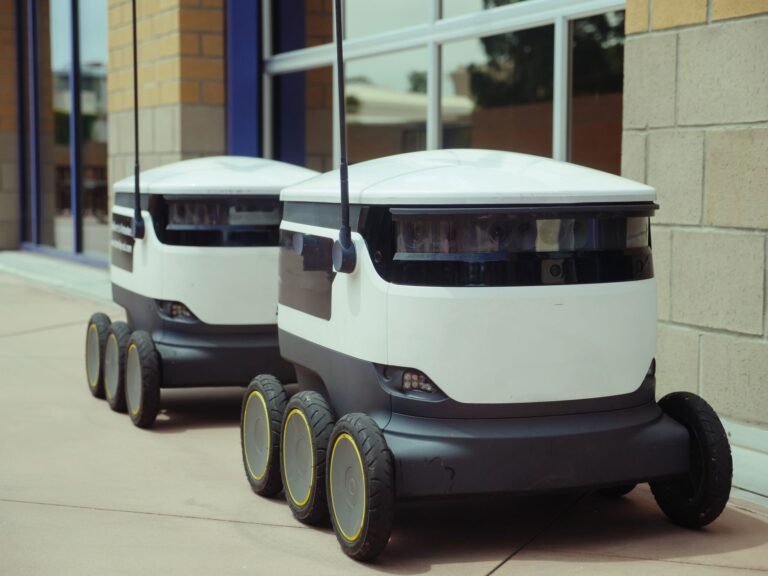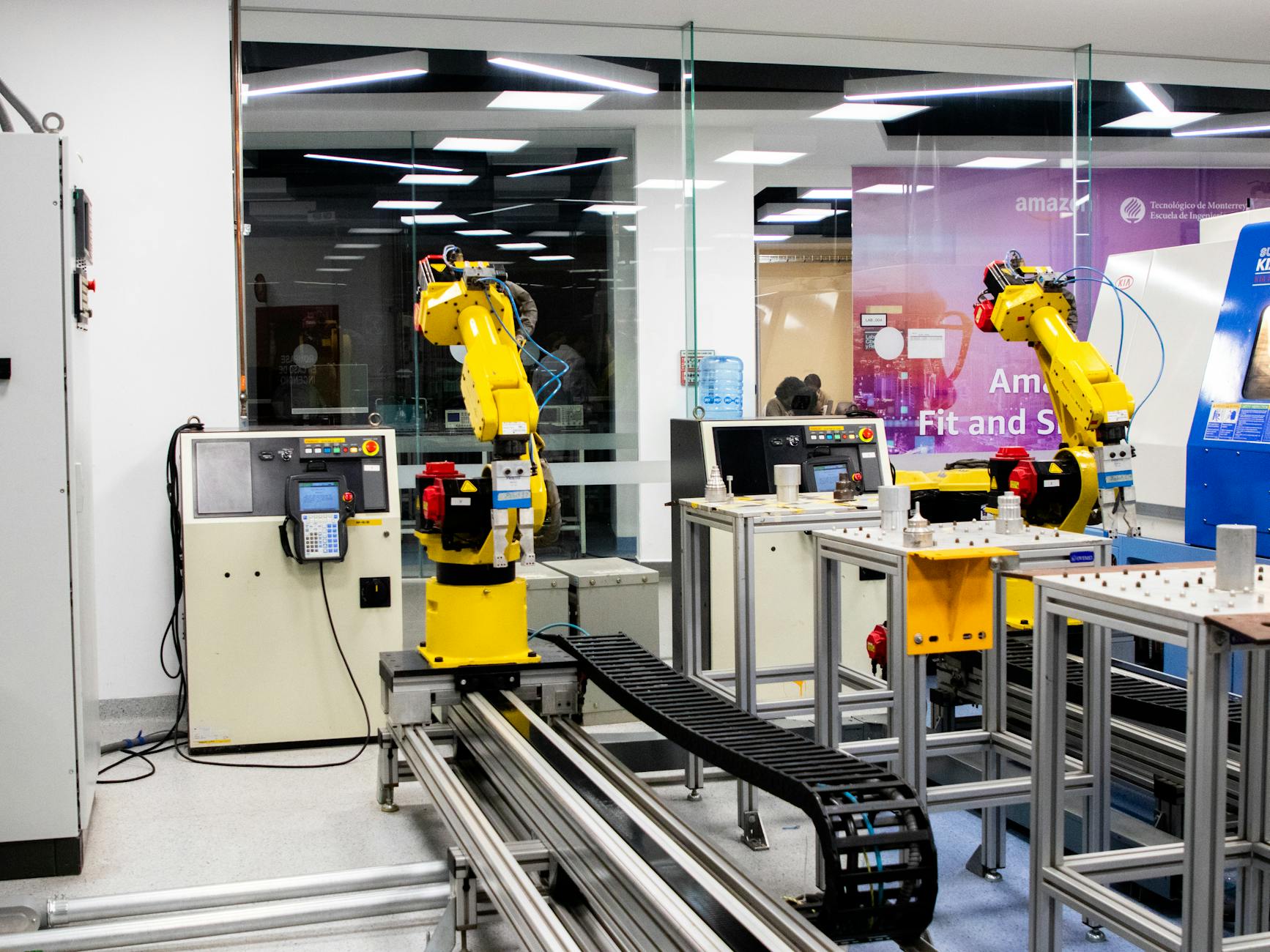

KSCP has become known as the “Amazon of robotic guarding” because the company has fundamentally scaled and commoditized security robot deployment in ways that traditional security firms have struggled to replicate. Rather than relying on the same guard-labor model that has dominated the security industry for decades, KSCP operates a platform-based approach that deploys autonomous and semi-autonomous security robots to handle routine surveillance, patrol, and monitoring tasks across multiple client sites simultaneously. The comparison to Amazon is apt: just as Amazon disrupted retail by building infrastructure and logistics at scale, KSCP has built the operational systems, software, and supply chain to deploy security robots as a service across geography and client size, fundamentally changing the economics of site security.
The company’s model works because robotic guards can be deployed faster, redeployed between locations based on demand, and operate continuously without the fatigue, scheduling constraints, and benefits costs that accompany human security staff. A mid-sized retail or logistics facility that once required three to four security guards working rotating shifts can now deploy one or two KSCP robots that provide 24/7 coverage, thermal imaging, and automated incident detection at a comparable or lower cost structure. This shift from labor-intensive to capital-and-software-intensive operations has forced the broader security industry to rethink how services are structured.
Table of Contents
- How KSCP Built a Scalable Robotic Security Platform
- The Technology Behind Robotic Guards and Detection Systems
- KSCP’s Impact on Traditional Security Markets
- Implementing KSCP’s Robotic Guards in Facility Operations
- Limitations and Failure Modes of Autonomous Security Robots
- KSCP’s Market Position Against Global Competitors
- The Future of Robotic Guarding and Evolving Security Models
- Conclusion
- Frequently Asked Questions
How KSCP Built a Scalable Robotic Security Platform
kscp‘s scaling advantage stems from treating robotic security as an infrastructure layer rather than a collection of point solutions. The company maintains centralized software systems that manage robot deployment, monitoring, and maintenance across multiple customer sites, which creates efficiencies that individual security companies cannot match. When a new customer signs up, KSCP deploys robots from a managed fleet rather than custom-configuring systems for each location—similar to how cloud providers quickly spin up resources for new customers rather than building custom data centers. The economic model compounds this advantage. A traditional security firm hiring new guards for expanded operations faces hiring delays, training timelines, and fixed labor commitments.
KSCP redeploys robots between accounts based on real-time demand patterns. A warehouse that only needs weekend coverage can share robot resources with a weekday-focused office building, lowering idle time and capital costs. This flexibility doesn’t exist in human security, where a guard staffed 24/7 is a fixed cost whether the site needs full coverage or not. However, this centralization comes with a limitation: KSCP’s service quality and innovation are tightly coupled to their platform architecture. A software bug or connectivity issue can affect multiple customer sites simultaneously, and customization requests that fall outside the platform’s design are difficult to accommodate. Some customers discover that the system works well for routine patrol and detection but struggles with the nuance required for complex security decisions.

The Technology Behind Robotic Guards and Detection Systems
KSCP’s robots typically combine mobile platforms (often wheeled or tracked for terrain flexibility) with sensor suites that include HD cameras, thermal imaging, and sometimes LiDAR for spatial mapping. The detection software uses computer vision and machine learning to identify suspicious behaviors—loitering in restricted areas, unauthorized entries, tampering with equipment—and either alert a human monitor or take automated actions like blocking access or triggering alarms. This technological stack has matured significantly in the past five years, with accuracy rates that now match or exceed human security officers in detecting predefined threat categories. The real competitive advantage for KSCP is not individual sensor performance but rather the data aggregation and algorithmic improvements that come from operating thousands of robots across diverse sites.
Each deployment generates training data that improves the detection models, and each incident (legitimate or false alarm) teaches the system what behaviors matter in specific contexts. A retail chain deploying KSCP robots at 50 locations contributes data that improves detection for all 50 locations and potentially for KSCP’s broader customer base. The limitation here is significant: the system’s accuracy depends on clearly defined, repeatable threat patterns. Complex scenarios—distinguishing between an employee in distress and an actual criminal, identifying sophisticated theft techniques, understanding context-dependent security concerns—remain areas where human judgment outperforms robots. Additionally, adversaries who understand how the robots’ detection systems work can adapt their behavior to avoid triggering alerts, a challenge that KSCP must continuously address through detection model updates.
KSCP’s Impact on Traditional Security Markets
The emergence of KSCP and competitors like Knightscope, Evolve Robotics, and international providers has forced traditional security companies to confront an uncomfortable truth: labor-intensive guard services are vulnerable to displacement in certain contexts. Large facilities with predictable, routine security needs—parking garages, logistics warehouses, office buildings—represent the most defensible market for robotic alternatives. A major security firm that once won a 100-guard contract at a large facility now competes against a robotic alternative requiring 5-10 human monitors managing 20 robots. This dynamic has created a bifurcation in the security industry. Firms that have invested in robotic platforms or formed partnerships with KSCP and competitors are repositioning themselves as security technology providers rather than pure labor vendors.
Firms that continue to compete on labor availability are experiencing margin pressure, as clients increasingly demand robotic options or hybrid models. Some regional and mid-sized security companies have been acquired or consolidated by larger firms precisely because standalone labor-only models no longer command premium valuations. The impact on employment is real and worth acknowledging. Entry-level security guard positions, which have historically been accessible to workers with limited education or experience, are declining in core segments like facility patrol. KSCP’s disruption creates winners (the technicians who maintain robots, the software engineers building detection systems) and losers (security guards whose core job has been automated away). The security industry has not yet developed strong retraining pathways to transition displaced guards into higher-skill roles, which suggests that this labor displacement is a one-way ratchet rather than a shift.

Implementing KSCP’s Robotic Guards in Facility Operations
For a facility manager or security director considering KSCP deployment, the practical case typically emerges in facilities with specific characteristics: large square footage, limited complex threat scenarios, predictable traffic patterns, and sufficient power infrastructure for robot charging. A pharmaceutical manufacturing facility that needs 24/7 perimeter monitoring and intrusion detection is an ideal fit. A hospital emergency department where robots must navigate around patients and healthcare workers presents much greater complexity and lower value. The implementation process differs significantly from traditional security contracts. Rather than hiring and onboarding human guards over weeks, a KSCP deployment involves network infrastructure assessment, mapping of facility layouts, integration with existing access control and alarm systems, and training of staff who will monitor alerts and manage robot routing.
Facilities also need to communicate the robotic presence to employees and visitors, as untrained staff sometimes react negatively or try to tamper with the robots. The initial deployment timeline ranges from two to eight weeks depending on facility complexity, compared to the four to twelve weeks required to hire and train a full security team. The trade-off is important: upfront capital costs for robot hardware and software infrastructure are higher than the first few weeks of labor costs, but long-term operating costs are lower and more predictable. A facility signing a three-year contract with KSCP knows its security technology costs will remain relatively fixed (minus software updates and maintenance), while a facility relying on security guards faces unpredictable labor cost inflation, turnover-related disruptions, and varying service quality. However, facilities that have implemented KSCP systems sometimes discover that certain edge cases—a panicked employee calling for help, an ambiguous threat that requires immediate human judgment—create friction that was invisible when planning the deployment.
Limitations and Failure Modes of Autonomous Security Robots
Despite KSCP’s scaling success, robotic security guards face hard technical and situational limitations that no amount of software improvement will fully resolve. The first is the “last mile” problem: a robot detecting an intrusion or suspicious activity can alert human operators and potentially trigger physical barriers, but actually confronting, subduing, or apprehending a threat still requires human intervention. This means facilities cannot replace all human security staff; they can only reduce the number of staff required and redeploy them to higher-value problem-solving. A robot that discovers someone tampering with equipment in a restricted area must summon a human guard to investigate and respond—that human guard is still essential, just fewer of them are needed. The second limitation is environmental and behavioral complexity. Robots navigate two-dimensional space reasonably well, but they struggle with stairwells, crowded spaces, soft surfaces like sand or gravel, and conditions like heavy snow or rain.
More important, they cannot understand the social context of human behavior the way human security officers can. A group of teenagers loitering in a parking garage has very different threat profiles depending on whether they appear to be waiting for a legitimate ride, engaging in vandalism, or casing vehicles for theft. A robot’s sensors and detection algorithms can flag the behavior; a human security officer who has worked the site for six months understands the pattern and context. KSCP systems are gradually improving at contextual understanding through machine learning, but the gap remains significant. The third limitation is adversarial: once bad actors understand how a robotic security system works, they can develop tactics to evade it. Knowing that robots use visible light and thermal cameras, a theft organization might conduct operations outside the thermal signature range or deliberately mask their activities with decoys. This is an arms race rather than a solved problem, and it means KSCP must continuously deploy new detection techniques to stay ahead of adaptive adversaries.
KSCP’s Market Position Against Global Competitors
KSCP operates in a competitive landscape that includes both established Western robotics companies and emerging players across Asia. Knightscope dominates the North American market with a strong focus on indoor retail and corporate facilities, while KSCP has built significant market share in South Korea and Asia-Pacific regions through localized supply chains and understanding of regional facility needs. Companies like Evolve Robotics and Hanwha Q Cells have also deployed security robots, and traditional security giants like G4S and Securitas are investing in robotic capabilities to hedge against disruption.
The competitive differentiation between KSCP and other robotics security providers increasingly centers on software and data rather than hardware. The robots themselves have become commoditized—multiple manufacturers can build wheeled or tracked platforms with camera and thermal sensor packages. What separates KSCP from lower-cost competitors is the machine learning models, the customer support infrastructure, the ability to integrate with existing security systems, and the scale of the operational network. A small startup offering robots at 30% lower cost may lose customers quickly when their detection software generates too many false alarms or their technical support team cannot respond to integration issues.
The Future of Robotic Guarding and Evolving Security Models
The security industry is moving toward hybrid models where robots handle routine surveillance, perimeter monitoring, and initial incident detection, while human security personnel focus on complex decision-making, threat response, and customer-facing security services. This split is likely to intensify over the next five to ten years as detection software improves and as facilities managers accumulate operational experience with robotic platforms. The “pure” robotic replacement of all security functions will remain impractical for complex environments, but the “mostly automated with human oversight” model is becoming the de facto standard in large, well-funded facilities.
KSCP’s positioning in this transition depends partly on geographic factors—the company’s strength in Asian markets gives it advantages in regions where robotic security adoption is normalizing faster than in Western markets—and partly on the company’s ability to expand its software capabilities beyond detection into more autonomous decision-making and coordination. As regulations around autonomous systems and liability frameworks become clearer, companies that have invested early in robust, explainable AI systems will have advantages over companies that rush to market with less mature capabilities. The “Amazon of robotic guarding” metaphor may ultimately be proven accurate if KSCP can maintain its platform advantages as the market matures, or it may be a phase in a longer transition toward security ecosystems where multiple providers’ systems must interoperate.
Conclusion
KSCP has earned its comparison to Amazon by building a platform-based security infrastructure that treats robotic guards as a scalable service rather than a point technology. The company’s combination of managed robot fleets, centralized software systems, and continuous algorithm improvement creates economic advantages over traditional security labor models in specific use cases: large facilities with routine security needs and limited complex threat scenarios.
For facility managers, the choice between KSCP and traditional security guards increasingly comes down to whether the facility’s security profile matches the strengths of robotic automation, not whether robotic security is generally viable. The security industry is at an inflection point where robotic platforms like KSCP are establishing the baseline for what scaled security infrastructure should deliver, forcing traditional providers to adapt or consolidate. The future of security is unlikely to be “robots replace guards” but rather “robots handle routine work, humans focus on complex judgment and response.” KSCP’s success will depend on navigating that reality—building systems flexible enough to handle the edge cases and contextual complexity that pure automation cannot solve, while maintaining the operational efficiency that makes the platform economically compelling.
Frequently Asked Questions
Can KSCP robots actually catch or apprehend criminals?
No. KSCP robots can detect intrusions, monitor suspicious activity, and alert human operators, but they lack the physical capability to apprehend anyone. They function as detection and monitoring platforms that enable faster human response, not as replacements for human security personnel in threat response scenarios.
How much does KSCP robotic security cost compared to human guards?
The cost varies by facility size and coverage requirements, but typical deployment costs are competitive with 2-4 full-time security guards over a three-year contract. Initial capital costs for robot hardware and software are higher, but long-term operational costs are more predictable and generally lower than scaling human staffing.
What happens if a KSCP robot malfunctions or loses connectivity?
Facilities typically maintain backup monitoring or human patrols during robot downtime, depending on their security requirements. KSCP provides maintenance and support agreements, but any single robot failure creates a coverage gap that must be managed. Large deployments with multiple robots provide redundancy that reduces the impact of individual unit failures.
Can KSCP robots distinguish between authorized and unauthorized personnel?
Only if the facility integrates KSCP systems with existing access control data that identifies authorized personnel. The robot uses visual recognition and learning algorithms to flag unfamiliar patterns, but it cannot distinguish an employee from an intruder without connected security system data or prior training on facility staff.
How do employees and visitors typically react to robotic security guards?
Reactions vary. Some facilities report that employees adjust quickly and appreciate the 24/7 monitoring. Others encounter initial resistance or concerns about privacy. Facilities that are successful with KSCP deployment invest in clear communication about the robots’ presence and limitations before deployment, reducing surprise and friction.
What happens to security guard jobs as KSCP and competitors scale?
Traditional entry-level security guard positions in routine surveillance and patrol are at risk. However, demand is growing for robot maintenance technicians, security system administrators, and human security specialists who manage complex threat scenarios. The industry has not yet developed robust retraining programs, which means some displaced workers face difficulty transitioning into higher-skill roles.