
The next NVIDIA in robotics won’t necessarily be a chip manufacturer—it will be the company that wins the network effect. While NVIDIA has dominated AI hardware through relentless GPU innovation, the robotics industry is at an inflection point where software platforms, cloud connectivity, and ecosystem lock-in matter more than raw computational power. A player that creates the operating system for robots—one where hardware, software, and cloud services reinforce each other—stands to capture more value than a pure-play chip vendor. This shift is already underway, evidenced by NVIDIA’s own pivot from chips to platforms with its Nemotron Coalition and the explosive growth in cloud robotics and software-as-a-service models. The numbers tell the story clearly.
The global robotics market reached $88.27 billion in 2026, up from $73.64 billion in 2025, but the real growth engine is software platforms and cloud services. The robotic software platforms market grew to $8.79 billion in 2026 and is expected to reach $28.73 billion by 2032 at a 21.60% compound annual growth rate. Meanwhile, cloud robotics expanded to $11.18 billion this year and is projected to hit $52.67 billion by 2034. These aren’t hardware margins—these are recurring, sticky revenue streams that compound with network effects. The robotics company that owns the platform millions of robots run on will extract more value than the company selling the chips inside them, much like how Microsoft extracted more value from Windows than Intel did from CPUs.
Table of Contents
- What Creates Network Effects in Robotics Markets?
- Why NVIDIA’s Platform Strategy Beats Pure Hardware Play
- How Cloud Robotics and Software Platforms Create Sustainable Advantage
- Market Implications and the Business Model Shift
- The Challenge of Building Network Effects in a Hardware-First Industry
- Emerging Competitors and Alternative Platforms
- The Future of Robotics and Platform Economics
- Conclusion
What Creates Network Effects in Robotics Markets?
Network effects in robotics differ fundamentally from those in software. You can’t simply add one robot and increase the value for others—or can you? When robots operate through shared cloud platforms, common software stacks, and connected ecosystems, they do create value for each other. A robot deployed in a warehouse that runs on a standardized control system generates data that improves perception models for all robots on the same platform. A collaborative robot arm that shares collision-avoidance patterns through a cloud network makes the next robot safer and more efficient out of the box. These feedback loops are the essence of modern network effects in robotics. Consider Boston Dynamics and NVIDIA’s partnership, announced as part of the Nemotron Coalition in 2026. Boston Dynamics robots running on NVIDIA’s Isaac GR00T (a general-purpose robotics model) and cloud infrastructure create a closed loop: robot deployments generate task data, that data refines the foundational models, and the improved models are pushed back to all robots in the ecosystem. Tesla’s Optimus robots, now being produced at the Fremont factory after the company discontinued Model S and X sedans there, will follow a similar pattern.
The more Optimus units in the field, the more hours of real-world data feed back into Tesla’s control systems, and the more capable the next generation becomes. Traditional robotics companies like FANUC, Yaskawa, ABB, and KUKA face a challenge: they built their value on hardware excellence and point solutions, not platform ecosystems. They’re now trying to catch up to this reality. The network effect compounds when Robot-as-a-Service and cloud connectivity become the dominant business model. Instead of selling a robot once, service contracts create recurring revenue and continuous data collection. A robot subscription model incentivizes the vendor to keep improving the software—if the robot becomes less capable than competitors, the customer cancels. This creates pressure for constant innovation and ecosystem expansion. Companies like Figure AI, which is in talks for a $1.5 billion funding round at a $39.5 billion valuation, understand this: they’re not just building humanoid robots; they’re building cloud-connected platforms that will improve with every deployment.

Why NVIDIA’s Platform Strategy Beats Pure Hardware Play
NVIDIA’s dominance in AI chips is real but fragile in robotics. The company can sell H100 GPUs to anyone with money, but those chips are commodity inputs—valuable, yes, but interchangeable at the margins. AMD’s Ryzen AI Embedded P100 and X100 Series processors, released in January 2026 with the X100 scaling to 16 CPU cores for autonomous systems, provide a viable alternative. Broadcom is another credible competitor. In a pure hardware race, NVIDIA’s first-mover advantage shrinks as competitors match performance and undercut on price. NVIDIA’s real moat is ecosystem lock-in through software and platforms. The Nemotron Coalition, launched in 2026 with six frontier model families including Isaac GR00T for general robotics and Cosmos for world models and vision models, represents this shift.
When Boston Dynamics, Caterpillar, Franka Robotics, LG Electronics, NEURA Robotics, Agility, FANUC, Figure, KUKA, and Yaskawa all build robots trained on the same foundational models and running on NVIDIA’s cloud infrastructure, each partner’s success strengthens the entire ecosystem. A startup trying to compete against this coalition doesn’t just need better chips; it needs better software, better models, better data infrastructure, and relationships with major hardware manufacturers. That’s a much higher barrier to entry than building a competitive GPU. The limitation here is critical: network effects only work if you’re actually winning. NVIDIA’s strategy assumes continued leadership in AI model quality and cloud infrastructure. If a competitor—say, a consortium backed by major robotics manufacturers—develops equally capable foundational models and builds a cloud platform that’s simpler or cheaper to use, NVIDIA’s advantage evaporates. This has happened before in tech: AWS dominated cloud infrastructure not because of better hardware but because of easier management and better integration. A roboticist-first platform, built by and for hardware engineers, could potentially overtake NVIDIA’s platform if the software experience proves superior.
How Cloud Robotics and Software Platforms Create Sustainable Advantage
Cloud robotics markets are exploding—from $11.18 billion in 2026 to a projected $52.67 billion by 2034 at an 18.9% CAGR—because remote monitoring, autonomous control, and continuous model updates are impossible without cloud connectivity. A collaborative robot arm manufacturing widgets in a factory in Vietnam is now regularly querying cloud models for anomaly detection, optimization recommendations, and predictive maintenance alerts. This creates continuous data collection and model improvement, a flywheel that benefits all robots on the platform. The robotics software platforms market growing at 21.60% CAGR toward $28.73 billion by 2032 reflects a second wave: roboticists and enterprises are willing to pay for software layers that abstract away hardware complexity. Just as app developers build on top of iOS or Android without worrying about the underlying chip, robot engineers want operating systems and middleware that work across different hardware. ROS (Robot Operating System), an open-source framework, has enabled this for years, but fragmented, incompatible implementations.
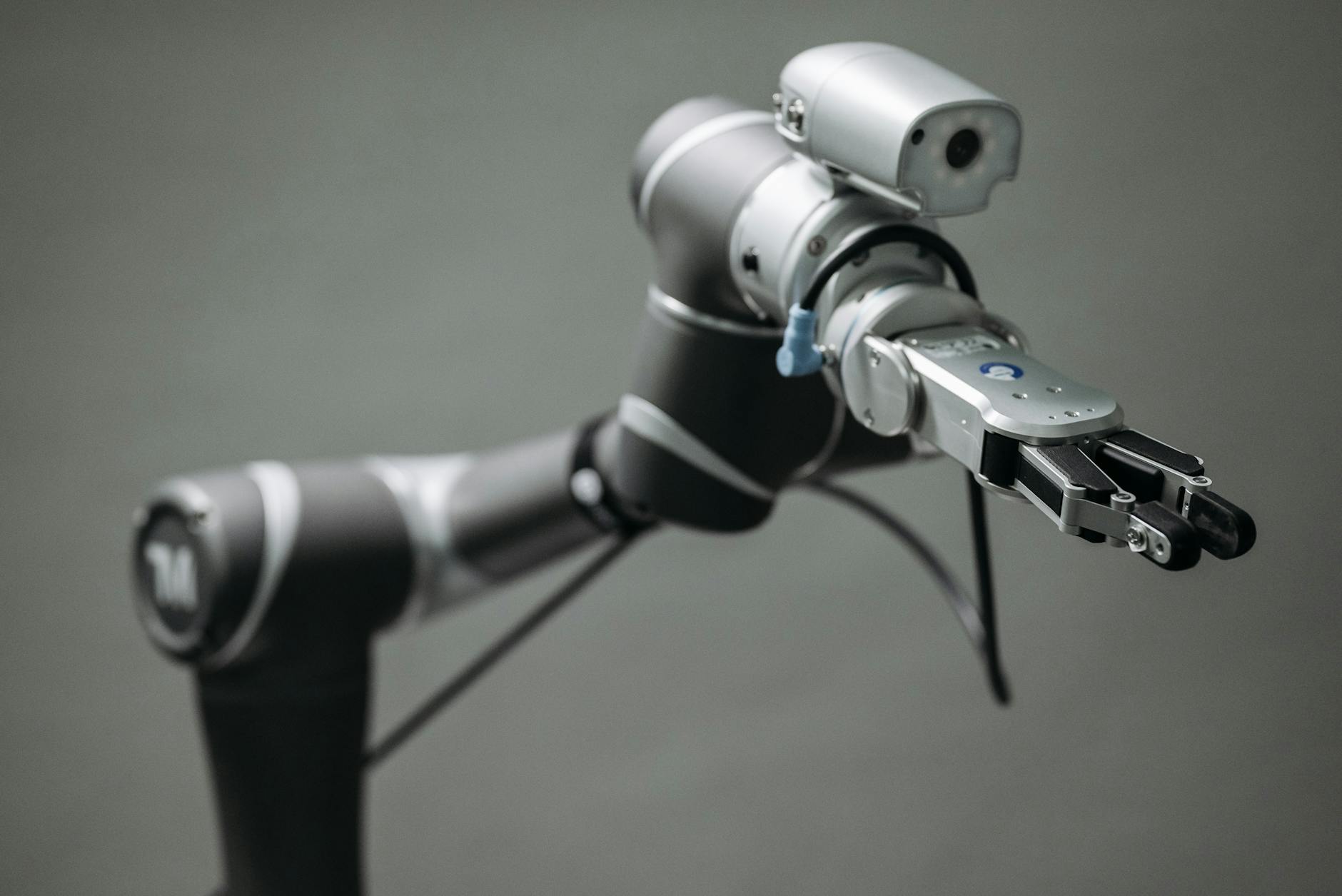
A commercial platform that offers ROS compatibility, cloud scaling, integrated machine learning tooling, and easy deployment could capture significant market share. NVIDIA’s Isaac platform is moving in this direction, but so are specialized startups building industry-specific stacks. A practical example: collaborative robot manufacturers are shifting toward Robot-as-a-Service contracts. Instead of selling a $100,000 arm once, they now lease it for $5,000 to $10,000 monthly, promising uptime and capability improvements. The recurring revenue model incentivizes continuous software updates and ecosystem expansion. A customer who starts with one cobot arm, then adds a second, then integrates with conveyor systems and vision systems through the same cloud platform, gets locked in through convenience and integration depth, not switching costs. This is network effects in action—each additional element makes the system more valuable.

Market Implications and the Business Model Shift
The shift from hardware-centric to software-centric value capture is already reshaping the competitive landscape. Collaborative robot revenue is projected to grow at 27.5% CAGR from 2024 to 2030, expanding from $1.3 billion to over $7 billion, but these units are increasingly interchangeable. The differentiation is moving to software—which robot arms integrate best with your factory management system? Which cloud platform offers the most advanced vision models? Which ecosystem will improve the fastest? Traditional robotics manufacturers like Yaskawa, FANUC, and KUKA have enormous competitive advantages in hardware design, manufacturing, and customer relationships, but they’ve been slow to build cloud platforms and software ecosystems. They’re now forced to partner with software companies or acquire them. FANUC has made moves in this direction, but partnerships are slower and messier than internal development.
A startup or a tech company with strong software and cloud capabilities has an asymmetric advantage: it can partner with any hardware manufacturer, learning from each partnership and improving its platform. This is the playbook that could produce the next NVIDIA—a platform vendor that commoditizes hardware while capturing software value. The tradeoff is real: pure hardware companies face margin compression, but pure software companies face fragmentation. NVIDIA’s answer is to own both the hardware and software, but that’s expensive and requires continuous innovation on two fronts. A more likely scenario is that the next market leader is the company that makes the best platform for integrating diverse hardware—a Switzerland-like position that allows partnerships across the ecosystem while extracting value through software lock-in.
The Challenge of Building Network Effects in a Hardware-First Industry
Building network effects in robotics is harder than in software because hardware deployment cycles are long and switching costs are high. A factory that installs a $500,000 robotic production line doesn’t upgrade yearly; it optimizes that system for 10 years. A robot running on proprietary software, trained on proprietary models, becomes deeply integrated into operations. Switching to a different ecosystem—different arm, different control system, different cloud platform—is expensive and risky. This creates customer lock-in, which is good for established vendors but makes it hard for newcomers to build network effects through customer growth. Figure AI’s high valuation and Tesla’s Optimus investment reflect bets that humanoid robots will accelerate adoption and deployment cycles. If robots are easier to deploy (swappable, standardized, software-definable) and become more affordable, then network effects can build faster. But this is speculative.
The collaborative robot market has grown substantially, yet no single platform vendor has truly dominated software in the way NVIDIA dominates GPU computing. ROS remains fragmented, and enterprises are building custom solutions on top of it. This suggests that true platform dominance in robotics may be harder to achieve than in AI chips. Another limitation: data privacy and security become critical barriers. A robot system that continuously sends data to cloud platforms raises concerns about intellectual property, production secrets, and regulatory compliance. A manufacturing company may be unwilling to give one vendor complete visibility into its operations. This creates pressure for federated approaches, edge computing, and privacy-preserving models—which fragment the ecosystem and reduce network effects. NVIDIA and other platform vendors will need to navigate these concerns carefully, offering on-premise options, data minimization, and strong compliance frameworks, but each concession reduces the power of centralized network effects.
Emerging Competitors and Alternative Platforms
NVIDIA’s dominance in the robotics software and hardware space isn’t guaranteed. OpenAI’s investments in robotics (through partnerships and capability research), Google’s robotics research (Building Robotics, Intrinsic), and Amazon’s warehouse automation investments are all potential threats.
Additionally, regional platforms are emerging: Chinese companies like SenseTime and Baidu are investing heavily in robotics software and cloud services for Asian markets, potentially creating fragmented ecosystems rather than one global network. The most interesting alternative is a consortium-based approach: what if FANUC, Yaskawa, ABB, and KUKA jointly built a robotics software platform and cloud infrastructure, combined their customer bases, and leveraged their manufacturing expertise? Such a consortium could compete with NVIDIA by offering hardware diversity, global manufacturing scale, and deep domain expertise. The risk is coordination costs and slower decision-making, but the upside is a platform that respects hardware diversity and integrates with legacy systems better than a single vendor’s stack.
The Future of Robotics and Platform Economics
The robotics industry is likely to follow the same consolidation pattern we’ve seen in other technology markets: hardware commoditizes, and software becomes the primary source of value. In smartphones, Apple controls both hardware and software (iOS) and extracts premium margins; Android handset makers like Samsung compete on features but often lose money on hardware. In robotics, we’ll likely see a similar split: specialized hardware vendors competing on cost and performance, while a few software platform leaders (NVIDIA, potentially a consortium, possibly a startup we haven’t heard of yet) capture recurring revenue and network effects.
The timeline matters. If the robotics industry matures (deployment cycles shorten, standardization increases, cloud adoption accelerates) within the next 3-5 years, network effects will start compounding, and platform winners will emerge. If fragmentation persists—different robots, different control systems, different cloud platforms for different industries—then network effects will remain weak, and competition will stay fierce. The next NVIDIA won’t be a product of inevitable tech evolution; it will be the company that best navigates the transition from hardware-centric to software-centric economics while building an ecosystem that’s good enough to be attractive but proprietary enough to lock in customers.
Conclusion
The next NVIDIA in robotics won’t be determined by who builds the fastest chips or the most advanced robots. It will be determined by who builds the most valuable platform ecosystem—one where hardware, software, foundational models, cloud infrastructure, and customer relationships reinforce each other. NVIDIA is making this bet with the Nemotron Coalition and Isaac platform, but it faces competition from traditional hardware manufacturers trying to catch up, tech companies with cloud and AI expertise, and startups with fresh approaches to robotics software architecture.
The window to build these network effects is open now, while the industry is still consolidating and standardizing. In five years, the platform leader will have pulled far ahead, much like NVIDIA did in AI chips. In ten years, roboticists will build on that platform the way developers build on CUDA, and the platform owner will be the next NVIDIA.