
Yes, the next Nvidia in robotics could very well be a robotics OEM. The opportunity isn’t hiding in another chip designer or software startup—it’s sitting with the companies that actually build and integrate robots into manufacturing and logistics operations. As Nvidia CEO Jensen Huang said in January 2026, robotics represents a “once-in-a-generation” opportunity, and it’s the original equipment manufacturers—companies like Fanuc, ABB Robotics, Yaskawa, and KUKA—that are positioned to capture massive value by becoming the trusted intermediaries between AI innovation and real-world industrial deployment. These OEMs control the relationships with factories, understand customer workflows, and have decades of installed base advantages. Fanuc’s recent partnership with Nvidia to develop AI-driven robots capable of performing tasks based on verbal commands is a perfect example of this thesis playing out in real time.
The robotics industry raised $26.5 billion in 2025—a record amount—but capital alone doesn’t guarantee dominance. What matters is execution and market position. Huang himself stated that “every industrial company will become a robotics company,” but someone has to build the robots, train the workers, and maintain them when they break down. That someone is increasingly an OEM. The companies controlling the hardware platform, the software stack integration, and the customer relationships will command pricing power and switching costs that pure-play AI companies struggle to achieve.
Table of Contents
- Why OEMs Hold the Competitive Advantage in the AI Robotics Era
- The AI Integration Advantage and the Real Limitation
- Real-World Deployment and the GR00T N2 Advantage
- The Ecosystem Play and the Switching Cost Tradeoff
- The Cloud Computing Shift and the Edge Processing Reality
- Service, Training, and the Hidden Competitive Advantage
- The Next Decade and the Risk of Underestimating Startups
- Conclusion
Why OEMs Hold the Competitive Advantage in the AI Robotics Era
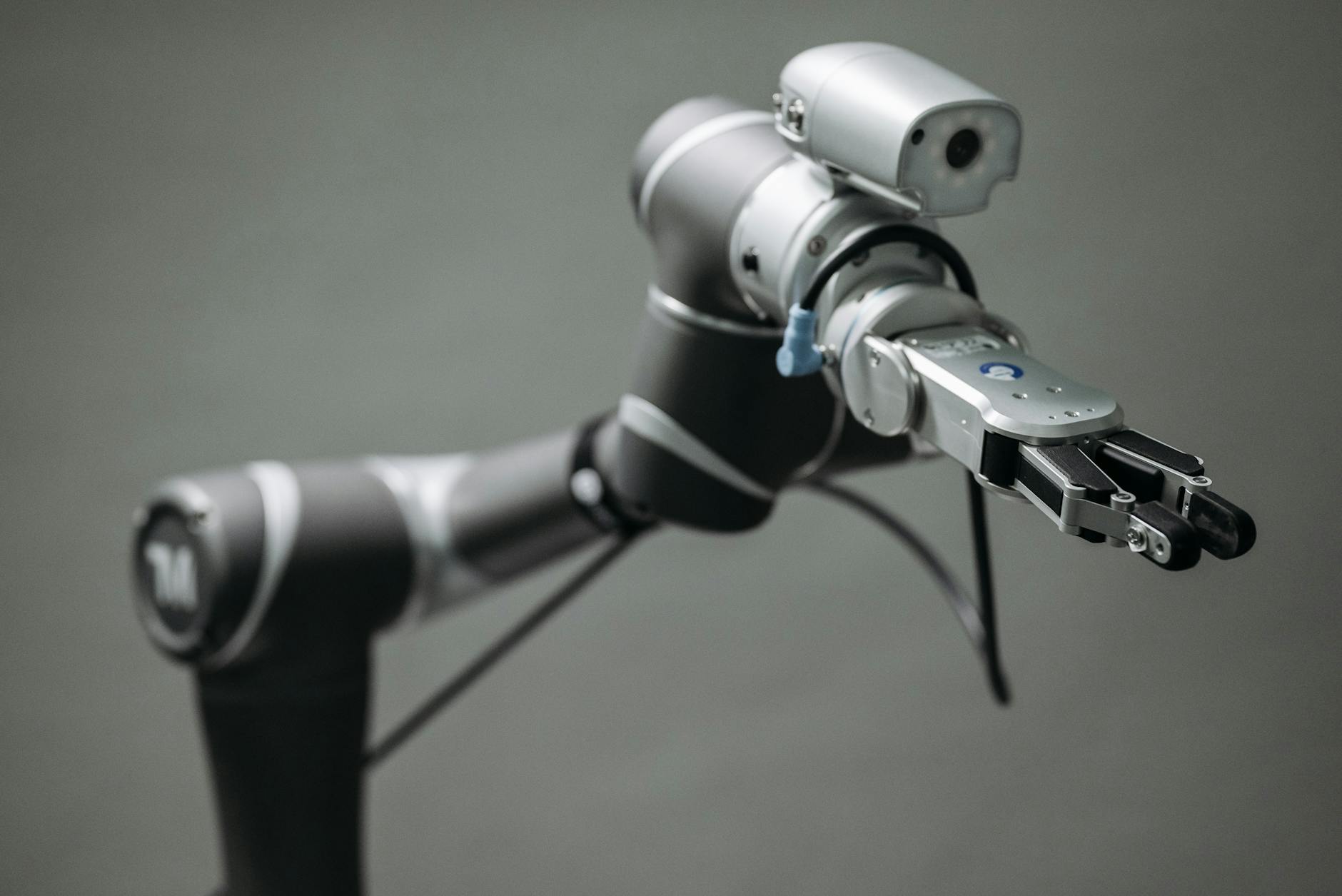
The traditional view was that nvidia would capture robotics the same way it captured AI: by owning the chips and the fundamental software layer. But robotics is different. There’s no such thing as a generic robot—every deployment is customized, integrated, and fitted to a specific factory or warehouse environment. OEMs like Fanuc and ABB have spent forty years building this expertise, training customer engineers, and creating ecosystem dependencies that are extraordinarily hard to disrupt. Consider what Fanuc announced in December 2025: a partnership with Nvidia to build robots that understand verbal commands. This isn’t Nvidia shipping a robot product. It’s Fanuc using Nvidia’s technology to create a robot that Fanuc’s customers already trust, already own, and already know how to use.
That’s a distribution advantage worth billions. An OEM can take bleeding-edge AI capabilities and package them into a product that integrates with existing factory infrastructure, existing workflows, and existing customer contracts. Nvidia can build the foundation models and simulation frameworks, but Fanuc can make them work in a real factory floor—where latency matters, where reliability is non-negotiable, and where a robot that fails isn’t an experimental prototype, it’s a liability. The barrier to entry here is brutal. Starting a new robotics company today requires building a product, building a sales force, building service capabilities, and training thousands of customer engineers. ABB Robotics and KUKA already have all of that. They’re not starting from zero.

The AI Integration Advantage and the Real Limitation
The March 2026 GTC announcements made it clear that Nvidia wants to be the infrastructure layer. The company released Cosmos world models, Isaac simulation frameworks, and Isaac GR00T N models—foundation models trained to help robots succeed at new tasks. Major OEMs including ABB Robotics, FANUC, Yaskawa, and KUKA are actively integrating these tools: they’re building Omniverse libraries and Isaac simulation frameworks into their virtual commissioning solutions, and they’re embedding Jetson modules directly into their robot controllers for real-time AI inference at the edge. this is the critical shift. Instead of robots needing to connect to the cloud to think, OEMs are putting AI inference at the edge, inside the robot controller itself. This means faster response times, no network dependency, and better privacy for factories worried about sending production data to the cloud. A factory that runs Fanuc or ABB robots gets access to cutting-edge AI without architectural disruption.
But here’s the limitation: OEMs aren’t necessarily the most innovative software companies. They move slowly. They prioritize stability and backward compatibility. A startup AI robotics company can pivot in weeks; an OEM pivots in years. This means OEMs will integrate AI, but they may not lead innovation—they’ll be one step behind the frontier startups. That’s actually fine from a business perspective. The companies that perfect the frontier are rarely the ones that capture mass-market value.
Real-World Deployment and the GR00T N2 Advantage
The GR00T N2 robot foundation model (based on DreamZero research) achieves a crucial metric: it helps robots succeed at new tasks 2x more often than leading vision language action models. For an OEM, this is game-changing. Imagine an ABB customer who normally needs a specialist engineer to reprogram a robot for a new production line. With GR00T N2 integration, that same customer might be able to use natural language commands or higher-level instructions to adapt the robot to new tasks. The engineering time shrinks. The customer’s payback period shrinks. That’s a feature that an OEM can sell to its entire installed base. Fanuc, ABB, Yaskawa, and KUKA are the primary beneficiaries here.
They get to embed Nvidia’s most capable foundation models into controllers that millions of factories already use. That’s not just a software update—it’s a competitive reset. A factory that previously chose ABB over Fanuc might now stick with ABB because ABB integrated GR00T N2 first, or integrated it better, or trained their service teams more effectively. The OEM that executes best on AI integration wins customers and price premiums. Universal Robots and smaller collaborative robot makers face a different dynamic. They’re smaller, faster, but have less installed base leverage. Fanuc sells over 1 million robots globally. Universal Robots sells tens of thousands. Scale matters for software adoption and ecosystem lock-in.
The Ecosystem Play and the Switching Cost Tradeoff
Nvidia’s announcement at GTC 2026 featured an unusually deep partner ecosystem: not just ABB and Fanuc, but also Figure, Agility, CMR Surgical, Hexagon Robotics, Medtronic, Skild AI, World Labs, and others. This is intentional. Nvidia doesn’t want one robot company to own robotics. It wants multiple OEMs, system integrators, and software companies all building on Nvidia’s stack, creating lock-in through ubiquity rather than dominance. For an OEM, this creates a tradeoff. Integration with Nvidia’s stack is attractive—Cosmos, Isaac, and GR00T are world-class technology. But the deeper the integration, the more dependent that OEM becomes on Nvidia roadmaps.
If Nvidia changes its licensing terms, release cycles, or priorities, the OEM is exposed. Fanuc and ABB are large enough to negotiate favorable terms and to have contingency plans, but smaller OEMs and integrators have less leverage. The comparison is instructive: consider how Qualcomm captured smartphone chipset dominance. Qualcomm didn’t own the phone brands—Samsung, Apple, and others did. But by controlling the core platform and making it profitable for everyone to integrate, Qualcomm captured enormous long-term value. That’s the trajectory Nvidia is pursuing in robotics. The OEMs execute the vision, but Nvidia captures the critical layer.
The Cloud Computing Shift and the Edge Processing Reality
One of the biggest themes from GTC 2026 was the move away from cloud-dependent robotics. Early AI robotics prototypes required constant cloud connectivity—videos of robot perception feeds being sent to servers, processed, and results sent back. This is slow, expensive, and unreliable for factories with legacy networks or spotty connectivity. The current generation of AI robotics is moving everything to the edge. Jetson modules embedded in robot controllers mean inference happens locally, in milliseconds, without network latency. This is a huge advantage for OEMs because it means factories don’t have to redesign their IT infrastructure or worry about sending proprietary manufacturing data to the cloud.
A legacy factory network that’s never connected a robot to the internet can now use an AI-powered robot without architectural changes. The warning here is important: edge processing is harder and more constrained than cloud processing. The models have to be smaller, more efficient, and more specialized. Factories can’t just upgrade to the latest Nvidia model and expect it to work—they need to integrate it with their existing hardware and validate it in their specific environment. This shifts the burden to OEMs and system integrators. The technology is democratized, but the deployment expertise is still scarce and valuable.
Service, Training, and the Hidden Competitive Advantage
OEM leadership in robotics won’t be decided by AI innovation alone. It’ll be decided by service and training. When a robot equipped with GR00T N2 malfunctions, who fixes it? When a factory wants to deploy verbal commands for robot reprogramming, who trains the operators? The answer is the OEM’s service network. Fanuc operates the largest robot service network globally—thousands of field engineers, spare parts depots, and training centers. ABB has a similarly scaled operation.
This infrastructure is worth more than any software library. A startup building better robot foundation models might fail if it can’t get an engineer to a customer’s facility within 24 hours when something breaks. An OEM with 40 years of service relationships and infrastructure wins. This also creates a powerful moat: customers who use Fanuc robots learn how to maintain Fanuc robots, train new people on Fanuc systems, and become committed to the Fanuc ecosystem. Switching costs are high not because of software lock-in, but because of expertise and operational dependence.
The Next Decade and the Risk of Underestimating Startups
The OEM thesis is compelling, but it carries a real risk: underestimating how fast startups can move and how much customers value innovation over stability. Figure AI and other humanoid robotics startups are pursuing different use cases—unstructured environments, non-manufacturing tasks—where the OEM advantages are weaker. If humanoid robotics becomes the dominant form factor in the 2030s, the traditional OEMs that built their franchises on fixed industrial arms might find themselves competing on the wrong playing field. Still, the data supports the OEM thesis for the next five to ten years.
The $26.5 billion in 2025 robotics funding is flowing to both startups and to OEM-backed ventures. Nvidia’s partnership ecosystem at GTC 2026 was heavily weighted toward established OEMs and system integrators. The “once-in-a-generation” opportunity that Huang described will most likely be captured by OEMs that move fast, integrate deeply with Nvidia’s stack, and execute flawlessly on deployment. That’s how platform shifts work: the new technology (AI, simulation, foundation models) flows through the existing distribution channels (OEM sales networks, service organizations, customer relationships) to create the next generation of value.
Conclusion
The next Nvidia in robotics probably isn’t Nvidia—and it probably isn’t a new startup either. It’s likely to be an OEM that successfully integrates Nvidia’s AI capabilities, leverages decades of customer relationships and service infrastructure, and executes on the boring but crucial work of making robots more capable and easier to deploy. Fanuc, ABB Robotics, Yaskawa, and KUKA have already started this journey.
The companies that move fastest and most effectively will capture disproportionate value from the robotics boom that Huang described as once-in-a-generation. For investors, customers, and competitors, the lesson is clear: control of the platform matters, but control of the customer relationship matters more. The OEM that becomes the trusted partner for AI-powered robotics deployment will capture more durable value than the company that merely invents the technology. That’s the next Nvidia in robotics.