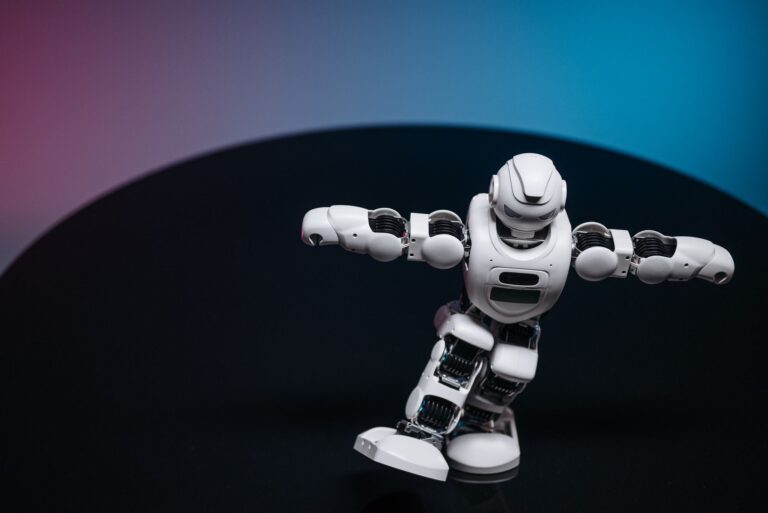

The laundry automation market is increasingly turning away from humanoid robots—machines designed to mimic human form and movement—in favor of specialized soft robot solutions that prioritize fabric handling over anthropomorphic design. This shift challenges a long-standing assumption in robotics that humanoid architecture represents the ideal form factor for general-purpose household tasks. Soft robot laundry systems achieve this by abandoning rigid joints, precise gripping mechanisms, and the need to balance on two legs, instead focusing on compliant materials and adaptive manipulation strategies that naturally accommodate the variability and fragility of textiles.
The core advantage lies in how soft materials interact with fabric. A humanoid robot’s rigid gripper, designed with the precision needed for picking up hard objects or manipulating tools, exerts uneven pressure and can snag, tear, or permanently deform delicate clothing. A soft robot built with silicone fingers or pneumatic actuators distributes pressure more evenly and yields when encountering resistance, much like human hands do—but without requiring the computational overhead of constant force feedback and environmental sensing that rigid robots need to avoid damage.
Table of Contents
- Why Humanoid Robots Struggle With Textile Manipulation
- How Soft Materials Enable Textile-Safe Handling
- Specialized Geometries for Laundry-Specific Tasks
- Commercial Viability and Deployment Trade-offs
- Remaining Challenges in Soft Robot Laundry Automation
- Emerging Prototypes and Proof-of-Concept Deployments
- Industry Signal and Technological Direction
Why Humanoid Robots Struggle With Textile Manipulation
humanoid robots face a fundamental mismatch when handling fabric. Their rigid skeletal structure and precise actuators were engineered for repeatable industrial tasks where objects have consistent geometry and material properties. Clothing is the opposite: a cotton shirt stretches differently than silk, wet denim behaves unlike dry linen, and wrinkles create unpredictable resistance during folding or insertion into a machine. A humanoid system attempting to handle this variability must either rely on over-sensitive force sensors—which increase cost and require constant recalibration—or accept a higher rate of damage to garments. Additionally, humanoid platforms require significant floor space, complex balance mechanics, and substantial computational resources devoted to bipedal locomotion.
For a task that happens within the confined space of a laundry room or commercial cleaning facility, these attributes waste energy and reduce the space available for actual laundry processing. A humanoid robot moving between a washer and a folding surface consumes time and power on navigation that a stationary or lower-profile soft robot avoids entirely. The gripper design on most humanoid robots optimizes for dexterous tool use—five fingers, palm pressure, rotational articulation. This complexity becomes a liability in laundry work, where a garment often needs to be gathered, held loosely, or manipulated as a sheet rather than as a discrete object. Humanoid hands either over-grip, concentrating stress on small areas of fabric, or under-grip, dropping items. Soft robot architectures can be tailored to bundle and suspend fabric with minimal focal pressure points.
How Soft Materials Enable Textile-Safe Handling
Soft robotics employs materials—silicone, rubber, flexible polymers—that inherently deform under load and redistribute force across a larger surface area. When a soft actuator encounters a delicate fabric, it yields rather than holds its shape, naturally adapting to the garment’s contours and minimizing the risk of creasing or damage. This compliant behavior is particularly valuable for tasks like extracting wet clothing from a washer, where fabric is heavy and prone to clumping; a soft gripper can gently envelop and lift without the concentrated pressure points that rigid fingers create. However, soft materials introduce a trade-off: reduced precision and increased unpredictability. A soft robot may require longer cycles to complete tasks because the control strategy emphasizes safety and robustness over speed.
Where a humanoid arm might position a folded shirt with millimeter-level accuracy, a soft system may settle for “approximately centered” and accept minor variations in the final output. This slowdown is acceptable in residential laundry, where one additional minute per garment is preferable to occasional damage, but becomes a constraint in commercial or high-volume operations. Another limitation is durability under repeated stress. Soft materials can develop micro-tears, lose elasticity, or suffer from material fatigue faster than rigid metal components. A soft robot laundry system may require more frequent maintenance and component replacement than a humanoid robot would, offsetting some of the capital cost savings from simpler design.
Specialized Geometries for Laundry-Specific Tasks
Soft robot laundry solutions often abandon the full-body humanoid form entirely, instead adopting task-specialized morphologies. A system designed for washing-machine loading might resemble a multi-arm fixture with rotary soft actuators rather than a bipedal form. A folding system may be a benchtop configuration with several compliant limbs positioned at optimal angles for garment manipulation, without any attempt to maintain human proportions or mobility. These purpose-built designs leverage advances in pneumatic control and modular soft actuator assembly.
A machine designed specifically for towel folding, for example, can employ a horizontal pressing mechanism and several coordinated gathering arms—geometries that would look ungainly if mounted on a humanoid frame. The result is faster cycle times and more reliable outcomes because every structural element serves the laundry task without compromise. One practical example of this principle appears in industrial linen services, where some facilities use semi-automated soft-robot-based systems to bundle and pre-sort garments before washing. These systems lack any humanoid features; they consist of conveyors, compliant chutes, and pneumatic arms positioned to handle large batches of mixed textiles efficiently.
Commercial Viability and Deployment Trade-offs
From an economic standpoint, soft robot laundry solutions present a different value proposition than humanoid alternatives. Humanoid robots carry significant upfront costs and can theoretically be repurposed for multiple types of housework—laundry, dishwashing, vacuuming—if software is developed to support multiple task domains. Soft robot systems are usually narrower in scope but cheaper to manufacture and deploy, since they don’t require the sensing, computational, and structural complexity that general-purpose humanoids demand. This specialization introduces a tradeoff: a facility deploying soft robots for laundry must either accept that each machine handles only laundry, or invest in a suite of multiple systems if other chores are also to be automated. A humanoid system, theoretically, could move between tasks.
In practice, the repurposing rarely works as planned, and the time to reprogram and recalibrate a humanoid for a new task often exceeds the simple benefit of having two separate machines. For most commercial laundry operations, the soft robot’s lower cost and higher reliability for the single intended task justifies the loss of generality. Deployment also favors soft systems in facilities with space constraints. A commercial laundry room may have limited room to accommodate a humanoid robot’s footprint and walking space. A soft robot system occupies a smaller envelope and can be mounted, suspended, or integrated into existing machinery in ways that a full-body humanoid cannot.
Remaining Challenges in Soft Robot Laundry Automation
Despite their advantages, soft robot systems face persistent obstacles. Detecting garment orientation and position relies on vision systems and advanced sensors that must operate reliably in humid, lint-filled laundry environments where classical computer vision often fails. A soft robot cannot simply reach out and feel its way through a pile of fabric as a human can; it needs robust environmental sensing or must operate in highly structured scenarios where garment placement is predictable. Another limitation is the speed-robustness trade-off. Soft actuators respond more slowly than rigid motors and cannot generate the high accelerations needed for rapid cycle times.
In competitive commercial laundry markets where throughput directly impacts profitability, a soft robot system might lose ground to a faster rigid-robot-based competitor, even if the soft system damages fewer garments. This creates a scenario where operators must choose between gentle-but-slow or fast-but-risky—a choice that humanoid robotics also faces but often masks by running damage-mitigation algorithms that further slow operation. Contamination is also a concern. Soft materials can absorb lint, detergent residue, and moisture if not carefully sealed or protected. A system must either employ frequent cleaning cycles, use specialized coatings, or operate in strictly controlled conditions. Humanoid robots, with their sealed rigid joints and smooth surfaces, may actually be easier to keep clean in industrial settings.
Emerging Prototypes and Proof-of-Concept Deployments
Several research institutions and robotics startups have demonstrated soft robot laundry prototypes that show promise in controlled environments. These systems typically focus on single high-value tasks such as towel folding or delicate garment extraction rather than attempting a complete laundry workflow.
The rationale is clear: solving the full problem—sorting by fabric type, adjusting wash cycle, detecting and treating stains, folding diverse garments—is a harder challenge than engineering a robot that excels at one narrowly defined step. A common approach involves soft grippers combined with conveyor systems and structured gauntlets that guide garments through predictable manipulation sequences. This hybrid architecture reduces the burden on the soft robot itself by constraining the problem space, allowing the system to operate reliably even with imperfect sensing.
Industry Signal and Technological Direction
The shift toward soft robots for laundry work reflects a broader realization within the robotics industry: general-purpose humanoid automation is neither necessary nor optimal for most real-world tasks. Specialized systems tailored to specific problem domains deliver better results, cost less, and require less computational overhead.
This principle has already driven industrial robotics for decades—factories don’t deploy humanoid arms; they deploy task-specific robot arms—but it is only recently gaining acceptance in consumer and commercial service robotics. For robotics companies and laundry service operators, this trend signals that the future of laundry automation is not a humanoid robot folding your clothes at home, but rather a collection of purpose-built soft robot systems, each optimized for a different stage of the laundry process, deployed where the problem is well-understood and the mechanical demands are constrained. This represents a pragmatic acceptance that mimicking human form is a poor strategy when the actual task can be engineered more efficiently with radically different morphologies and materials.