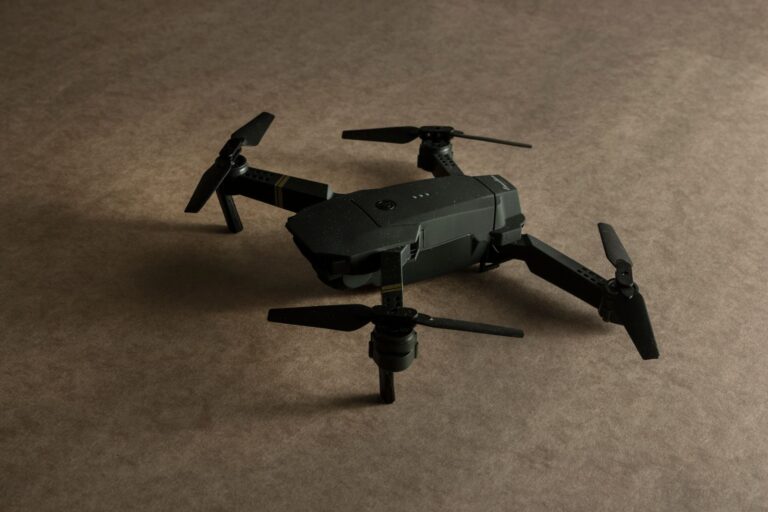

Ukraine has employed sophisticated unmanned aerial systems to target Russian petrochemical infrastructure, including refineries like Omsk, as part of a broader strategy to degrade Russia’s capacity to produce fuel and materials supporting military operations. This approach represents a significant evolution in modern warfare, where autonomous and semi-autonomous drone systems serve as precision instruments against industrial targets. The campaign demonstrates how robotics and automation technology—developed for industrial and commercial purposes—have been adapted for asymmetric military strategy on an unprecedented scale.
The Omsk refinery, one of Russia’s largest oil processing facilities, sits approximately 2,500 kilometers from Ukrainian territory, placing it beyond the range of traditional artillery but within reach of drone systems that combine endurance, payload capacity, and navigational precision. Ukraine’s drone attack strategy is not random bombardment; rather, it reflects careful targeting of facilities with high economic and logistical impact. These operations rely on advances in aerial robotics, including extended flight times, terrain-following navigation, and autonomous course corrections—capabilities that blur the line between traditional unmanned systems and fully autonomous platforms.
Table of Contents
- How Have Drone Technologies Evolved to Reach Deep Russian Targets?
- What Makes Petrochemical Refineries Vulnerable to Drone Attack?
- What Role Does Autonomous Navigation Play in Long-Range Drone Operations?
- How Does Ukraine’s Strategy Compare to Traditional Long-Range Attack Methods?
- What Are the Limitations of Drone-Based Industrial Targeting Strategies?
- How Does Refinery Resilience Evolve in Response to Drone Threats?
- What Technological Advancements Might Shape Future Drone Warfare Against Infrastructure?
- Frequently Asked Questions
How Have Drone Technologies Evolved to Reach Deep Russian Targets?
Modern military drones represent a convergence of multiple automation and robotics disciplines: inertial navigation systems, GPS-denied navigation algorithms, propulsion optimization, and payload integration. Ukrainian forces have adapted both purchased platforms (such as Turkish Bayraktar systems) and domestically developed or modified drones to extend their operational reach far beyond their original design specifications. This innovation cycle has created increasingly capable systems that can navigate hundreds of kilometers while carrying warheads or reconnaissance payloads. The technical challenge of reaching targets 2,000+ kilometers away involves solving problems similar to those in autonomous delivery and long-range robotics applications.
Drones must maintain stable flight in varying weather, preserve battery or fuel reserves, avoid detection, and execute precise targeting. Some Ukrainian systems reportedly use visual terrain mapping or radio-inertial guidance to navigate when GPS is jammed or unreliable—techniques familiar to roboticists working on autonomous ground vehicles and industrial automation systems. A critical limitation is payload capacity versus range. The farther a drone must travel, the more fuel or battery capacity it consumes, leaving less weight available for ordnance or sensor packages. This creates a constant engineering tradeoff that Ukrainian operators must optimize for each mission, balancing destruction potential against mission success probability.
What Makes Petrochemical Refineries Vulnerable to Drone Attack?
Refineries are complex, sprawling industrial facilities with numerous critical infrastructure nodes: storage tanks, processing units, boilers, and pipeline systems. Unlike hardened military installations, most civilian petrochemical infrastructure was not designed with drone defense as a primary consideration. A refinery contains dozens of vulnerable points, and damage to even one major processing unit can reduce output by 10-30 percent, with repairs taking weeks or months. The automation systems within refineries—sensors, control networks, and distributed processing units—represent both operational vulnerabilities and targeting opportunities.
Modern refineries operate on narrow margins, with continuous processes coordinated by networked systems. Physical damage to key transformation units cascades through production schedules and forces facility shutdowns for inspection and repairs. However, refineries can be defended through air defense systems, redundancy in critical processes, and dispersed facility design. Russia has reportedly enhanced air defenses around key refineries, though the sheer geographical spread of these facilities makes comprehensive protection difficult. Some refineries operate backup systems and can switch between parallel production lines when primary units are damaged.
What Role Does Autonomous Navigation Play in Long-Range Drone Operations?
Autonomous navigation systems are essential for drone operations at extended ranges where continuous remote pilot control becomes impractical. These systems combine pre-programmed flight paths with real-time course corrections, allowing drones to fly complex routes while maintaining resilience against jamming or sensor degradation. Ukrainian engineers have reportedly implemented terrain-following algorithms that allow drones to fly at low altitude—below radar coverage—by using onboard sensors to detect obstacles and maintain safe separation. Inertial measurement units (IMUs), which are standard in commercial robotics and autonomous vehicles, provide the foundation for this capability.
When combined with barometric altimeters and visual odometry systems, IMUs allow drones to maintain position estimates accurate enough for strike missions. The technology is not exotic—similar systems exist in commercial autonomous delivery platforms and industrial robotics—but adapting them for military application requires optimization for cost, reliability, and stealth. The constraint is that truly autonomous systems face ethical and strategic complications. Most documented Ukrainian strikes involve some degree of remote supervision or final-stage targeting by operators. Fully autonomous systems that select and execute strikes without human intervention remain controversial and are not reliably confirmed in operational use.
How Does Ukraine’s Strategy Compare to Traditional Long-Range Attack Methods?
Conventional long-range strikes have historically relied on manned aircraft, cruise missiles, or artillery. Drones offer significant advantages: lower cost per sortie (often $10,000-$50,000 per drone versus millions for cruise missiles), greater availability (dozens of drone sorties possible to a handful of missile launches), and reduced risk to personnel. This shifts the cost-benefit calculus in favor of frequent, smaller strikes over rare, large attacks. Cruise missiles like the Kalibr impose higher per-strike costs but may be more difficult to intercept in some scenarios.
Drones offer slower, more predictable flight profiles but greater flexibility in targeting. Ukrainian forces appear to have chosen volume and persistence over raw destructive power—many small strikes that disrupt refinery operations gradually rather than attempting occasional decisive destruction. The tradeoff reveals an important strategic principle: when an attacker has fewer resources than a defender, quantity and attrition become viable alternatives to overwhelming force. Ukraine’s drone campaign reflects this constraint realistically.
What Are the Limitations of Drone-Based Industrial Targeting Strategies?
Air defense systems, when properly deployed, can intercept drones. Russia operates S-300, S-400, and Pantsir air defense systems capable of engaging aerial targets at ranges of 40-400 kilometers depending on the system. As Ukrainian drone strikes continue, Russian forces have concentrated air defenses around key facilities, raising interception rates. Additionally, hardened drone interception poses a technical problem: drones are small, fast, and numerous, making them difficult targets for point-defense systems designed for larger aircraft. Weather represents another significant limitation.
Strong winds, precipitation, and icing can degrade drone performance or navigation accuracy. Winter conditions in Russia impact operational tempo, though Ukrainian forces have demonstrated the capacity to conduct strikes year-round with reduced frequency in severe weather. Attrition is inevitable. Many drone sorties fail to reach their targets due to mechanical failure, air defense, or navigation errors. Ukrainian forces must maintain a production and acquisition pipeline sufficient to absorb these losses while maintaining operational tempo. This creates a technological and industrial endurance contest with Russia’s air defense capabilities.
How Does Refinery Resilience Evolve in Response to Drone Threats?
Refineries operate on continuous production models, making rapid recovery from damage challenging. However, redundancy and facility design modifications can enhance resilience. Russia can disperse critical processing units, create backup systems for key transformations, or relocate production loads to other refineries.
The Omsk facility, one of multiple refineries in the region, allows for some load balancing. Underground hardening and blast protection for critical equipment increase costs significantly but improve survival rates. Russia has reportedly invested in such upgrades at key facilities since the drone campaign began in 2022, though the scale and effectiveness of these measures remain unclear from publicly available information.
What Technological Advancements Might Shape Future Drone Warfare Against Infrastructure?
Improvements in battery technology, fuel efficiency, and sensor systems directly expand drone operational range and payload capacity. Swarm technologies—multiple coordinated drones executing a single mission—present defenders with compounded challenges: air defense systems must engage multiple simultaneous targets, and losing individual drones becomes tactically irrelevant if the swarm achieves mission objectives through redundancy.
Artificial intelligence applied to target recognition and navigation could reduce dependence on human operators and GPS-based positioning. Computer vision systems that identify specific facilities or equipment within a facility allow for more precise targeting and adaptation to changing conditions. These capabilities exist in emerging form in commercial autonomous systems and are likely to mature in military applications as well.
- —
Frequently Asked Questions
How far can Ukrainian drones travel?
Confirmed range extends beyond 2,000 kilometers for some systems, though longer-range systems require careful payload optimization and navigation planning.
Can air defense systems stop all incoming drones?
No. High interception rates (sometimes reported above 70-80 percent) are still imperfect, and coordinated swarms can overwhelm point defenses.
Why target refineries specifically?
Refineries process crude oil into fuel. Degrading refinery capacity reduces the military’s ability to fuel vehicles, aircraft, and equipment.
How quickly can damaged refineries return to operation?
Major damage can require weeks or months for repairs, depending on the severity and availability of replacement equipment.
Are there ethical concerns with autonomous drone strikes?
Yes. Fully autonomous systems raise accountability questions, though most confirmed operations retain some human oversight.
Could Russia move refineries or harden them sufficiently?
Relocation is impractical at industrial scale. Hardening improves survival rates but cannot guarantee protection against repeated attacks.