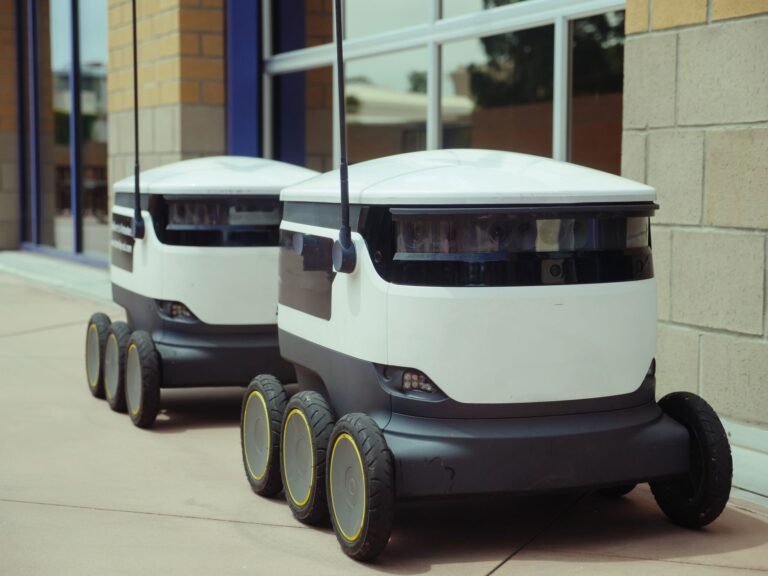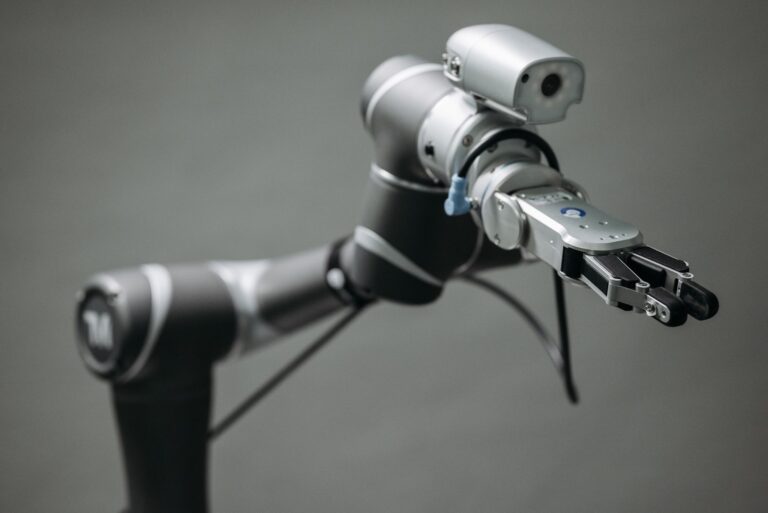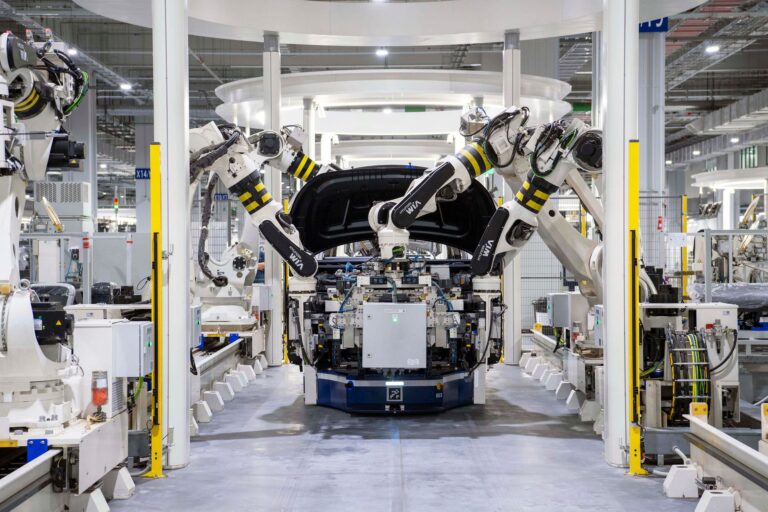

When major technology companies commit billions to warehouse automation, the decision reverberates through the robotics industry in ways that reshape company valuations almost overnight. Large tech firms have increasingly shifted from outsourcing logistics to building proprietary automation infrastructure, and their capital deployment decisions now function as de facto market validators for entire segments of the robotics sector. A major e-commerce company’s decision to invest $2 billion in warehouse robotics doesn’t just upgrade its own operations—it signals to investors which robotics technologies are production-ready, scalable, and strategically important, often attracting venture capital into those same verticals.
This capital concentration creates both winners and casualties in the robotics industry. Companies offering solutions that align with big tech’s automation priorities see their valuations accelerate, while robotics firms operating in adjacent but misaligned niches often struggle to attract funding, even if their technology is sound. The resulting dynamic has made warehouse automation investment a leading indicator of which robotics companies will receive institutional backing and which will face a crowded market with shrinking margins.
Table of Contents
- How Does Big Tech’s Warehouse Spending Rewrite Robotics Market Valuations?
- Supply Chain Pressures Driving Accelerated Automation Spending
- Robotics Startup Valuations in an Age of Mega-Scale Automation Deployment
- Market Concentration and Tier-One Robotics Supplier Dynamics
- Technical Debt and Long-Term Sustainability Challenges in Automation
- International Competition and Valuation Pressure from Foreign Robotics Firms
- Capital Deployment Patterns Reveal Robotics Sector Maturation
- Frequently Asked Questions
How Does Big Tech’s Warehouse Spending Rewrite Robotics Market Valuations?
Large technology firms control a disproportionate share of capital available for automation spending, and their procurement choices concentrate investor attention on specific robotics technologies. When a major logistics operator announces a multi-year commitment to mobile manipulation systems or autonomous mobile robots, venture capitalists and institutional investors pay close attention to which robotics vendors won the contract. That visibility directly affects subsequent funding rounds, IPO readiness assessments, and merger-and-acquisition activity in the robotics space. A robotics company selected as a preferred supplier to a Fortune 50 tech company gains not just revenue but also the reputational credibility and customer reference that attracts later institutional capital.
The valuation uplift can be substantial and relatively rapid. Robotics firms that secure major enterprise contracts often see their series funding rounds oversubscribed and valued at significant premiums relative to peers with similar technical capabilities but smaller customer bases. Conversely, robotics companies with superior technology but limited Fortune 500 deployment experience frequently trade at discounts to the wider software and automation sectors. The gap reflects investor assumptions about risk: a robotics company with production systems running at scale inside a major tech company’s warehouses is seen as de-risked relative to one with proof-of-concept deployments only.
Supply Chain Pressures Driving Accelerated Automation Spending
The economics of last-mile delivery and labor market tightness have forced large technology companies to treat warehouse automation as a strategic necessity rather than an optional efficiency gain. When labor availability becomes constrained and wage pressure intensifies, automation investment moves from a cost-reduction play to a business continuity requirement. This shift affects robotics industry valuations because it creates recurring, multi-year spending commitments rather than one-off capital projects. A tech company’s five-year automation roadmap translates to predictable demand for robotics components, sensors, and software, which investors view as a stabilizing force on company valuations in the sector.
However, this dependency on large customers creates a hidden risk for robotics valuations. When a tech company achieves cost targets or reduces headcount through automation, it often reduces subsequent automation spending or redirects capital toward a different technology class. Several robotics companies experienced valuation corrections after their largest customers announced efficiency gains and scaled back automation procurement. This cyclical pattern means that robotics valuations tied closely to single large customers or to a single customer segment often face significant volatility, even if the underlying technology remains sound.
Robotics Startup Valuations in an Age of Mega-Scale Automation Deployment
Robotics startups pursuing enterprise automation now face a bifurcated market: those with Fortune 500 deployment experience command valuations 2 to 4 times higher than those without, all else equal. This valuation gap persists even when the non-deployed startup’s technology is technically superior or more innovative. The divergence reflects investor risk perception rather than technical merit—enterprise deployments provide evidence that a robotics system survives real-world conditions, scaling challenges, and customer integration friction.
Investors perceive this evidence as worth billions in valuation uplift because it reduces execution risk and accelerates the path to revenue scale. Robotics startups without major enterprise customers often pursue more niche markets or focus on smaller-scale logistics operations where they can be price-competitive and responsive to customization. While these markets are real and substantial, they attract less venture capital precisely because they do not align with big tech’s automation priorities. The concentration of funding toward enterprise-grade, large-scale automation solutions has created a scarcity of capital for mid-market and smaller robotics applications, even though those segments represent significant addressable markets.
Market Concentration and Tier-One Robotics Supplier Dynamics
The warehouse automation spending patterns of major tech companies have accelerated consolidation in the robotics supply chain. Smaller robotics component manufacturers and software startups increasingly face pressure to partner with or be acquired by larger automation integrators that can meet the scale, quality assurance, and delivery requirements of Fortune 500 customers. This vertical integration drives down valuations for smaller component makers, as they lose independent operating options and instead negotiate from within larger company structures.
The trade-off for founders is immediate customer access and cash security versus loss of upside potential and reduced founder control. Market concentration also means that pricing power for robotics systems and components is increasingly concentrated among a small number of tier-one suppliers who have established relationship depth and operational trust with major technology companies. A robotics startup entering the market for the first time faces steep hurdles: it must prove its system works at scale, it must navigate complex procurement processes with long sales cycles, and it competes against established suppliers with proven track records. These barriers to entry favor well-capitalized firms and create widening valuation gaps between incumbent suppliers and new entrants.
Technical Debt and Long-Term Sustainability Challenges in Automation
The accelerated deployment timeline required to meet large tech companies’ automation roadmaps often forces robotics firms to accumulate technical debt. Systems rushed to production at scale sometimes carry unresolved edge cases, suboptimal architecture decisions, or insufficient operational automation. This technical debt eventually requires substantial engineering investment to remediate, which can strain profitability and divert resources from feature development. Investors are increasingly alert to this risk, and robotics companies with accelerated scaling but acknowledged technical debt sometimes see valuation growth decelerate even as revenue scales.
Another sustainability challenge involves over-optimization to specific customer requirements. A robotics company that customizes its system heavily to meet one major customer’s specific warehouse layout or operational constraints risks building a product that is difficult to sell to other customers without substantial rework. This customer-specific customization pattern has plagued several robotics companies, which achieved high valuations on the strength of major contracts but discovered that scaling that relationship to other customers required fundamental product changes. Investors now scrutinize whether a robotics company’s systems are genuinely modular and portable across customer environments or whether they represent deep customizations that limit addressable market size.
International Competition and Valuation Pressure from Foreign Robotics Firms
Robotics companies in Asia, particularly in countries with lower labor costs and established manufacturing bases, have begun competing aggressively for large technology companies’ automation contracts. This international competition has created valuation pressure on Western robotics firms that previously enjoyed near-monopoly positions in enterprise automation. A Japanese or Chinese robotics manufacturer offering comparable functionality at lower price points forces Western companies to justify premium valuations based on differentiated capabilities, reliability, or operational support rather than market position alone.
The emergence of international competition has also driven some Western robotics companies toward more specialized niches—custom solutions for hazardous environments, high-precision manipulation systems, or domain-specific applications. While these niches can support profitable businesses, they typically attract smaller investment rounds and lower valuations than broad-market automation solutions. Investors perceive focused niche strategies as lower-risk but also lower-growth relative to mass-market warehouse automation plays.
Capital Deployment Patterns Reveal Robotics Sector Maturation
The shift from venture capital and private equity toward strategic corporate investment in robotics reflects changing market maturity. Large technology companies increasingly make direct equity investments in robotics startups as an alternative to pure procurement relationships. This capital flow affects valuations because it introduces a strategic buyer with different valuation criteria than traditional venture funds.
A strategic investor may accept lower IRR targets if the robotics investment provides competitive advantage in warehouse automation or supply chain differentiation. The concentration of robotics sector capital among a small number of major technology companies, strategic acquirers, and tier-one automation integrators has also compressed the middle of the valuation distribution. Robotics startups are increasingly either well-funded ventures with clear paths to major customer relationships or thinly capitalized early-stage companies pursuing niche applications. The mid-size robotics company with moderate growth, regional customer bases, and steady margins has become scarcer, as investor capital allocation increasingly favors winner-take-most dynamics in large automation markets.
Frequently Asked Questions
Why does big tech’s warehouse automation spending affect smaller robotics companies?
Large technology companies control substantial capital and set industry standards through their procurement choices. When they invest in specific robotics technologies, venture investors follow, and valuations shift accordingly. Companies not aligned with those choices face capital scarcity.
Do robotics companies always benefit from big tech customers?
Not necessarily. While major contracts provide revenue and credibility, over-dependency on one customer creates risk. When customers reduce automation spending after achieving efficiency goals, robotics vendors can face revenue drops and valuation corrections.
How does international robotics competition affect valuations?
Robotics companies from Asia and other regions offering similar capabilities at lower prices force Western firms to compete on differentiation or scale. This pressure typically reduces valuations for companies without clear competitive advantages beyond market position.
Can smaller robotics firms still attract capital?
Yes, but they must target niches that big tech companies don’t dominate—specialized precision work, hazardous environments, or small-to-medium business solutions. These markets support profitable businesses but typically attract smaller investment rounds.
What is technical debt’s effect on robotics valuations?
Robotics companies that accelerate deployments to meet big tech timelines sometimes accumulate technical debt. If unresolved, this debt eventually strains profitability and can trigger valuation corrections once investors become aware of it.
How does supply chain integration affect robotics company valuations?
Smaller component manufacturers and software startups increasingly lose valuation independence as they are absorbed into larger automation integrator companies. This consolidation provides stability and customer access but reduces founder upside and long-term valuation potential.