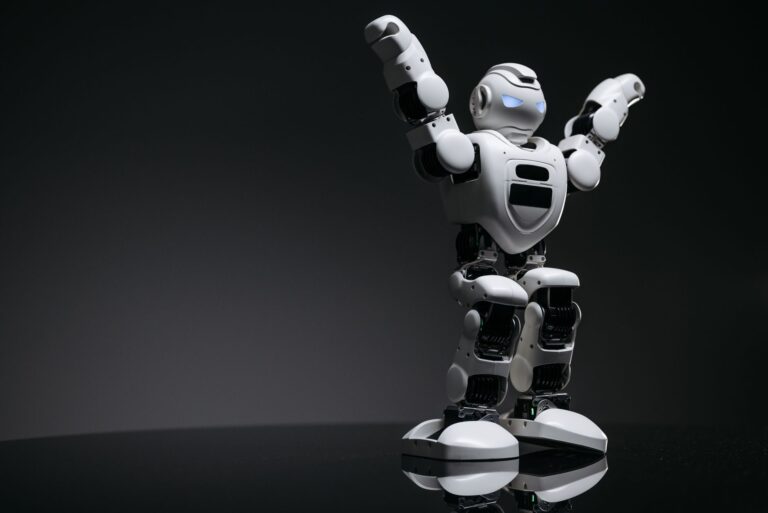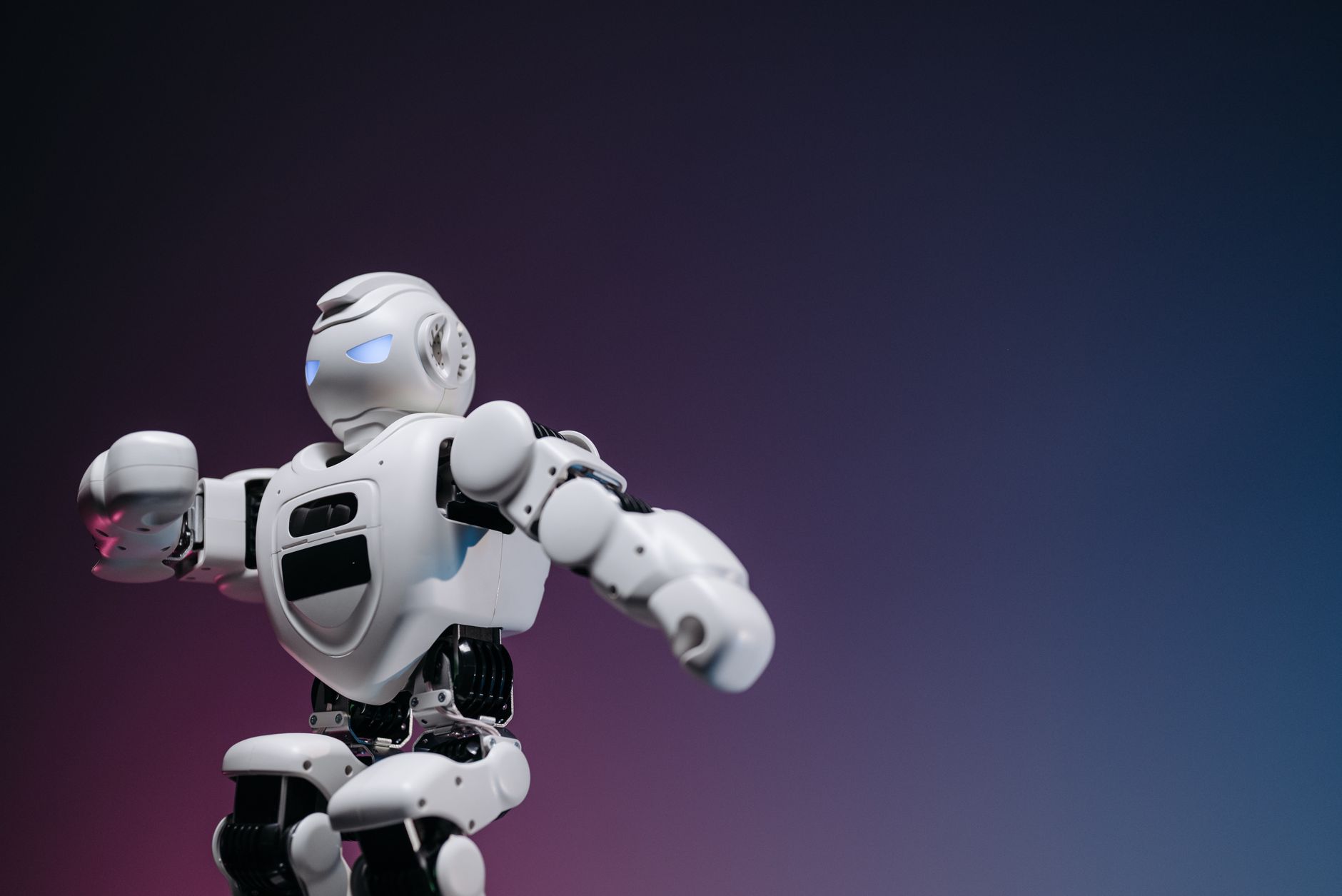

Investors are actively funding robotics startups that develop humanoid labor platforms, betting that robots capable of performing general-purpose tasks in human environments can address persistent labor shortages. These platforms attract capital because humanoid form factors promise flexibility—the ability to work in warehouses, factories, hospitality, and construction without requiring costly infrastructure redesigns. However, the investment surge reflects both genuine technological progress and significant uncertainty about when these robots will operate reliably and profitably at scale.
The appeal lies in solving a real problem: many industries face tight labor markets and repetitive, physically demanding work that humans avoid. A humanoid platform that can adapt across multiple tasks theoretically justifies higher upfront costs than single-purpose machines. Companies like Tesla, Boston Dynamics, and smaller startups have demonstrated working prototypes, which has convinced venture capital and strategic investors that this category will mature within the next decade. Yet funding does not guarantee commercial success—history is littered with robotics ventures that raised millions and never shipped products at meaningful volumes.
Table of Contents
- Why Are Investors Backing Humanoid Robots Over Other Automation Approaches?
- The Technical and Market Challenges in Scaling Humanoid Platforms
- How Startup Funding Models Are Shaping the Robotics Industry
- Comparing Humanoid Robots to Specialized Automation Solutions
- The Economic and Operational Realities of Humanoid Deployment
- The Role of Corporate Partnerships in Robotics Funding
- What Success Actually Looks Like for Humanoid Startups
- Frequently Asked Questions
Why Are Investors Backing Humanoid Robots Over Other Automation Approaches?
Humanoid robots represent a bet on generality. Unlike conveyor-belt systems or robotic arms fixed to a single workstation, a humanoid platform can theoretically move between tasks, navigate unstructured environments, and work alongside human workers. This flexibility appeals to investors because it expands the addressable market beyond factories and into logistics, healthcare, hospitality, and small-batch manufacturing. If a humanoid robot can learn a new task through demonstration or reprogramming, operators believe they can deploy fewer total units across more diverse applications. The economics of generality drive funding decisions.
A specialized robot for one task costs money and occupies floor space but becomes worthless if production shifts. A humanoid platform that retains residual value and can be redeployed justifies premium pricing. Investors also point to software stacks and machine learning improving steadily—each generation of humanoid becomes easier to train and more capable. The narrative is that the hardware bottleneck will ease, multiplying demand for platforms that integrate vision, manipulation, and mobility well. However, generality comes with a catch: humanoids must excel at many tasks instead of dominating one. A specialized pick-and-place robot can achieve 99.9% accuracy in controlled conditions; a humanoid juggling multiple behaviors often trades precision for versatility. Investors betting on humanoids are essentially gambling that broad competence at 80–90% effectiveness across many jobs beats narrow excellence at one job, even though the math remains unproven at scale.
The Technical and Market Challenges in Scaling Humanoid Platforms
Building humanoid robots that work reliably in real environments remains genuinely difficult. Dexterous hands capable of grasping irregular objects, stable bipedal locomotion on variable terrain, and computer vision robust to lighting changes and occlusion all remain open problems. Startups face years of iteration before prototypes become production units, and production units must run through thousands of cycles without failure in noisy, dusty, or wet environments where lab conditions do not apply. This gap between demonstration and deployment is the graveyard of robotics funding. Funding chases the headline breakthroughs—a humanoid walking smoothly, manipulating objects, or working in a warehouse pilot. But investors often underestimate the unglamorous work required to make robots reliable. Mechanical components wear. Sensors drift.
Edge cases emerge: a robot trained on synthetic grasping data fails on a real coffee mug with a slightly different texture. Moving from 100 units tested by engineers to 10,000 units deployed across different facilities by non-specialists surfaces countless failures. Many funded startups have struggled through this valley of death, burning capital while fixing problems no one anticipated. The timeline mismatch is critical. Investors typically expect venture returns in seven to ten years, but robotics timelines stretch longer. A startup might spend two years on hardware design, two years on initial prototyping, two years scaling manufacturing, and two more years reaching scale profitability. By then the market may have moved, competitors may have leapfrogged the technology, or customer needs may have shifted. Funding rounds are real money, but they are not a guarantee that a team will execute faster than physics and engineering allow.
How Startup Funding Models Are Shaping the Robotics Industry
The funding landscape for humanoid robotics has bifurcated. Large tech companies—including automakers, retail giants, and industrial manufacturers—are investing directly in startups or building internal robotics divisions because they have existing production lines to automate and customer relationships to leverage. Venture capital funds are also engaged, often betting on upstart teams led by researchers or engineers who spun out of larger labs. Fewer independent robotics startups purely bootstrap or bootstrap-and-then-raise, because the hardware and talent required are expensive from day one. This structure creates dependencies and constraints. A startup taking investment from an automotive supplier may be pushed toward that supplier’s use cases rather than the broader market the founders envisioned. Money from a logistics company may come with an expectation that the robot perform well in that specific warehouse environment.
These are not bad things—focused use cases can accelerate product-market fit—but they also limit the generality argument that attracted investors in the first place. A humanoid funded to solve one customer’s problem may not solve the next customer’s problem without extensive retraining. The funding model also affects hiring and culture. Well-funded robotics startups can recruit top talent from academia and established companies, but money does not guarantee good engineering or wise prioritization. Some teams overcomplicate solutions, building features that impress but do not ship. Others chase hardware performance metrics that matter less than reliability or cost. Funding creates optionality and resources, but it does not solve the hard problem of shipping products customers actually want.
Comparing Humanoid Robots to Specialized Automation Solutions
A humanoid robot costs roughly an order of magnitude more than a specialized automated system for a single task. A robotic arm on a pedestal might cost $50,000–$150,000; a humanoid platform typically falls in the $100,000–$500,000+ range depending on capabilities and production volume. For a task like palletizing boxes, a specialized arm outperforms a humanoid and costs less. But for a task that changes seasonally or requires working in spaces not designed for fixed machinery, the humanoid’s flexibility begins to justify the premium. This trade-off is the central question facing customers and investors. Humanoid platforms win when customers value flexibility, worker safety, and ease of redeployment.
They lose when a task is simple, repetitive, and truly identical across dozens of cycles. Many manufacturing and logistics environments include a mix of both: 70% routine work (where specialized robots excel) and 30% variable tasks (where humanoids could add value). The optimal solution may actually be hybrid—a fleet mixing specialized robots for high-volume work and humanoids for variable tasks—but this increases complexity and capital requirements. Real-world examples illustrate the split. Food production, with its demand for hygiene, product variation, and regulatory compliance, may benefit from humanoid capabilities more than automotive assembly, where tolerance stacks and volume justify fixed automation. A humanoid in a small electronics manufacturer that builds 50 different products per year could theoretically pay for itself faster than in a factory running one product at massive volume. The market for humanoids is the market for flexibility, not the market for automation as a whole.
The Economic and Operational Realities of Humanoid Deployment
Even if a humanoid robot functions flawlessly, the economic case hinges on total cost of ownership, not just the robot’s sticker price. Installation, integration with existing systems, training operators, maintaining software, handling repairs, and eventually recycling the hardware all factor in. A $200,000 robot that requires a $100,000 integration project and $30,000 per year in maintenance support suddenly costs much more than the headline price. For companies accustomed to buying human labor—where the total cost is wages, benefits, and overhead—the all-in robotics cost can still exceed labor costs in markets where wages remain low or labor supply is adequate. Humanoid robots also require expertise to supervise and troubleshoot that many facilities do not yet possess. A warehouse that has never deployed robots may need to hire or train someone in robotics maintenance, software debugging, and hardware repair. This overhead is real money and time. Startups often underestimate how much hand-holding early customers require and how much that hand-holding constrains their ability to scale.
A startup that can support 50 customer deployments with a team of specialists cannot support 500 deployments without scaling operations, hiring more specialists, or developing robust self-service support tools—all of which consume cash and time. The risk of technological obsolescence is another overlooked factor. A humanoid platform deployed today will likely be outdated in five to ten years. Hardware will be superseded by stronger, faster, more capable designs. Software will evolve. Customers who buy generation-one humanoids face the question of whether to upgrade to generation-two or stick with familiar, trained systems. Startups that survive long enough to release generation-two products may not support generation-one units, leaving early customers stranded. This risk discounts the value of a humanoid investment, especially for customers with tight capital budgets.
The Role of Corporate Partnerships in Robotics Funding
Major corporations—whether automotive OEMs, logistics providers, or technology giants—use strategic investments in robotics startups as both financial bets and technical talent acquisitions. A corporation investing $50 million in a humanoid startup gains exposure to the company’s technology and roadmap, insight into how competitors might deploy similar platforms, and often an option to acquire the startup or license its intellectual property later. These partnerships can accelerate a startup’s growth if the corporate partner provides customer access or integration support, but they also risk turning the startup into a captive supplier. Partnerships have concrete benefits. A logistics company that invests in a humanoid startup and provides access to its warehouses gives the startup real-world testing ground, customer feedback, and a potential anchor customer for revenue.
A tech company that funds a robotics startup gains early exposure to emerging capabilities and can integrate them into its own roadmap. But partnerships also create leverage: a startup dependent on one corporate investor may be forced to accept terms that hurt its independence or forbid it from serving competitors. The partnership model accelerates some startups and constrains others. Startups with strong corporate backing can navigate the long road to profitability because they have patient capital and insider access to customers. Startups without corporate backing must rely on venture capital, which is less patient and more outcome-focused. Over time, the market may consolidate around the well-funded, well-partnered startups, leaving solo ventures with fewer survival pathways.
What Success Actually Looks Like for Humanoid Startups
Success in humanoid robotics is not the same as success in software startups. A software startup can iterate rapidly, deploy to millions of users for nearly zero incremental cost, and scale from $10 million to $100 million in revenue without proportional increases in headcount. A humanoid robotics startup must manufacture physical units, support them in the field, handle warranty claims, and manage supply chains. Going from 100 units deployed to 1,000 requires real capital, real factory capacity, and real people.
Growth is slower and more constrained. A successful humanoid startup will likely look like this: focused on a specific vertical or set of use cases rather than claiming to solve all problems; profitable or close to it by the time initial venture funding is exhausted; with a handful of production-ready deployments that generate revenue and testimonials; and either backed by a strong corporate partner or in a late-stage funding round where investors are betting on near-term profitability rather than moonshot optionality. Startups that burn $5 million per year without reaching production deployments or clear paths to revenue will face pressure to pivot, slow burn, or seek acquisition. The graveyard of robotics startups includes many that raised $50–100 million and failed to reach this bar.
- —
Frequently Asked Questions
Why do investors prefer humanoid robots over specialized automation?
Humanoid platforms promise flexibility across multiple tasks and environments, potentially justifying higher costs through broader deployment. Specialized robots outperform humanoids for single, repetitive tasks, but investors bet that the humanoid’s versatility will eventually address industries that need adaptability.
How much does a humanoid robot cost?
Production humanoids typically range from $100,000 to $500,000 or more, depending on capabilities. When factoring in installation, integration, training, and ongoing maintenance, total cost of ownership can easily double the hardware price.
What is the biggest technical challenge in deploying humanoid robots?
Reliability and robustness in uncontrolled, real-world environments. Prototypes work under lab conditions, but moving to thousands of units across different facilities surfaces edge cases, wear, sensor drift, and failures that engineers did not anticipate.
Are humanoid robots more cost-effective than hiring workers?
Not yet in most cases, and perhaps not for decades in labor markets where wages are low or workers are available. The economic case depends heavily on total cost of ownership, the specific task, local wages, and regulatory costs.
Why do large corporations invest in robotics startups?
Corporations gain early exposure to emerging technology, direct insight into their own automation roadmap, and often an option to acquire or license the startup’s intellectual property. These partnerships provide startups with customers and testing grounds, but may also constrain their independence.
What happens to early-generation humanoid robots when newer models ship?
Customers face decisions about upgrading or maintaining older systems. Startups that survive long enough to release newer versions may not support generation-one units, creating a risk for early adopters.