
School districts across the country are expanding robotics education, and the most visible sign of this growth is the proliferation of summer STEM camps featuring robotics as a core offering. These summer programs represent a meaningful shift in how districts are investing in hands-on technology education, moving beyond isolated after-school clubs to create intensive, structured learning experiences. Many districts now see robotics summer camps as essential infrastructure for developing student skills in engineering, coding, and problem-solving—and as a way to keep technology education momentum going year-round. The expansion reflects genuine demand: schools that already run robotics teams during the academic year increasingly want to deepen student experience and reach new participants through summer programming.
A typical example is a mid-sized district that starts with one or two after-school robotics teams, discovers strong student engagement and measurable outcomes, and within a few years launches a formal summer camp where students build, program, and compete in robotics challenges over multiple weeks. This progression from club to institutional program is happening in districts large and small. Beyond simple growth in numbers, these camps represent districts taking ownership of STEM education rather than treating it as an optional enrichment. The shift raises important questions about equity, sustainability, and what skills schools should prioritize as automation reshapes the labor market.
Table of Contents
- Why Districts Are Building Out Summer Robotics Programs
- Types of Summer Robotics Programs Schools Offer
- Summer Camps as Extension of Year-Round Robotics Teams
- How Schools Are Funding Summer Robotics Expansion
- Equipment and Infrastructure Barriers
- Student Outcomes and Skill Development
- Industry Partnerships and Career Pathways
Why Districts Are Building Out Summer Robotics Programs
School administrators cite several concrete drivers for this expansion. First, robotics creates genuine engagement—students show up, focus, and stay involved in ways that traditional classroom instruction sometimes does not. Teachers report that robotics projects motivate students who might otherwise disengage from academics, particularly in engineering and applied mathematics. Second, robotics aligns with labor market realities. Employers in manufacturing, construction, agriculture, and increasingly other sectors face skills shortages in automation and technical troubleshooting. Districts recognize that robotics education addresses a real need and gives students a legitimate career pathway.
Third, robotics competitions and tournaments have created a legitimate metric for success. Unlike some STEM programs that remain vague about outcomes, robotics teams can point to tournament rankings, awards, and scholarships won by graduates. This tangible measurement makes it easier for districts to justify spending on robotics infrastructure and summer programming to school boards and taxpayers. Parents also understand the value clearly—their children are building tangible objects and developing problem-solving skills they can point to. However, one limitation is that this growth remains uneven. Wealthy districts and well-funded charter schools tend to launch robotics programs first and most expansively. Less resourced districts face barriers to entry: startup costs for robotics kits and equipment are significant, qualified instructors are scarce, and budget constraints make summer programming a luxury many schools cannot afford.
Types of Summer Robotics Programs Schools Offer
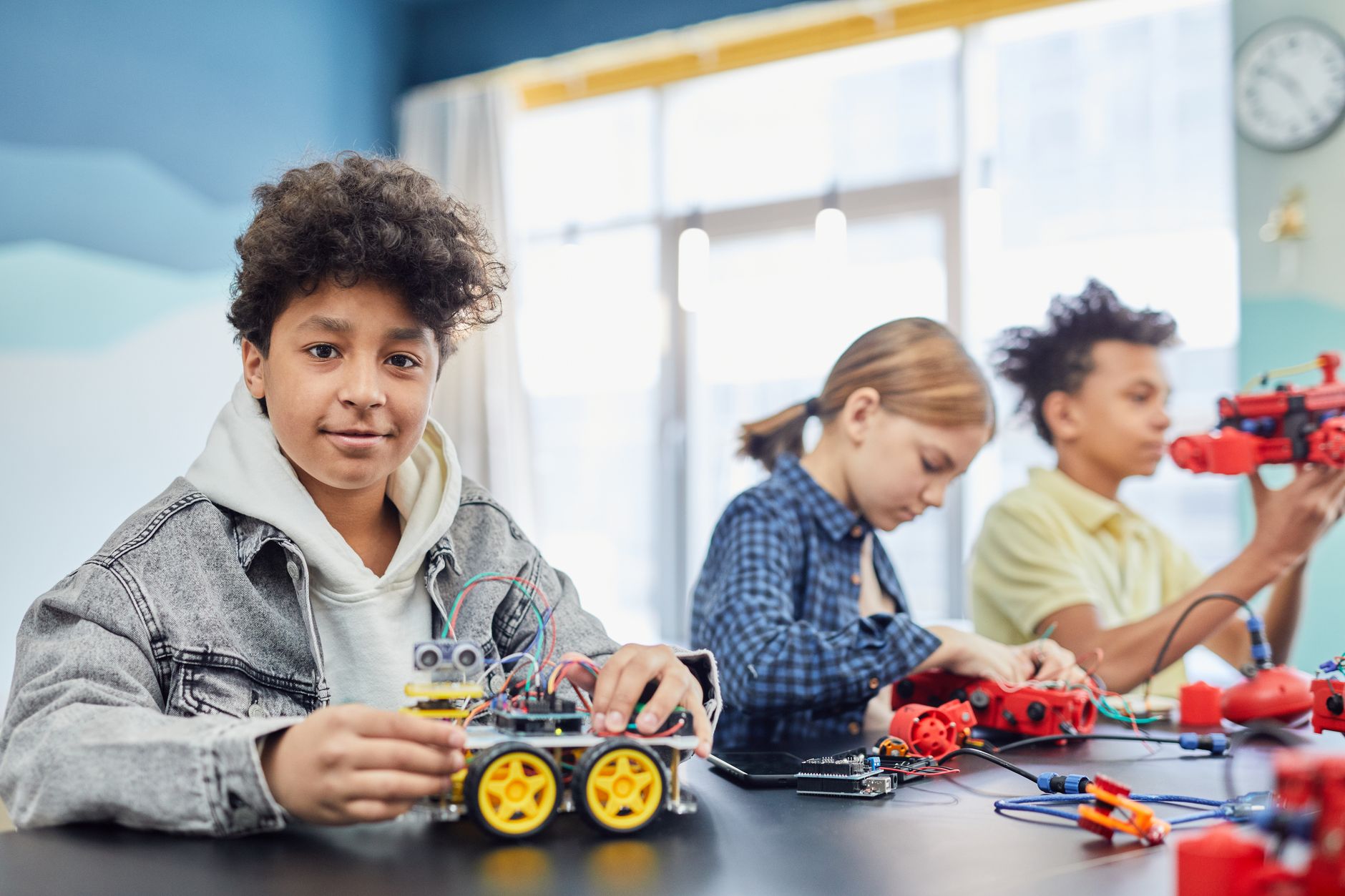
The robotics summer camps now available range widely in structure and content. Some schools run intensive multi-week camps for high school students focused on specific robotics platforms like FIRST competitions or VEX systems. These camps often charge fees or are subsidized by district funds, sometimes with scholarships for low-income students. Students spend full days building, programming, and testing robots, often culminating in a local tournament or exhibition. Other districts offer shorter programs—one-week camps or half-day summer offerings—designed for younger students or beginners with no robotics experience.
These introductory camps teach basic building and coding concepts using platforms like LEGO Mindstorms or simpler block-based programming. Some schools have found success mixing age groups, where older students mentor younger ones, creating a peer learning environment that extends beyond what staff alone could deliver. A significant limitation of current programs is access. Many summer robotics camps still charge participant fees, even in public school districts. While some districts have moved to make camps free or heavily subsidized, others operate on a cost-recovery model that excludes students whose families cannot afford the fees. This creates a practical equity problem: robotics education becomes an enrichment benefit primarily accessible to higher-income families, which defeats the stated goal of building a broader pipeline of students with technical skills.
Summer Camps as Extension of Year-Round Robotics Teams
For districts that already have active robotics teams competing during the school year, summer camps serve as both recruitment and deepening tools. Students on school robotics teams often use summer to work on design improvements, learn new programming techniques, or prepare for fall competitions. Summer allows more flexibility in scheduling—no conflicts with regular classes—and lets students pursue projects in greater depth. Summer camps also create an on-ramp for students who want to join robotics teams but feel intimidated by jumping into a competitive team environment mid-year. By offering a low-stakes summer introduction, schools make the transition to competitive robotics less intimidating.
A student can attend a one-week summer camp, build confidence and foundational skills, and then join a school team in the fall as a more prepared participant. This reduces the knowledge gap between experienced team members and newcomers. The relationship between summer programs and year-round teams is not always smooth, however. Some districts find that summer camps and school-year teams compete for the same pool of students and instructor resources. A teacher working full-time during the school year may be asked to lead summer programming as well, creating burnout. Competition for equipment and lab space between summer programs and regular club activities can also strain limited facilities.
How Schools Are Funding Summer Robotics Expansion
Funding mechanisms for summer robotics camps vary considerably. Some districts treat them as part of regular summer school budgets and fund them entirely from the general fund. Others use a hybrid model: district provides facilities and baseline funding, while robotics boosters or parent organizations fundraise for additional equipment or field trip costs. Still others partner with local employers or community organizations who sponsor camps or provide mentorship. Grants from foundations focused on STEM education have enabled some districts to launch programs they could not otherwise afford.
Many state departments of education offer competitive grants specifically for robotics education. Local industry partners—especially manufacturing companies or tech employers looking for future workers—sometimes fund robotics camps as a talent pipeline investment. These partnerships can work well when goals align, but they also introduce complexity around curriculum design and student outcomes that match sponsor interests rather than purely educational goals. A practical tradeoff is that grant-dependent programs often prove unsustainable when grant cycles end. Districts that grew robotics summer camps on a three-year grant frequently find themselves unable to continue when the grant expires and no recurring budget allocation was established. This creates program instability that undermines student trust and makes it harder to recruit participants year after year.
Equipment and Infrastructure Barriers
One of the clearest challenges in scaling robotics summer camps is the cost and maintenance of equipment. A single FIRST robotics kit can cost several thousand dollars. VEX systems are somewhat less expensive but still substantial. Schools that want to run summer camps with multiple simultaneous teams or larger class sizes need either enough equipment for all participants or careful scheduling to share resources. Equipment maintenance and replacement compounds the problem. Robots get damaged through use and learning mistakes—motors burn out, components break, sensors fail.
A district that operates a summer camp with heavy student usage may need to replace significant portions of equipment annually. This ongoing cost is often not anticipated when schools launch programs. Some districts have found creative solutions: refurbished or donated equipment from local manufacturers, kit-sharing arrangements with nearby schools, or student-led repair and maintenance programs that teach troubleshooting alongside project work. Storage and workspace present another practical limitation. Summer camps require dedicated space with electrical access, tables, and secure storage for equipment and incomplete projects. Many schools lack sufficient facilities, particularly if summer camps run while the building is also hosting other summer programs or construction projects. This forces scheduling compromises that limit when or how many students can participate.
Student Outcomes and Skill Development
Schools that have operated robotics summer camps report measurable outcomes in student skill development. Students develop competency in mechanical design, problem-solving under constraints, coding concepts, and teamwork. They practice project management, learn to troubleshoot when things fail, and build confidence in technical capability. Teachers observe that robotics programs particularly benefit students who learn better through hands-on, project-based work rather than traditional classroom instruction.
Beyond technical skills, robotics camps create social benefits. Students form peer networks, experience success in collaborative environments, and often develop interest in engineering or computer science careers they might not otherwise have considered. Tracking graduates of robotics summer camps shows that some students go on to participate in high school robotics teams, pursue STEM in college, or enter technical careers. Not all participants become engineers, but many report that robotics education shaped their academic direction and career interests.
Industry Partnerships and Career Pathways
An increasing number of robotics summer camps now incorporate mentorship or facilities partnerships with local manufacturers, engineering firms, or technology companies. These partnerships create authenticity—students work in real facilities or get guidance from professionals in the field. A student building a robot in a facility that also manufactures industrial automation equipment develops awareness of genuine applications for skills they are learning.
These industry partnerships also create visibility for student work and sometimes lead to internship or apprenticeship pathways. Some robotics students have moved directly from summer camps into work-study positions or paid internships with local employers. However, this works best in regions with strong manufacturing or technology sectors. In communities without nearby employers seeking automation skills, partnerships may be harder to develop, limiting the career pathway clarity that makes robotics programs compelling to some students.