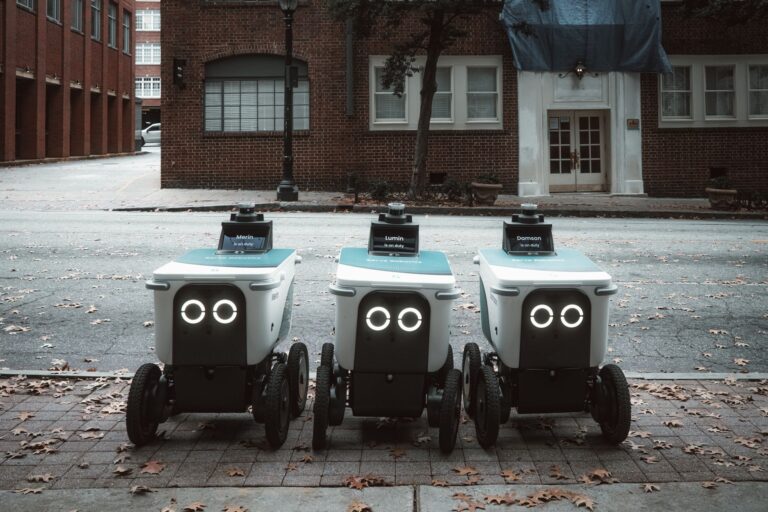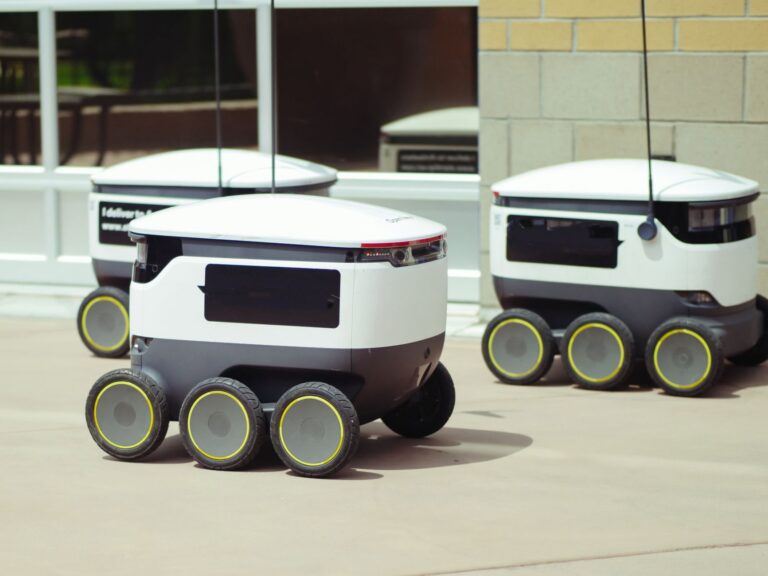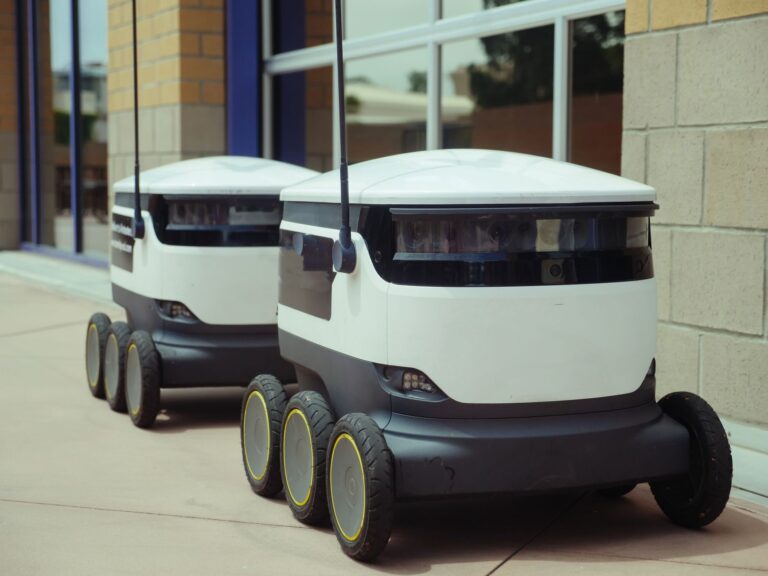

Evidence supports faster commercialization in parts of robotics through 2026, led by autonomous mobile robots and more capable artificial intelligence, but not a verified industry-wide boom. The latest broad market report covers 2024 sales, so 2026 momentum must be judged through deployments, contracts and technology releases rather than a complete sector total. An autonomous mobile robot, or AMR, uses sensors and software to navigate without a fixed track. The clearest growth signals come from logistics, delivery and selected factory applications, where robots can take on repeatable movement tasks.
Table of Contents
- How strong is the growth evidence?
- Why mobile robots are moving first
- What smarter onboard models change
- Safety and public access remain gates
- What buyers should verify before committing
How strong is the growth evidence?
The International Federation of Robotics recorded 102,900 transportation-and-logistics service robots sold in 2024, a 14% annual increase. Most were mobile goods-transport robots, while sales through robot-as-a-service arrangements grew 42%, according to its World Robotics 2025 release. That report does not prove the whole robotics sector is accelerating through 2026. Its results cover 294 suppliers and are not projected across the entire industry.
It also reports 2024 sales rather than comprehensive 2025 or 2026 output. More recent company results show momentum but cannot replace a sector-wide measure. Serve Robotics reported first-quarter 2026 revenue of $3 million and said it operated about 2,000 delivery and indoor-service robots across 44 U.S. cities, according to its May 2026 SEC filing. Its 578% year-over-year revenue increase is significant for Serve, but one company's growth does not establish an industry growth rate.
Why mobile robots are moving first
Goods movement gives robots a comparatively focused job: transport an item between known parts of a warehouse, factory, building or delivery area. Operators can define routes, handoff points and performance targets before expanding a fleet. Commercial models are also changing how buyers adopt robots. Robot-as-a-service lets an operator pay for access or usage instead of purchasing every machine outright. The IFR's 42% channel growth suggests that some customers prefer to shift hardware, maintenance and fleet support toward a service provider.
Pilots are beginning to produce commercial commitments. Agility Robotics said Toyota Motor Manufacturing Canada signed a robot-as-a-service agreement after a successful pilot and plans to use Digit humanoids in manufacturing, supply-chain and logistics operations. platform partnerships offer another route to scale. Hyundai's MobED Alliance brings together 10 suppliers and five solution companies around mobile modules for delivery, security and digital signage. Such alliances show commercial intent, but they do not reveal how many robots customers will ultimately deploy.
What smarter onboard models change
New robot models can connect visual perception, language instructions and physical actions. Running those models on the robot can reduce dependence on a continuous network connection, which matters in facilities with unreliable coverage or strict response-time requirements. Google DeepMind said Gemini Robotics On-Device can operate locally, tolerate intermittent connectivity and adapt to a task using 50 to 100 demonstrations.
However, the initial release went to trusted testers, so it should be viewed as an emerging capability rather than a generally available deployment standard. Cloud systems remain useful for simulation, training and sharing lessons across fleets. NEURA Robotics and AWS plan to combine those capabilities, while Amazon will explore selected fulfillment-center deployments. "Explore" is the important limitation: the collaboration supports scale-up work but does not confirm broad installation across Amazon's network.
Safety and public access remain gates
A robot's ability to complete a task is only part of commercial readiness. Machines operating near workers or pedestrians also need dependable sensing, stopping behavior, inspection processes and evidence suitable for safety certification. NVIDIA introduced Halos for Robotics to combine computing, sensor connectivity, safety software and inspection support.
Agility is integrating parts of the system into Digit, illustrating how safety engineering is becoming part of the deployment stack, rather than a check performed after development. Regulation can determine where an AMR may operate even when its technology is ready. Singapore's IMDA, JTC and Singapore Institute of Technology plan a 2026 public-area testbed that allows multiple operators to trial robots under shared safety conditions. Its precinct-level exemption framework avoids requiring each operator to seek a separate exemption for qualifying public-path trials.
What buyers should verify before committing
Buyers should evaluate a robot against one defined workflow, not a broad promise of general autonomy. A useful assessment should cover: Treat alliances, exploratory projects and limited-access models as progress markers, not installed-base proof. Before expanding a fleet, require a controlled pilot with a baseline, measurable acceptance criteria and a documented safety review.
- The number of trips, labor hours, delays and handling errors in the current process.
- Payload, route, doorway, elevator, floor and pedestrian requirements.
- Expected uptime, support response and maintenance responsibilities.
- Purchase and robot-as-a-service costs under the same usage assumptions.
- Local operating capability and fallback behavior when connectivity fails.