
The defining robotics trends of 2026 are embedded AI, selective humanoid deployments, stricter safety planning, and growing demand for technical labor. Humanoids attract attention, but conventional industrial robots still account for most real-world scale. The practical question is no longer whether robots will expand. It is where they can perform reliably, how employers will control risk, and which workers will operate and maintain them.
Table of Contents
- Industrial robots remain the center of growth
- Robot AI is moving onto the machine
- How close are general-purpose humanoids?
- Safety must cover routine work and intervention
- Automation changes the job mix
Industrial robots remain the center of growth
Factories worldwide installed 542,076 industrial robots in 2024, the second-highest annual total recorded. The operating stock reached 4.66 million, according to the International Federation of Robotics' 2025 report. Those numbers make 2026 an installed-base story. Manufacturers must integrate, maintain, repair, and eventually replace millions of existing machines alongside evaluating newer designs.
Growth is also geographically concentrated. Asia received 74% of new deployments in 2024, compared with 16% for Europe and 9% for the Americas. china alone accounted for 54% of global installations. Suppliers and manufacturers should therefore distinguish worldwide excitement from the adoption rate in their own region and industry.
Robot AI is moving onto the machine
Google DeepMind's Gemini robotics On-Device runs a vision-language-action model locally. This type of software interprets visual information and instructions to generate physical actions. Local operation targets robots that need low-latency responses or must work without a dependable connection.
DeepMind reported that the model could adapt to new tasks with 50 to 100 demonstrations, potentially reducing the work required to teach a narrowly defined behavior. The access caveat matters: the company initially limited the system to trusted testers. Buyers should separate a research capability from a product that their facilities can obtain, validate, support, and deploy at scale.
How close are general-purpose humanoids?
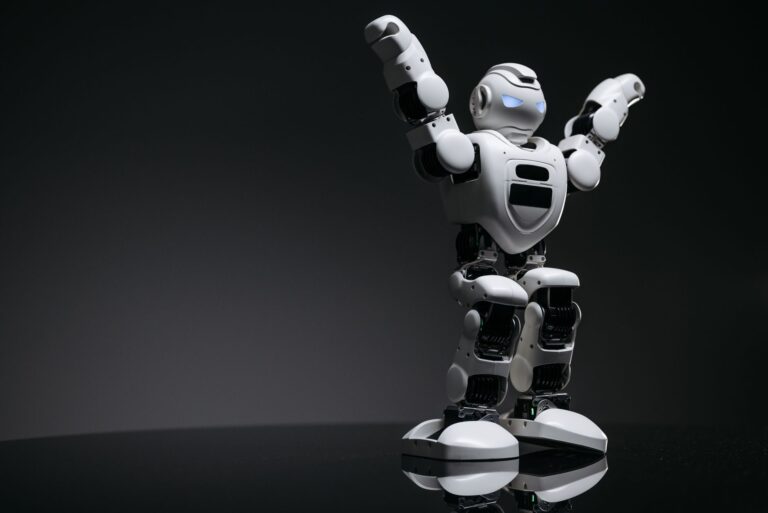
humanoids have entered limited commercial logistics work. Agility Robotics says its Digit robot moved more than 100,000 totes at GXO's Flowery Branch facility. That demonstrates repeated work in a real warehouse, but it does not independently establish broad, general-purpose deployment. Research systems are also gaining better control over their bodies.
Google DeepMind's Gemini Robotics 2 demonstrates whole-body humanoid control, yet reported success on multifinger tasks ranges from 32% to 92%, according to the company's July 2026 announcement. That wide range exposes the central limitation. A humanoid can perform an impressive task without delivering the consistency required across changing objects, layouts, and operating conditions. Prospective users should evaluate a defined workflow and measurable failure rate, not the robot's humanlike appearance.
Safety must cover routine work and intervention
OSHA identified 550 robot-involved manufacturing incidents in 2024. Production workers and people installing, maintaining, or repairing equipment were most affected, while 33% of incidents required emergency-room treatment, according to the agency's annual injury and illness report. OSHA has no robotics-specific workplace standard.
Employers must apply broader requirements, including lockout/tagout and machine guarding. Collaborative systems need application-specific risk assessments because workers share safeguarded space with moving equipment. A deployment review should cover more than normal operation:.
- Identify where people enter, reach into, clean, clear, teach, or repair the system.
- Assess the complete application, including tools, payloads, fixtures, and nearby equipment.
- Define isolation and restart procedures before maintenance or fault recovery.
- Reassess the cell after changing software, speed, layout, tooling, or assigned tasks.
Automation changes the job mix
Evidence does not support a simple claim that every robot eliminates jobs. A U.S. plant-level study covering 2010 through 2022 found that robot-adopting manufacturers had roughly 150% more job postings and 15% higher employment, while non-adopters lost employment.
The study points toward changing skill requirements, including maintenance, repair, design, production, and programming. It does not guarantee that every worker or facility benefits, so employers need retraining plans tied to the equipment they intend to deploy. Workforce planning can begin with three questions: The U.S. Bureau of Labor Statistics projects overall manufacturing employment to remain little changed from 2024 to 2034, while industrial machinery mechanics add 41,200 manufacturing jobs because automated equipment needs maintenance and repair.
- Which existing employees understand the process well enough to learn robot operation or troubleshooting?
- Which maintenance and programming skills must be developed before commissioning?
- How will workers receive paid training before their current tasks change?