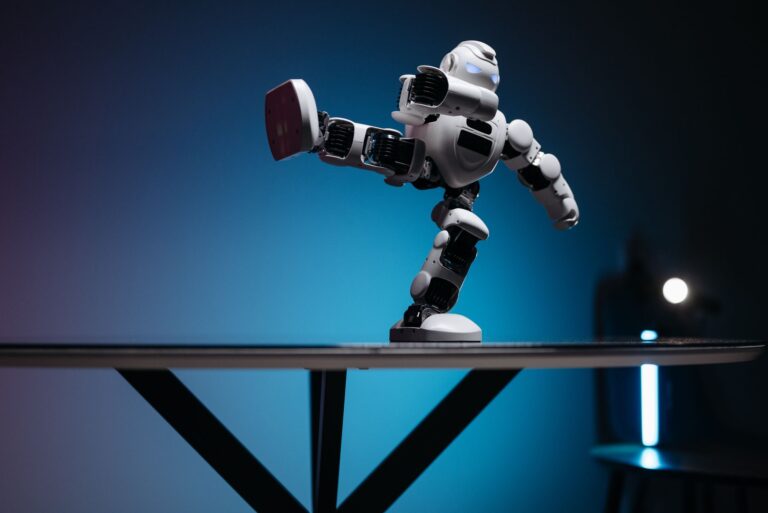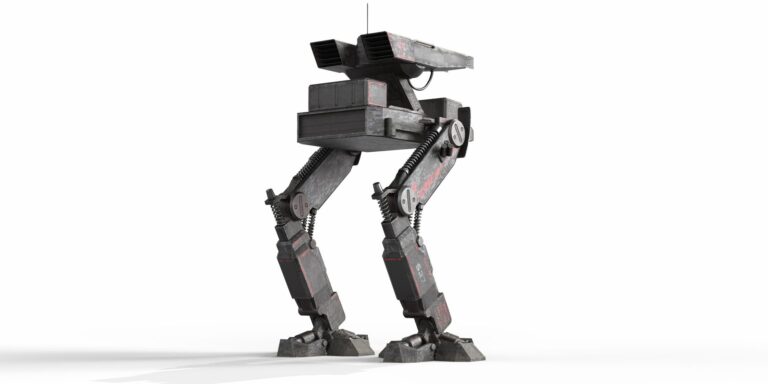

Legged robots in 2026 can handle bounded inspection and warehouse tasks, but broad general-purpose deployment remains unproven. Buyers should judge them by measured task performance, site-specific safety controls, and total operating demands—not polished demonstrations. A legged robot moves on two or more articulated legs instead of wheels or fixed tracks. This design can help on stairs, slopes, uneven floors, and human-built routes, but it also creates challenges involving balance, payload, runtime, worker interaction, and recovery from faults.
Table of Contents
- What can legged robots reliably do?
- How should buyers evaluate capability claims?
- What safety evidence should a deployment include?
- Which standards and cybersecurity controls matter?
- Questions to ask before approving deployment
What can legged robots reliably do?
The strongest commercial evidence comes from repetitive work in controlled environments. Agility robotics reports that its two-legged Digit robot moved more than 100,000 totes at a GXO facility, including transfers and stacking. That is meaningful evidence for a defined material-handling workflow, not proof that the robot can perform any warehouse job. Four-legged robots have a different strength: mobile inspection.
Since mid-2024, Cargill has piloted Spot at its Amsterdam Multiseed plant for routine maintenance inspections and visual safety checks. Thermal, acoustic, and optical sensors support hotspot, leak, and equipment-condition monitoring, while technicians continue parallel manual inspections. These examples point to a practical division of labor. Humanoid-style robots may fit tasks involving containers, racks, and spaces designed for people. Quadrupeds may suit routes where stability, terrain handling, and sensor positioning matter more than human-like manipulation.
How should buyers evaluate capability claims?
Start with the exact route, payload, task cycle, and operating conditions. Boston Dynamics specifies that Spot can traverse slopes of plus or minus 30 degrees, negotiate 300-millimeter steps, carry up to 14 kilograms, and typically operate for 90 minutes. Those figures establish test targets, but buyers still need trials with their own sensors, surfaces, temperatures, doors, obstacles, and charging schedule. A useful evaluation should reproduce normal work and credible failures.
Measure whether the robot completes the whole assignment, not merely its most impressive movement. For emergency response or other high-consequence work, demonstrations are especially weak evidence. NIST and the Department of Homeland Security use response-robot test methods covering mobility, manipulation, sensing, energy, communications, operator interfaces, logistics, and safety. Buyers should request task-relevant measurements and proof of operator training across the categories that affect their mission.
- Test the heaviest planned payload and its effect on balance and runtime.
- Include wet, dusty, reflective, narrow, or uneven areas found on the real route.
- Measure completion rate, intervention frequency, charging time, and recovery time.
- Test communications loss, blocked paths, sensor degradation, and unexpected people.
- Define which tasks still require a trained employee.
What safety evidence should a deployment include?
Safety must cover the entire work cycle, including setup, teaching, maintenance, troubleshooting, and recovery. OSHA says many robot accidents occur during programming, testing, setup, adjustment, and maintenance, when workers may enter the machine's working envelope. That risk is not theoretical. OSHA's 2024 injury and illness report identified 550 robot-involved manufacturing incidents, often affecting production, installation, maintenance, and repair workers.
Reported outcomes included cuts, bruises, fractures, and musculoskeletal disorders. A deployment plan should therefore specify: Robot features do not replace system-level safeguards. Agility says Digit includes a safety programmable logic controller, onboard emergency stop, Category 1 controlled stop, and safety-enabled teach pendant. It also acknowledges that standards for dynamically stable industrial mobile robots remain under development.
- Lockout/tagout procedures for maintenance and fault clearing.
- Physical or electronic access controls for hazardous areas.
- Emergency-stop locations and authorized users.
- Safe restart rules after a fall, obstruction, or communications failure.
- Training for operators, technicians, supervisors, and nearby workers.
Which standards and cybersecurity controls matter?
For industrial installations, purchasers should require the integrator to produce a documented, site-specific risk assessment. ANSI/A3 R15.06-2025, published by the Association for Advancing Automation on October 29, 2025, adopts ISO 10218:2025 and emphasizes risk assessment and personnel safety. The standard category must match the application. ISO 13482:2014 addresses personal-care robots but excludes industrial, medical, military, and public-force robots. It also notes the absence of exhaustive, internationally recognized collision pain and injury limits—a significant limitation when people may have physical contact with a robot.
Cybersecurity now belongs inside the safety review. The 2025 industrial-robot standard update adds safety-related cybersecurity requirements and expands covered safety functions. Buyers should establish who owns network segmentation, user access, software patches, security monitoring, and validation after updates. Connectivity failures also need a defined safe response. The contract and acceptance test should state whether the robot stops, returns, waits, or continues when it loses its network, positioning service, remote operator, or cloud connection.
Questions to ask before approving deployment
A strong procurement process turns broad promises into acceptance criteria. Ask the vendor and integrator for answers that can be measured, observed, and assigned to a responsible party.
Tie payment and rollout decisions to those answers. A pilot should use representative shifts and difficult conditions, record every human intervention, and preserve a manual fallback until the robot meets the agreed safety and performance thresholds.
- What exact task, route, payload, and operating hours are included?
- What completion rate and intervention rate must the robot achieve?
- Which surfaces, slopes, steps, temperatures, and lighting conditions were tested?
- How much useful runtime remains with the production payload?
- What happens after a fall, collision, blocked route, sensor fault, or lost connection?