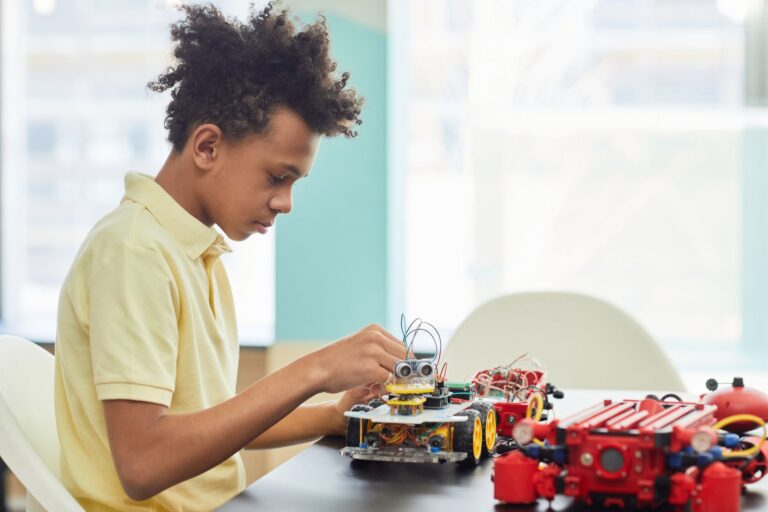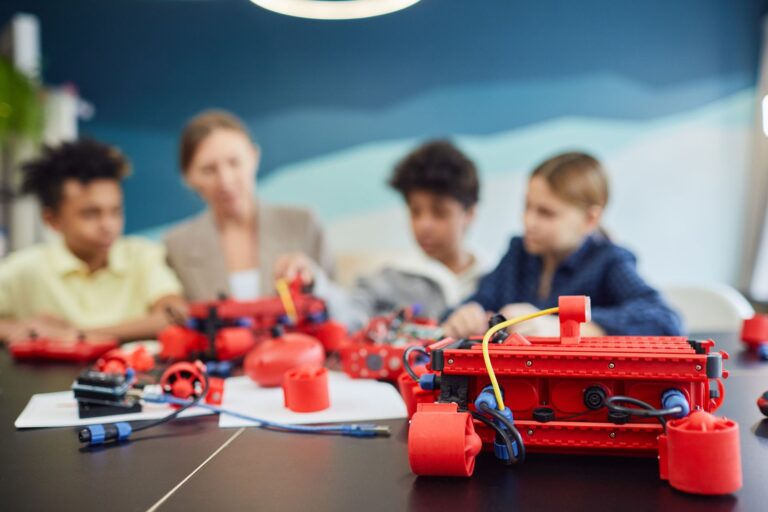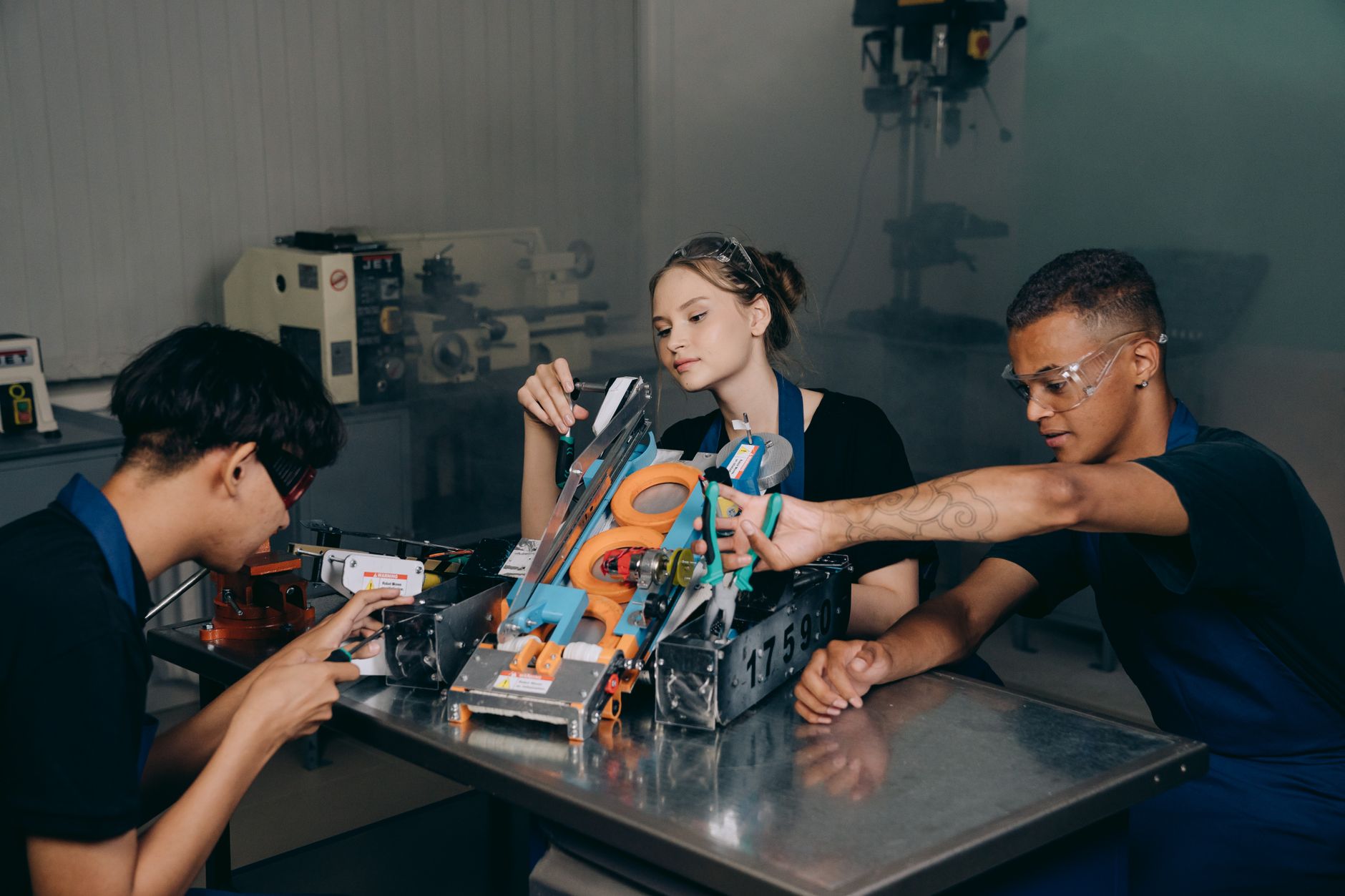

Education robots can improve learning in 2026, but the evidence supports structured, teacher-led use rather than teacher replacement. Buyers should judge capabilities, privacy, physical safety, supervision, and measurable learning outcomes before deployment. Educational robotics means using physically embodied, programmable, or interactive machines for teaching and learning. The category includes student-programmed robots and social robots that communicate through speech, movement, or other human-like behavior.
Table of Contents
- What can education robots do well?
- Where do current systems fall short?
- What student data does the robot handle?
- How should schools assess safety and trust?
- Questions to ask before buying or scaling
What can education robots do well?
robots work best as active learning tools. Students might program movement, test a sequence, observe failure, revise instructions, and immediately see the result. This makes abstract ideas such as logic, sequencing, measurement, and cause and effect tangible.
A 2026 meta-analysis covering 34 studies and 3,665 children found moderate learning gains, with an overall correlation of 0.31. Benefits were stronger in active, programmable, sustained programs than in one-off demonstrations, according to the PubMed-indexed meta-analysis. The same analysis found larger benefits when robots were compared with traditional materials than when compared with human instructors. A robot may therefore extend a lesson or create a useful practice environment, but the evidence does not justify treating it as a substitute teacher.
Where do current systems fall short?
Demonstrations can make a robot appear more independent than it will be during ordinary classroom use. A system may still require setup, scripted interactions, troubleshooting, charging, updates, network access, or an adult ready to intervene. A review of 23 classroom field studies found social robots feasible in schools, but few operated autonomously for more than several days.
The review also found no demonstrated superiority over teachers or other technologies, making long-term autonomy an unresolved limitation in the Educational Research Review study. Schools should ask vendors to demonstrate an entire lesson under realistic conditions. The test should include student misunderstandings, noise, connectivity loss, low batteries, unexpected movement, and the process for restoring normal operation.
What student data does the robot handle?
Cameras, microphones, student accounts, recordings, and cloud telemetry can create privacy risks even when data collection is not the product's main purpose. Buyers should map what information enters the robot, where it goes, who receives it, how long it remains, and how it is deleted. The Federal Trade Commission says covered education-technology providers may not require children to disclose more information than reasonably necessary for schoolwork.
Its COPPA policy statement also addresses limits involving collection, use, retention, and security. Before creating accounts or enabling sensors, districts should inspect privacy policies and contract terms. They should identify subcontractors, transmission paths, retention periods, deletion procedures, security responsibilities, and what families will be told.
How should schools assess safety and trust?
Safety includes more than preventing collisions. Child-facing robots may encourage over-attachment, emotional dependence, authority confusion, or displacement of human relationships. Anthropomorphic features can also make responsibility unclear when a machine gives a poor response. IEEE initiated P7027 in June 2026 to address safety and trust in educational and child-facing human-robot interaction, but the proposed practice is not yet an approved standard. Schools should not describe planned guidance as an existing certification.
Physical hazards require a separate review. ISO 13482:2014 remains current while a replacement service-robot standard is under development, according to the ISO standard record. Purchasers should request the vendor's hazard assessment, intended-use limits, supervision procedures, maintenance controls, and emergency-stop instructions. A classroom plan should state who supervises the robot, who can stop it, which spaces are permitted, and how damaged equipment is isolated. Any robot that moves near people or makes physical contact deserves testing in the actual environment before students use it.
Questions to ask before buying or scaling
NIST's voluntary Govern–Map–Measure–Manage model offers a practical procurement structure. It asks schools to establish accountability, identify risks affecting students, measure outcomes, and decide how risks will be controlled.
Use a limited pilot with a defined instructional goal and clear stopping conditions. Ask: Do not scale because students found a demonstration engaging. Expand only when the pilot shows a useful learning outcome, manageable supervision demands, acceptable data practices, documented safety controls, and a workable response to failures.
- What specific student task should the robot improve?
- What evidence supports this use, age group, and program length?
- Which functions require a teacher or technician?
- What happens after a wrong response, sensor failure, or lost connection?
- Which cameras, microphones, accounts, and cloud services are active?
You Might Also Like
- Tutorials and DIY Robotics 2026 Guide: capabilities, safety, and deployment; Key Facts and Questions to Ask
- Exoskeletons Robotics 2026 Guide: capabilities, safety, and deployment; Key Facts and Questions to Ask
- Construction Robotics 2026 Guide: capabilities, safety, and deployment; Key Facts and Questions to Ask