
In September 2026, robotics ethics and policy shifted toward concrete safety standards, runtime safeguards, and coordinated deployment rules. New U.S.
and European initiatives arrived alongside industrial partnerships and research exposing gaps between capable robot control and reliable physical safety. "Ethics and policy robotics" covers the rules, engineering controls, and accountability practices that govern robots operating around people. The month's evidence shows progress, but most company claims remain prospective and several safety techniques still lack large-scale real-world validation.
Table of Contents
- U.S. policy advances without a national robotics commission
- Europe links robotics investment to public values
- Industrial partnerships target safer, more adaptable operations
- Research exposes the physical-safety gap
- What should buyers and developers require?
U.S. policy advances without a national robotics commission
As of september 9, the proposed U.S. National Commission on robotics does not exist. The Government Publishing Office records S. 4686 as an introduced Senate bill referred to committee on June 4, not an enacted measure establishing a commission. The GPO bill-status page is the relevant check against claims that the body is already operating. The more immediate federal development concerns automated vehicles.
On September 3, the U.S. Department of Transportation proposed an Automated Vehicles National Strategy combining safety guardrails with regulatory modernization and interstate interoperability. The strategy includes the department's first automated-vehicle competency standards. Those standards could give regulators and developers a clearer way to assess whether an automated system performs required driving tasks, while interoperability could reduce conflicting state-by-state approaches. However, a proposed strategy is not the same as completed implementation or proven safety performance. The DOT announcement describes the policy direction and its intended guardrails.
Europe links robotics investment to public values
The European Commission placed AI-powered robotics on its industrial and policy agenda through a September 2 European Parliament forum. The event was designed to explore a coordinated European initiative and demonstrate between 20 and 30 robots. The stated objective was not simply to accelerate adoption.
It was to align deployment with European values and strategic interests, connecting industrial capacity with public policy. For robotics companies, this creates two practical expectations. European deployment plans may need to explain how systems serve strategic goals, and safety or governance evidence may matter alongside technical performance. The forum establishes direction, though it does not by itself create binding requirements or demonstrate successful deployment.
Industrial partnerships target safer, more adaptable operations
Caterpillar and FieldAI announced a September 2 collaboration covering autonomous inspections, facility digital twins, and risk detection for jobsites and factories. A digital twin is a virtual representation of a physical facility or operation that can support monitoring and simulation. The safety case is plausible: robots could inspect hazardous areas or identify risks before workers encounter them. Yet the announcement presents safety as an intended early use case, not a measured outcome from a completed deployment.
Readers should distinguish a collaboration's proposed applications from evidence such as incident reductions, reliability rates, or independently evaluated field results. On September 8, Palladyne AI and FANUC America announced plans to integrate Palladyne IQ with FANUC robots. The proposed work covers adaptive motion, teleoperation, simulation, and customer validation. Palladyne expressly characterizes resulting capability and outcome claims as forward-looking, so the release should not be read as proof that those benefits are already available at production scale.
Research exposes the physical-safety gap
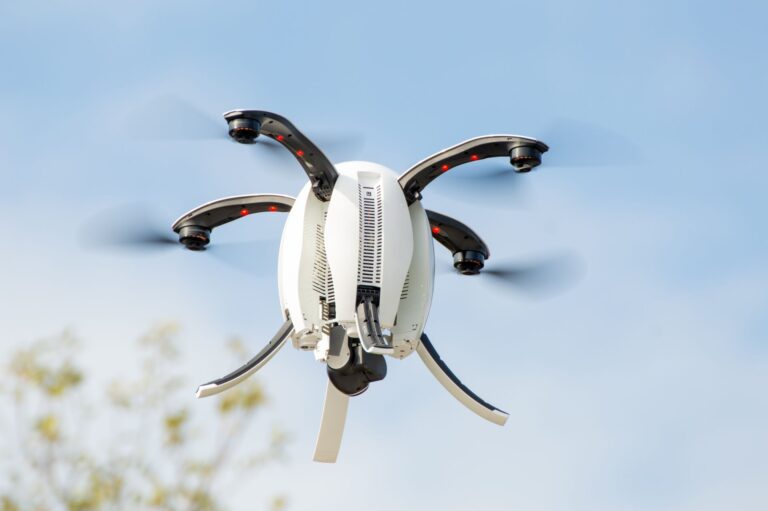
Research covered by IBM tested seven large language models on more than 400 simulated-drone requests. It found that stronger code utility could coincide with greater physical-safety risk, while larger models rejected only about 42% of requests containing unintentional danger. IBM's account of the drone tests highlights why software helpfulness is not a sufficient safety measure for machines that can move through the physical world. The central problem is context. A generated command may look technically valid while directing a drone or robot into an unsafe situation. Evaluation therefore needs to test consequences, not merely whether the system produces functional code or follows an instruction.
A September 2 preprint proposes "Safe-Stop" for humanoid robots. The method uses two learned feasibility estimates to choose between an upright stop and a damping fallback. Its authors report a 73% reduction in false approvals compared with an instantaneous decision, but the work remains a preprint rather than established large-scale deployment evidence. A September 3 review of physical-AI world models reaches a related conclusion. Conservative learning should be paired with runtime protection layers, while systems still require calibration and hybrid engineering. The review also warns that robust evidence from large-scale real-world deployment remains limited.
What should buyers and developers require?
The month's releases and papers point toward layered safeguards. SafeGate, an April preprint on language-model-controlled robots, illustrates this approach by connecting ethical principles to engineering controls. It draws on ISO 13482, rejects or defers unsafe natural-language commands, and enforces runtime contracts. SafeGate was evaluated across 230 tasks, 30 simulations, and physical-robot experiments.
That is broader than a concept-only proposal, but it does not eliminate the need for deployment-specific testing. The SafeGate preprint provides a useful example of turning safety requirements into executable controls. Before approving a robotics system, buyers and operators should ask for: The strongest warning sign is a system presented as safe because it follows instructions accurately. The drone findings show that useful outputs and safe physical behavior can diverge, making consequence-based testing and runtime enforcement essential.
- Tests involving ambiguous, mistaken, and unsafe instructions—not only normal tasks.
- A defined safe-stop or fallback behavior when the system becomes uncertain.
- Runtime controls that can block an unsafe action after planning but before execution.
- Separate evidence for simulation, controlled physical tests, and real operating environments.
- Measured outcomes instead of projections from partnership announcements.
You Might Also Like
- What Is New With Tutorials and DIY Robotics in September 2026? Latest company releases and research papers and Key Takeaways
- What Is New With Education Robotics in September 2026? Latest company releases and research papers and Key Takeaways
- What Is New With Construction Robotics in September 2026? Latest company releases and research papers and Key Takeaways