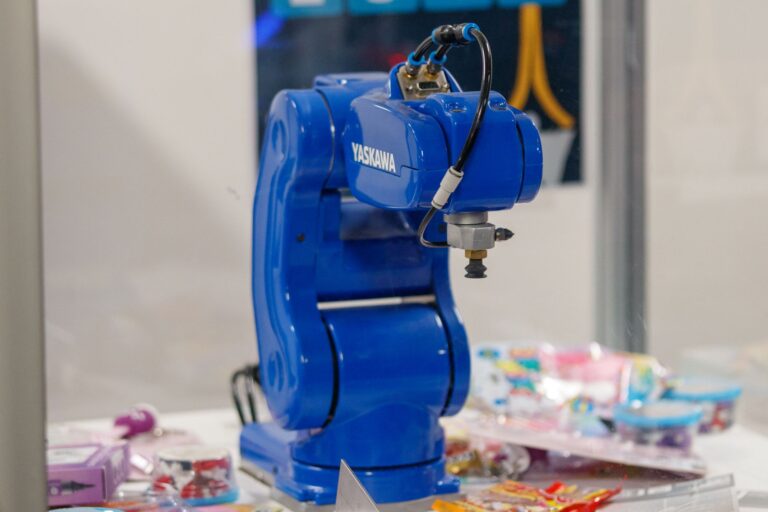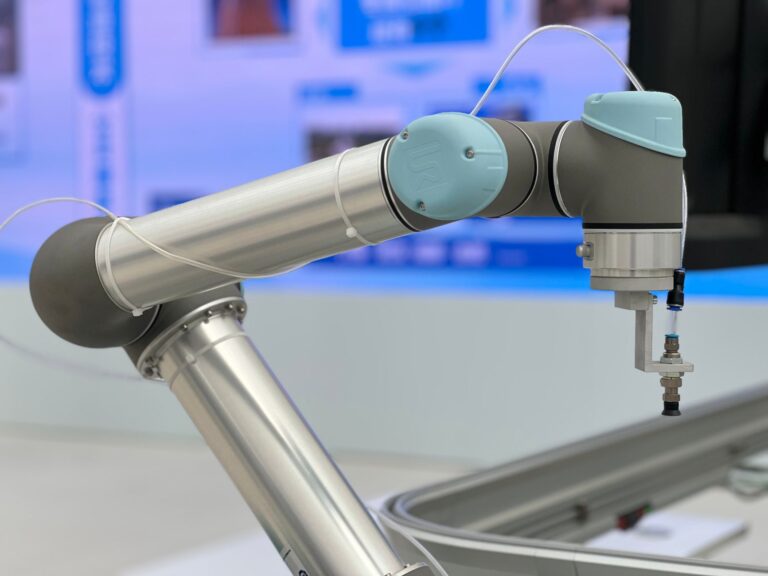

Simulation digital twins in robotics are virtual copies of robots, workcells, or rooms used to train and test behavior before real deployment. In 2026 they affect factory engineers, robotics teams, and vendors integrating systems across plants.
Evidence shows useful sim-to-real transfer for arms, mobile manipulators, and legged robots. Practical work now centers on tighter real-to-sim loops with phone scans and standard data models. The smart next move is to build one small twin, prove transfer on a single task, then scale.
Table of Contents
- Who gains from robotics twins?
- What does transfer evidence show?
- Which tools and standards hold twins together?
- Where do simulations still mislead?
- How to start a low-cost loop?
Who gains from robotics twins?
Robotics and Automation News reports FANUC linked RoboGuide with NVIDIA Isaac Sim and Omniverse, as described in its FANUC partnership report. Manufacturers can simulate whole lines and validate workflows before hardware install. The March 2026 project aims to cut commissioning time and cost.
Plant vendors face the harder integration job across mixed equipment. The U.S. National Institute of Standards and Technology maintains terminology and reference models for interoperability. Its Digital Twin Standardization page was updated 13 Feb 2026.
What does transfer evidence show?
The Allen Institute for AI trained MolmoBot entirely in simulation and moved it zero-shot to real robots, as shown in its MolmoBot announcement. The tests used Franka FR3 and RB-Y1 robots. Tasks included pick-place, drawer and cabinet work, and door handling with no real-world fine-tuning.
MIT CSAIL built RialTo to turn an iPhone scan of part of a home into a digital twin for simulated practice. Paired with real data, it beat traditional imitation learning under visual and physical disruption. UC Berkeley teams also showed sim-to-real reinforcement learning can keep loaded legged robots walking outdoors without toppling.
Which tools and standards hold twins together?
NVIDIA says Isaac Sim, built on Omniverse, supplies physics, lighting, and sensor simulation for safe policy testing, according to NVIDIA documentation. Teams can train robot policies virtually before real deployment. That separation catches failures where repair is cheap.
Manufacturers standardizing twins use ISO 23247. Its four parts cover principles, reference architecture, digital representation, and information exchange. Scope includes personnel, equipment, materials, processes, and facilities.
Where do simulations still mislead?
Voxel51 cautions that simulation success does not equal deployment readiness in its synthesis of vision-language-action datasets. Some large synthetic benchmarks report simulation-only results. Treat those scores as engineering signals, not real-world performance proxies.
Test under lighting shifts, clutter, and physical bumps before trusting a policy. Keep a real-world scorecard separate from simulation scores. Require repeated passes on hardware before scaling tasks or speeds.
How to start a low-cost loop?
The NVIDIA Technical Blog outlines a low-cost real-to-sim loop for 2026 teams. Capture iPhone photos, process them with COLMAP into 3D Gaussian reconstruction, then export USDZ. Load that scene directly in Isaac Sim to drive, plan, and test.
Start narrow and keep the loop tight. Pick one cell, one task, and one clear pass measure. Compare sim and real runs and fix the model gap first. Ship the next twin only after the small loop transfers without extra tuning.
- Scan one cell or room corner, not a full plant.
- Rebuild and test one task with clear pass criteria.
- Compare sim and real runs, then fix the model gap first.