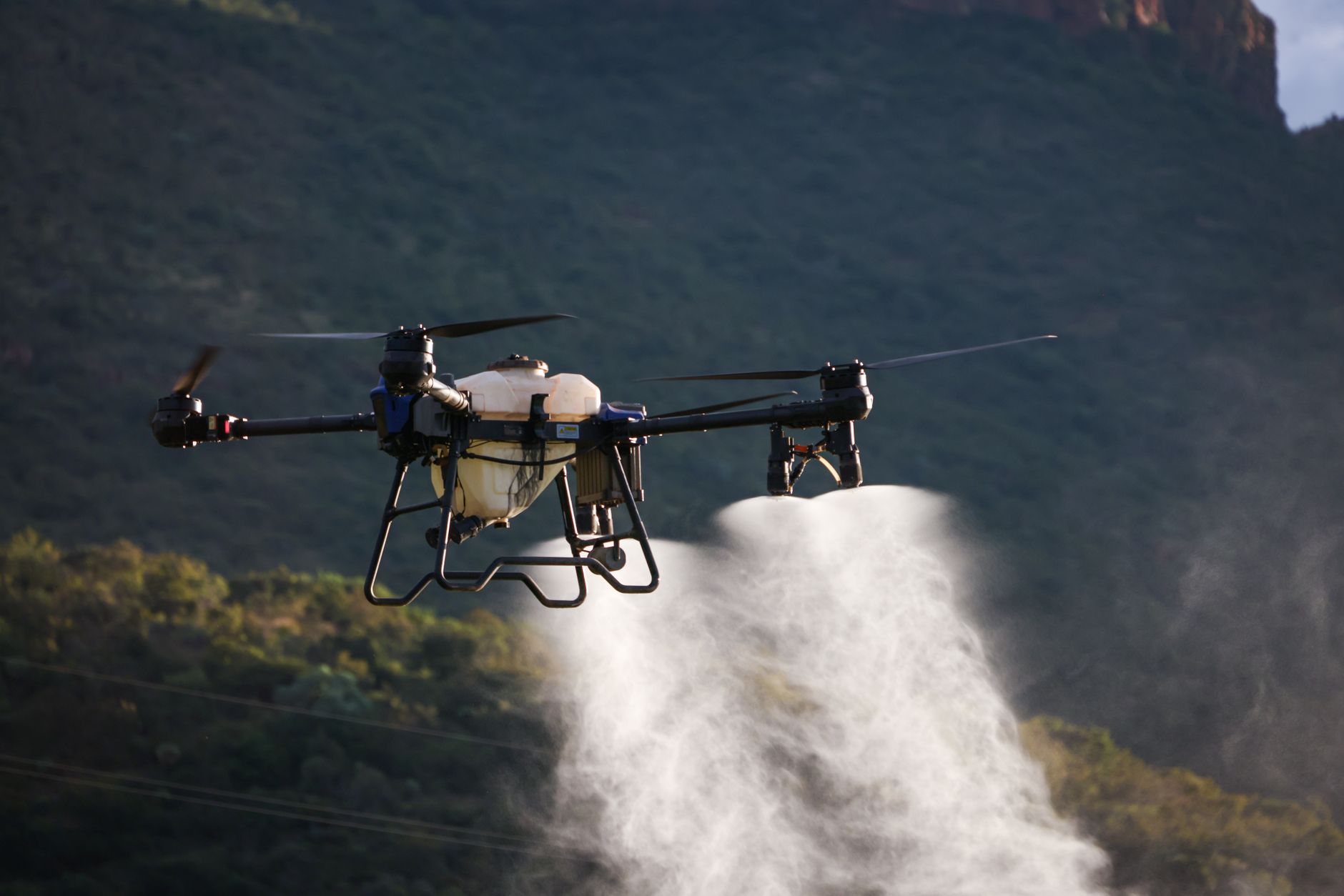

Autonomous sprayer drones are agricultural robots that fly a pre-programmed route and release pesticide or fungicide over a field without a human piloting each pass. For fall pest control, they let growers hit late-season insects—like stink bugs, aphids, and armyworms—on a tight schedule as temperatures drop and pest behavior shifts before winter.
These machines are not casual consumer drones. They combine GPS-guided flight planning, terrain-following sensors, and tank-and-nozzle spray systems built for row crops, orchards, and vineyards. Operating one for pest control involves both the hardware itself and a layer of regulatory and agronomic decisions that determine whether a fall application actually works.
Table of Contents
- What Makes a Sprayer Drone "Autonomous"
- Why Fall Timing Changes the Pest Control Approach
- Regulatory and Licensing Requirements
- Payload, Coverage, and Practical Limitations
- What to Ask Before Hiring a Drone Spray Service
- Frequently Asked Questions
What Makes a Sprayer Drone "Autonomous"
Autonomy in this context means the drone follows a mapped flight path using GPS and RTK (Real-Time Kinematic) positioning, adjusting altitude automatically as it crosses uneven terrain so the spray boom stays at a constant height above the crop canopy. The operator sets field boundaries, no-fly zones, and application rate ahead of time, then supervises the flight rather than manually steering it. Most systems still require a human nearby to launch, monitor, and intervene if something goes wrong—a tree line that wasn't mapped, a sudden wind gust, or a low-battery warning.
Full autonomy, where a drone takes off, sprays, returns, and recharges without anyone present, exists in some commercial fleets but is not yet the norm for most farm operations. Terrain-following and obstacle-avoidance sensors matter most in fall applications because crop canopies vary in height across a field as plants mature or begin senescing. A drone that can't adjust its altitude in real time risks uneven coverage—too much drift in low spots, too little penetration into dense canopy.
Why Fall Timing Changes the Pest Control Approach
Fall pest pressure differs from the pests growers deal with in spring and summer. Stink bugs and certain aphid species become more active as they search for overwintering sites, often concentrating at field edges before moving toward structures. Armyworm outbreaks can also spike in fall in warmer regions, feeding aggressively before cooler weather sets in.
Because these pests often cluster rather than spread evenly, drone operators frequently run targeted border or hot-spot applications instead of blanket coverage across an entire field. A drone's ability to fly a tight, repeatable path along field perimeters or specific zones—guided by scouting reports or aerial imagery—is one of the practical advantages over a full-field ground rig in this scenario. Cooler fall temperatures and lower wind windows in early morning or late afternoon also affect spray drift and droplet behavior. Many pesticide labels specify temperature and wind ranges for effective application, and a drone's smaller flight windows mean operators need to plan applications around narrower weather conditions than they might in summer.
Regulatory and Licensing Requirements
In the United States, flying a sprayer drone for agricultural work requires a Federal Aviation Administration (FAA) Part 107 remote pilot certificate at minimum, since this counts as commercial drone operation. Because agricultural spray drones typically exceed the standard 55-pound weight limit for Part 107 aircraft, operators generally also need an FAA exemption or waiver under Part 137, the agricultural aircraft operation rules originally written for crewed crop dusters. Beyond the FAA, applying pesticides—by drone or any other method—requires compliance with state pesticide applicator licensing.
Most states require a commercial pesticide applicator license for anyone applying restricted-use pesticides, and the product label itself is a legal document that dictates application rate, buffer zones, and weather conditions. A drone doesn't exempt an operator from any of these label requirements. Growers hiring a drone application service should confirm the operator holds both the FAA authorization for the aircraft and the applicable state pesticide license before any fall spraying begins. These are separate credentials, and having one does not imply the other.
Payload, Coverage, and Practical Limitations
Commercial agricultural drones typically carry spray tanks in the range of a few gallons up to around ten gallons per flight, depending on the model, which means covering larger acreage requires multiple takeoffs, landings, and tank refills. This makes drones more practical for smaller fields, irregular terrain, orchards, and spot treatments than for large contiguous row-crop acreage, where ground rigs or crewed aircraft often still cover more ground per hour. Battery life is another constraint. Most electric agricultural drones fly for roughly ten to twenty minutes per charge under load, so a full day of spraying involves cycling through multiple batteries and tanks.
Operators plan routes to minimize downtime between flights, often using a support vehicle stocked with charged batteries and premixed spray solution. Wind remains the biggest operational limiter in fall applications specifically. Many agricultural drone manufacturers recommend halting operations above wind speeds of roughly 10 mph to avoid spray drift, and fall weather in many regions brings more variable wind patterns than summer. Operators who plan fall applications should build flexibility into their schedule rather than committing to a fixed date, since a narrow weather window can shift a planned application by a day or more.
What to Ask Before Hiring a Drone Spray Service
Growers considering a drone-based fall pest control service can evaluate a provider with a short set of questions: A service that can answer all five clearly, with documentation on request, is operating within the same regulatory framework that governs any other form of pesticide application. One that can't produce licensing details or explain its weather thresholds is a sign to keep looking.
- Does the operator hold a current FAA Part 107 certificate and the Part 137 agricultural exemption needed for the aircraft's weight class?
- Is the operator licensed as a commercial pesticide applicator in the state where the field is located?
- What spray tank capacity and flight time does their specific drone model offer, and how many acres per day can they realistically cover?
- How do they handle field mapping—do they fly their own survey pass, or rely on existing maps that may not reflect current crop height?
- What is their wind and temperature cutoff for applying the specific product being used, based on the label?
Frequently Asked Questions
Can homeowners use a consumer drone for backyard pest spraying?
No. Standard consumer drones aren't built with spray tanks, calibrated nozzles, or the FAA agricultural authorization required for pesticide application, and using one this way would violate both aviation and pesticide regulations.
Do sprayer drones replace ground-based pesticide equipment entirely?
Not typically. They're best suited to smaller fields, orchards, steep or irregular terrain, and targeted hot-spot treatments, while large flat row-crop acreage often remains more efficient to cover with ground rigs or crewed aircraft.