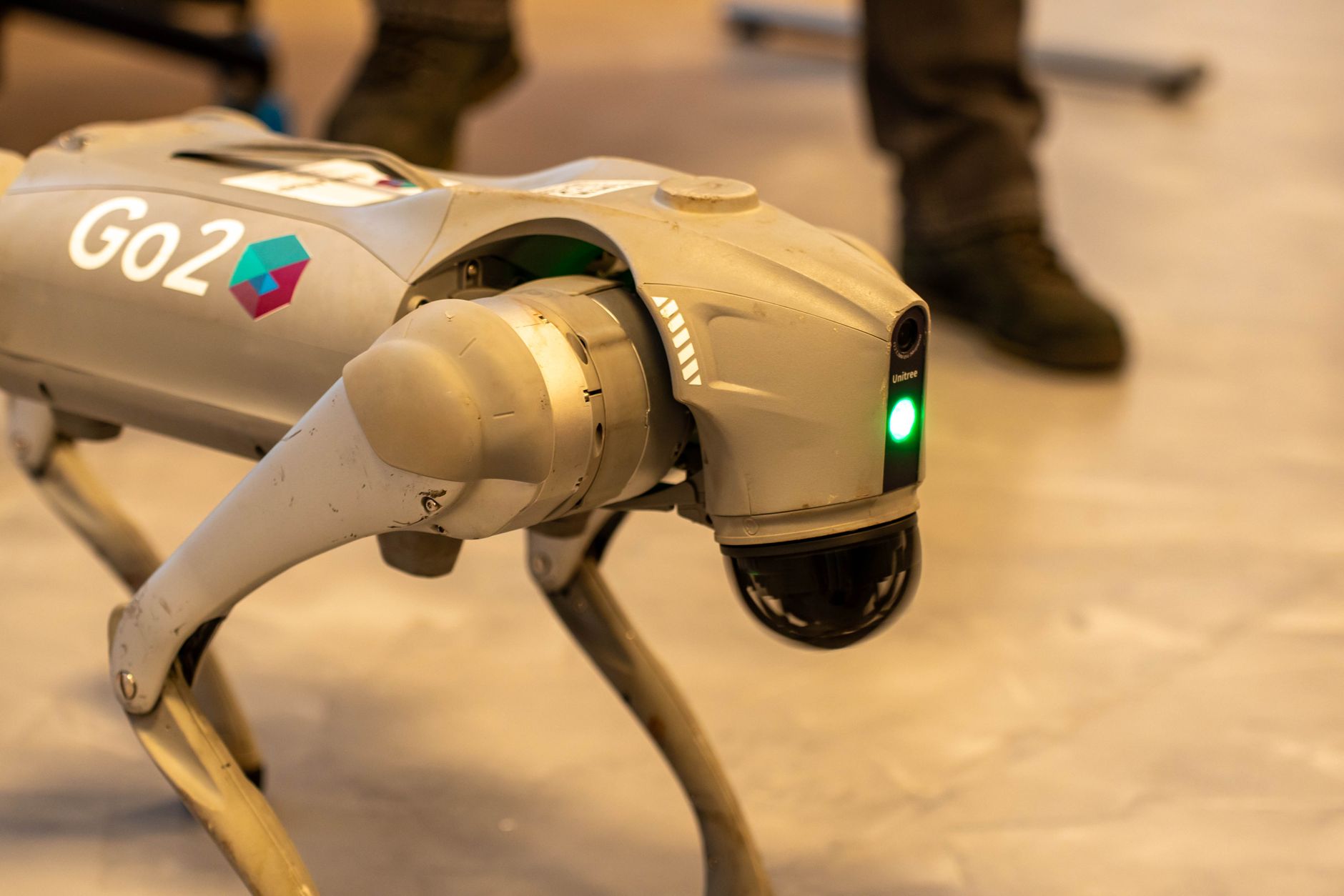

Quadruped robots for industrial inspection are four-legged walking machines that carry cameras and sensors on routine plant rounds. They climb stairs, step over pipes, and pause at set points to take readings, images, or samples of equipment condition. They suit sites with large areas, repeated checks, or zones where frequent human entry is awkward or hazardous. They work best as mobile sensing platforms tied to a clear inspection plan.
Table of Contents
- Where walking robots fit best
- What they carry and check
- How they move through a working plant
- What to check before deployment
- Frequently Asked Questions
Where walking robots fit best
They help where inspection points spread across levels, outdoor yards, or long corridors. Wheeled robots often struggle on stairs, loose gravel, curbs, and grated floors. Walking machines can keep a steady route across those gaps. They also help where checks must repeat often. Examples include gauge reads, valve positions, corrosion spots, and heat patterns.
Regular patrols catch slow changes before they cause shutdowns. They do not replace fixed sensors or people. Fixed sensors watch one spot all the time. People handle repair, judgment, and unusual faults. Walking robots fill the middle role: mobile, frequent observation.
What they carry and check
Most units carry visual cameras, thermal cameras, microphones, and gas detectors. Some add lidar for mapping or readers for asset tags. The mix depends on the defect you want to find.
Payload and patrol time trade off against each other. Heavier sensors shorten range and demand more charging stops. Short, focused routes usually give sharper data than long general walks.
- visual cameras for cracks, rust, leaks, and gauge faces
- thermal cameras for hot bearings, electrical faults, and steam traps
- microphones for air leaks and abnormal vibration
- gas sensors for abnormal buildup near seals and joints
How they move through a working plant
Operators map routes in advance and mark stop points. The robot walks the path, avoids obstacles, recovers from slips, and returns to charge. Staff watch remotely and take control when needed. Good routes use clear floors, firm footing, and safe clearance from moving gear.
Slippery oil, deep mud, open pits, and strong wireless interference still cause trouble. A trial run reveals snags before full use. Data needs a path too. Images and readings must upload, align with asset tags, and enter the maintenance system. Without that link, patrols create files no one uses.
What to check before deployment
Start with access and safety rules. Confirm stair access, door widths, floor loads, and zones where robots must stop.
Review rules for hazardous areas, live equipment, and work near people. Walk the route with operations and safety staff, test one full shift, then expand only where readings changed a maintenance choice.
- inspection goal for each stop: reading wanted, normal range, and follow-up action
- route proof: stairs, lighting, traction, wireless coverage, and charging point
- handling of rain, dust, heat, and noise that can blur readings
- owner for alerts, storage, and review of collected data
Frequently Asked Questions
Can they work alongside people and vehicles?
Yes, when rules set speed, paths, warning signals, and stop zones. Test during quiet shifts first, then add busier periods.
How much training does an operator need?
Basic route setup, start-up, and recovery are straightforward to learn. Reliable results still need clear routines for charging, sensor checks, and data review.
What upkeep do the robots themselves need?
They need cleaning, footpad checks, battery care, and sensor calibration. Dirty lenses and worn feet reduce both safety and reading quality.