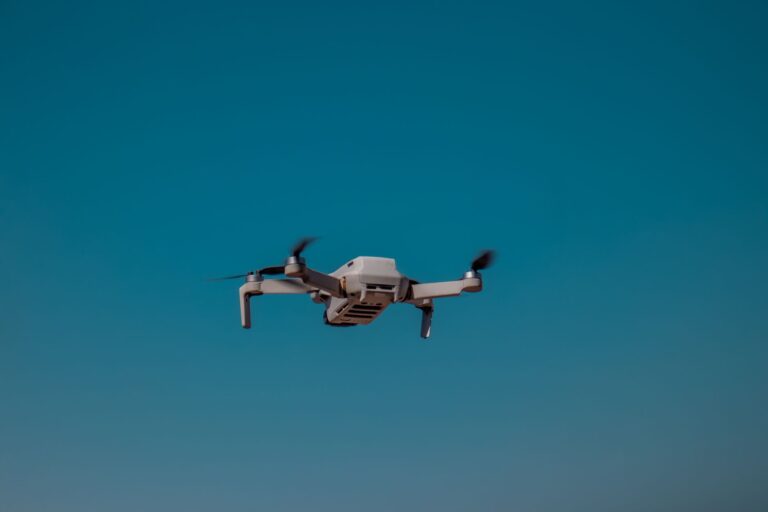

Electromagnetic launchers represent a fundamentally different approach to defending against drone swarms—one that replaces expensive kinetic interceptors with directed electrical energy. Rather than firing a missile costing tens or hundreds of thousands of dollars to destroy a single drone worth a fraction of that amount, electromagnetic systems accelerate projectiles using Lorentz force, converting electrical energy into kinetic energy at rates that dramatically shift the economics of air defense. A single engagement with a traditional air defense system might require multiple missile interceptors to neutralize a coordinated swarm; an electromagnetic launcher can engage multiple targets in rapid succession using only the cost of electrical power and replacement ammunition, making it substantially cheaper per engagement.
The cost advantage becomes increasingly significant as swarm sizes grow. In scenarios where dozens or hundreds of drones approach simultaneously, the traditional model of one-missile-per-target becomes fiscally unsustainable for smaller military installations, critical infrastructure, or civilian applications like airport protection. Electromagnetic launchers shift the burden from ammunition procurement to power infrastructure, a trade-off that strongly favors organizations with established electrical grids or renewable power generation.
Table of Contents
- Why Does Ammunition Cost Matter More Than Power in Drone Defense?
- The Power Generation Bottleneck in Practical Deployments
- Integration Into Existing Air Defense Networks
- Comparing Engagement Speed and Coverage Against Swarm Tactics
- Reliability and Failure Modes in Combat Conditions
- Power Source Architecture Decisions
- Research Status and Limiting Factors in Current Systems
- Frequently Asked Questions
Why Does Ammunition Cost Matter More Than Power in Drone Defense?
The economics of air defense hinge on a brutal calculus: the cost per target. Traditional surface-to-air missiles cost between thirty thousand and several hundred thousand dollars per unit, depending on system sophistication and guidance capability. A drone swarm might consist of inexpensive commercial quadcopters worth five to twenty thousand dollars each, or purpose-built military variants worth more but still substantially less than interceptor missiles. The moment a defense operator must fire two or three missiles to reliably eliminate a single drone—a common scenario when targets are maneuvering or employ decoys—the cost-per-kill becomes economically untenable for sustained operations. Electromagnetic launchers eliminate this ammunition cost paradigm entirely.
The projectiles themselves are simple kinetic rounds—essentially hardened steel pellets or rods that cost dollars or tens of dollars to manufacture. The expensive component becomes the launcher infrastructure: the capacitor banks, power conditioning systems, and barrel construction capable of withstanding repeated electromagnetic pulses. Once that infrastructure exists, however, the marginal cost of each subsequent engagement approaches the cost of electricity consumed plus minimal projectile replacement. An operator can engage dozens of targets before the cumulative ammunition cost approaches the price of a single traditional interceptor. This shifts the financial calculation from “can we afford to defend against this swarm” to “can we afford the upfront infrastructure investment.” For military bases, airports, and critical infrastructure with existing electrical capacity, that infrastructure often already exists or can be added at reasonable cost.
The Power Generation Bottleneck in Practical Deployments
The apparent cost advantage of electromagnetic launchers encounters a significant practical limitation: power availability and delivery. A high-powered electromagnetic launcher requires sudden massive electrical surges—potentially megawatt-scale power draws for milliseconds during each firing sequence. This demand cannot always be met by standard electrical grids without causing voltage sags or brownouts affecting surrounding systems. The same infrastructure upgrade that makes ammunition-cost savings possible creates new dependencies on power generation capacity. Mobile or remote deployments face particular challenges. A traditional air defense system can be relocated with its ammunition supply and fired from anywhere with line-of-sight to targets.
An electromagnetic launcher requires either connection to a permanent power source, onboard power generation (adding weight and reducing mobility), or massive battery/capacitor banks (increasing cost and complexity). A military installation in a remote region with limited grid capacity might find that the ammunition savings are entirely negated by the need to construct dedicated power generation or distribution infrastructure. Additionally, capacitor banks degrade over time and require periodic maintenance and replacement, introducing hidden lifecycle costs that complicate cost-per-engagement calculations. The thermal load presents another constraint. Repeated firing generates substantial heat in the capacitor systems, power conditioning electronics, and launcher barrel. In high-intensity scenarios with sustained rapid-fire engagement against large swarms, a launcher might need to pause operations to cool down—a vulnerability that a traditional system with sufficient missile stockpiles does not share.
Integration Into Existing Air Defense Networks
Most nations have invested decades into layered air defense architectures combining radar detection, command-and-control systems, and multiple types of interceptor platforms. Adding electromagnetic launchers to this ecosystem requires solving integration problems that can be as costly as the launcher itself. Existing fire-control radars may not provide targeting data in the formats that electromagnetic launcher systems expect. Command systems built around missile inventory management and logistics workflows may not accommodate the radically different operational models of direct-energy weapons. A practical example emerges from research installations where electromagnetic launchers have been developed and tested.
The U.S. military’s electromagnetic rail gun program, conducted over multiple decades at various research facilities, required extensive integration work with existing naval ship systems. Despite the technological maturity of the basic launcher concept, the effort to make it work alongside existing radar, targeting, and fire-control systems consumed resources comparable to the launcher development itself. Operators transitioning to electromagnetic defense must also retrain personnel accustomed to traditional ammunition-based workflows. A technician trained to load missiles and manage inventory faces entirely different operational procedures with an electromagnetic system. This human-factors cost is rarely quantified in initial cost-benefit analyses but emerges as a significant implementation challenge.
Comparing Engagement Speed and Coverage Against Swarm Tactics
Electromagnetic launchers offer a decisive advantage in engagement speed. A traditional missile-based system might achieve one to two engagements per minute per launcher, depending on reload procedures and targeting-computer constraints. An electromagnetic launcher can engage targets at rates of several rounds per second, constrained primarily by power supply recovery time and the rate at which targeting systems can refresh data and compute firing solutions. This speed advantage directly counters swarm tactics, which rely on overwhelming defenses through simultaneous or near-simultaneous attacks from multiple vectors. A swarm of forty drones attacking from different angles might approach faster than traditional air defense can engage individual targets; the same swarm might be dispersed and defeated by electromagnetic launchers capable of rapid sequential engagement.
However, this advantage has a finite limit. If swarm density or arrival rate exceeds the launcher’s engagement rate, or if multiple swarm formations attack simultaneously from different positions, the speed advantage alone may not provide adequate coverage. A single electromagnetic launcher has physical limitations on how many targets it can engage before swarms either break through or exceed its field of fire. This constraint drives operational doctrine toward integrating multiple electromagnetic launchers into a single defense perimeter, creating overlapping fields of fire. That integration adds costs and complexity that reduce the per-unit economic advantage gained from lower ammunition expenditure.
Reliability and Failure Modes in Combat Conditions
Electromagnetic launchers introduce failure modes absent from traditional kinetic systems. The capacitor banks required to store and deliver firing pulses degrade under stress, especially in rapid-fire scenarios. A capacitor that leaks charge or fails to hold full voltage introduces misfires—failures to launch rounds at intended velocity or trajectory. For precision engagement of small, maneuvering targets like drones, even minor reductions in muzzle velocity can shift the impact point beyond lethal distance. Environmental conditions also matter in ways kinetic systems handle more forgivingly. Extreme heat can degrade capacitor performance; extreme cold increases electrical resistance in firing circuits.
Humidity and salt spray (in maritime environments) can corrode electrical contacts and degrade performance of power conditioning systems. A traditional missile system might be equally affected by these conditions, but the failure modes are often more transparent to operators—a missile either launches or it does not. An electromagnetic launcher might partially fire, generating a round at suboptimal velocity or trajectory, creating ambiguity about whether an engagement was successful. Maintenance requirements for electromagnetic systems remain incompletely understood in operational contexts because the technology has not been fielded at scale for extended periods. Early developmental systems revealed unexpected wear patterns in launcher barrels due to electromagnetic forces and friction effects. Replacement and repair of barrels or firing contacts might require specialized technicians and parts not readily available in field conditions, creating logistical challenges that reduce the system’s operational flexibility.
Power Source Architecture Decisions
Organizations deploying electromagnetic launchers must make strategic choices about underlying power infrastructure. Some installations pair electromagnetic launchers with renewable power sources—solar arrays or wind generators—creating a system with minimal ongoing fuel costs beyond initial construction.
Others rely on connection to existing electrical grids, avoiding the capital cost of dedicated power generation but accepting dependency on grid stability and external infrastructure. A third approach uses onboard power generation with engines or fuel cells, maintaining mobility and independence from external power sources at the cost of reduced range, increased weight, and higher per-engagement expenses when fuel and maintenance are included. A mobile electromagnetic launcher mounted on a military vehicle might use an onboard generator, but that generator adds thousands of kilograms to the vehicle and consumes fuel at rates that partially offset ammunition savings.
Research Status and Limiting Factors in Current Systems
Electromagnetic launcher technology remains in development or early testing phases in most military applications. The physics of the systems is well understood, but engineering challenges in scaling from laboratory demonstrations to reliable, portable, combat-capable systems have proven more difficult than early research suggested. Existing prototypes demonstrate the fundamental concept—launching projectiles via electromagnetic force at velocities sufficient to engage targets at meaningful ranges—but do not yet achieve the reliability, maintenance-friendliness, or integration simplicity that would make them operationally preferable to existing systems in all contexts. The range and accuracy capabilities of experimental electromagnetic systems remain limited compared to modern guided missiles with sophisticated targeting and mid-course correction capabilities.
An electromagnetic launcher typically engages targets at ranges measured in kilometers rather than the tens of kilometers achievable by advanced missile systems. This limits electromagnetic launchers to close-in defense roles rather than standoff defense, reducing their applicability in scenarios where early engagement before swarms reach critical positions is essential. The projectiles, being unguided kinetic rounds, require accurate targeting information and depend on ballistic calculations that become increasingly sensitive to small errors at maximum range. These limitations constrain the role electromagnetic launchers can play within broader air defense architecture, making them complementary to rather than fully replacing existing systems.
- —
Frequently Asked Questions
How much cheaper is engagement with an electromagnetic launcher compared to a traditional missile system?
The cost differential depends on the specific missile and launcher systems being compared, but ammunition costs for electromagnetic systems approach the cost of electricity and projectile manufacture, while traditional interceptor missiles cost tens to hundreds of thousands of dollars per unit. Exact cost-per-engagement calculations require accounting for infrastructure investment and maintenance, making direct comparison complex.
Can electromagnetic launchers defend against maneuvering drone swarms?
Electromagnetic launchers excel at rapid sequential engagement due to high firing rates, making them effective against swarms where engagement speed is critical. However, their unguided ballistic projectiles require accurate targeting data, and their typical engagement ranges are shorter than guided missiles, limiting their role to close-in defense within broader layered systems.
What power requirements do electromagnetic launchers have?
Requirements depend on launcher specifications, but typical systems demand megawatt-scale power surges lasting milliseconds during firing. This necessitates substantial capacitor banks, dedicated electrical infrastructure, or onboard power generation, all of which add significant cost and complexity to deployment.
Are electromagnetic launchers ready for military deployment?
Electromagnetic launchers remain in testing or development phases in most applications. Existing prototypes demonstrate the fundamental concept but have not achieved the reliability and integration simplicity required for widespread operational deployment in all military contexts.
What are the maintenance challenges with electromagnetic launcher systems?
Capacitor degradation, barrel wear from electromagnetic stresses, corrosion of electrical contacts in harsh environments, and lack of standardized replacement parts in field conditions are identified challenges. Extended operational experience with these systems remains limited.
Can mobile platforms carry electromagnetic launchers effectively?
Mobile electromagnetic launchers typically require onboard power generation, adding significant weight and fuel consumption that partially offsets ammunition cost savings. Most current development focuses on stationary or ship-based platforms with access to substantial electrical power.